What is NVIDIA Muse Spark? A Complete Guide to Community Creative Uses and Application Scenarios
NVIDIA Muse Spark leverages community creativity to drive AI 3D creation tool platformization
NVIDIA's AI creative tool Muse Spark, built on the Omniverse ecosystem and technologies like NeRF, significantly lowers the barrier to 3D content creation. By showcasing community users' diverse creative cases across work and entertainment scenarios, NVIDIA replicates the UGC-driven growth model validated by products like Midjourney. Muse Spark is evolving from a standalone tool toward a creative platform, with community activity serving as a key indicator of its platformization strategy's success.
Muse Spark: Unlimited Possibilities for Community Creativity
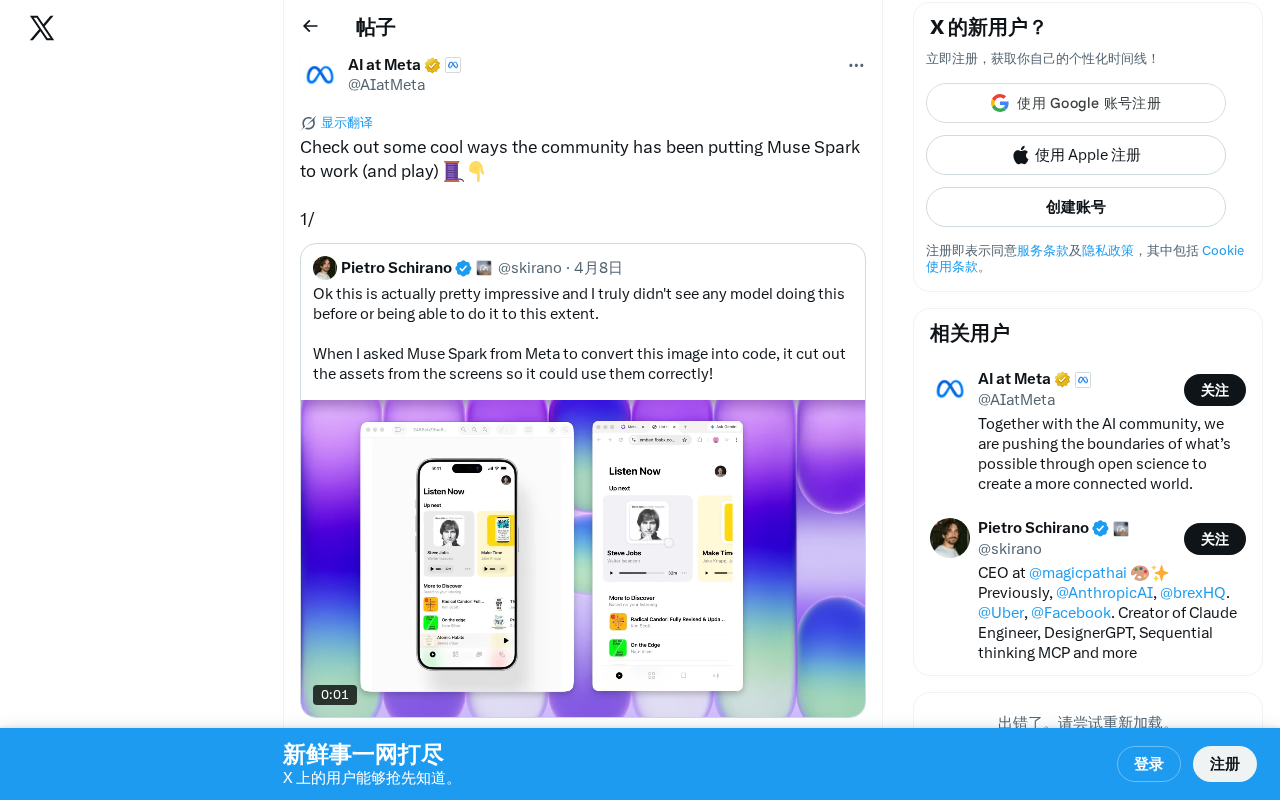
NVIDIA's Muse Spark has recently attracted widespread attention and creative exploration from community users. The official Twitter account published a curated post showcasing various impressive examples of community members using Muse Spark for creation and entertainment.
What is Muse Spark? Core Features and Positioning
Muse Spark is an AI-powered creative tool launched by NVIDIA, designed to help users quickly generate and edit visual content. It combines advanced generative AI technology, enabling ordinary users to easily accomplish creative tasks that previously required professional skills.
As part of the NVIDIA Omniverse ecosystem, Muse Spark focuses on lowering the barrier to 3D content creation, making the process from concept to visualization more streamlined and efficient. Notably, NVIDIA Omniverse itself is a real-time 3D collaboration and simulation platform built on Pixar's USD (Universal Scene Description) open standard, already used by major enterprises like BMW and Lockheed Martin for digital twin and industrial simulation scenarios. Muse Spark inherits Omniverse's deep technical expertise in real-time rendering and physics simulation, which is the core differentiator that sets it apart from purely 2D image generation tools like Midjourney.
How Generative AI is Reshaping the 3D Creation Workflow
Traditional 3D content creation requires artists to manually model, texture, and rig assets—a moderately complex 3D asset often demands dozens of hours of professional work. Generative AI, through technologies like Diffusion Models or NeRF (Neural Radiance Fields), can directly infer 3D geometric structures and material information from text descriptions or 2D reference images. NVIDIA holds a unique advantage in this field: its GPU hardware is naturally suited for massively parallel computation, and its proprietary Instant NeRF technology (released in 2022, capable of reconstructing 3D scenes from photos in minutes) provides solid underlying technical support for Muse Spark. This enables ordinary users to accomplish through natural language descriptions what previously required professional 3D modelers, fundamentally changing the entry barrier for content creation.
Community-Driven Innovation
Real-World Applications in Work Scenarios
From the community cases shared officially, Muse Spark is being applied across multiple professional work scenarios. Whether it's rapid prototyping, concept visualization, or generating product showcase materials, community users are continuously exploring the tool's capability boundaries.
This strategy of "putting the tool in users' hands and letting users define its use" is an important trend in the current AI tool ecosystem. A tool's value depends not only on the developer's design intent but even more on the community's creativity.
Entertainment and Personal Creative Exploration
Beyond serious work applications, community members are also using Muse Spark for various fun creative experiments. The official post specifically mentions the keyword "play," indicating that the tool holds enormous potential in entertainment and personal creation as well.
This dual positioning for both work and entertainment helps expand the user base while also allowing explorations in entertainment scenarios to feed back into professional application innovation.
Development Trends in AI Creative Tools
Why Community Ecosystems Matter So Much
The Muse Spark case once again proves that an active community ecosystem is crucial for the success of AI tools. When users begin spontaneously sharing usage experiences, creative works, and technique tutorials, the tool's value grows exponentially.
NVIDIA's choice to actively showcase community works on social media follows clear industry logic. User Generated Content (UGC) as a marketing strategy has proven extremely effective in the AI creative tools space. Midjourney is the benchmark case for this model: the company has virtually no traditional advertising budget, relying entirely on viral spread through works spontaneously shared by users in its Discord community, rapidly accumulating over 15 million users between 2022-2023. Runway takes a different approach by regularly hosting AI Film Festivals, converting community creations into brand assets. The essence of this model is deeply binding users' sense of creative achievement with product exposure—when users share their works, the tool itself becomes the best advertisement. NVIDIA's approach of actively curating community works is replicating this proven growth flywheel, both incentivizing existing users to continue creating and attracting potential users' attention.
The Evolution Path from Tool to Platform
As community creativity continues to emerge, Muse Spark is evolving from a simple tool toward a creative platform. Users are not just tool users but co-builders of the ecosystem. This model is highly consistent with the development paths of AI creative tools like Midjourney and Runway.
The evolution from tool to platform has a clear historical trajectory in the tech industry. Adobe started as a PostScript font tool and gradually evolved into a creative software platform; Unity expanded from a game engine to a real-time 3D platform covering automotive, architecture, and film. For AI creative tools, this evolution typically follows three stages: the first stage is core capability validation, proving that AI can accomplish specific creative tasks; the second stage is community ecosystem building, attracting developers and creators through API openness, plugin marketplaces, and community showcases; the third stage is ecosystem lock-in, where migration costs increase significantly as users' workflows, asset libraries, and social relationships are all deposited within the platform. Muse Spark is currently at the critical juncture transitioning from the first to the second stage, and the continued growth in community activity is an important indicator of whether its platformization strategy can succeed.
Outlook and Reflections
The active performance of the Muse Spark community reflects several key signals in the AI creative tools market:
- Diversified user needs: The same tool demonstrates entirely different application scenarios in different users' hands
- Continuously lowering creation barriers: An increasing number of non-professional users can participate in high-quality content creation
- Community-driven innovation: The most valuable use cases often come from users rather than developers
For practitioners following the development of AI creative tools, continuously monitoring the Muse Spark community's dynamics will help grasp the latest trends and opportunities in this field.
Key Takeaways
- NVIDIA officially showcases Muse Spark community users' creative application cases, covering both work and entertainment scenarios
- As an AI-powered creative tool, Muse Spark leverages the Omniverse ecosystem and underlying technologies like NeRF to lower the barrier to 3D content creation
- An active community ecosystem is crucial for AI tool success, and the UGC-driven growth flywheel has been validated in products like Midjourney
- AI creative tools are evolving from standalone tools toward creative platforms, with users becoming ecosystem co-builders
Related articles
 Tech Frontiers
GitHub Agent HQ Launch: AI Coding Tools Enter the Era of Platform Competition
GitHub Universe unveils Agent HQ platform for unified coding agent management, Copilot upgrades with multi-model support. OpenAI completes restructuring, Anthropic tests new model, NVIDIA open-sources AI models.
 Tech Frontiers
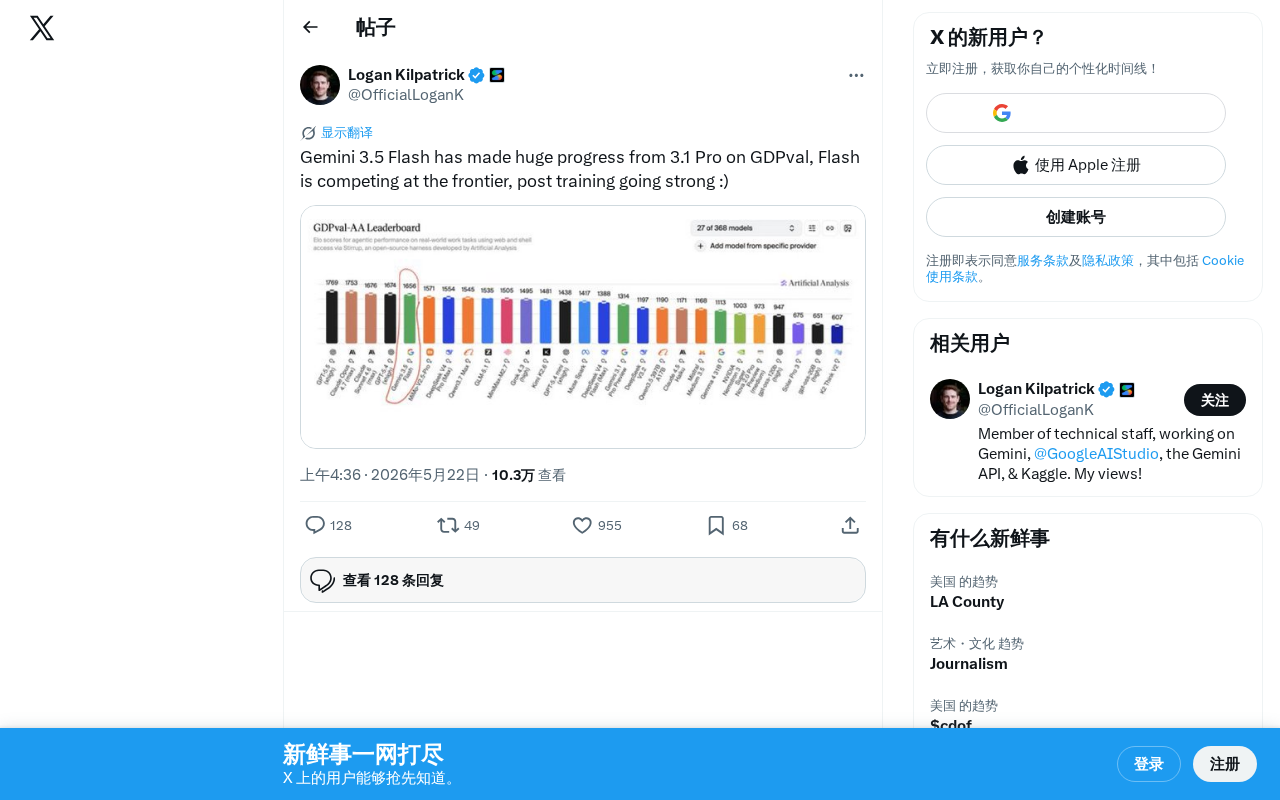
Gemini 3.5 Flash Achieves a Massive Leap on the GDPval Benchmark
Google Gemini 3.5 Flash surpasses Gemini 3.1 Pro on the GDPval benchmark. The lightweight Flash model leverages post-training techniques to approach frontier-level performance, redefining the balance between quality and cost.
 Tech Frontiers
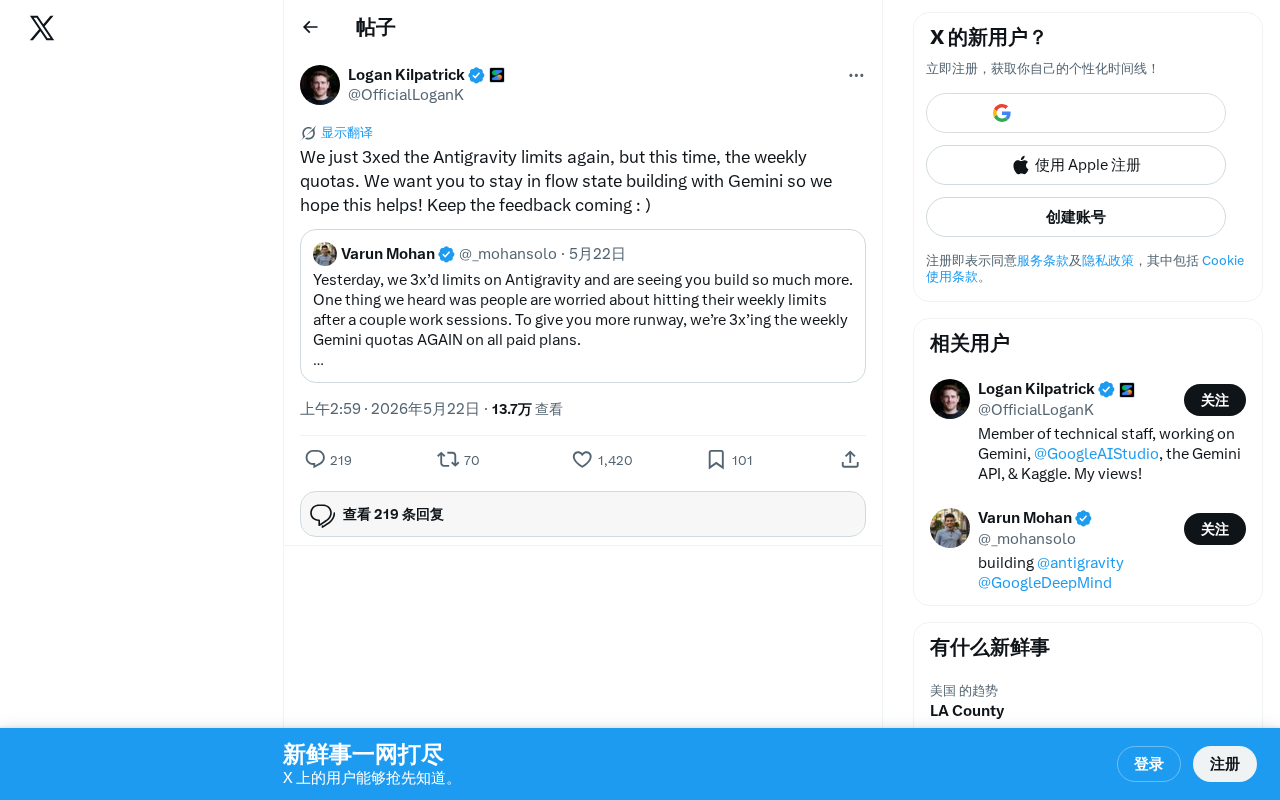
Google Gemini Antigravity Weekly Quota Tripled — AI Coding Without Limits
Google Gemini triples Antigravity weekly quotas following a prior daily quota boost. Analyzing the impact on developers and its strategic significance in AI coding.