Why Now Is the Best Time to Be a Software Engineer

AI amplifies software engineers' value rather than replacing them, making now the best time for the profession.
Despite fears of AI replacing software engineers, experts argue now is the best time to be in the field. AI tools like GitHub Copilot and Cursor amplify individual productivity, software demand is exploding across industries, and the bar for comprehensive engineering skills is rising. Engineers who embrace AI as a force multiplier while strengthening irreplaceable skills like systems thinking and technical judgment will thrive.
Software Engineers Are Entering a Golden Era in the Age of AI
As the AI wave sweeps across the tech industry, many fear that software engineers will be replaced by AI. However, tech expert Justin Reock offers a strikingly opposite perspective — "There has never been a better time to be a software engineer than right now."
This viewpoint has sparked widespread discussion on social media and invites us to re-examine the true relationship between AI and software engineers.

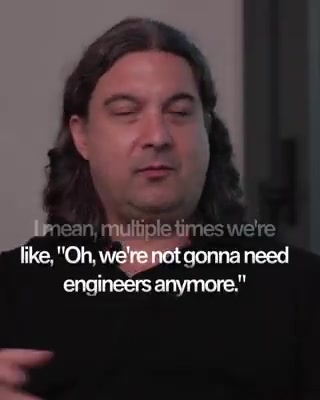

Why Now Is the Best Time to Be a Software Engineer
AI Is a Productivity Tool, Not a Replacement
The rapid development of AI coding tools (such as GitHub Copilot, Cursor, Claude, etc.) may appear to be "stealing jobs" on the surface, but in reality, they dramatically boost software engineers' productivity. GitHub Copilot, based on OpenAI's Codex model, is trained on massive open-source code repositories and can auto-complete code snippets or even generate entire functions based on context. Cursor is an IDE with deep LLM integration that supports direct AI conversations, code refactoring, and debugging within the editor. Claude (developed by Anthropic) excels at long-context understanding and precise reasoning, making it particularly adept at complex code analysis tasks. What these tools share in common is their use of Transformer-based large language models to convert natural language intent into executable code. However, they are fundamentally "probabilistic code generators" — predicting the most likely next segment of code based on patterns in training data, rather than truly "understanding" program logic. This is precisely why human engineers remain indispensable.
A single engineer can now accomplish what previously required an entire team, meaning the value of individual engineers hasn't decreased — it has been significantly amplified.
Software Demand Is Exploding
The proliferation of AI hasn't reduced the demand for software — it has created even more demand. Every industry is undergoing digital transformation and AI integration, requiring large numbers of software engineers with professional judgment to design architectures, ensure quality, and make technical decisions.
The global digital transformation market is expected to exceed $1 trillion in 2025. From intelligent risk management systems in finance, to AI-assisted diagnostics in healthcare, to smart supply chain management in manufacturing, virtually every vertical industry is embedding AI capabilities into its core business processes. This integration is far from simply calling an API — it involves building data pipelines, deploying and monitoring model services, handling compatibility with legacy systems, and meeting strict security and compliance requirements. The emergence of new engineering practices like MLOps (Machine Learning Operations) and LLMOps (Large Language Model Operations) has further expanded the demand for AI-literate software engineers.
AI can write code, but understanding business requirements, designing system architectures, and ensuring code maintainability — these remain the core value that human engineers provide.
The Bar Is Rising, Not Lowering
While AI has lowered the entry barrier for "writing code," it has raised the requirements for engineers' comprehensive capabilities. Engineers who can effectively leverage AI tools, understand their limitations, and make correct judgments based on AI output will be more valuable in the market than ever before.
How Software Engineers Can Stay Competitive in the AI Era
Actively Embrace AI Coding Tools
Software engineers should proactively learn and use AI programming assistants, treating them as powerful tools for boosting efficiency. Engineers who can skillfully wield AI tools will far outpace peers who cling to traditional approaches in terms of productivity.
Strengthen Irreplaceable Core Competencies
Systems design thinking, cross-team communication skills, business acumen, and technical decision-making judgment — these capabilities become even more important in the AI era. AI excels at executing well-defined tasks, but in areas with high ambiguity that require creative thinking, human engineers remain irreplaceable.
Systems design thinking encompasses not only technical architecture capabilities (such as distributed systems design, microservices decomposition, and database selection) but also the judgment to make trade-offs under complex constraints. For example, when designing a high-concurrency system, engineers need to make trade-offs between consistency, availability, and partition tolerance (the CAP theorem). When introducing AI components, they need to consider the impact of model inference latency on user experience, fault-tolerance mechanisms for hallucinated outputs, and the balance between cost and effectiveness. This ability to make decisions amid uncertainty is precisely where current AI is weakest.
Maintain a Continuous Learning Mindset
The pace of technological iteration is faster than ever. Maintaining the ability to learn new technologies, tools, and paradigms is the key to staying ahead in this era.
A Rational View of Trends in the Software Industry
Justin Reock's perspective isn't blind optimism — it's grounded in a deep understanding of how technology evolves. Every technological revolution in history — from assembly to high-level languages, from hand-written code to frameworks and libraries — has triggered panic that "programmers will become obsolete." But the outcome has always been the same: the role of software engineers evolves, but demand only increases.
Looking back at this history, the transition from assembly language in the 1950s to high-level languages like FORTRAN and COBOL raised concerns that "programmers who understand machine instructions would no longer be needed." The rise of frameworks like Java and .NET in the 1990s, and the popularity of rapid development frameworks like Ruby on Rails in the 2000s — each wave significantly lowered the difficulty of specific coding tasks while simultaneously giving birth to entirely new software forms like web applications, mobile apps, and cloud computing, creating orders of magnitude more engineering positions. The "Jevons Paradox" from economics applies here as well: when technology improves the efficiency of using a resource, total consumption of that resource often increases rather than decreases, because efficiency gains stimulate demand at a much larger scale.
The AI era is no exception. The key is that software engineers need to proactively adapt to change, viewing AI as an extension of their capabilities rather than a threat. Those engineers who can stand on AI's shoulders are indeed experiencing the best era of their careers.
Key Takeaways
Related articles
Non-Technical Founders Built a $50K/Month SaaS Product Using AI Tools
Two non-coders built Shipper to $50K MRR in 6 months using AI tools. Learn their reverse-engineering, zero-free-tier, and viral growth playbook for indie developers.
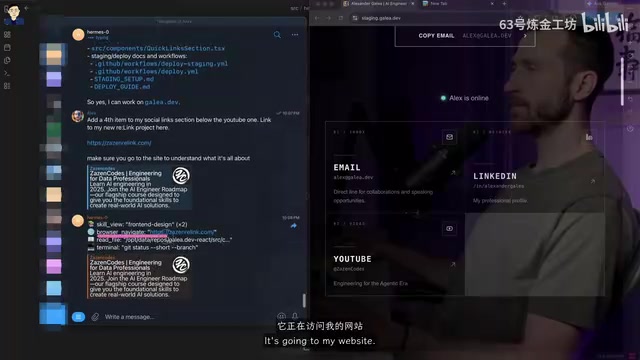
Hermes Agent Deployment Guide: Building a Mobile AI Coding Workflow with Telegram
Learn how to deploy Hermes Agent on a VPS with Telegram Bot integration for mobile AI coding. Covers Docker setup, GitHub integration, auto-deployment, and comparison with OpenClaw.

AI Tool Fable Ports Classic FPS to Browser in Two Hours — With Full Multiplayer
A developer used AI coding tool Fable to port Return to Castle Wolfenstein to the web browser in just two hours with full multiplayer, revealing AI's power in system-level engineering.