Windsurf Integrates Claude Opus 4.7 Fast Mode with 2.5x Speed Boost

Windsurf integrates Claude Opus 4.7 fast mode, achieving 2.5x speed while retaining full intelligence
AI coding tool Windsurf has announced official integration of Claude Opus 4.7 fast mode, boosting output speed by approximately 2.5x while maintaining the flagship model's full intelligence level. This improvement significantly reduces wait times for code completion, debugging, and other scenarios, helping developers maintain their coding flow. The move also reflects an industry trend where AI coding tool competition is shifting from model capability to response speed and user experience optimization.
Windsurf Welcomes Claude Opus 4.7 Fast Mode
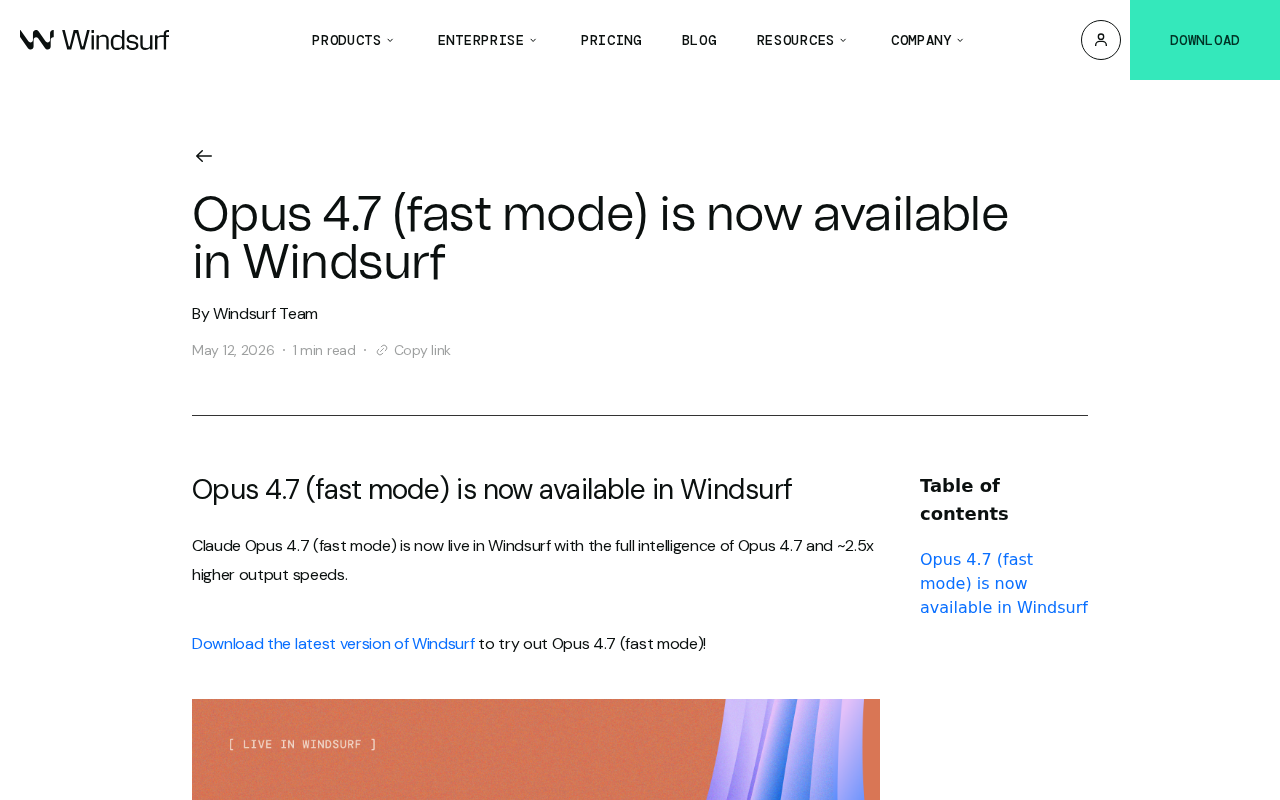
AI coding tool Windsurf has announced official integration of Claude Opus 4.7's fast mode, offering developers a new option that balances intelligence with speed. According to official information, this mode delivers approximately 2.5x faster output while maintaining Opus 4.7's full intelligence level.
What Fast Mode Means
Balancing Speed and Intelligence
Claude Opus 4.7 is Anthropic's flagship large language model, representing the highest capability tier in the Claude 4 series. Anthropic's model naming system typically divides into three tiers: Haiku (lightweight and fast), Sonnet (balanced), and Opus (flagship). The Opus series is designed for demanding tasks requiring deep reasoning, complex code generation, and long document comprehension. Opus 4.7 leads in multiple benchmark tests, particularly excelling in programming-related evaluations like SWE-bench (Software Engineering task benchmark) and HumanEval (code generation evaluation), making it one of the most favored models among professional developers for AI-assisted coding. However, high intelligence often comes with higher inference latency, which can significantly impact developer workflow fluidity in real-world coding scenarios.
The introduction of fast mode directly addresses this pain point. A roughly 2.5x speed improvement means developers using Windsurf for code completion, refactoring, or debugging will experience substantially reduced wait times. In the field of human-computer interaction, psychological research shows that users' tolerance threshold for response latency typically falls between 100-300 milliseconds, and delays exceeding 1 second noticeably interrupt the user's flow state. For programming—a cognitively intensive activity highly dependent on flow state—AI tool response latency is particularly critical. Current mainstream large models often have a Time to First Token (TTFT) of 2-8 seconds when handling complex code tasks, with total generation time potentially even longer. Therefore, a 2.5x speed improvement means compressing wait times from potentially frustrating multi-second delays to near-"instant" perception ranges, which has substantive significance for maintaining developers' coding flow.
Practical Impact on Developers
In everyday coding scenarios, the value of speed improvements manifests across multiple dimensions:
- Instant feedback: Code suggestions and completions respond more quickly, reducing thought interruptions
- Iteration efficiency: Overall time spent during multi-turn debugging conversations is significantly reduced
- Large file handling: Perceived latency when processing longer code files or complex projects is noticeably improved
You might not have noticed, but the official announcement emphasizes that fast mode retains Opus 4.7's "full intelligence," meaning the speed improvement doesn't come at the cost of model capability. Instead, it's more likely achieved through inference optimization, infrastructure acceleration, and other technical approaches.
The AI Coding Tool Competitive Landscape
Windsurf's Differentiation Strategy
Windsurf's predecessor, Codeium, was founded in 2021 and initially entered the market by offering free code completion services. It rapidly accumulated a large developer user base through broad support for mainstream IDEs like VSCode and JetBrains. In 2024, Codeium launched Windsurf, a next-generation AI coding IDE that upgraded the product form from a plugin to a standalone development environment, introducing Agent capabilities like "Cascade" with multi-step autonomous execution. This transformation evolved Windsurf from a simple code completion tool into an AI coding assistant capable of understanding project-wide context and autonomously completing complex programming tasks, creating more direct competition with Cursor. The quick adoption of Opus 4.7 fast mode reflects its product strategy of maintaining technical competitiveness and staying current with cutting-edge model capabilities.
The current AI coding tool market is fiercely competitive, with Cursor, GitHub Copilot, Windsurf, and other products all vying for developer attention. Against the backdrop of increasingly homogenized underlying model capabilities, model invocation speed, toolchain integration depth, and user experience polish are becoming the new competitive focal points.
Fast Mode as an Industry Trend
"Fast mode" is not a concept unique to Windsurf. Recently, multiple AI service providers have been exploring how to improve inference speed without significantly degrading model quality. This reflects an industry consensus: for high-frequency interaction scenarios like programming, response speed is equally important as model intelligence.
From a technical perspective, Speculative Decoding is currently one of the most mainstream acceleration approaches—its core idea is to use a small "draft model" to quickly generate several candidate tokens, which the main model then verifies in parallel, transforming serial generation into partial parallelization and significantly improving throughput without changing output quality. Beyond this, common techniques include KV Cache optimization (caching key-value pairs in the attention mechanism to reduce redundant computation), quantized inference (compressing model weights from FP32 to INT8 or INT4 precision), and low-level optimizations from specialized inference engines like vLLM and TensorRT-LLM. Anthropic has not publicly disclosed the specific implementation details of Opus 4.7's fast mode, but the industry generally believes that such "fast modes" typically involve a combination of multiple acceleration techniques. Regardless of which approach is used, the ultimate goal is to deliver a "fast and smart" experience for developers in actual use.
Summary
Windsurf's integration of Claude Opus 4.7 fast mode represents another step forward in user experience optimization for AI coding tools. The 2.5x speed improvement paired with a top-tier model's full capabilities promises to deliver a smoother coding experience for developers. As various tools continue to push forward on model integration and performance optimization, the practicality of AI-assisted programming is rapidly approaching a new tipping point.
Related articles
 Tech Frontiers
GitHub Agent HQ Launch: AI Coding Tools Enter the Era of Platform Competition
GitHub Universe unveils Agent HQ platform for unified coding agent management, Copilot upgrades with multi-model support. OpenAI completes restructuring, Anthropic tests new model, NVIDIA open-sources AI models.
 Tech Frontiers
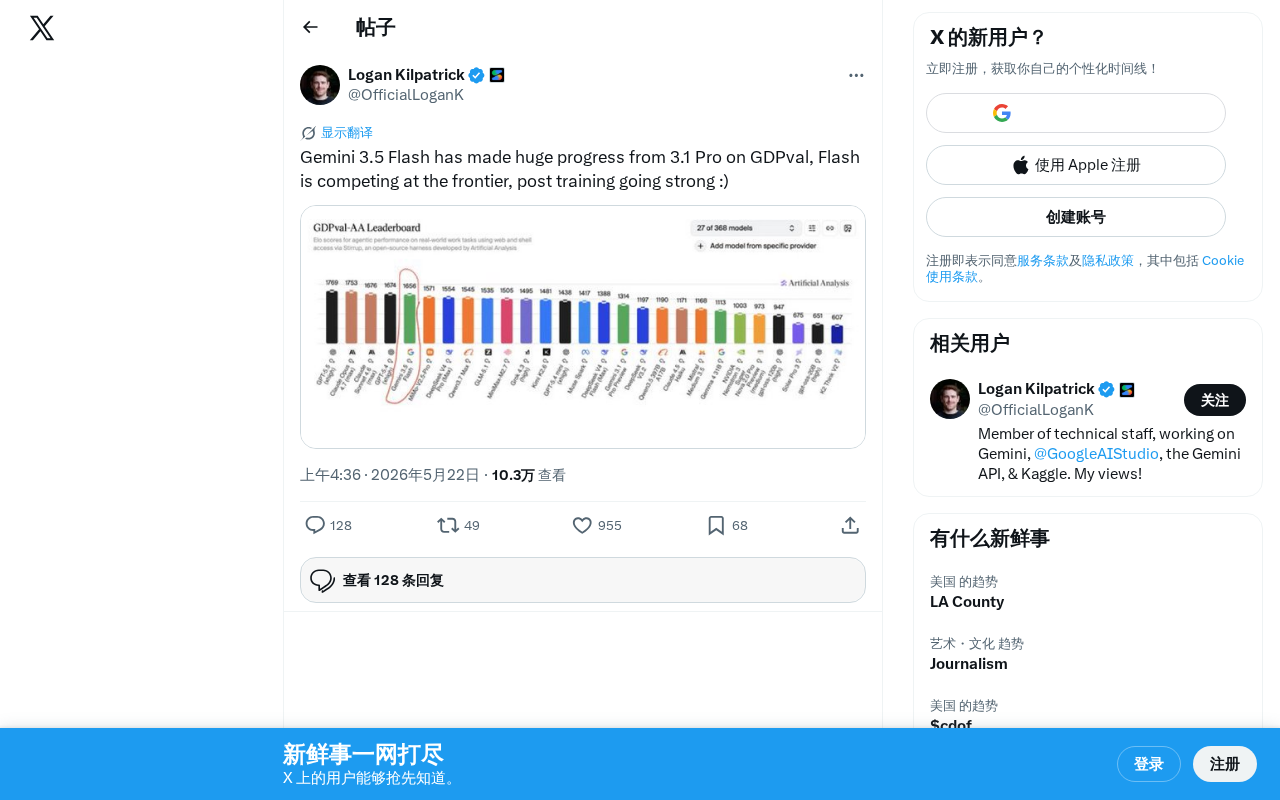
Gemini 3.5 Flash Achieves a Massive Leap on the GDPval Benchmark
Google Gemini 3.5 Flash surpasses Gemini 3.1 Pro on the GDPval benchmark. The lightweight Flash model leverages post-training techniques to approach frontier-level performance, redefining the balance between quality and cost.
 Tech Frontiers
Google Gemini Antigravity Weekly Quota Tripled — AI Coding Without Limits
Google Gemini triples Antigravity weekly quotas following a prior daily quota boost. Analyzing the impact on developers and its strategic significance in AI coding.