Windsurf Rebrands as Devin Desktop: A Complete Breakdown of the Multi-Agent Collaborative IDE Platform
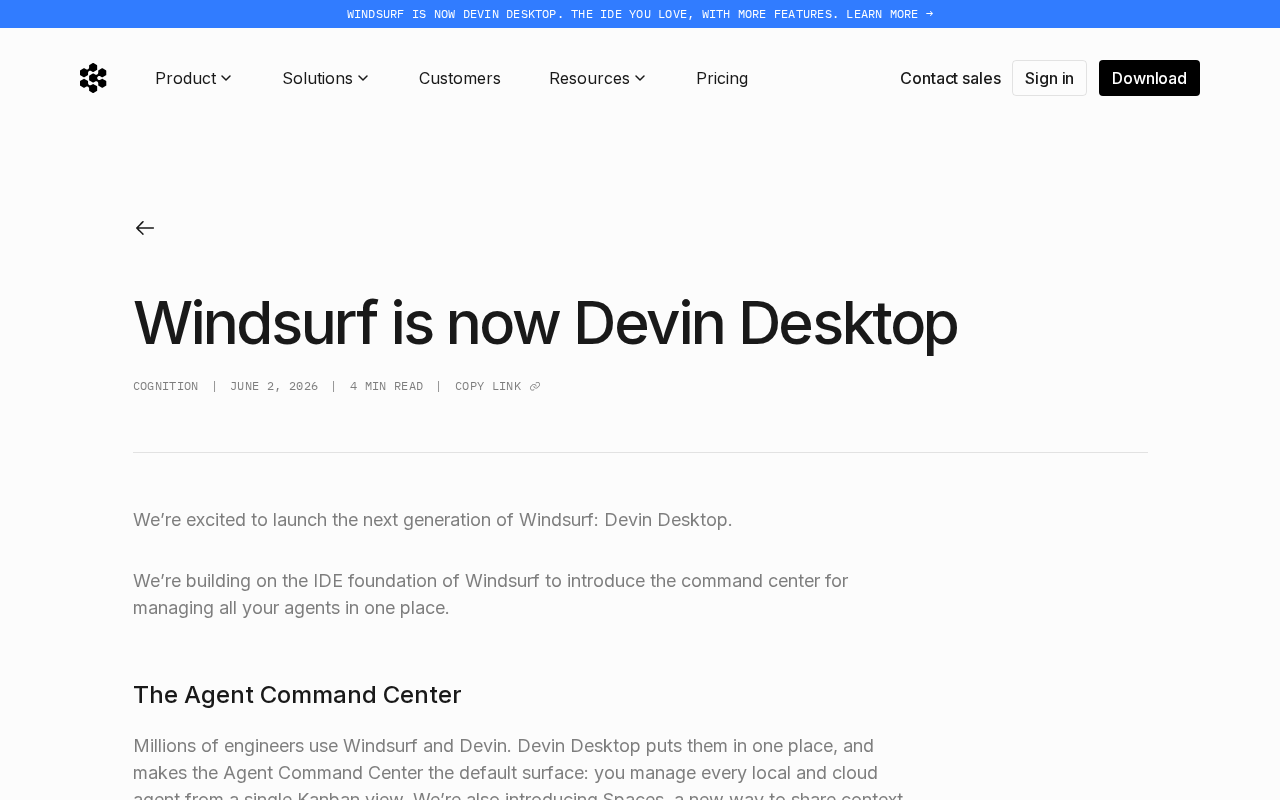
Windsurf rebrands as Devin Desktop, evolving into a multi-agent coordination and management platform.
Cognition has rebranded its AI coding IDE Windsurf as Devin Desktop, featuring the Agent Command Center — a Kanban-style multi-agent management interface — and the Spaces context-sharing system. Through the open-source ACP protocol, it supports third-party Agents like Codex and Claude Agent. The Rust-rewritten Devin Local delivers a 30% token efficiency boost. With enterprise partners including NVIDIA, Cognition is building a full-stack Agent product matrix across Desktop, Cloud, CLI, and Review.
From Windsurf to Devin Desktop: More Than Just a Name Change
The Cognition team has officially announced that Windsurf, the popular AI coding IDE, is being rebranded as Devin Desktop, along with the introduction of an entirely new multi-agent management architecture. This isn't a simple brand swap — it's an upgrade from a standalone IDE tool to a unified AI Agent command center.
For millions of Windsurf users, this update will be delivered automatically via OTA. Existing subscription plans, pricing, extensions, and features remain unchanged. However, in terms of product positioning, Devin Desktop represents a fundamental shift in AI coding tools — from a "single assistant" to a "multi-agent coordination platform."
Agent Command Center: A Unified Management Interface for Multiple Agents
Kanban-Style Agent Management
The core innovation of Devin Desktop is the Agent Command Center. It consolidates all local and cloud-based agents into a single Kanban board view, allowing engineers to manage the progress of multiple AI Agents the same way they'd manage task cards.
Kanban is a visual work management method originating from the Toyota Production System. It tracks workflow by moving tasks — represented as cards — across status columns (e.g., "To Do," "In Progress," "Done"). In software development, tools like Trello and Jira have already popularized Kanban for project management. Devin Desktop brings this paradigm to AI Agent management, meaning each Agent's task is treated as a trackable card. Engineers can intuitively see which Agents are executing, which have completed, and which need human intervention. This design reduces cognitive load in multi-Agent environments, making the management of AI workers feel as natural as managing a human team's task board.
This means you no longer need to switch between different windows and tools to check the execution status of each Agent. Whether it's a locally running Agent or a long-running cloud task, everything is visible at a glance in a single interface.
Spaces: A New Paradigm for Multi-Agent Context Sharing
Launching alongside the Agent Command Center is the Spaces feature — a new way to share context across multiple Agents. Spaces groups conversations, PRs, files, and contextual information together, enabling different Agents to "know" what each other is working on, preventing duplicate work or context loss.
In multi-Agent collaboration scenarios, context sharing is one of the most critical and challenging technical problems. Each AI Agent has a limited context window — the upper bound of information it can "see" at once. When multiple Agents are simultaneously working on different parts of the same codebase without awareness of each other's changes, conflicts can arise — for example, two Agents might modify the same interface signature at the same time. The Spaces feature is essentially solving the "state synchronization" problem found in distributed systems, similar to shared transaction logs in databases or consensus protocols in distributed systems. By grouping and synchronizing sessions, PRs, files, and other information across Agents, Spaces ensures each Agent can make decisions based on the latest global state, avoiding the "hallucination conflicts" common in traditional multi-Agent systems.
Open Ecosystem: The ACP Protocol Makes Devin Desktop More Than a Proprietary Platform
Agent Client Protocol (ACP) — An Open-Source Protocol
The most strategically significant decision for Devin Desktop is its support for the Agent Client Protocol (ACP) — an open-source protocol that allows any compatible Agent to run in any ACP-compatible editor.
ACP's design philosophy is similar to the role Language Server Protocol (LSP) plays in the editor ecosystem. LSP was introduced by Microsoft in 2016 and defined a standard communication protocol between editors and language servers, enabling any editor to support intelligent features for any programming language — breaking the previous paradigm where each IDE needed separate plugins for each language. ACP aims to replicate this success in the AI Agent domain — defining a standard interface between Agents and their host environments so that Agent development is decoupled from the runtime environment. This means Agents developed by OpenAI, Anthropic, or any other team can run in any compatible IDE as long as they follow the ACP specification, without needing platform-specific adaptations. This protocol-level openness strategy is fundamentally a play for "standard-setting authority" in the AI development tool ecosystem.
First-party supported third-party Agents include:
- Codex (OpenAI's coding Agent)
- Claude Agent (Anthropic's Agent)
- OpenCode
- Any internally built ACP-compatible Agent
Third-party Agents receive the same interface treatment as Devin: they appear in the Kanban view, run within Spaces, and share context with other Agents. This open strategy is clearly aimed at positioning Devin Desktop as an "operating system"-level platform for AI coding.
Enterprise Validation and Partnership Cases
Several heavyweight enterprises have participated in Devin Desktop's early partnerships:
- Ramp: Uses the Command Center to unify the orchestration of multiple Agents their engineers already use, enabling rapid task switching while maintaining context continuity
- Harvey: Integrated their internal Agent "Spectre" into Devin Desktop, extending organization-level context to every engineer's local environment
- NVIDIA: Participating as a research preview partner, helping define how multiple Agents share context and coordinate work on the same platform
- Modal: Highlights Devin Desktop as the first tool that lets engineers manage all their Agents in a shared context from a single interface
Devin Local: A High-Performance Local Agent Rewritten in Rust
As the successor to Cascade, Devin Local is a completely new local Agent rewritten from scratch in Rust by the Cognition team.
Rust is a systems-level programming language initiated by Mozilla in 2010, renowned for its memory safety, zero-cost abstractions, and high performance without garbage collection. In recent years, an increasing number of development tools have chosen to rewrite core components in Rust — Deno (a Node.js alternative), Turbopack (a Webpack alternative), and SWC (a Babel alternative) are all prime examples. For AI Agent applications that require frequent file I/O, code parsing, and concurrent task scheduling, Rust's ownership system effectively prevents memory leaks, while its async runtime (such as Tokio) delivers excellent concurrency performance. Devin Local's choice to rewrite in Rust directly yielded a 30% improvement in token efficiency, likely stemming from more efficient context window management and more precise memory control, reducing unnecessary token consumption.
Key improvements include:
- 30% improvement in token efficiency: Significantly reduced resource consumption while maintaining the same capabilities
- Support for Subagents: Complex tasks can be decomposed into multiple subtasks for parallel processing
- Full compatibility with Cascade's settings and capabilities
Subagents represent a hierarchical task execution architecture inspired by management hierarchies in human organizations — a primary Agent receives a complex task, breaks it down into multiple subtasks, delegates them to specialized sub-Agents for parallel processing, and then aggregates the results. This architecture has deep theoretical roots in AI, aligned with the principles of "Divide and Conquer" and "Mixture of Experts." In practice, for example, a "refactor an entire module" task might be split by the primary Agent into "analyze dependencies," "rewrite core functions," and "update test cases" — three subtasks executed in parallel, significantly reducing overall completion time. OpenAI's Swarm framework and LangChain's Agent Executor employ similar multi-layer Agent orchestration approaches.
For existing users, the legacy Cascade will remain available until July 1st, providing ample time for migration.
The Full Devin Product Matrix: One Agent Covering All Development Scenarios
Cognition's product strategy is now crystal clear — building Devin as a unified Agent across all development scenarios:
| Product Form | Positioning |
|---|---|
| Devin Desktop | Agent manager with a full-featured IDE |
| Devin Cloud | Cloud-based autonomous Agent for long-running tasks |
| Devin CLI | Devin agent in the terminal |
| Devin Review | Automated code review for every diff |
The same Agent, the same context, consistent behavior regardless of where it runs. This "full-stack coverage" strategy signals that Cognition aims to become the ubiquitous AI infrastructure in every developer's workflow.
Industry Implications: The AI Coding IDE Race Enters the Platform Era
From Cursor to Windsurf/Devin Desktop, competition among AI coding tools is evolving from "who has better code completion" to "who can better coordinate multiple AI Agents." The launch of Devin Desktop marks several important trends:
- Multi-Agent collaboration is becoming essential: Engineers using multiple Agents daily is now the norm, and unified management has become a pain point
- Open protocols are the moat: The launch of ACP demonstrates that platform value lies not in locking in users, but in becoming the center of the ecosystem
- Convergence of local and cloud: The best experience requires both local speed and cloud persistence
For developers, now is a great time to evaluate multi-Agent workflows. Whether or not you choose Devin Desktop, the paradigm of "managing multiple AI Agents from a single platform" is very likely to become standard in future development tools.
Key Takeaways
- Windsurf has officially rebranded as Devin Desktop, introducing the Agent Command Center as a unified multi-agent management interface
- Supports the open-source Agent Client Protocol (ACP), with first-party compatibility for Codex, Claude Agent, and other third-party Agents
- The new Devin Local is rewritten in Rust, achieving a 30% improvement in token efficiency with Subagent support
- NVIDIA, Ramp, Harvey, and other enterprises have participated in early partnership validation of multi-Agent collaboration scenarios
- Cognition has built a full-stack Agent product matrix spanning Desktop/Cloud/CLI/Review
Related articles
 Tech Frontiers
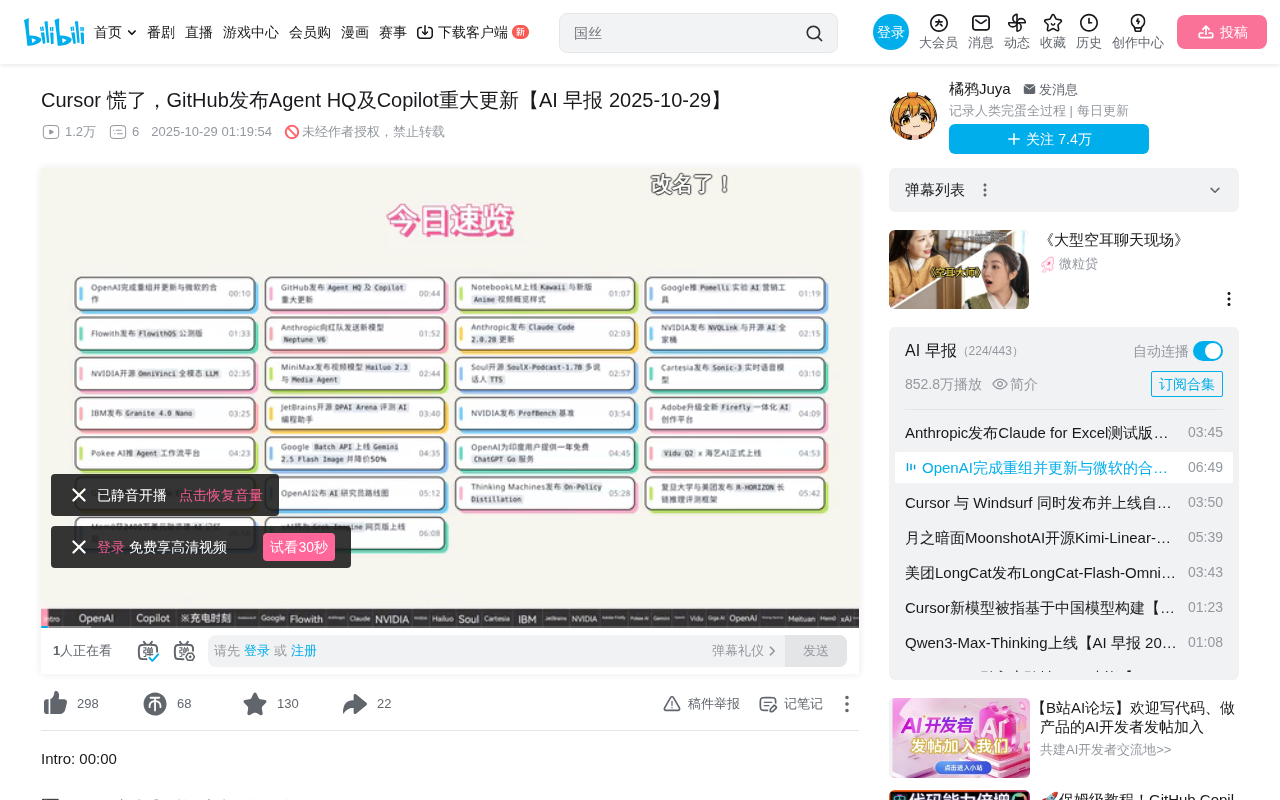
GitHub Agent HQ Launch: AI Coding Tools Enter the Era of Platform Competition
GitHub Universe unveils Agent HQ platform for unified coding agent management, Copilot upgrades with multi-model support. OpenAI completes restructuring, Anthropic tests new model, NVIDIA open-sources AI models.
 Tech Frontiers
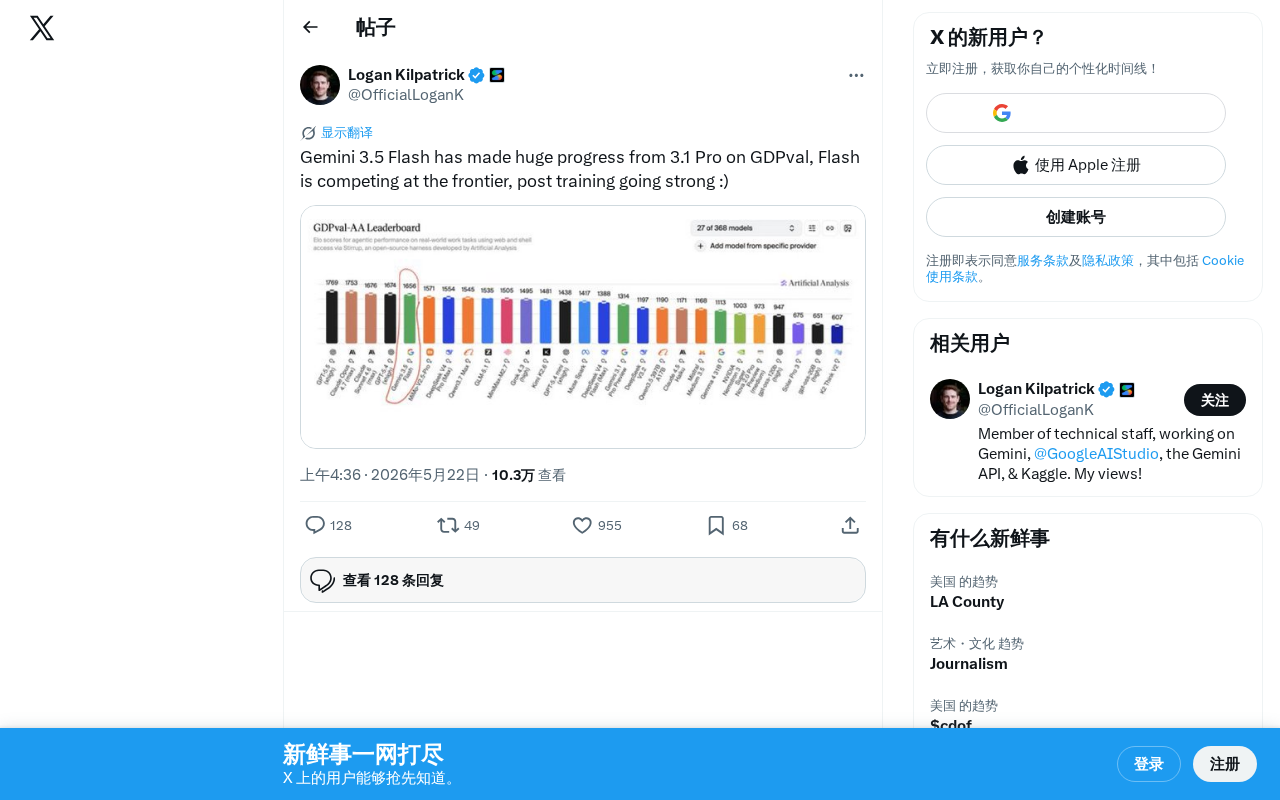
Gemini 3.5 Flash Achieves a Massive Leap on the GDPval Benchmark
Google Gemini 3.5 Flash surpasses Gemini 3.1 Pro on the GDPval benchmark. The lightweight Flash model leverages post-training techniques to approach frontier-level performance, redefining the balance between quality and cost.
 Tech Frontiers
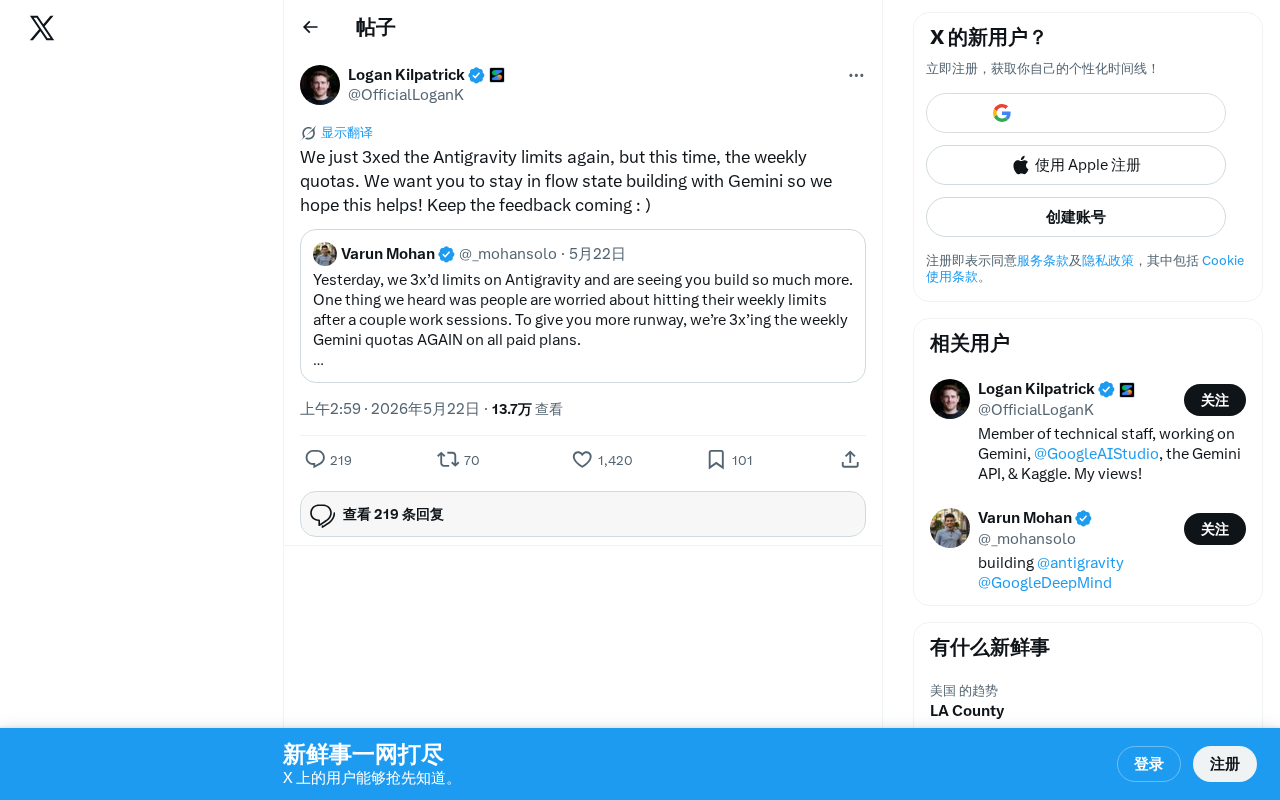
Google Gemini Antigravity Weekly Quota Tripled — AI Coding Without Limits
Google Gemini triples Antigravity weekly quotas following a prior daily quota boost. Analyzing the impact on developers and its strategic significance in AI coding.