Xi Yin Joins OpenAI: What It Means When Top Scientists Leave Universities
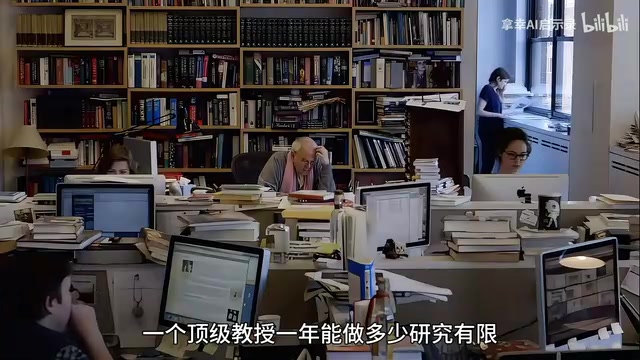
Top string theorist Xi Yin's reported move to OpenAI signals a fundamental shift in how science gets done.
Harvard's youngest-ever Chinese full professor Xi Yin has reportedly joined OpenAI, marking a broader trend of elite scientists leaving academia for AI companies. The move reflects a structural shift where compute has overtaken talent as the limiting resource in research. OpenAI values not just Yin's knowledge but his judgment—the ability to identify flaws in AI-generated reasoning. As AI challenges universities' core functions of creating, disseminating, and certifying knowledge, the world's most important competition is shifting from industrial to cognitive.
Harvard physics professor Xi Yin has reportedly joined OpenAI, sending shockwaves through the scientific community. As Harvard's youngest-ever Chinese full professor and a world-class scholar in string theory, Yin's decision is far more than a personal career move—it reflects a profound question of our era: when top scientists begin leaving universities for AI companies, is the 300-year-old research system facing fundamental transformation?
Who Is Xi Yin? Why Does His Choice Matter So Much?
Xi Yin is no ordinary scholar. He became a full professor at Harvard at age 31, working in string theory—the most cutting-edge frontier of theoretical physics that attempts to unify gravity, electromagnetism, the strong force, and the weak force into a "theory of everything." He is widely regarded by peers as one of the theoretical physicists most likely to win a Nobel Prize in Physics.
String Theory is one of the most ambitious attempts in theoretical physics. It proposes that the fundamental building blocks of the universe are not point-like particles but one-dimensional vibrating strings, with different vibrational modes corresponding to different fundamental particles. String theory is called a candidate for the "theory of everything" because it attempts to unify Einstein's general relativity (which describes gravity) with quantum mechanics (which describes the three fundamental forces of the microscopic world) within a single mathematical framework. This unification problem has plagued physics for nearly a century—general relativity produces infinities at extremely small scales, and string theory elegantly eliminates these mathematical singularities by replacing point particles with strings of finite length. String theory requires extra spatial dimensions (typically 10 or 11), which are thought to be curled up at scales too small for humans to directly observe. It is precisely this extreme abstraction and mathematical complexity that demands researchers possess both extraordinary mathematical ability and deep physical intuition.
Yet this scholar—who by all expectations should have remained deep in the ivory tower—chose to join an AI company. And he's not alone. Over the past few years, similar talent migration has been accelerating: Google DeepMind has been absorbing mathematicians en masse, OpenAI continues recruiting physicists, Anthropic has gathered cognitive scientists, and Meta has targeted neuroscientists. The brightest minds that once belonged to universities are converging on AI giants.
A Fundamental Shift in the Core Resources of Research
Why would top scholars make such a choice? The core reason is that the foundational resources of scientific research have undergone a structural transformation.
For the past century, the most critical resource in research was talent. Whoever had the smartest people held the future, and universities naturally held the advantage. But with the arrival of the AI era, the resource that determines the upper limit of research has begun to shift—talent remains important, but the weight of compute has risen dramatically.
The importance of compute in the AI era can be illustrated with concrete numbers: training GPT-4 is estimated to have consumed approximately 2.15×10²⁵ floating-point operations (FLOPs), equivalent to thousands of NVIDIA A100 GPUs running for months. A single A100 GPU costs roughly $10,000–$15,000, and the total cost of training a frontier large model may exceed $100 million. By comparison, a university professor's annual research budget typically ranges from hundreds of thousands to a few million dollars. This means that as research increasingly depends on large-scale computation, universities can no longer compete with tech giants at the resource level. Microsoft has invested over $13 billion in OpenAI, most of it for building compute infrastructure—a figure that exceeds the entire annual basic science budget of many countries.
In a previous interview, Yin made a statement that shook the academic world: "AI generates in a few weeks what might take me ten years to code." This isn't merely an efficiency improvement—it's a fundamental paradigm shift. When ten years of work is compressed into a few weeks, the biggest bottleneck that once constrained scientific progress is shattered.
Research that might take a PhD student five years could be completed by AI in five days; a scientist who can only test dozens of hypotheses in a lifetime could see AI test millions in a single day. This isn't an efficiency revolution—it's a cognitive revolution.
What OpenAI Really Needs: Judgment, Not Knowledge
Many people assume that AI companies' core assets are programmers, but programmers are merely the engineering layer. What truly determines the ceiling of AGI are cognitive scientists, mathematicians, and theoretical physicists—because they study not code, but intelligence itself.
The core challenge OpenAI currently faces is this: models are getting stronger and parameters more numerous, but the growth rate of reasoning ability is beginning to plateau. The industry is shifting from pursuing bigger models to pursuing deeper thinking capabilities.
This shift involves a central debate in AI. Previously, OpenAI and other institutions discovered the so-called Scaling Law: model performance improves as a power law with increases in parameters, data, and compute. But starting in 2024, the industry observed diminishing returns from simply scaling up model size, especially on tasks requiring multi-step logical reasoning, mathematical proofs, and scientific discovery. This prompted a research pivot from "train-time compute" to "test-time compute"—letting models spend more time "thinking" when answering questions. OpenAI's o1/o3 series models are products of this approach. But the deeper question is: does the current Transformer architecture have a fundamental reasoning ceiling? This is precisely where theoretical physicists and mathematicians need to step in—their understanding of abstract structures and logical limits may provide critical insights for breaking through this bottleneck.
The ultimate testing ground for thinking ability isn't chat or writing—it's scientific discovery: discovering new physical laws, proposing new mathematical theorems, creating new scientific theories.
But here lies a critical problem: one of AI's greatest risks is "confidently generating nonsense." A model can produce countless derivations, but most may be wrong, and ordinary people—even many graduate students—cannot tell the difference. Only those standing at the very pinnacle of a field can spot the deeply hidden logical flaws.
AI's "hallucination" problem technically stems from how large language models work: they are fundamentally predicting the next most likely token, rather than truly "understanding" whether content is true or false. In scientific derivations, this problem is especially dangerous—a model might generate a mathematical proof that looks entirely reasonable, with every step conforming to proper syntax and formatting, yet hiding a subtle logical leap or false assumption at some critical step. In 2023, mathematician Terence Tao noted while using AI-assisted research that models frequently make errors at critical turning points in proofs, and these errors require deep mathematical intuition to identify.
From this perspective, what OpenAI truly wants may not be Yin's research output, but his judgment. The scarcest resource of the future isn't knowledge itself, but the ability to judge whether knowledge is true or false. Knowledge is becoming infinitely abundant, but judgment is becoming increasingly scarce—this is the most essential competitive advantage of the AI era.
AI Is Challenging the Three Core Functions of Universities
If AI truly begins to deeply participate in scientific discovery, what is the purpose of universities? This is a question many are reluctant to face.
Traditional universities serve three functions: creating knowledge, disseminating knowledge, and certifying knowledge. AI is simultaneously challenging all three:
- Creating knowledge: AI has already begun participating in research, and in some fields demonstrates efficiency surpassing humans
- Disseminating knowledge: AI is becoming the world's largest knowledge gateway
- Certifying knowledge: AI may in the future be even more efficient than peer review
Yin has previously expressed his views on the paper system publicly. He said the paper system is not the best way to organize knowledge, and that preprint databases are "more like a street market than a grand building." When the number of papers reaches hundreds of millions, no one can read them all—knowledge becomes fragmented, disciplines become siloed, and vast amounts of work gets buried.
Regarding the knowledge certification function, it's worth reviewing the history and current state of peer review. Peer review began with the founding of Philosophical Transactions in 1665, but didn't become the standard process for academic publishing until the mid-20th century. Its core principle is anonymous evaluation of papers' quality and innovation by experts in the same field. However, this system faces growing criticism: review cycles are too long (averaging 3–6 months, exceeding a year in some fields), reviewers are overloaded (approximately 3 million papers published globally each year), biases exist (favoring mainstream views and authors from prestigious institutions), and it struggles to detect carefully fabricated data. The rise of preprint platforms (such as arXiv) is a response to this system—researchers can share results before formal publication, accelerating knowledge dissemination, but at the cost of lacking quality control. AI could theoretically complete preliminary logical consistency checks and cross-referencing of literature in seconds—something human reviewers cannot do.
And for the first time, AI makes another possibility emerge: it can read all papers, connect all knowledge, discover cross-disciplinary patterns, and build dynamically updated knowledge networks. In the future, when scientists research a problem, they may no longer need to read thousands of papers—instead, they can directly converse with an AI that possesses all of human knowledge.
From Industrial Competition to Cognitive Competition
The macro significance of this trend extends far beyond academia itself. In the past, national power was determined by steel, oil, and warships; then it became chips, the internet, and supply chains; in the future, it will likely be compute, data, and superintelligence.
The world's most important competition is shifting from industrial competition to cognitive competition, and the boundaries between universities, laboratories, and corporations are rapidly dissolving. More and more scientists are beginning to realize: the most important laboratory of the future may not be at a university, the most important research equipment may not be a particle collider, and the most important infrastructure may be a data center housing millions of GPUs.
Humanity took 300 years to get from Newton to Einstein, and another century to go from quantum mechanics to string theory. Today, we may be standing at an even greater fork in the road: on one side, humans exploring the universe alone; on the other, AI and humans exploring the universe together.
Conclusion
Whether Xi Yin has officially joined OpenAI still awaits further confirmation. But regardless of whether the news ultimately proves true, one trend is becoming increasingly clear: when the smartest people start placing their bets on AI, the direction of the era has often already quietly shifted.
Every scientific revolution in history was fundamentally a tool revolution. The telescope extended the eye, the microscope extended vision, and the computer extended computational ability. AI is the first tool that begins to extend thinking itself—this is what makes it most dangerous, and what makes it most magnificent.
Related articles
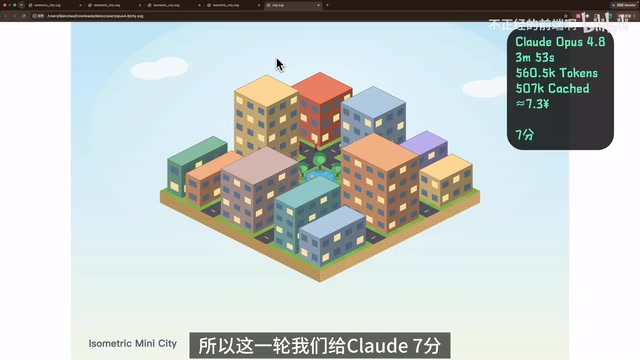
5 Models Coding Showdown: Claude, GPT, DeepSeek, M3 — Who's the Best Engineering Tool?
Hands-on comparison of Claude Opus 4.8, GPT 5.5, MiniMax M3, DeepSeek V4 Pro, and Mimo 2.5 Pro across SVG drawing, 3D game generation, elevator scheduling, and real bug fixing.

Huawei HDC Deep Dive: Pangu 2.0 Goes Open Source and HarmonyOS 7 Agents Reshape the Mobile AI Ecosystem
Huawei HDC unveils Pangu 2.0 full open source and HarmonyOS 7 system-level Agent capabilities. Deep analysis of sparse architecture efficiency, on-device 30B models, and the Agent gateway battle.
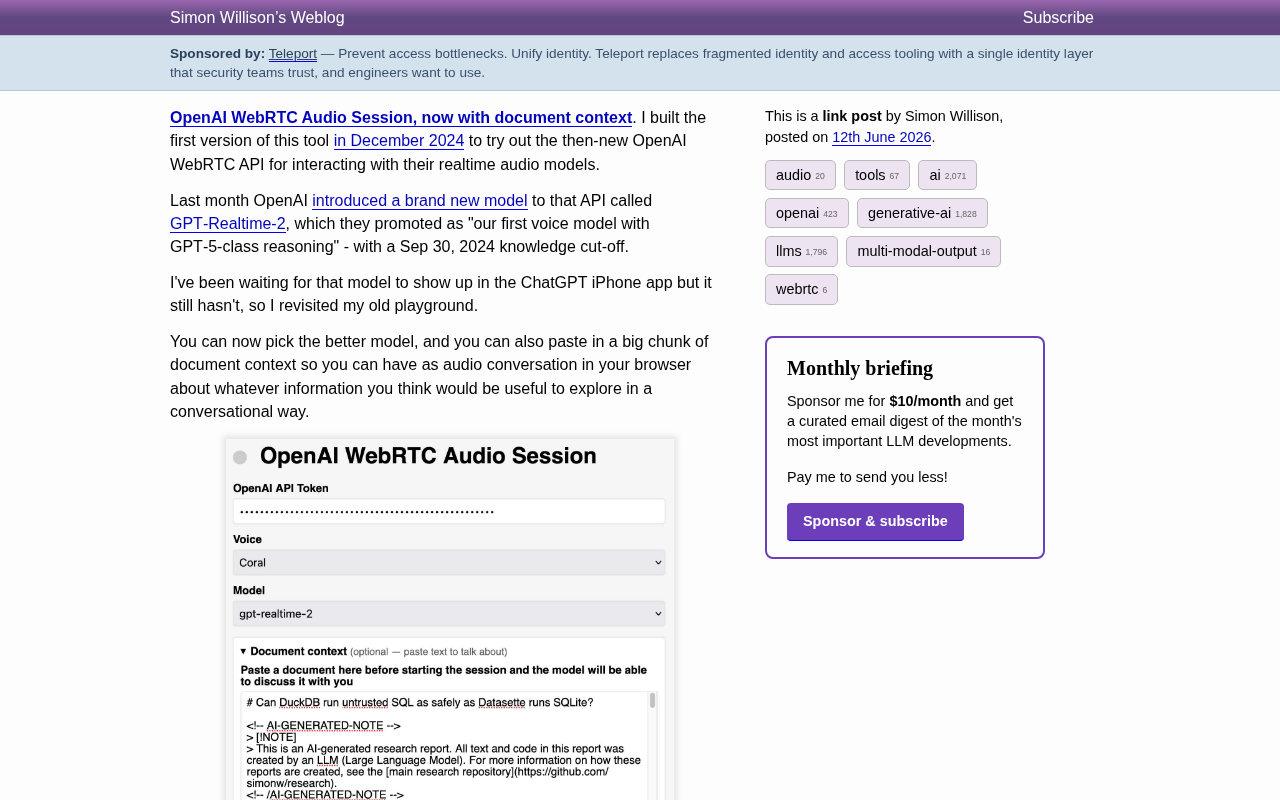
Simon Willison Updates WebRTC Voice Tool: Now Supports Document Context Conversations and GPT-Realtime-2
Simon Willison updates his OpenAI WebRTC voice tool with document context support and GPT-Realtime-2, enabling low-latency voice conversations grounded in specific documents.