Xiaomi MIMO vs. Huawei Pangu AI Strategy Comparison: The Android vs. iOS Battle of the Agent Era
Xiaomi and Huawei reveal divergent but complementary AI strategies, both converging on the Agent paradigm.
Xiaomi launched MIMO Code, an open-source on-device AI coding assistant, while Huawei declared its Pangu large model is entering the "Agent Convergence Era." Xiaomi pursues an Android-like open ecosystem targeting developers and consumers, while Huawei takes an iOS-like vertically integrated approach serving industrial and government clients. Both strategies converge on Agents as the key to real-world AI deployment in 2025.
On June 11 and 12, Xiaomi and Huawei dropped back-to-back bombshells in the AI space. Xiaomi officially released its open-source on-device AI coding assistant MIMO Code V0.1.0, while Huawei's Richard Yu announced at HDC2026 that he would once again lead the Pangu large model division, declaring the ambition to go "from China's number one to the world's number one." What are the similarities and differences between these two top Chinese tech giants' AI strategies? This article provides an in-depth analysis.
The Shared Keyword: Agents
Despite taking different paths, Xiaomi and Huawei share one core focus in their AI strategies — Agents.
Agents represent one of the most important paradigm shifts in AI today. Unlike traditional large model conversations, Agents can not only understand and generate text but also autonomously plan tasks, invoke external tools, execute multi-step operations, and dynamically adjust strategies based on feedback. Put simply, a large model is "a brain that can talk," while an Agent is "a complete entity that can talk and get things done." 2025 is widely regarded as the "Year of the Agent" — international giants like OpenAI, Google, and Anthropic have all made Agents a core product direction, while domestic players like Alibaba, ByteDance, and Baidu are also accelerating their efforts. The core technology stack for Agents includes: task decomposition (breaking complex goals into executable steps), tool invocation (API calls, code execution, database queries, etc.), memory management (short-term working memory and long-term knowledge storage), and multi-Agent collaboration (multiple agents working together to complete complex tasks).
Xiaomi announced its Agent product yesterday, and today Richard Yu declared that the HarmonyOS ecosystem is fully entering the "Agent Convergence Era." The fact that both companies independently chose Agents as their next core direction is no coincidence — it reflects an industry consensus: the value of large models must ultimately be realized through Agents deployed in real-world scenarios.
Interestingly, Richard Yu's return to lead the Pangu large model actually happened around China's National Day holiday in 2025, while Lei Jun's announcement of investing over 60 billion yuan in AI over the next three years came in March this year. Both companies' strategic moves had been quietly underway long before their public debuts in the past two days.
Xiaomi MIMO: The Open-Source "Android" Approach
Some readers might wonder: Xiaomi's MIMO V2.5 Pro already achieved a joint global first place in both the comprehensive intelligence index and the Agent-specific index among open-source large models back in April — so how can Huawei claim to be "China's number one"?
A few key distinctions need to be clarified:
- Scope: Xiaomi's "first place" is within the open-source large model space. Closed-source models like GPT-5.4 and Claude 4.6 are not included in the comparison.
- Evaluation dimensions: This "first place" isn't purely about having the most parameters or the highest benchmark scores. It's a comprehensive assessment across multiple dimensions including Agent real-world performance, overall intelligent experience, developer ecosystem activity, and cost-effectiveness.
Competition in the open-source large model space has reached a fever pitch by 2025. Meta's Llama series, Mistral, DeepSeek, and Alibaba's Qwen series are the major global players. "Open source" in the large model context has different levels: the most basic is releasing model weights for download, the next level is releasing training code and datasets, and the most thorough is releasing the complete training pipeline and infrastructure details. Xiaomi MIMO's fully open-source approach means developers can freely download, fine-tune, deploy, and even commercialize the model, dramatically lowering the barrier to AI application development. The "comprehensive intelligence index" is typically assessed across multiple authoritative benchmarks, including MMLU (Massive Multitask Language Understanding), HumanEval (code generation), MATH (mathematical reasoning), and real-world Agent task completion rates.

Especially with the permanent price reduction of the MIMO V2.5 series API, it's arguably the most accessible AI product for most people getting started today. Xiaomi's focus with MIMO is on person-vehicle-home full ecosystem scenarios, while MIMO Code is a coding assistant focused specifically on on-device programming — an important branch within the broader MIMO ecosystem.
MIMO Code V0.1.0 is positioned as an "on-device AI coding assistant," and the term "on-device" deserves special attention. Current mainstream AI coding tools like GitHub Copilot, Cursor, and Windsurf primarily rely on cloud-based large models — code is uploaded to the cloud for processing and the results are returned. An on-device AI coding assistant means the model can run locally on the device, offering three key advantages: first, data privacy protection since enterprise code doesn't need to be uploaded to the cloud; second, offline availability without depending on network connectivity; and third, lower response latency. This holds significant appeal for enterprise users with stringent code security requirements (such as finance, defense, and government sectors). The release of an open-source on-device coding assistant also means Xiaomi is entering direct competition with Meta's Code Llama, Alibaba's Qwen-Coder, and similar products.
Xiaomi's goal extends far beyond serving its own products — it aims to become the operating system kernel of the AI era. Just as Android became the foundational layer for countless phone manufacturers through AOSP's open-source model, Xiaomi wants developers to build their ecosystems on top of MIMO.
Huawei Pangu: The Vertically Integrated "iOS" Approach
Huawei's Pangu large model adopts a semi-open, semi-closed strategy — a dual-track model with an open-source foundation and closed-source value-added services. By June 30 this year, Huawei will progressively open-source seven core components including pre-training code, post-training code, and fast-inference operators.
But Pangu's ambitions go far beyond AI chat and AI coding. Huawei's broader goal is to transform AI into a new productivity tool for every industry, effectively integrating AI with industrial manufacturing, energy development, meteorological computing, government administration, financial services, and more.
Huawei's Pangu large model already has several landmark cases in industry applications. In meteorology, the Pangu Weather model can complete global medium-range weather forecasts in seconds, with accuracy comparable to the European Centre for Medium-Range Weather Forecasts (ECMWF)'s traditional numerical forecasting methods — which typically require hours of supercomputer computation. In the energy sector, the Pangu model is applied to seismic wave data interpretation in oil and gas exploration, compressing geological analysis work that traditionally takes months down to days. In mining scenarios, the AI large model combined with Huawei's industrial IoT platform enables intelligent dispatching of unmanned mining trucks. These application scenarios share common characteristics: massive data volumes, extremely high professional barriers, and stringent requirements for accuracy and reliability — making them ideal testing grounds for large models transitioning from "general intelligence" to "specialized intelligence."
From a technical architecture perspective, Huawei follows a fully vertically integrated stack: Ascend chips + MindSpore framework + Pangu large model + industry applications. This mirrors Apple's iOS closed ecosystem logic — from underlying hardware to upper-layer applications, everything is self-developed and self-controlled.
The strategic significance of this full-stack architecture needs to be understood in a broader context. The Ascend series AI chips are Huawei's core hardware competing against NVIDIA GPUs, with the Ascend 910B/910C already deployed at scale domestically to provide computing power for large model training and inference. MindSpore is Huawei's self-developed AI computing framework, functionally similar to Google's TensorFlow and Meta's PyTorch, responsible for connecting underlying hardware with upper-layer models. Against the backdrop of increasing global chip supply chain uncertainty, Huawei has built an AI technology pathway completely independent of NVIDIA's CUDA ecosystem — this is not only a commercial competitive necessity but also a strategic pillar for national technological security. The "fast-inference operators" are Huawei's low-level computing components optimized for large model inference scenarios, significantly improving inference speed and energy efficiency on Ascend chips.
The Fundamental Difference Between Two AI Approaches
Looking at the ultimate vision of these two approaches from a macro perspective:
Pangu Large Model: Becoming "Air"
Huawei's Pangu large model aspires to become the infrastructure of human society — you won't feel its presence, but in the future, every weather forecast you see, every unit of stable electricity you enjoy, and even every smooth, on-time high-speed rail journey you take may depend on it. This is a path of imperceptible permeation, emphasizing deep empowerment of critical sectors vital to the national economy and people's livelihoods.
MIMO Large Model: Becoming a "Swiss Army Knife"
Xiaomi's MIMO aims to be your most handy tool — operating it feels like an extension of your own arm, capable of completing anything you want according to your instructions. This is a path of tangible interaction, emphasizing direct empowerment of individual users and developers.
Summary: How the Two Approaches Complement Each Other
Xiaomi and Huawei's AI strategies are not a zero-sum game but rather complementary deployments across different dimensions:
| Dimension | Xiaomi MIMO | Huawei Pangu |
|---|---|---|
| Openness | Fully open-source | Semi-open, semi-closed |
| Core Scenarios | Person-vehicle-home ecosystem + coding | Industrial + energy + government |
| Business Model | Platform ecosystem | Vertical integration |
| User Perception | Direct interaction tool | Infrastructure empowerment |
| Technical Approach | Open-source models + general-purpose computing | Self-developed chips + framework + models |
| Target Users | Individual developers + consumers | Industry clients + government/enterprise users |
Both companies betting on the Agent direction means the second half of the year will be a critical turning point for China's AI industry, shifting from "capability demonstration" to "real-world deployment." Whether it's the Android-style open ecosystem or the iOS-style vertical integration, the ultimate competition comes down to who can convert AI capabilities into user-perceivable value faster and more deeply.
Notably, the coexistence of these two approaches is itself a sign of China's AI industry reaching maturity. In the global AI competitive landscape, the U.S. has the parallel tracks of OpenAI and Google's closed-source approach alongside Meta's open-source approach. China has similarly formed a dual-track structure with Huawei's vertical integration and Xiaomi's open-source ecosystem. The healthy competition and complementarity between these two models will jointly drive the comprehensive development of China's AI industry at both the infrastructure and application layers.
Related articles
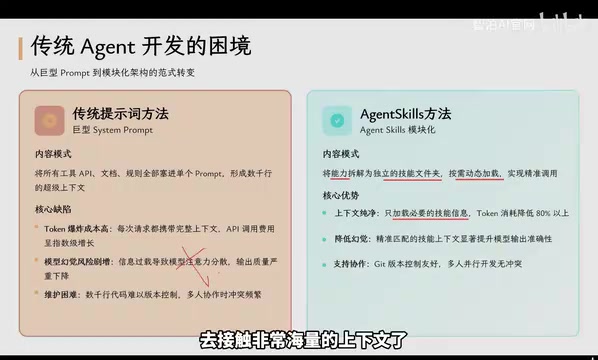
Agent Skills: Folders as Skills — Making AI Produce Precise, Template-Based Output
Agent Skills splits AI capabilities into independent skill folders with on-demand loading and progressive disclosure, cutting token costs by 80% and reducing hallucinations for template-based output.
Five Common Claude Code Mistakes — How Many Are You Making?
Five common Claude Code mistakes developers make: copy-pasting code, skipping CLAUDE.md, inefficient prompting, ignoring docs, and poor context management — with fixes.
Andrew Ng's New Course Explained: A Practical Guide to Using OpenAI's O1 Reasoning Model
Deep dive into Andrew Ng and OpenAI's Reasoning with O1 course covering test-time scaling, new prompting paradigms, multi-model orchestration, and practical applications for developers.