ZCodeAI Free AI Agent Tool Review: Multi-Model Aggregation at Zero Cost
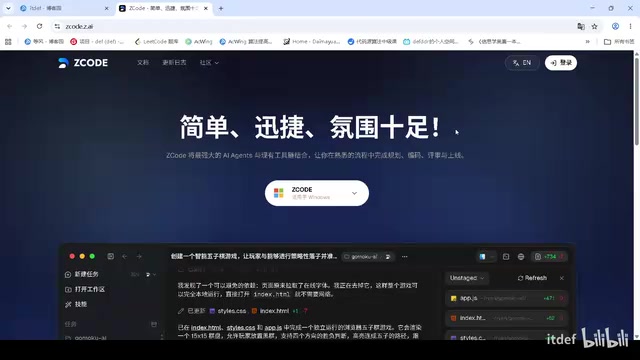
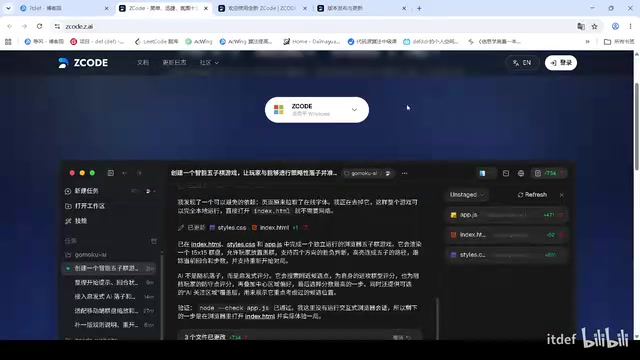
ZCodeAI offers free multi-model AI aggregation on desktop with zero-cost entry for everyday use.
ZCodeAI is a free desktop AI Agent client by ZhiPu that aggregates multiple large language models including DeepSeek V4 Flash and Xiaomi MiMo. It requires no API Key for basic use, supports multi-model switching, and is ideal for algorithm learning, programming assistance, and daily office tasks. Developers can also centralize their paid API Keys for unified management.
Introduction
As AI tools penetrate deeper into work, study, and daily life, finding a useful and free AI assistant has become increasingly important. Today we're introducing an AI Agent tool developed by ZhiPu — ZCodeAI. It not only supports the Windows platform but also comes with multiple built-in free large language models, making it more than sufficient for everyday light-use scenarios.
The AI Agent mentioned here is one of the core concepts in the current artificial intelligence field. It refers to an intelligent system capable of perceiving its environment, making autonomous decisions, and executing tasks. Unlike traditional chatbots, AI Agents possess a degree of autonomy and tool-calling capabilities, allowing them to decompose tasks based on user goals, invoke external tools, and iteratively optimize results. Since 2024, AI Agents have become a key focus for major tech companies — from OpenAI's GPT Agent to Google's Gemini Agent, and domestic products from ZhiPu, Baidu, and others. Agent-based architecture has become the mainstream paradigm for large model application deployment.
What Is ZCodeAI? A Multi-Model Aggregation AI Agent Client
ZCodeAI is a desktop AI Agent client launched by ZhiPu, primarily targeting Windows users. ZhiPu AI was founded in 2019, incubated from the Knowledge Engineering Laboratory of Tsinghua University's Computer Science Department. It is one of the earliest companies in China focused on large language model R&D. Its core products include the GLM series of large models and the ChatGLM conversational platform. Between 2023 and 2024, ZhiPu completed multiple rounds of major financing, with investors including the National Social Security Fund and Zhongguancun Science City — national-level capital. Its valuation once exceeded 20 billion RMB, making it one of the leading players in China's large model space.
ZCodeAI's core positioning is as a multi-model aggregation platform, where users can access and switch between multiple large models within a single interface for flexible invocation across different scenarios. The multi-model aggregation design philosophy stems from a practical reality: different large models excel at different tasks, and no single model performs optimally in all scenarios. For example, some models are better at creative writing, while others are stronger in code generation or mathematical reasoning. An aggregation platform integrates multiple models through a unified interface layer, allowing users to flexibly choose the most suitable model based on task characteristics. Similar product concepts exist in the industry, with tools like Poe, TypingMind, and OpenRouter all adopting comparable multi-model routing architectures.
Unlike many AI tools that require paid subscriptions, one of ZCodeAI's major highlights is: even without any API Key, you can directly use the platform's built-in free models. This significantly lowers the barrier to entry for ordinary users, making it especially suitable for students and light office users.
ZCodeAI Installation and Configuration Guide
Download and Installation
The first step to using ZCodeAI is to visit its official website and select the Windows version for download. The installation process is fairly standard — once the download is complete, simply follow the prompts step by step to finish the installation.
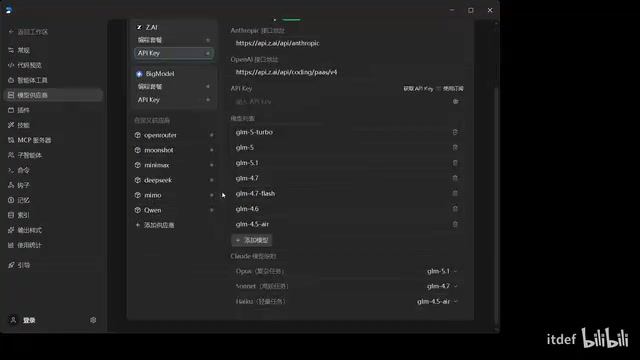
API Configuration (Optional Step)
After installation, you'll see an API configuration area on the main interface. ZCodeAI supports entering API Keys for multiple different large models, meaning if you already have APIs from OpenAI, DeepSeek, or other models, you can manage and use them all in one place.
API Key (Application Programming Interface Key) is a credential used by large model service providers for authentication and billing. When users call a large model through an API, the service provider identifies the caller through the API Key and charges based on usage (typically billed per token). Mainstream large models like OpenAI's GPT-4 and Anthropic's Claude all use this pay-per-use business model. An API Key typically corresponds to an account's usage quota, with token prices ranging from a few yuan to over a hundred yuan per million tokens, depending on the model's capability tier.
However, it's important to emphasize — API configuration is not a required step. If you don't have any API Key at the moment, you can skip this step entirely and directly use the free models provided by the platform.
What Free Built-in Models Are Available?
After selecting ZCodeAI's client mode, the platform provides several free large models, currently known to include:
- BigPicker: One of the platform's default recommended models, available for direct conversation
- MiMo (Xiaomi MiMo): A large model launched by Xiaomi with solid performance in reasoning and coding capabilities. MiMo is a large language model released by Xiaomi in 2025, marking the company's official entry into foundational large model R&D. The model has been specifically optimized for mathematical reasoning and code generation, employing reinforcement learning (RL) training strategies to enhance the model's logical reasoning chain capabilities. As a consumer electronics giant, Xiaomi's large model strategy is closely tied to its smart hardware ecosystem (phones, IoT devices, automobiles, etc.), and MiMo is expected to be deeply integrated into Xiaomi's full-scenario intelligent ecosystem in the future.
- DeepSeek V4 Flash: A lightweight, fast version of DeepSeek with quick response times, suitable for everyday Q&A. DeepSeek is a large language model series developed by DeepSeek (the company), founded by Liang Wenfeng, creator of the quantitative fund High-Flyer. The DeepSeek model series is known for its high cost-performance ratio, with its open-source DeepSeek-V2 and V3 models performing excellently across multiple benchmarks, approaching or even partially surpassing GPT-4-level capabilities. The "Flash" version typically refers to a lightweight variant optimized through distillation or quantization, significantly reducing inference latency and computational costs while maintaining good generation quality — particularly suitable for daily interactive scenarios that require fast response times.
- And several other models
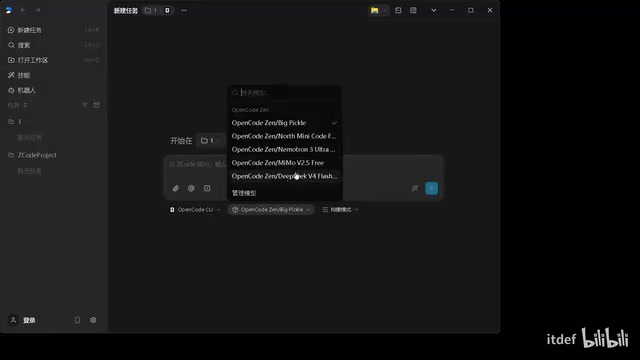
These free models cover a range of scenarios from general Q&A to coding assistance. Users can freely switch between different models based on specific needs — for example, using DeepSeek V4 Flash for quick answers, or switching to other models when deeper reasoning is required.
ZCodeAI Use Case Analysis
Algorithm Learning and Programming Assistance
ZCodeAI is particularly well-suited for algorithm learning and programming practice. When you encounter algorithm concepts or code logic you don't understand, you can directly ask the model and receive instant explanations and example code. While free models may not match the capabilities of top-tier paid models, they are more than sufficient for basic to intermediate-level learning questions.
It's worth noting that large language models have become very mature in programming assistance applications. From code completion and bug detection to algorithm explanation, AI programming assistants are reshaping how developers work. Tools like GitHub Copilot and Cursor have already proven the enormous value of this direction. ZCodeAI provides similar capabilities through free models, offering a low-barrier alternative for budget-conscious learners and independent developers.
Daily Office Work and Content Processing
For light office tasks such as copywriting, email polishing, and information organization, the built-in free models are fully capable. The multi-model switching feature also allows users to compare output quality across different models and choose the most satisfactory result.
This multi-model comparison approach is very practical in actual work. Since different models have different training data and optimization directions, the same prompt may produce outputs with vastly different styles and quality across different models. By quickly switching models and comparing results in ZCodeAI, users can achieve higher-quality content output without increasing costs.
Unified Multi-Model Management for Developers
For developers who already have multiple model APIs, ZCodeAI provides a unified management portal, eliminating the hassle of switching between different platforms. By centralizing all API Key configurations and calling different models on demand, the workflow becomes much more efficient.
In real development scenarios, a project might need to use multiple models simultaneously: GPT-4 for complex architectural design questions, DeepSeek for code generation tasks, and lightweight models for simple text formatting. If each model requires opening a different webpage or client, the context-switching cost significantly reduces work efficiency. ZCodeAI's unified management interface is designed precisely to address this pain point.
Conclusion: Is ZCodeAI Worth Trying?
As a desktop AI Agent tool, ZCodeAI's greatest advantages lie in zero-cost entry and multi-model aggregation. It addresses two core pain points: first, many users are unwilling to pay for AI tools; second, different models scattered across different platforms are difficult to manage in a unified way.
From an industry trend perspective, the desktop client approach for AI tools is a direction worth watching. Compared to pure web-based applications, desktop clients can better interact with local file systems, support offline caching, provide smoother user experiences, and also lay the foundation for integrating more Agent capabilities in the future (such as automating local application operations, file processing, etc.).
Of course, free models may have capability limitations when handling complex professional tasks. If you have higher demands, you can consider connecting paid APIs to enhance the experience. But for most everyday learning and light work scenarios, ZCodeAI's free offering is already a worthwhile option to try.
Key Takeaways
Related articles

Five Common Claude Code Mistakes — How Many Are You Making?
Five common Claude Code mistakes developers make: copy-pasting code, skipping CLAUDE.md, inefficient prompting, ignoring docs, and poor context management — with fixes.

Andrew Ng's New Course Explained: A Practical Guide to Using OpenAI's O1 Reasoning Model
Deep dive into Andrew Ng and OpenAI's Reasoning with O1 course covering test-time scaling, new prompting paradigms, multi-model orchestration, and practical applications for developers.

Learning AI After College Entrance Exams: A Complete Path from Zero to Freelancing
How to efficiently learn AI skills during summer break after exams? A complete path from mastering prompts and hands-on projects to freelancing on platforms.