Zero Coding Experience, AI-Made Game on Steam: A Two-Month Solo Dev Retrospective
Zero Coding Experience, AI-Made Game o…
A non-programmer used AI to build and ship a game on Steam in two months
A developer with minimal programming skills spent two months building a Vampire Survivors-style roguelite game entirely with AI tools and launched it on Steam. All code was AI-generated, and UI Toolkit was chosen over traditional UGUI for its AI-friendliness. However, 3D assets—from modeling to rigging and animation—remain the biggest bottleneck that AI cannot yet fully automate. The case demonstrates that AI dramatically lowers execution barriers in game development, while design skills remain firmly in human hands.
An Ordinary Person's AI Game Development Experiment
A developer who describes himself as a "beginner-level player" spent two months building a Vampire Survivors-style roguelite survival game without writing a single line of code, using AI to handle everything, and successfully launched it on Steam.
Background: Vampire Survivors was officially released in 2022, solo-developed by Italian indie developer Luca Galante. With extremely low production costs, it generated tens of millions of dollars in revenue, becoming an iconic case in indie game history. The core mechanics of this genre are "Roguelite + auto-combat + build crafting": players continuously kill monsters, collect experience, and choose skill upgrades within a limited time to form powerful skill combinations. Its success validated an important thesis: games with simple mechanics and number-driven design have relatively structured code logic, making them ideal entry points for AI-assisted development.
This case reinforces a growing trend: AI is dramatically lowering the barrier to game development, shifting the core competitive advantage from "can you code" to "do you have ideas and execution ability."
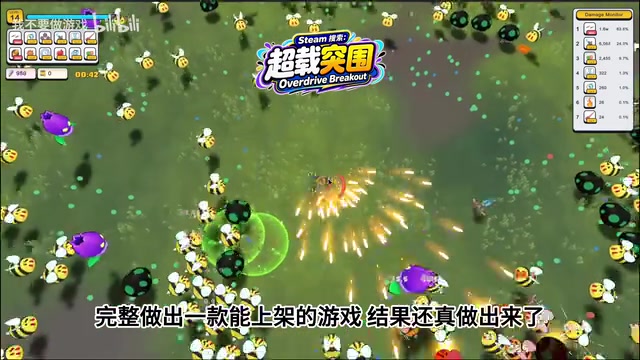
The author admits this game is no masterpiece. What he really wanted to verify was: can an ordinary person with weak programming skills deliver a commercially shippable game using AI tools? The answer is yes.
All Code Generated by AI: From Line-by-Line Review to Full Trust
Virtually all code in the project was produced by AI. Early on, the author reviewed every line, checking for logic errors and potential bugs. But as the project progressed, he gradually built trust in AI's coding capabilities and eventually stopped reviewing outputs altogether.
This shift in mindset is quite representative. Current mainstream large language models (like GPT-4, Claude, etc.) already achieve remarkably high accuracy when handling common game development logic—character movement, collision detection, skill systems, numerical calculations, and so on.
Technical Background: The code generation capabilities of LLMs like GPT-4 and Claude stem from training data that includes hundreds of millions of open-source repositories on GitHub. These models can understand requirements described in natural language and generate code conforming to specific framework syntax (Unity C#, Godot GDScript, etc.). In game development, logic like character movement, collision detection, and skill cooldowns is highly pattern-based and appears frequently in training data, resulting in impressive generation accuracy. Notably, the quality of AI-generated code is closely tied to "Prompt Engineering"—how clearly you describe requirements and decompose task granularity is itself a new skill worth learning.
For a roguelite survival game, the core gameplay code complexity is relatively manageable, well within AI's capabilities.
A New Approach to UI: UI Toolkit Instead of Traditional UGUI
For UI development, the author made a noteworthy technical choice: using UI Toolkit instead of Unity's traditional UGUI system.
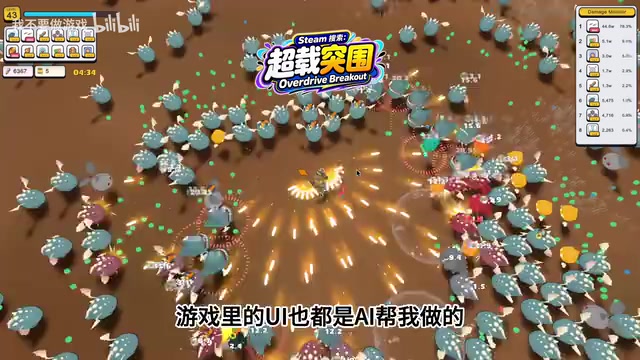
UI Toolkit uses HTML+CSS-like syntax with a declarative layout approach for building interfaces.
Technical Comparison: Unity's UI system has gone through two generations. The first-generation UGUI (Unity GUI), introduced in 2014, is based on GameObject and Component architecture—developers manually drag and configure components in the Scene view. It's intuitive but difficult to fully describe interface structure in code. The second-generation UI Toolkit (formerly UIElements) borrows from web frontend design, using UXML (similar to HTML) to define structure, USS (similar to CSS) to control styling, and supporting C# logic binding. This "structure-style-logic separation" declarative architecture means the entire UI can be expressed in plain text files. AI can therefore directly generate, modify, and debug UI code without relying on editor visual operations, greatly reducing friction in human-AI collaboration.
The key consideration behind this choice: this structured description language is extremely AI-friendly. Compared to UGUI's manual drag-and-drop component setup, UI Toolkit lets AI directly generate layout code, button styles, and interaction effects, significantly boosting development efficiency.
The author even revealed he considered embedding a browser component in Unity for flashier UI effects but ultimately abandoned the idea due to excessive package size. While aggressive, this thinking reflects a tendency among indie developers in the AI era: choose tech stacks that AI excels at generating, maximizing human-AI collaboration efficiency.
The Biggest Bottleneck in AI Game Dev: 3D Assets
Despite AI's strong performance in code and UI, the development process hit a clear bottleneck—acquiring and processing 3D assets.
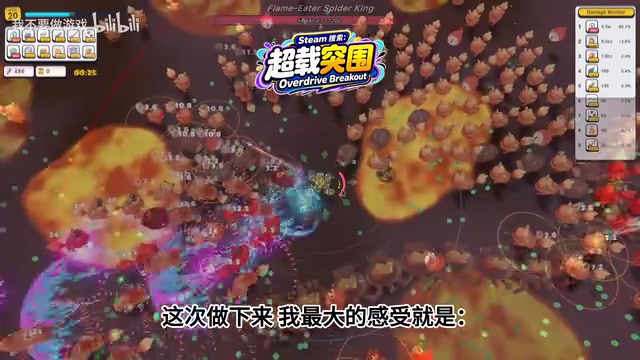
To find suitable 3D resources, the author dug through virtually every asset pack he'd ever purchased on the Unity Asset Store. While AI tools can now generate 3D models (Meshy, Tripo, etc.), model generation is just the first step. Rigging, animation, and motion tuning still require extensive work, and AI automation in these areas remains far from sufficient.
Industry Status: The AI 3D generation field is rapidly developing but still immature. Tools like Meshy, Tripo3D, and Stable Zero123 can generate basic 3D meshes from text or images, but the output typically suffers from irregular topology and insufficient detail. More critically, game 3D characters require a complete asset pipeline: rigging defines the skeletal hierarchy, skinning associates mesh vertices with bones, animation defines motion keyframes, and finally animation state machines must be configured in-engine. This workflow still heavily depends on manual work by professional artists. While AI automation tools exist (like Mixamo's auto-rigging), their support for complex characters remains limited—this is currently the most significant capability boundary of AI-assisted game development.
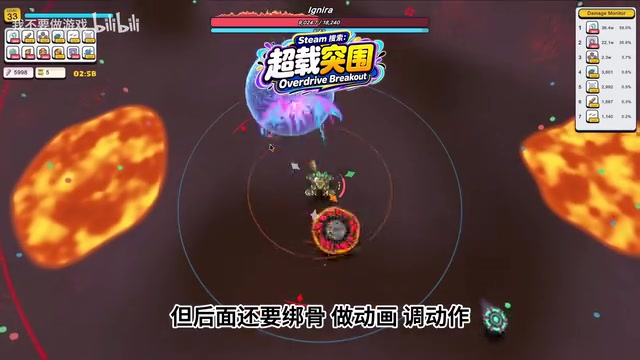
This reveals the real state of AI-assisted game development today:
- Code: AI is very mature, handling most logic requirements
- 2D assets: AI image generation tools (Midjourney, Stable Diffusion, etc.) can produce high-quality 2D resources
- 3D assets: From modeling to animation, the complete pipeline still has significant AI gaps
Based on this understanding, the author plans to pivot to 2D game development for his next project, where asset generation is more controllable and AI involvement is higher.
Three Takeaways for Indie Developers
This zero-code AI game development case offers several important insights:
1. AI Lowers the "Execution Barrier," Not the "Design Barrier"
AI can write your code and generate your UI, but core gameplay design, numerical balance, and level pacing—the elements that determine game quality—still require human judgment. AI is a powerful execution tool, but it won't figure out "what kind of game to make" for you.
2. Choose an "AI-Friendly" Tech Stack
Related articles
 Tech Frontiers
GitHub Agent HQ Launch: AI Coding Tools Enter the Era of Platform Competition
GitHub Universe unveils Agent HQ platform for unified coding agent management, Copilot upgrades with multi-model support. OpenAI completes restructuring, Anthropic tests new model, NVIDIA open-sources AI models.
 Tech Frontiers
Gemini 3.5 Flash Achieves a Massive Leap on the GDPval Benchmark
Google Gemini 3.5 Flash surpasses Gemini 3.1 Pro on the GDPval benchmark. The lightweight Flash model leverages post-training techniques to approach frontier-level performance, redefining the balance between quality and cost.
 Tech Frontiers
Google Gemini Antigravity Weekly Quota Tripled — AI Coding Without Limits
Google Gemini triples Antigravity weekly quotas following a prior daily quota boost. Analyzing the impact on developers and its strategic significance in AI coding.