AI Cracks the Riemann Hypothesis? A Crisis of Trust in Mathematical Proof
AI and a human claim the Riemann Hypothesis proof on the same day; formal verification passes but academic debate continues.
The article recounts how Anthropic mathematician Levent Alpoge claimed to have proven the Riemann Hypothesis with Claude, releasing over 250,000 pages of explanation and 17 million lines of Lean code. Mathematicians worldwide compiled the code within hours, and the community completed full verification the next day, saying they were "fully confident"; Oxford number theorist James Maynard also leans toward the proof being correct. On the same day, a Stanford professor posted an independently completed human proof, creating a rare dual-proof situation. However, the Clay Mathematics Institute still lists the problem as unsolved, with peer review and a two-year scrutiny period as preconditions for the $1 million prize. If the proof holds, tens of thousands of theorems relying on the Riemann Hypothesis would become established facts, but the core controversy is whether humans can still understand the mathematics AI does.
Introduction: One Weekend, the Mathematical World Turned Upside Down
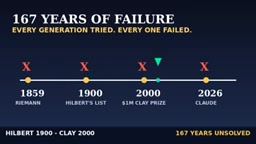
According to a YouTube channel, a purported AI-assisted proof of the Riemann Hypothesis has dropped a bombshell on the mathematical community. In 1859, German mathematician Riemann (mistakenly written as Bernhard Röhrl in the original) discovered a strange function called the zeta function, which seemed to govern the distribution of prime numbers, and conjectured that all its important solutions (zeros) lie on the same straight line. This conjecture became mathematics' most famous unsolved problem — Hilbert placed it on his list of major problems for the new century in 1900, and in 2000 the Clay Mathematics Institute offered a $1 million prize for a proof. For 167 years, countless geniuses tried and failed. Then, on a Friday, Anthropic mathematician Levent Alpoge posted a four-page note on his personal website, claiming to have discovered a proof of the Riemann Hypothesis in collaboration with Claude.
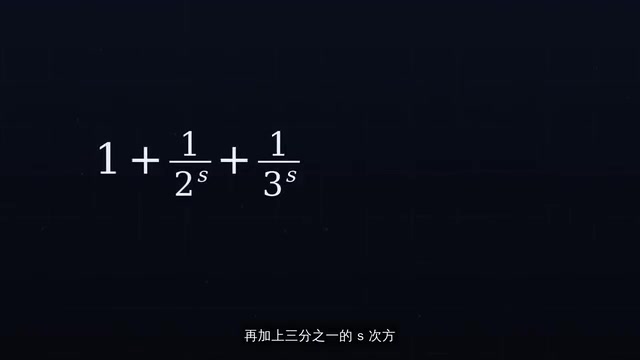
The Riemann zeta function and prime distribution: The Riemann zeta function was originally defined as the infinite series ζ(s) = 1 + 1/2^s + 1/3^s + …, which converges when the real part of s is greater than 1. Riemann analytically continued it to the entire complex plane (except for a pole at s=1) and studied its zeros. He observed that the distribution of primes is closely tied to the locations of these zeros — specifically, the error term in the prime counting function π(x) is determined by the real parts of the nontrivial zeros of the zeta function. The Riemann Hypothesis asserts that all nontrivial zeros lie on the line in the complex plane with real part 1/2 (the critical line). If true, the distribution of primes would be as regular as possible; if false, it would be extremely chaotic. The conjecture is a cornerstone of analytic number theory, deeply connected to refinements of the prime number theorem, the Goldbach conjecture, and many other problems.
An AI's "Proof": 250,000 Pages and 17 Million Lines of Code
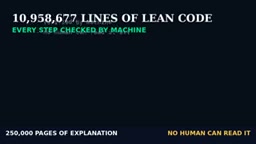
This proof is far from traditional. According to the video description, the AI-written full explanation exceeds 250,000 pages, far beyond what any human could read. Instead of a paper, Alpoge released 17 million lines of code written in a computer language called Lean, letting machines check every step of the mathematics. Within hours of the announcement, mathematicians worldwide downloaded and ran the code; Andrew Sutherland of MIT and others reported that the code compiled, meaning the machine found no errors. On Saturday, the community maintaining the proof-checking software completed verification of all 17 million lines and issued a verdict: "We are fully confident that Alpoge's proof of the Riemann Hypothesis is correct." James Maynard, a top number theorist at Oxford, also said he suspects the proof will ultimately turn out to be correct. In Alpoge's own words, the AI didn't just help solve a math problem — it "flew, danced, and shone as it approached the finish line and crossed it."
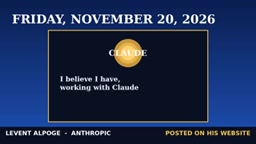
Lean and interactive theorem proving: Lean is a functional programming language initiated by Microsoft Research and now maintained by the community, designed specifically for formalizing mathematical proofs. In Lean, mathematical definitions, theorems, and proofs are all written as code, and every logical step must strictly conform to type-checking rules. When the code passes the compiler's checks, it means the machine has verified that every step of the proof has no logical gaps — provided the underlying axiom system (typically dependent type theory) is itself sound. Unlike traditional papers, formal proofs do not rely on the "intuitive trust" of peer readers but offer mechanically checkable certainty. 17 million lines of Lean code implies an extremely high level of complexity, but once it compiles, its correctness is guaranteed at the formal level. However, formal verification only ensures that the derivation from axioms to theorem is flawless; it does not automatically guarantee that the formalized proposition is what people usually mean by the "Riemann Hypothesis."
Same-Day Showdown: A Human Proof Arrives in Parallel
The story doesn't end there. Hours after Alpoge's announcement, Stanford mathematics professor Ravi Vakil posted a preprint by young mathematician Alessandro Maria Masullo — a completely human-written proof with no AI involvement. On the same day, the same impossible problem, two proofs appeared.
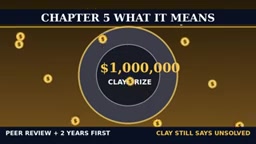
Not everyone is convinced. Some mathematicians believe Alpoge should have written a clearer explanation before announcing; one leading number theorist called his four-page document "a mess." More critically, the Clay Mathematics Institute still lists the problem as unsolved. Its rules are strict: a solution must be published in a peer-reviewed journal, withstand two years of scrutiny, and achieve general acceptance before the million-dollar prize is even considered.
The Clay Institute's million-dollar rules: In 2000, the Clay Mathematics Institute announced seven "Millennium Prize Problems," each carrying a $1 million prize for the first correct proof. Its official rules explicitly state that a solution must be published in a peer-reviewed mathematical journal and must have undergone at least two years of general acceptance after publication before a prize is considered. This means that even if a proof has been machine-verified or preliminarily recognized by the community at a technical level, the Clay Institute will remain silent until formal publication and broad consensus are achieved. Historically, Andrew Wiles's proof of Fermat's Last Theorem was announced in 1993, a gap was later found, and it took over a year of repair before it finally passed review — highlighting the necessity of a rigorous review process.
If It Holds, What Does It Mean?
If the proof ultimately holds, it would be one of the greatest moments in the history of mathematics. Tens of thousands of theorems proven under the assumption of the Riemann Hypothesis would instantly become established facts. It would also cap off an entire year in which AI went from an unreliable student to a superhuman force in mathematics. According to the video, as early as August, an unreleased version of Claude had already improved a long-standing result on the same problem. Alpoge also said the same methods could tackle generalized versions of the conjecture and make progress on equations describing the motion of air and water.
The Core Controversy: If AI Does Mathematics, Can Humans Still Understand It?
The question is no longer whether AI can do mathematics, but whether humans can still understand the mathematics AI does. A machine has written a proof no one can read, and mathematics' greatest mystery may finally be solved — but verification is far from over. The Clay Institute's silence, peers' skepticism, and the human proof that appeared the same day all cast a shadow of uncertainty over this "weekend miracle." As the video concludes, the final verdict of the world's mathematicians is still on its way.
Related articles
17 Million Lines of Code Challenge the Riemann Hypothesis: AI Proof Milestone or Trust Crisis?
Anthropic mathematician and Claude complete a Generalized Riemann Hypothesis proof in 17M lines of Lean code in 41 days—machine-verified with zero errors, yet no one can read it.
Meta Abandons 2030 Net Zero Target, Tech Industry Climate Pledges Face a Reckoning
Meta withdraws its 2030 net zero target in its 2026 sustainability report, triggering a chain reaction in tech climate pledges. This analysis examines the impact on competitive dynamics, ESG investment strategies, and industry self-regulation.

Philosopher Rejects Anthropic's AI Consciousness Argument: A Dangerous Business Narrative
Anthropic listed AI consciousness as a risk factor ahead of its IPO, prompting a prominent philosopher to publicly reject its consciousness argument. This article analyzes the business motives, scientific honesty, and AI industry narrative strategies behind the debate.