AI Daily: Mistral's Trillion-Parameter Model Goes Live, OpenAI Rolls Out Perks

Mistral launches trillion-parameter model, OpenAI offers free moderation and Decisions API, Google's on-device embedding model leads today's AI news
Today's AI landscape sees dense updates across product lines: Mistral launches the 1-trillion-parameter Large 4, supporting image, audio, and video understanding, with API available today and open weights by month's end; OpenAI makes AutoReview content moderation free without consuming subscription quotas and beta-tests the Decisions API, claimed to be 10x faster than using the Responses API to call GPT-6 Luna, while also publishing math research based on Lean proofs; Google open-sources 191MB Embedding Gemma 2 for on-device multimodal vectorization; Perplexity releases decision model PPPSR with API price halved to 2 cents per million tokens; Kaos launches a Chinese interface. The overarching trend is that model capabilities are being packaged into low-cost, low-latency APIs, continuously lowering the barrier to building applications.
Today's AI Quick Scan: Models, Tools, and Perspectives All in Motion
The AI world keeps up its brisk pace today: Mistral unleashes a trillion-parameter behemoth, OpenAI opens up a free moderation tool while flexing its math research muscle, and Google squeezes a multimodal embedding model into phones. Here's the breakdown, item by item, with brief analysis.
Mistral Large 4: Trillion Parameters, Multimodal, Open-Sourced by Month's End
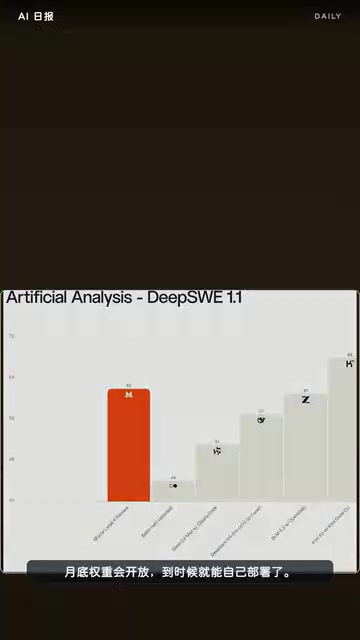
Mistral has launched a new model called Large 4, with a parameter count of 1 trillion, supporting image, audio, and video understanding. According to the announcement, the model is available via API today, and weights will be opened by the end of the month, allowing users to deploy it themselves.
The trillion-parameter club gains another member, but the more noteworthy point is the promise to "open weights by month's end." If fulfilled, Large 4 will become one of the few ultra-large-scale models that combines multimodal capabilities with an open-source license—quite attractive to enterprises and researchers needing private deployment. That said, the local deployment barrier for a trillion-parameter model is extremely high, so the players who can actually "deploy it themselves" are probably limited; the greater significance lies in ecosystem positioning.
OpenAI AutoReview Goes Free: A "Freebie" Option for Content Moderation
OpenAI has announced that AutoReview is now free to use, capable of automatically moderating content without consuming subscription quotas. For platforms handling user-generated content, this amounts to a zero-cost moderation tool.
AutoReview's positioning is clear: lowering the barrier to entry for content safety features. Being free and not counting against quotas means developers can embed it as a foundational capability directly into their workflows without repeatedly weighing cost against compliance. However, moderation accuracy and false-positive rates still need real-world testing, and the free strategy may come with limits on call frequency or use cases.
Google Embedding Gemma 2: 191MB, Multimodal Vectors Running Locally on Phones
Google has open-sourced a new model, Embedding Gemma 2, which converts text, images, audio, and video into vectors and supports running locally on phones with only 191MB of memory usage. It also works in offline scenarios.
At 191MB, on-device multimodal embedding becomes a reality—valuable for applications in privacy-sensitive or unstable-network environments. For example, semantic search in a local photo album or cross-modal retrieval in offline notes can be done without sending data to the cloud. The open-source strategy also helps the community iterate and adapt quickly.

An embedding model maps unstructured data such as text and images into high-dimensional vectors, so that semantically similar content ends up closer together in vector space. It is the underlying infrastructure for applications like semantic search, recommendation systems, retrieval-augmented generation (RAG), and clustering/deduplication. The traditional approach is to call a cloud API to generate vectors, whereas on-device embedding models move this step onto the local device. The advantages are zero network latency, data never leaving the device, and offline availability; the cost is that model size and accuracy usually have to be compromised. The Gemma family is Google's line of lightweight models released with open weights, and Embedding Gemma 2 continues that approach.
OpenAI Publishes Math Research: Frontier Models and Lean Proofs
OpenAI has released a batch of math research results from its internal frontier models, along with Lean proofs and code. For researchers at the intersection of math and AI, this is important reference material.
Mathematical proof is a hardcore test of a model's reasoning ability. Lean, as an interactive theorem prover, makes the public release of code and proofs helpful for the community to reproduce and verify. The move also hints that OpenAI is investing continuously in formal reasoning, which could influence the development of automated theorem proving and math assistance tools in the future.
Lean is an interactive theorem prover led by Microsoft Research, and also a functional programming language. Its core value lies in writing mathematical proofs as code that a computer can check line by line—every step of reasoning must be verified by the kernel, with no room for fudging. In recent years, the Lean community has built a massive math library called Mathlib, covering many areas at undergraduate and even graduate level. For AI research, Lean provides an environment where correctness can be automatically verified: if a model-generated proof fails to compile, it is wrong, making it an ideal testing ground for evaluating and training models' formal reasoning abilities.
Decisions API in Public Beta: Decision Speed Claimed 10x Faster
OpenAI has opened the Decisions API to public beta, letting developers have applications choose models, tools, or next actions in real time. The company claims it is 10x faster than using the Responses API to call GPT-6 Luna for decisions.
"10x faster" is the official claim; actual experience depends on the specific scenario and load. But the direction is clear: abstracting "decision-making" into a standalone API so applications can dynamically orchestrate models and tools at runtime rather than hard-coding workflows. This is good news for developers building Agent-type applications, reducing glue code and latency.

In Agent architecture, "decision-making" refers to the step of choosing, based on the current context, which model or tool to call next or which action to take. The traditional approach is to hard-code this routing logic into the application, or to use a full LLM call to make the judgment—the former is inflexible, the latter is high-latency. Abstracting decisions into a standalone API means the vendor has optimized specifically for the narrow task of "what to choose," trading a smaller model or shorter reasoning path for speed. This kind of decision-layer API belongs to the same technical lineage as Function Calling and Model Routing; the goal is to let applications dynamically orchestrate capabilities at runtime rather than rely on static workflows.
Kaos Launches Chinese Interface: The "True Fragrance" Principle Strikes Again
Kaos has quietly launched a Chinese interface, with Simplified and Traditional Chinese available on both web and desktop. Previously, the official stance was that Chinese was not supported; now the attitude has changed.
The barrier to entry for Chinese users is further lowered, reflecting the growing weight of domestic users in global AI products. Users who previously held off due to language barriers can now try it at lower cost.
Perplexity Decision Model API Price Cut: 2 Cents per Million Tokens
Perplexity has released a new decision model, PPPSR. The new version is now available via API, with the price cut in half—just 2 cents per million tokens.
Inference costs for decision-type applications are pushed even lower; a unit price of 2 cents is quite friendly for high-frequency call scenarios. Combined with the OpenAI Decisions API move, it is clear that the "decision layer" is becoming a new focus of competition among model vendors: not only must models be strong, but decisions must be fast and cheap.

Trend Watch: Three Forces—Models, Tools, Perspectives
Today's information flow can be summarized in three lines: on the model side, Mistral stakes its position with trillion parameters and multimodality, while Google fills in scenarios with small on-device models; on the tool side, OpenAI packages moderation and decision-making capabilities into APIs, and Perplexity uses a price war to stake out the decision layer; on the perspective side, the public math research demonstrates the potential of frontier models in formal reasoning.
For developers, what matters is not the parameter count of any single model, but the call cost and latency after capabilities are packaged. AutoReview being free, Decisions API speeding things up, and PPPSR cutting prices all lower the barrier to building AI applications. Next, watch whether these capabilities can be reliably delivered in real business scenarios.
AI Daily keeps an eye on it for you every day—see you tomorrow.
Related articles
AWS AgentCore Gateway: Connecting AI A…
AWS AgentCore Gateway: Connecting AI Agents to Enterprise Backends with MCP
How AWS AgentCore Gateway acts as a primary MCP server to aggregate REST APIs, Lambda, and existing MCP services? Analyzing its AST real-time mapping, zero cold start, semantic search for tool overload, session isolation, and key injection security design, plus the architectural approach to decoupling enterprise AI agents from backends.

One Link Gives Figma AI a New Skill: Hands-On with MCP Connectors
Paste one MCP server link and the AI Agent in Figma gains new tool capabilities. We break down the setup flow, 20+ one-click apps, read/write permissions and execution policies, and the public HTTPS requirement.

Cognition SWE-2 in Practice: One Prompt to Handle the Whole Product Launch Process
Analyzing a YouTube creator's prompt for using Cognition SWE-2 to launch a product: a landing page, seven-email sequence, and non-buyer follow-up tool, plus how the 'test and report' constraint changes AI delivery quality.