@ai-sdk/tui 1.0.164 Released: Synchronized Dependency Updates

@ai-sdk/tui 1.0.164 released, mainly a dependency synchronization patch related to ai@7.0.163.
@ai-sdk/tui has released version 1.0.164, a typical patch update whose changes are almost entirely "Updated dependencies," with no independent code changes of its own. This version is synchronized with ai@7.0.163, and it is reasonable to infer that it incorporates the relevant upstream changes. The release was automated by github-actions and carries GPG signature verification, making the release chain traceable. For users, upgrading is a low-risk operation, but attention should be paid to compatibility with the upstream ai package and to terminal interface behavior in areas such as streaming output and state refresh.
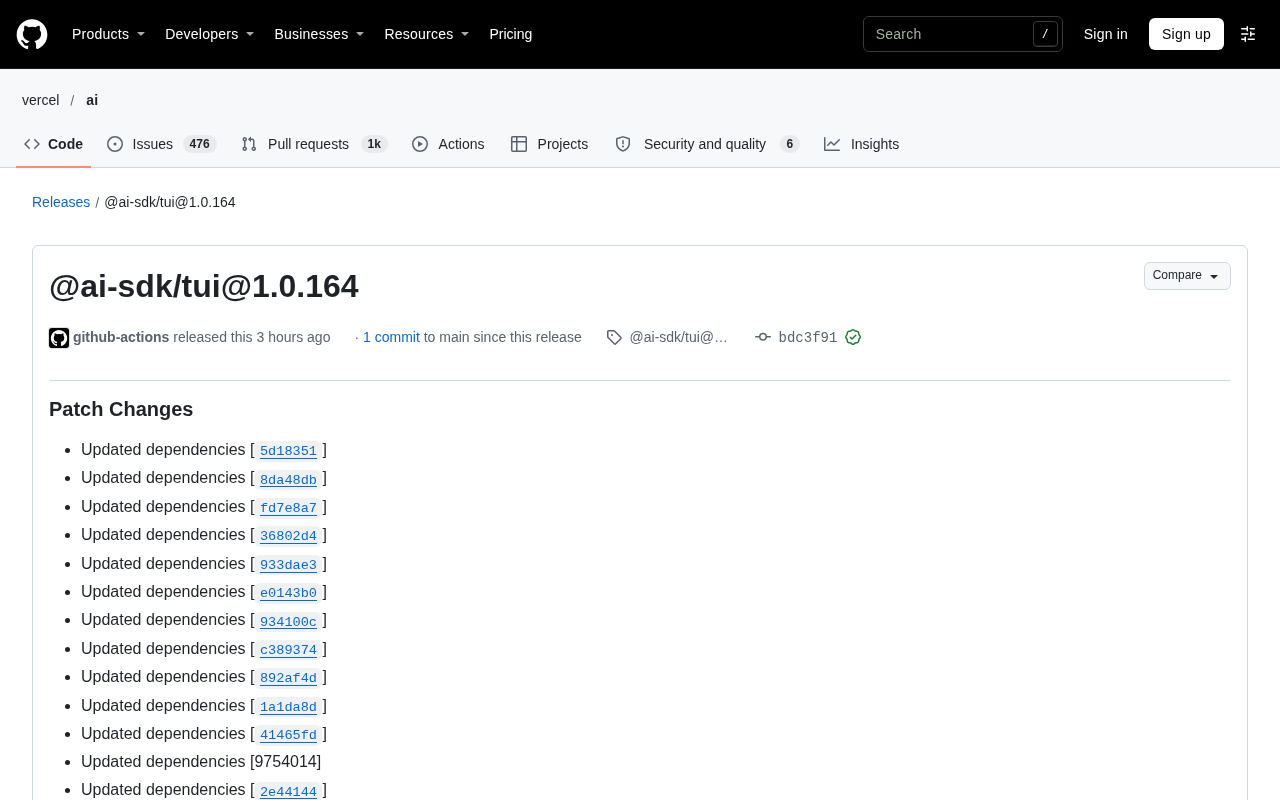
The AI SDK's terminal interface package @ai-sdk/tui has released version 1.0.164. Judging from the release notes, this is a typical patch update, with the core changes centered on dependency synchronization rather than new features or behavioral adjustments.
What changed in this update
The version number continues forward in the 1.0.x sequence and is marked as Patch Changes. Nearly everything listed in the release information is "Updated dependencies," accompanied by a string of commit hashes. This means the changes in this version were passively brought in from upstream dependency upgrades, and the project itself has no independent code change description.
A small detail: this kind of release is fairly common in monorepos — after a low-level package is upgraded, all packages that depend on it will also publish a new version to ensure consistency of the dependency tree. For users, the actual impact of upgrading to 1.0.164 depends on what happened to the upstream ai package.
Relationship with ai@7.0.163
The release notes mention ai@7.0.163 at the end, and it appears in the same context as this @ai-sdk/tui release. A reasonable inference is that @ai-sdk/tui 1.0.164 synchronized the relevant changes from ai 7.0.163. Since the original information does not elaborate on the specific changes in the ai package, it is not appropriate to speculate further about its behavioral changes here.
In the npm ecosystem, monorepos often use Changesets or similar tools to manage versions and releases. When a package (such as ai) publishes a new version, packages that depend on it are automatically marked for patch updates, and "Updated dependencies" along with the corresponding commit hashes are recorded in the changelog. This mechanism ensures that package versions within the same repository stay synchronized, and it also explains why the patch records for @ai-sdk/tui often contain only dependency upgrade information. Users can check the locked ai version range via npm view @ai-sdk/tui@1.0.164 dependencies.
Practical significance for users
If your project directly depends on @ai-sdk/tui, upgrading to 1.0.164 is a low-risk operation — patch versions usually do not involve breaking changes. The real focus is on confirming whether the upstream ai package version is compatible with your other dependencies.
The value of dependency synchronization
In an SDK ecosystem composed of multiple packages, version mismatches are a common source of failures. By publishing patch versions together with upstream releases, maintainers solidify mappings such as "which tui version corresponds to which ai version" into the release records, reducing the cost for users to troubleshoot version conflicts themselves.
How to follow up on subsequent changes
This release does not provide feature-level explanations, so the focus should be on the actual changes in the upstream package. After upgrading, it is recommended to pay attention to the rendering and interaction behavior of the terminal interface, especially areas closely coupled with underlying SDK behavior such as streaming output and state refresh.
Credibility of the release process
The record shows that the commit was published by github-actions and carries a GitHub-verified signature (GPG key ID: B5690EEEBB952194). This indicates that the release process runs through an automated pipeline and that the commit source is verifiable. For teams that rely on supply chain security reviews, this information can serve as a reference for version credibility.
GPG signature verification is an important part of npm supply chain security. Publishers use a private key to sign package contents, and users can verify via npm audit signatures whether a package was published by a trusted source and has not been tampered with. When GitHub Actions publishes automatically, the signing key is usually stored in repository Secrets, and the pipeline automatically signs and pushes after building. For enterprise environments, this signature information can be incorporated into dependency admission policies, requiring all production dependencies to have valid signatures, thereby reducing the risk of malicious package injection.
Summary
@ai-sdk/tui 1.0.164 is a patch release focused mainly on dependency synchronization, with no significant feature changes of its own. Users can handle it as a routine patch upgrade, with particular attention to the knock-on effects of the upstream ai package version.
Related articles
AI Detection False Positive Controversy: Writer Accused of Using AI, Who Should Bear the Burden of Proof?
A 2026 Commonwealth Short Story Prize regional winner was flagged by Pangram as 100% AI-generated but cleared after drafts were reviewed. The case exposes AI detection false positives and the burden-of-proof dilemma facing creators.
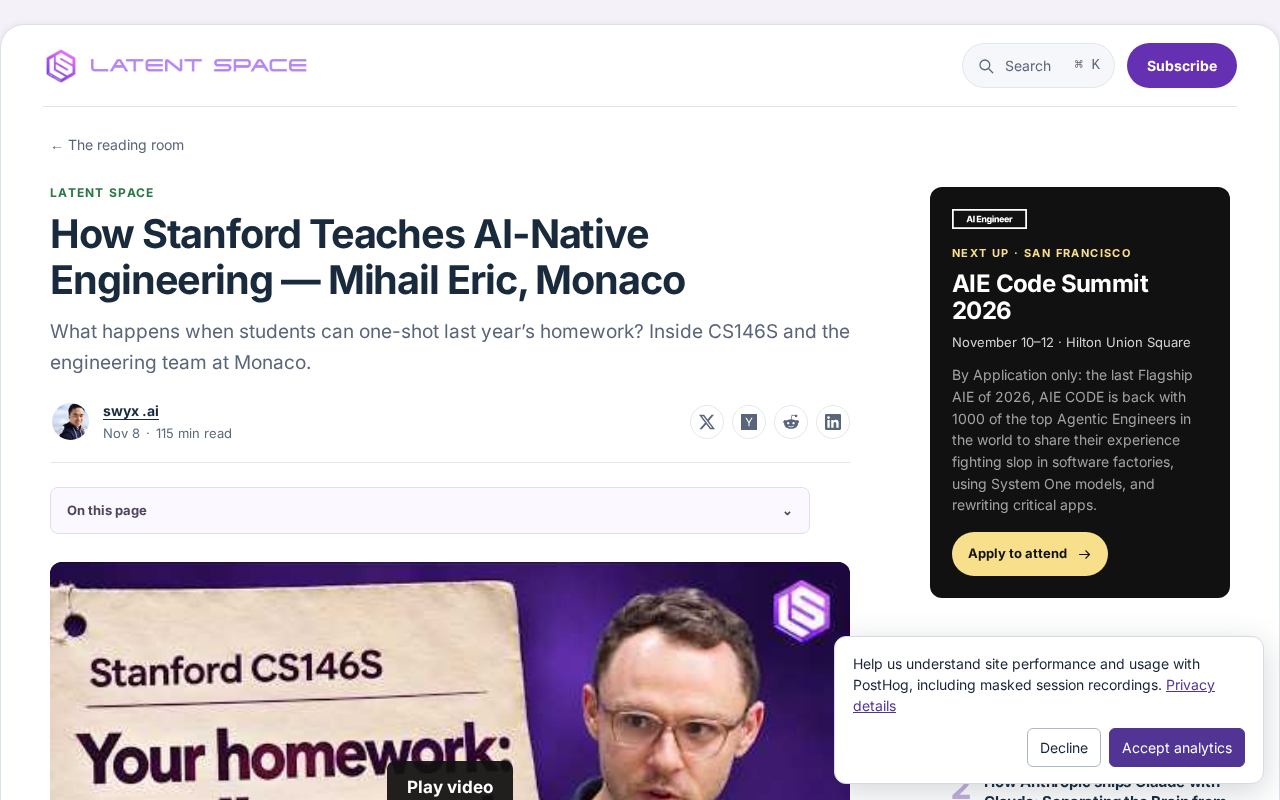
How Stanford Teaches AI-Native Engineering: Inside CS146S
Stanford's CS146S course confronts AI one-click assignment generation, exploring AI-native engineering education. Mihail Eric shares how to treat AI as an engineering partner and build system design and code review skills, offering a new model for engineering education.
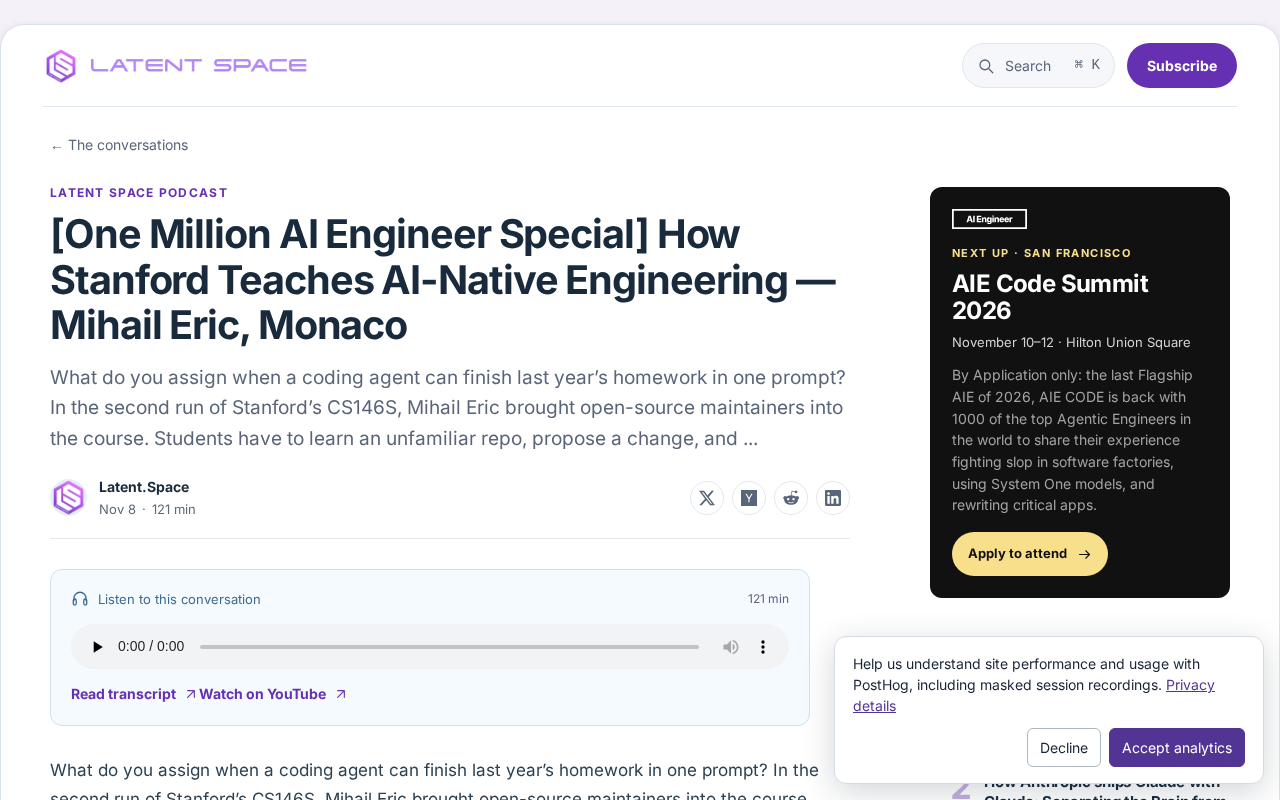
Stanford's AI-Native Engineering Course: How to Teach Programming in the Age of Agents
Stanford CS146S course reform: Mihail Eric brings open-source maintainers into the classroom, having students propose changes in unfamiliar real codebases, exploring AI-native engineering teaching in the age of agents, shifting from writing code to cultivating engineering decision-making skills.