Beyond the Compute Arms Race: Reflections on a Technical White Paper

The white paper discussion questions the linear path of compute stacking, advocating a shift toward algorithmic efficiency and architectural innovation.
The article centers on a technical white paper discussion from Reddit, with the core thesis being whether the AI industry has fallen into an inefficient compute arms race. The white paper points out that the current mainstream approach relies on massive compute stacking to improve model capabilities, but this linear thinking ignores variables such as algorithmic efficiency, architectural innovation, and data quality, leading to diminishing marginal returns while costs, energy consumption, and engineering complexity continue to climb. The article outlines possible directions for shifting from scale-driven to efficiency-driven development, including more efficient training algorithms, more rational architecture choices, and inference cost control, and notes that this perspective is more practically meaningful for resource-constrained small and medium teams and the open-source community. Since the original material only provides the title and the nature of the discussion, the article is positioned as a framework-level overview, reminding the industry to guard against path dependence and remain open to alternative technological routes.
Beyond the Compute Arms Race: Reflections on a Technical White Paper
In the AI industry, "bigger models, more GPUs, more compute" has become almost the default formula for success. But this technical white paper discussion from Reddit proposes a counter-thesis: are we trapped in an inefficient compute arms race?
The Hidden Concerns of the Compute Race
The current mainstream approach relies on massive compute stacking to improve model capabilities. The white paper's core argument is that this linear thinking ignores variables such as algorithmic efficiency, architectural innovation, and data quality. Simply competing on compute scale is yielding diminishing marginal returns, while costs, energy consumption, and engineering complexity continue to climb. The author calls on the industry to shift attention from "whose cluster is bigger" to "whose approach is smarter."
It should be noted that the original material only provides the title and the nature of the discussion, without disclosing the white paper's specific technical details, experimental data, or author background. Therefore, this article is more of a framework-level overview of the topic rather than a point-by-point interpretation of the white paper's conclusions.
Diminishing marginal returns is a fundamental concept in economics, referring to the fact that when other inputs remain constant, continuously increasing the input of one factor leads to progressively smaller additional output. In AI training, this principle manifests as follows: once model parameters and training data reach a certain scale, further increases in GPU count or training duration yield ever-smaller performance gains. Taking OpenAI's Scaling Law research as an example, early models could achieve significant capability leaps by doubling scale, but recent practice shows that equivalent compute increments now correspond to noticeably narrower benchmark improvements. This is precisely the technical basis for the "failure of linear thinking" discussed in the white paper—the relationship between compute investment and model capability is not a simple proportional one, but has a point of diminishing returns. Understanding this concept helps grasp why simply stacking hardware is no longer an efficient path.
From Scale-Driven to Efficiency-Driven
The direction implied by the white paper discussion is to shift the optimization focus from hardware scale to system efficiency. This includes more efficient training algorithms, more rational model architecture choices, and cost control during inference. For practitioners, this means that evaluating an AI solution should not only consider "how many cards were used" but also the effective capability produced per unit of compute. This perspective is especially meaningful for small and medium teams with limited resources.
Effective capability per unit of compute is a key metric for measuring AI system efficiency, commonly understood as "the model performance improvement obtained per FLOP (floating-point operation)." This concept shifts the focus from absolute compute scale to compute utilization efficiency. Specifically, it involves sample efficiency during training (achieving equivalent accuracy with less data), architectural efficiency (such as Mixture of Experts (MoE) reducing per-inference computation through sparse activation), and cost control during inference (such as quantization and distillation techniques). For small and medium teams, this metric is more instructive than "how many A100/H100s do you have," because it directly reflects whether usable model capability can be obtained under a limited budget. The recently emerging "performance per dollar" evaluation approach in the industry is precisely the quantitative embodiment of this idea.
Implications for Industry Practice
If the diminishing marginal returns of the compute race hold true, then the open-source community and smaller players may actually gain more room—they are forced to innovate on efficiency rather than compete on budget. At the same time, enterprise procurement and R&D decisions should also more carefully weigh compute investment against algorithmic returns. The value of such discussions lies in reminding the industry to guard against path dependence and remain open to alternative technological routes.
Conclusion
This technical white paper discussion from Reddit essentially serves as a wake-up call to the mainstream narrative of "compute supremacy." Before seeing the complete white paper, we should refrain from drawing conclusions about its technical claims, but the questions it raises deserve serious consideration from every AI practitioner: are we actually solving problems, or just stacking hardware?
Related articles
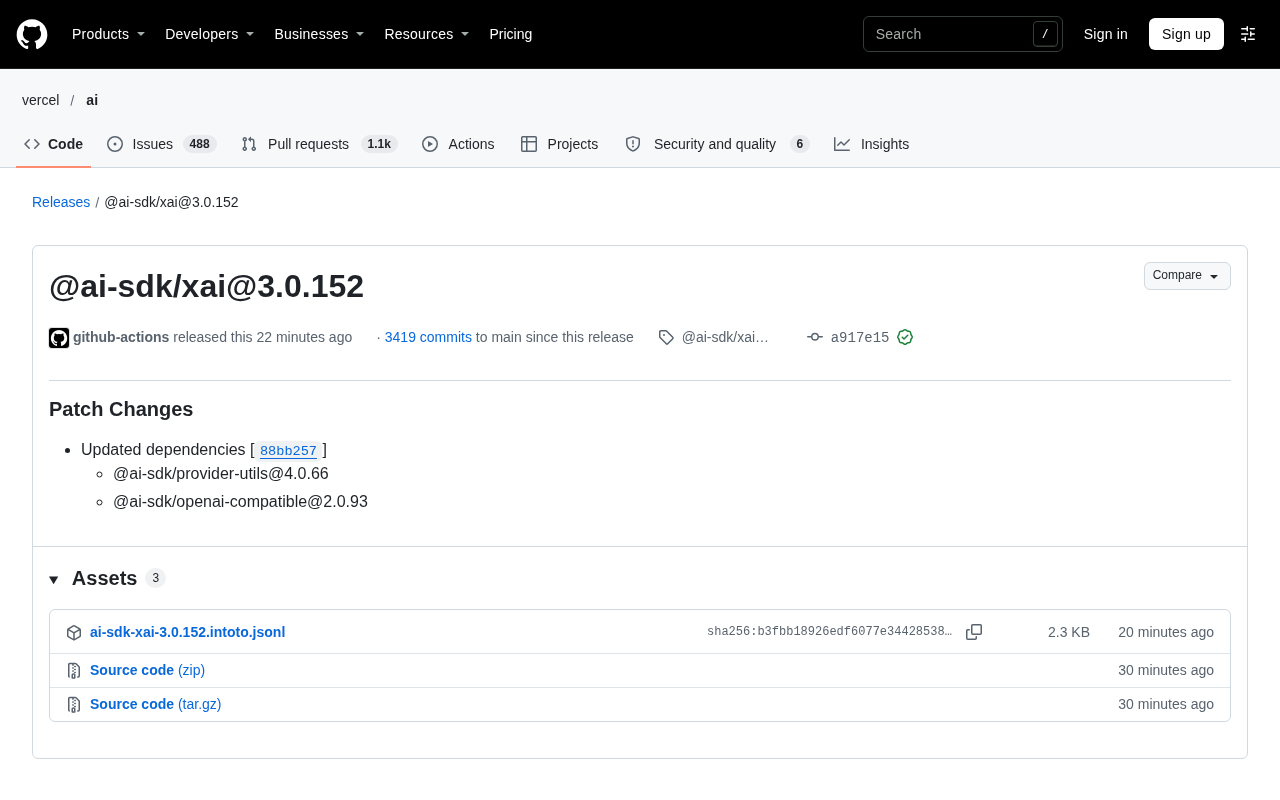
AI SDK xAI 3.0.152 Patch Update: Dependency Upgrades and Ecosystem Compatibility
AI SDK's xAI provider releases patch 3.0.152, updating provider-utils and openai-compatible dependencies. This article analyzes the patch contents, the xAI provider's positioning, and upgrade considerations.
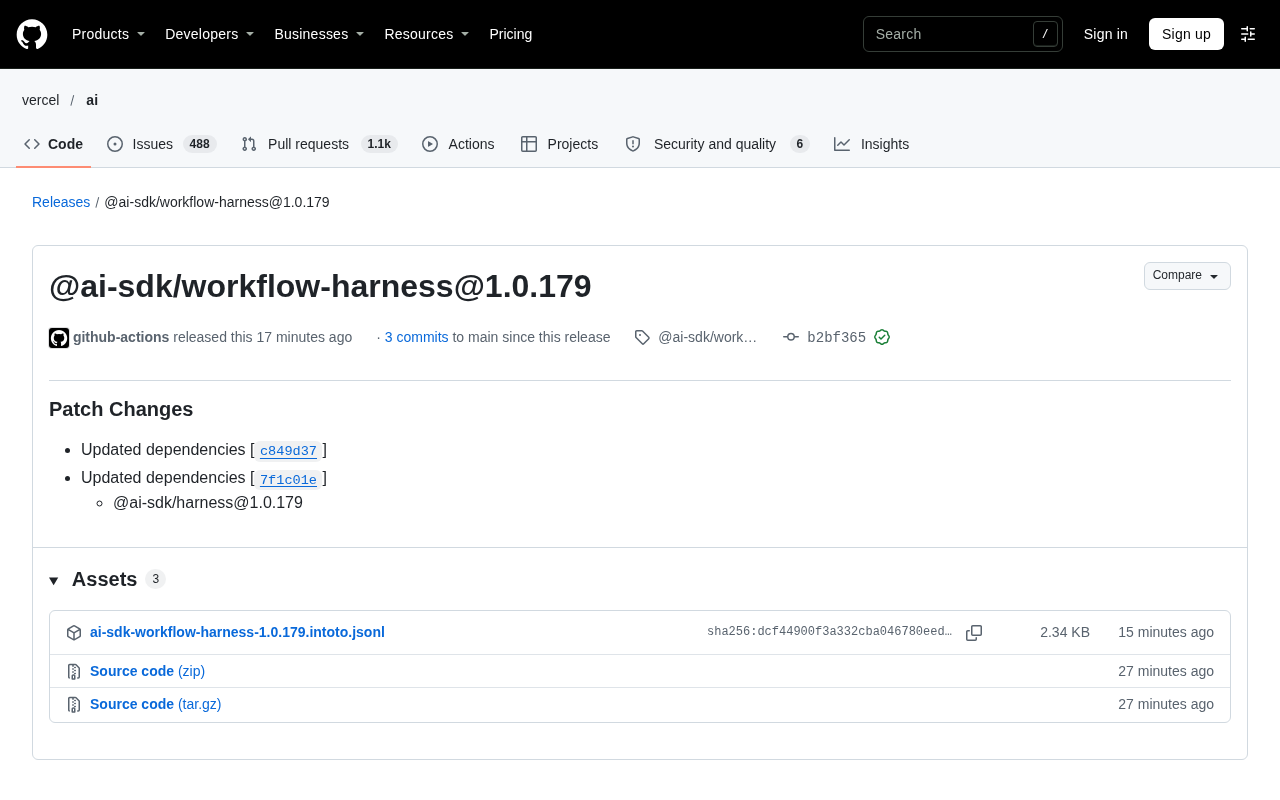
@ai-sdk/workflow-harness 1.0.179 Released: Dependency Patch Update
@ai-sdk/workflow-harness releases patch version 1.0.179 with two dependency updates and a synchronized @ai-sdk/harness upgrade. Release overview, patch change meaning, and upgrade advice.
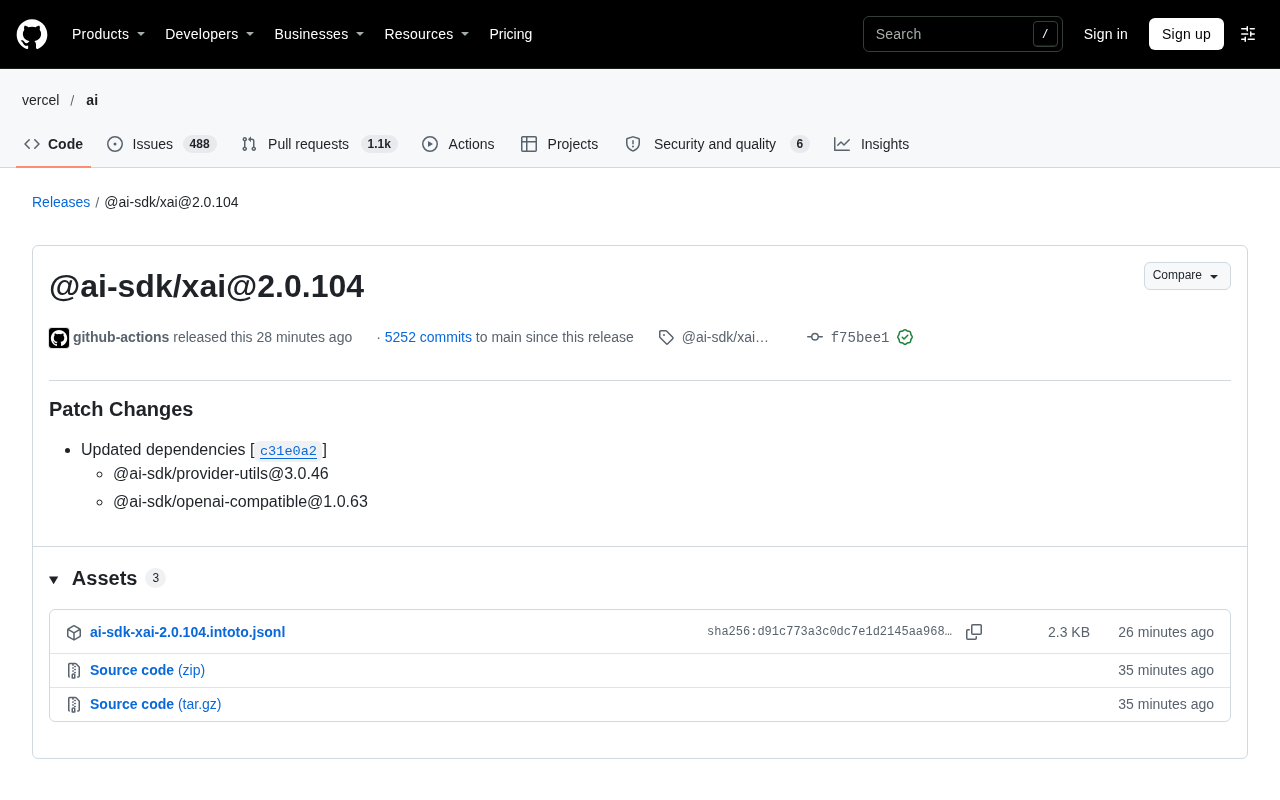
@ai-sdk/xai 2.0.104 Patch Release: Coordinated Dependency Updates
@ai-sdk/xai releases patch version 2.0.104, syncing provider-utils to 3.0.46 and openai-compatible to 1.0.63. Here's what this coordinated dependency update means for developers.