Can Universal Pre-K Bridge America's Partisan Divide?

A Democrat argues Congress should push states to provide pre-K for four-year-olds, seeing it as a pragmatic issue for bipartisan cooperation.
Based on an interview clip, the article presents a Democratic political figure's pragmatic stance on pre-K. He believes the federal government should push states to provide pre-K for four-year-olds and wants Congress to act to ensure coverage in every state. He sees pre-K as an area for cooperation with different party factions, including Elizabeth Warren, and hopes to extend consensus to both parties. The article argues that pre-K, as a public good that invests in the future and involves child development and labor participation, is more likely than issues like Medicare for All to form bipartisan consensus; its federal-incentive, state-implementation approach reflects pragmatic politics. It concludes that this case offers lessons for tech policy: framing issues as nonpartisan public interests boosts political feasibility.
Title
Can Universal Pre-K Bridge America's Partisan Divide?
Meta Description
An interview segment suggests that pre-K education in the U.S. could become a bipartisan issue. This article analyzes the pragmatic stance, the case for a federal role, and the realistic basis for cross-party cooperation, and explores its implications for tech policy discussions.
Article Content
Democrats and Republicans clash on many issues, but a recently surfaced interview clip suggests that pre-K education may be a rare area for cooperation. When asked whether he would run for president, a Democratic political figure laid out his pragmatic stance in detail: the federal government should play a role in pushing states to provide pre-K for four-year-olds, and he believes this issue has the potential to transcend party lines.
Pragmatic Stance: Federal Role and Bipartisan Cooperation
When asked how he views child care and pre-K from the federal level, the figure made clear that the federal government has a role to play. He mentioned that he currently supports multiple congressional candidates and discusses the pre-K issue with them. In his view, even though the media is eager to play up divisions within the Democratic Party, that narrative is overstated. He gave the example of meeting with Elizabeth Warren, where he looks for areas both sides agree on and can work on together—pre-K being one of them, and housing another.
This pragmatic approach is consistent with his cautious stance on "Medicare for All." He has previously described himself as a "more pragmatic candidate," and on the pre-K issue, pragmatism means acknowledging federal responsibility while seeking a viable political path.
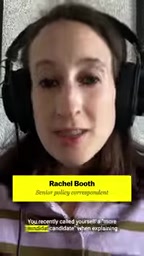
Medicare for All is a universal health care plan long championed by the progressive wing of the Democratic Party. Its core proposal is to expand Medicare into a single-payer system covering all Americans, thereby replacing the private insurance market. The plan has been advocated by Bernie Sanders and others, and Elizabeth Warren has also expressed support. Because it involves redistributing interests among the insurance industry, medical institutions, employers, and taxpayers, it is highly controversial; Republicans are almost uniformly opposed, and moderates within the Democratic Party also have many reservations. Therefore, when a political figure takes a cautious stance on Medicare for All while calling himself "more pragmatic," he is in effect signaling to voters that he favors gradual, implementable reform rather than radical structural change. This positioning also explains why he is more willing to take a clear stand and push for federal action on less controversial issues like pre-K.
Specific Proposal: Congress Should Push States to Cover Four-Year-Olds
The figure's core proposal is that Congress should take action to ensure every state provides pre-K for four-year-olds. He describes the policy as "a good thing" and "a smart move," and emphasizes its nonpartisan nature. He believes such a measure would benefit people in every state across the country and could genuinely bring Democrats and Republicans together.
You may not have noticed, but he specifically mentions that he is supporting multiple congressional candidates and talking with them about the pre-K issue. This shows that he is not merely停留在 the level of ideas but is trying to embed this issue in the actual political agenda.

The Realistic Basis for Cross-Party Cooperation
The reason pre-K education may become a bipartisan consensus has to do with the nature of the policy. Unlike issues such as Medicare for All that deeply touch on interest structures, providing pre-K for four-year-olds is closer to a public good that "invests in the future." It involves both child development and labor participation—whether parents can access affordable child care directly affects employment.
The figure mentions that he and Warren would "look for things we both agree on to work on together." This suggests that even among different factions within the Democratic Party, pre-K is an issue that can build consensus. Extending that consensus to the bipartisan level is the hope he has publicly expressed.
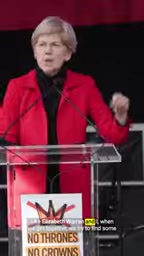
Public goods in economics refer to goods or services that are non-rivalrous and non-excludable, and that usually require government intervention because private markets underprovide them. Pre-K education is often classified as a "quasi-public good" or "investment-type public spending with positive externalities": on the one hand, the cognitive and non-cognitive gains from early childhood development translate over the long term into higher labor productivity and lower crime rates and welfare dependency; on the other hand, affordable child care can raise the labor force participation rate of parents, especially mothers, thereby expanding the tax base. It is precisely this characteristic of "benefiting everyone and having few direct losers" that makes pre-K, compared with issues like Medicare for All that involve reorganizing vested interests, more likely to win majority support in public opinion and provides a realistic basis for cross-party cooperation.
Political Rhetoric and Policy Feasibility
In the interview, he asked rhetorically: "Wouldn't it be nice to do the right thing, the smart thing, and do it in a nonpartisan way?" This rhetoric is clearly inspirational, but it also reflects a real problem: although pre-K may be attractive in public opinion, delivering it at the federal level still requires congressional action. His statement that "Congress should take action" means that federal legislation is a necessary step, not something that can be achieved through administrative push alone.
From a pragmatic perspective, the challenge of this proposal lies in how to design the division of responsibilities between the federal government and the states. What he proposes is "ensuring every state provides it," not "the federal government directly operating it," which implies a federal incentive or framework legislation approach that respects states' flexibility in implementation.
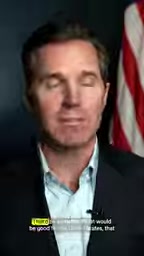
Under American federalism, the division of responsibilities between the federal government and the states is key background for understanding pre-K legislation. K-12 education is primarily the responsibility of states and school districts, and the federal government usually exerts influence through grants, conditional funding, and framework legislation (such as the Every Student Succeeds Act) rather than directly operating schools. Therefore, "ensuring every state provides pre-K" would more likely be implemented through federal matching funds, minimum standards, and allowing states flexibility in designing implementation plans, similar to the federal-state cooperation model of Medicaid. This design both responds to the demand that "the federal government has a responsibility" and avoids criticism of federal overreach; it is a concrete institutional expression of pragmatic politics.
Implications for AI and Technology
Although this interview focuses on U.S. domestic policy, the logic behind it also has reference value for technology policy discussions. On issues such as AI regulation and digital infrastructure, there is likewise tension between the "federal role" and "state-level experimentation." The pre-K case shows that when an issue is framed as "beneficial to all and nonpartisan," its political feasibility increases significantly. For the tech industry, how to translate policy proposals into bipartisan consensus rather than getting trapped in ideological opposition is a strategic question worth considering.
Of course, a single interview clip is not enough to prove that universal pre-K can truly bridge the partisan divide. But it at least offers a window: in a highly polarized political environment, pragmatists are still looking for issues they can work on together, and pre-K is one area that has been explicitly named.
One-line Summary
A Democrat argues that Congress should push states to provide pre-K for four-year-olds, seeing it as a pragmatic issue that can attract bipartisan cooperation.
Paragraph Summary
Based on an interview clip, the article introduces a Democratic political figure's pragmatic stance on the pre-K issue. He clearly believes the federal government should play a role in pushing states to provide pre-K for four-year-olds and advocates congressional action to ensure coverage in every state. He sees pre-K as an area where he can cooperate with different party factions, including Elizabeth Warren, and hopes to extend the consensus to both parties. The article argues that because pre-K is a public good that "invests in the future" and involves child development and labor participation, it is more likely than issues like Medicare for All that deeply affect interest structures to form bipartisan consensus; its "federal incentives, state implementation" approach also reflects a pragmatic political style. The article concludes that this case has reference value for technology policy discussions such as AI regulation and digital infrastructure: issues framed as nonpartisan public interests are more likely to gain political feasibility.
Related articles

Will GitHub Die? Open Source Maintainer Burnout and the Collaboration Crisis in the AI Era
Lex Fridman podcast discussion on open source maintainer burnout and GitHub's predicament: massive pull requests overwhelm core maintainers, and AI worsens code bloat. Using math journal peer review and Poincaré conjecture verification as analogies, the article analyzes why verification in knowledge production must be deliberately slow, and how open source communities can avoid the failure mode of maintainers exiting.

Stop Building Cookie-Cutter AI Websites: 3 Tools That Transform Your Coding Agent
Three tools that boost AI coding agents: FFmpeg skill for local video editing in Claude Code and Cursor, Hallmark's 50 design themes to fix cookie-cutter AI sites, and Jailbreaks' 25+ model prompts.

How America's Gerontocracy Squeezes the Younger Generation
Americans over 55 hold nearly three-quarters of national wealth, alongside an 80-year-old president and elderly congressional leaders. The Atlantic's Idrees Kahloon explains how gerontocracy drives up housing costs, squeezes opportunities for the young, and explores zoning reform and child poverty reduction as practical fixes.