CoreWeave Earnings Lift AI Trade as Anthropic IPO Valuation May Hit New Highs

AI compute demand confirmation offsets rising inflation rate-hike bets as markets trade two narratives.
Bloomberg's The Brief captures a contradictory market: CoreWeave beat expectations with $13.3B full-year guidance and a $132B backlog, improved financing easing debt worries and lifting the AI supply chain. Anthropic's underwriters may raise its IPO valuation above $1.5 trillion, while OpenAI's Q3 revenue of about $10B, up 50% QoQ, reinforces enterprise AI demand. Meanwhile, hot US CPI drove the two-year Treasury yield to its biggest one-day gain in 19 months and the ten-year briefly above 5%. Citi sees inflation above consensus, shifting to short duration and adding gold. Markets are trading both AI's long-term certainty and a rate repricing; the real variable is application-side productivity.
Bloomberg's latest edition of The Brief paints a contradictory market picture: on one side, CoreWeave's better-than-expected earnings have reignited enthusiasm for the AI trade; on the other, hotter-than-expected US CPI data has pushed rate-hike bets to new heights. These two threads intertwine to form the most tense tension between tech assets and the macro environment today.

1. CoreWeave Earnings: A Concentrated Confirmation of AI Compute Demand
CoreWeave delivered a quarterly report card that let the market breathe a sigh of relief. The company raised its full-year revenue guidance to $13.3 billion, and third-quarter revenue also beat Wall Street expectations. CEO Michael Intrator called it a "breakout quarter" for the company.
Even more noteworthy is the order backlog. CoreWeave disclosed a backlog exceeding $132 billion, which substantially improves revenue visibility for coming quarters. Losses are also narrowing — a rare positive signal for a company whose business model had previously drawn heavy scrutiny.
The market's doubts were not unfounded. CoreWeave needs to borrow at relatively high interest rates to build data centers and procure chips, then lease that compute to customers like Microsoft and OpenAI. Its net debt still stands at around $62 billion. Bloomberg Intelligence analyst Matt Bloxham noted that the more valuable information in this report was actually the improvement in financing structure: the company expects to receive about $9 billion in prepayments from customers, and an investment-grade delayed draw financing is also in progress, meaning it won't need to rely on expensive debt to sustain expansion in the near term.
This signal directly eased concerns that had been amplified by soaring yields. After the earnings release, nearly the entire AI supply chain benefited — from cloud service providers and server and memory suppliers to data center industrial companies, all posted gains. The photonics sector also strengthened; strong results from Japan's Hamamatsu Photonics confirmed that data center demand for photonic components remains robust.
Backlog is a core forward-looking indicator for the cloud services and compute leasing industry, referring to the total value of contracts that customers have signed but that have not yet been delivered or recognized as revenue. For asset-heavy companies like CoreWeave, backlog size directly determines future revenue visibility and is a key basis for the market to assess whether it can cover hefty capital expenditures and debt interest. A $132 billion backlog means much of its future capacity has already been locked up, but it also implies customer concentration risk — if major customers adjust the pace of their AI capital spending, revenue expectations would face downward pressure.
Delayed Draw Term Loan is a term loan arrangement that allows the borrower to draw funds in tranches within an agreed period, typically used to match project construction progress. If this financing obtains an investment-grade rating, it means borrowing costs are significantly lower than high-yield bonds, which can effectively improve CoreWeave's debt structure and reduce reliance on expensive short-term debt.
2. Anthropic IPO: Valuation Expectations Revised Upward
According to the Financial Times, Anthropic's underwriters are considering raising the IPO valuation to $1.5 trillion or even higher. If priced in that range, it would set a record for IPO history.
Previously, the company's updated S-1 filing indicated a price range of $17 to $78 per share. Raising the pricing range amid strong demand is uncommon but not unprecedented. Analysts noted that this valuation is still below the higher levels discussed earlier in the market, but clearly above the base IPO pricing range.
The core support for the valuation remains revenue growth. Although Anthropic's revenue growth has slowed somewhat, the absolute level remains very high. Meanwhile, OpenAI's third-quarter revenue was about $10 billion, up roughly 50% quarter-over-quarter, with annualized revenue of about $50 billion. Both companies are tilting toward the enterprise AI market, indicating that demand in this segment is large enough to accommodate multiple major players.
You may not have noticed, but successfully clearing the IPO is only the first step. A guest on the Bloomberg program reminded viewers that how the secondary market reacts after the lock-up period ends is the real test of the valuation's quality.
S-1 Filing is a registration statement required by the US Securities and Exchange Commission (SEC) for companies planning to go public, containing core information such as business model, financial data, risk factors, and the preliminary price range. Underwriters may raise the range before final pricing if roadshow feedback is positive, but this does not guarantee the final transaction price, which still depends on subscription multiples and market sentiment.
Lock-up Period is typically 180 days after an IPO, during which company insiders and early investors may not sell shares. After the lock-up expires, a large number of shares may be unlocked, potentially creating a supply shock and depressing the stock price, so it is often seen as a "stress test" moment for whether an IPO valuation is solid.
3. Inflation Data Shakes Everything: Rate-Hike Bets Heat Up
Hedging against the optimism in AI stocks is the hotter-than-expected CPI data. After the release, the two-year Treasury yield posted its largest single-day gain in about 19 months, and the ten-year yield briefly broke through 5%. Because it coincided with Veterans Day, the US cash Treasury market was closed, but futures markets continued to digest the shock.
Chicago Fed President Austan Goolsbee's remarks on PBS NewsHour were repeatedly cited: he called the report "unsettling, close to disturbing," and said plainly that the US faces "a real inflation problem."
Bloomberg analyst Ven Ram was even more direct: actual growth is above trend and inflation is significantly above target, and the market had been ignoring the question of how far the Fed still needs to go. He believes the number of rate hikes currently priced in is insufficient to address the situation, and the direction of long-end yields remains upward.
Olaolu Agango, Head of Portfolio Construction and Analysis at Citi, offered a quantitative perspective: the share of CPI components rising 5% or more rose to 56% in October, up from 44% in September and the highest since 2022. He disclosed that Citi's inflation forecast is above consensus and that it has shifted duration positioning to the short end while adding gold to balance the portfolio.

Two-year and ten-year Treasury yields reflect the market's pricing of the short-term policy rate path and long-term economic growth and inflation expectations, respectively. The two-year is most sensitive to Fed rate-hike expectations, and a large single-day jump usually means the market is rapidly repricing the policy rate path; the ten-year breaking 5% reflects rising term premiums and inflation concerns simultaneously. Rising yields directly raise discount rates and weigh on valuations of long-duration growth stocks (such as AI and tech assets) — this is precisely the financial mechanism behind the "two narratives" pulling against each other in this article.
Duration in bond investing measures price sensitivity to interest rate changes; the longer the duration, the larger the price decline when rates rise. Citi's shift to short duration is essentially reducing the portfolio's interest rate exposure when inflation and rate-hike risks rise.
4. Politics and Geopolitics: A Few Easily Overlooked Threads
Beyond macro, the program also reviewed several noteworthy developments.
Morgan Stanley noted that global equity hedge funds cut risk exposure in the first week of November at the fastest pace in more than a decade, against the backdrop of post-midterm-election selling in AI stocks, with hedge fund returns negative across all regions.
US Ambassador to China David Perdue acknowledged in a Bloomberg interview that controversy surrounding Nvidia CEO Jensen Huang has made US-China relations "bumpy." He said the two countries are establishing direct channels to communicate quickly in the event of serious incidents involving AI models. US Treasury Secretary Scott Bessent, in another setting, emphasized that economic security is national security.
Russia and Ukraine held a second day of US-led peace talks in Abu Dhabi. Ukrainian President Zelensky said a potential ceasefire covering the Black Sea and energy infrastructure could be put on the table. But Russia was cautious, saying it was too early to judge progress and that the two sides exchanged attacks overnight. Territory and security guarantees remain the two most difficult disagreements.

5. How to Understand This Fractured Market Sentiment
Putting the above together, the market is trading two narratives at once. One is the long-term certainty of AI capital spending and compute demand — CoreWeave's backlog and the revenue growth of Anthropic and OpenAI all reinforce this. The other is the repricing of the rate environment: sticky inflation means discount rates are unlikely to fall, which puts sustained pressure on highly valued growth assets.
One remark from Agango on the program captured the key point: elections bring volatility, but long-term outcomes are driven by fundamentals. More than 80% of S&P 500 constituents have reported earnings, with profit growth of about 30% year over year — the third consecutive quarter above 25% growth. The S&P 500's price-to-earnings ratio is about 18x, the lowest in roughly three years.
But the appeal of valuations rests on the premise that earnings expectations are met. If the rate-hike path is steeper than the market expects, or if data center construction slows due to local policy resistance, this logic will come under pressure. Agango is relatively optimistic: the US currently has thousands of operating data centers and a comparable number of projects in various planning stages; data center construction is essentially a state-level legislative issue, and if one state is blocked, projects can move to another.
The real variable may not lie on the construction side but on the application side. Once the infrastructure is built, whether broader enterprises can deliver productivity gains is the core factor determining the length of this AI cycle.
Price-to-earnings (P/E) ratio is the ratio of stock price to earnings per share, commonly used to gauge whether valuations are high or low. An S&P 500 P/E of about 18x is seen as the lowest in roughly three years, but this judgment depends heavily on whether earnings expectations are met: if earnings growth slows due to rising rates or slower AI capital spending, the denominator contracts and the actual valuation is not cheap. Thus "low valuation" and "high uncertainty" can coexist — one of the roots of today's fractured market sentiment.
One-line Summary
AI compute demand confirmation and rising inflation rate-hike bets offset each other as the market trades two narratives at once.
Paragraph Summary
Bloomberg's The Brief sketches the current market's contradictory picture: CoreWeave beat expectations, raising full-year revenue guidance to $13.3 billion with a backlog exceeding $132 billion; improved financing structure eased debt concerns and drove broad gains across the AI supply chain. Anthropic's underwriters are considering raising the IPO valuation above $1.5 trillion, while OpenAI's third-quarter revenue of about $10 billion, up roughly 50% quarter-over-quarter, reinforces the enterprise AI demand narrative. On the other side, hotter-than-expected US CPI pushed the two-year Treasury yield to its largest single-day gain in about 19 months, with the ten-year briefly breaking 5%, heating up rate-hike bets. Citi believes inflation will exceed consensus and has shifted to short duration while adding gold. The article notes the market is trading both AI's long-term certainty and a rate repricing at once, with the real variable being whether application-side productivity gains materialize.
Related articles
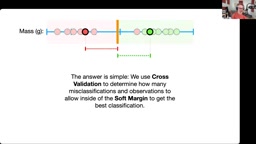
Support Vector Machines (SVM): Core Concepts and Python Hands-On Practice
From maximal margin classifiers to the kernel trick, this article explains SVM core concepts in an accessible way and demonstrates a complete polynomial-kernel SVM workflow on the diabetes dataset in Python, including standardization, model training, and decision boundary visualization.

GRPO Reinforcement Learning Explained: Group Relative Policy Optimization That Teaches LLMs to Reason
A deep dive into the GRPO reinforcement learning algorithm: how in-group relative advantages are computed, how clipping and the importance sampling ratio work in the loss, the role of KL divergence constraints, and GRPO's training-cost advantage over PPO—with round-by-round mathematical derivations.

Mercedes-Benz Launches Point-to-Point Urban Assisted Driving, Directly Challenging Tesla FSD
Mercedes-Benz will launch hands-off highway driving and point-to-point urban navigation assistance next year, directly targeting Tesla FSD. This article analyzes Mercedes' dual-track layout, the technical challenges of urban point-to-point, and the competitive differences between traditional automakers and Tesla in assisted driving routes.