Cosh: Open-Source AI Agent Orchestrator Debuts on Hacker News
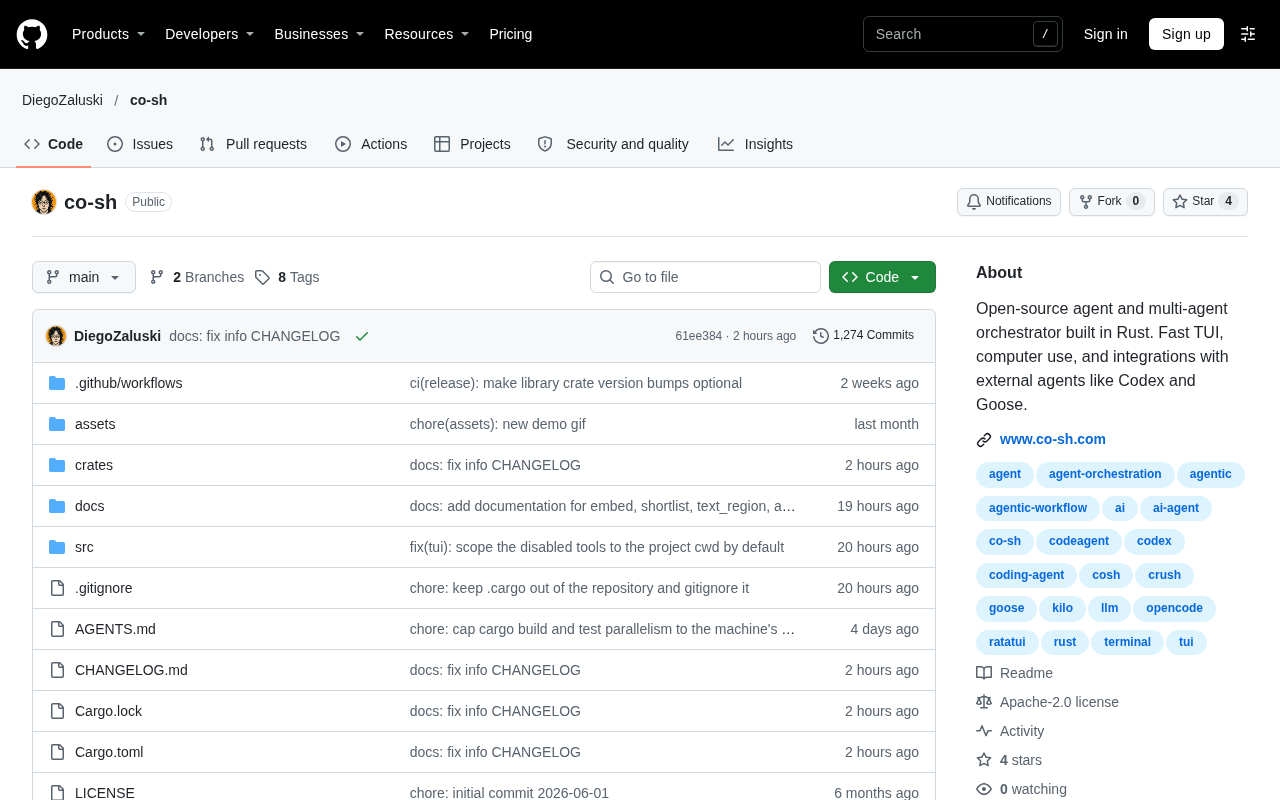
Open-source AI agent orchestrator Cosh debuts on Show HN, positioning itself as a key middle layer for agent engineering.
Open-source AI agent orchestrator Cosh recently made its first public appearance in the Show HN section of Hacker News, receiving only 3 points and 1 comment—a typical early exposure stage. The orchestrator handles scheduling, coordination, and process control in agent systems, deciding which agent does what, when, and in what order, making it a key middle layer for multi-model, multi-tool applications. Released as open source, Cosh allows developers to view, modify, and self-host its orchestration logic. The article notes that rising agent complexity makes orchestration layers essential, and open-source orchestrators offer a compromise between in-house costs and closed-source lock-in.
Open-Source AI Agent Orchestrator Cosh Takes the Stage
As AI agents gradually move from single-point tools toward complex workflows, how to efficiently coordinate multiple agents—letting them each play their part while working together—has become a hot topic in the developer community. Recently, an open-source AI agent orchestrator called Cosh appeared in the Show HN section of Hacker News, sparking some discussion. According to the Hacker News page, the post received 3 points and 1 comment. While its popularity isn't high yet, the combination of the keywords "open-source" and "orchestrator" hits a key gap in the current agent ecosystem.
What Is Cosh: Starting from "Orchestration"
The original title makes it clear that Cosh positions itself as an "open-source AI agent orchestrator." In agent systems, an orchestrator typically takes on the role of scheduling, coordination, and process control—it doesn't directly complete a specific task, but decides which agent executes a task at what time, in what order, and with which resources. For application scenarios that need to chain multiple models, tools, or sub-agents, the orchestration layer often determines the stability and maintainability of the entire system. Cosh is released as open source, meaning developers can view, modify, and self-host its orchestration logic—naturally attractive to technical teams that prioritize data privacy and customization capabilities.
Agent Orchestration is an engineering concept that emerged alongside the rise of multi-agent systems. Its core idea is to decompose complex tasks into subtasks that can be handled by different agents or tools, and to manage their dependencies, execution order, data transfer, and exception recovery through a centralized scheduling layer. Common orchestration patterns include serial chain calls, parallel branch merging, conditional routing, and stateful loop workflows. Unlike traditional microservice orchestration (such as Kubernetes scheduling containers), the units of agent orchestration are model instances with reasoning capabilities, so it also involves unique aspects such as context injection, tool selection strategies, and intermediate result validation. A well-designed orchestration layer typically provides declarative process descriptions, observable execution logs, and pluggable component interfaces, allowing developers to adjust overall behavior without modifying the internal logic of individual agents.
Community Feedback and Open-Source Ecosystem Positioning
Judging from the interaction data on Hacker News, Cosh is currently in an early exposure stage: 3 points and 1 comment indicate it hasn't yet generated large-scale discussion, placing it in a typical "new project first public release" state. On Show HN as a launch channel, many open-source projects start small and gradually build attention. The value of an open-source orchestrator often depends on its ecosystem integration capabilities—whether it can connect to mainstream model interfaces, whether it supports common tool-calling protocols, and whether documentation and examples are sufficient all affect developers' willingness to adopt it. The original material doesn't disclose these technical details, which is both information Cosh needs to fill in later and a key dimension for the community to evaluate it.
Show HN is a section of Hacker News specifically for showcasing new works by individuals or teams. Posters typically use "Show HN: Project Name" as the title, attach a project link, and provide a brief description. The community culture of this section leans toward constructive feedback: commenters often ask specific questions about technical implementation, user experience, and potential improvements, while the number of upvotes reflects the post's immediate attention. Due to fierce competition on the Hacker News front page, it's normal for new projects to receive single-digit points in their early days—many open-source projects that later became well-known initially received only limited exposure. For open-source projects, the value of Show HN lies not only in traffic but also in reaching a group of early technical users willing to try things out and provide in-depth feedback—feedback that often directly influences a project's roadmap and interface design.
Why Orchestrators Are Worth Watching
The complexity of agent applications is rising rapidly. A single agent handling simple Q&A is already fairly mature, but when it comes to multi-step tasks, multi-tool collaboration, and long-process state management, the lack of an orchestration layer easily leads to scattered logic and debugging difficulties. The emergence of open-source orchestrators gives developers a controllable middle-layer option: compared to building everything in-house, it lowers setup costs; compared to closed-source solutions, it preserves the freedom to modify and self-host. Cosh's entry into this field at this time reflects that the open-source community's focus on agent infrastructure is shifting from "model integration" to "process governance."
Observation Tips for Early-Stage Projects
For developers focused on AI agent infrastructure, early-stage open-source projects like Cosh are worth keeping an eye on. When evaluating, pay attention to several aspects: whether the abstraction level of orchestration capabilities is clear, whether runnable examples are provided, the project's maintenance frequency and license terms, and compatibility with existing agent frameworks. Since currently available public information is limited, it's recommended to go directly to its code repository and the Hacker News discussion thread for first-hand information before deciding whether it's suitable for your tech stack.
Summary
Cosh appeared on Show HN as an open-source AI agent orchestrator, representing a segment that is heating up. Its current visibility is limited, but the "open-source + orchestration" positioning addresses a real need in agent engineering. As more technical details and community feedback accumulate, such projects have the potential to become an important piece of the puzzle in bringing agent applications to fruition.
One-line Summary
Open-source AI agent orchestrator Cosh debuts on Show HN, positioning itself as a key middle layer for agent engineering.
Paragraph Summary
Open-source AI agent orchestrator Cosh recently made its first public appearance in the Show HN section of Hacker News, with the post receiving only 3 points and 1 comment—a typical early exposure stage. In agent systems, the orchestrator is responsible for scheduling, coordination, and process control. It doesn't directly execute specific tasks but decides which agent completes work when, in what order, and with which resources—making it a key middle layer for chaining multi-model, multi-tool applications. Cosh is released as open source, allowing developers to view, modify, and self-host its orchestration logic, which is attractive to teams that prioritize data privacy and customization. The article notes that as agent application complexity rises rapidly, the lack of an orchestration layer leads to scattered logic and debugging difficulties. Open-source orchestrators offer a compromise between in-house development costs and closed-source lock-in, reflecting that the community's focus is shifting from model integration to process governance.
Related articles
Anthropic Model Benchmarking: Fable 5 vs 5.1 vs 5.2 Comparison
Based on Reddit community comparison material, this analyzes benchmark differences among Anthropic models Fable 5, 5.1, and 5.2, and discusses the practical implications of version iterations for developers and model selection advice.

Jensen Huang Steps Down as Nvidia CEO, Asian Governments Scramble to Respond to Chip Supply Shifts
Jensen Huang's departure as Nvidia CEO triggers chain reactions across Asian governments: some confirm chip supply commitments, others monitor local AI project impacts and handle related investigations. This article analyzes supply chain stability, project risks, and compliance uncertainty.
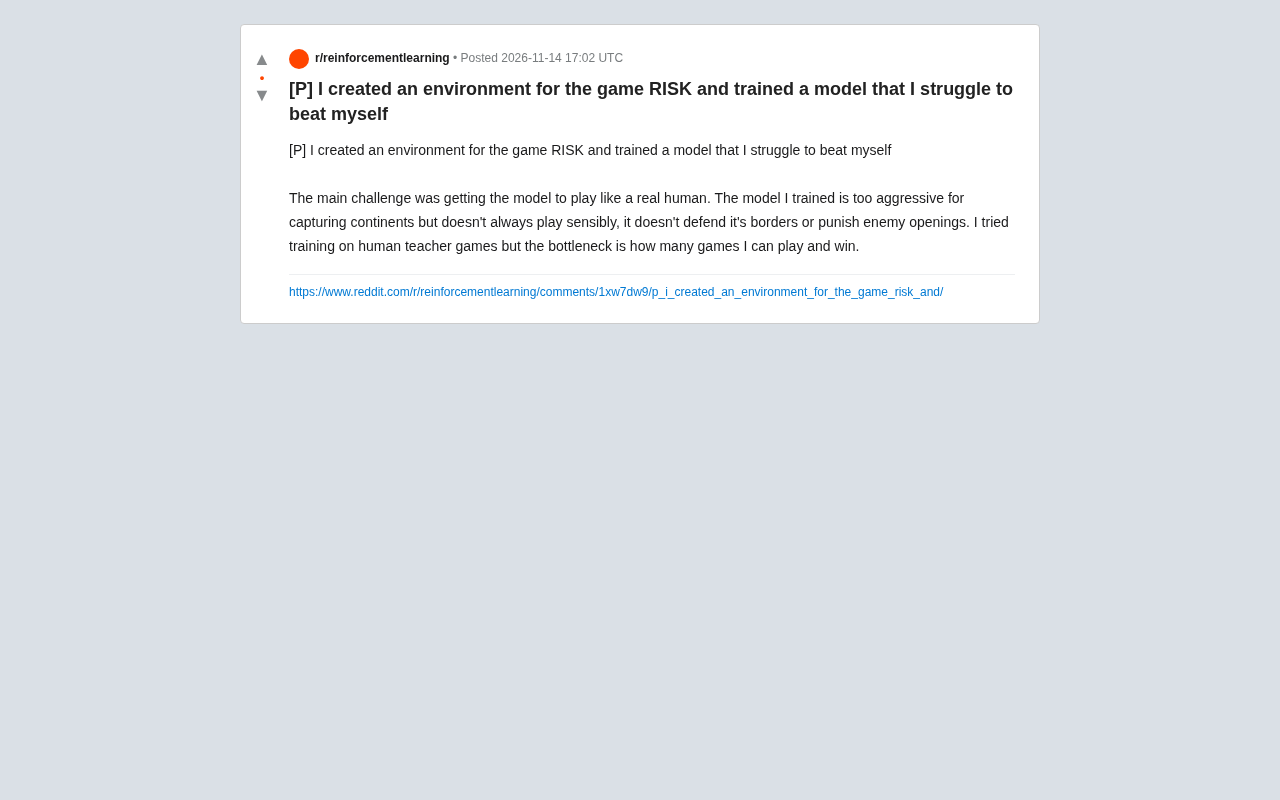
Reddit Player Builds RISK Game Environment and Trains an AI That's Nearly Impossible to Beat
Reddit player builds a RISK training environment and trains an aggressive AI model that's nearly unbeatable. Strong at expansion but weak at defense, the author hits a bottleneck trying human data training, revealing common game AI development challenges.