DeepSeek Blacklisted by the US: An AI Iron Curtain Is Descending
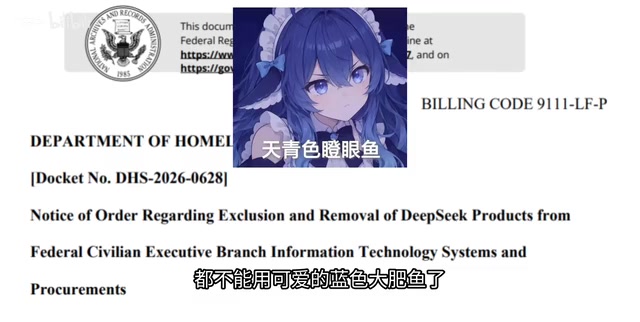
US DHS blacklists DeepSeek for federal procurement, tracing developers through the supply chain and solidifying AI national barriers.
The US Department of Homeland Security has publicly added DeepSeek to the procurement blacklist for civilian government agencies, covering dozens of federal agencies and independent bodies including the Departments of State, Treasury, and NASA. The key to the ban is that it traces the model developer rather than the server location: any third-party product developed using DeepSeek technology, whether locally deployed or in the cloud, is removed from the government procurement list, and the supply chain's "DeepSeek content" must be zero. The official reasons are data transmission and national security, but the logic of inferring malicious code in the underlying model from app front-end vulnerabilities is difficult to establish. The article links this with the 2019 GPU embargo, arguing that from choking computing power to blocking models, national barriers in AI are systematically solidifying, and the global AI ecosystem faces substantive fragmentation.
The US Department of Homeland Security recently published a document adding DeepSeek to the procurement blacklist for civilian government agencies. This is not a simple procurement restriction but a systematic exclusion targeting Chinese AI models. From federal civilian agencies to the upstream and downstream supply chain, an AI iron curtain stretching across the Pacific is slowly descending.
Scope of the Ban: More Than Government Procurement
According to a breakdown by Bilibili creator Jiang Cheng, the list of covered departments is quite long: the Departments of State, Treasury, Justice, Interior, Agriculture, Commerce, Labor, Health, Education, Transportation, Energy, Housing and Urban Development, Veterans Affairs, NASA, the Environmental Protection Agency, the Communications Commission, the Trade Commission, and Homeland Security itself, plus dozens of independent agencies.
More critical is the extension logic of the ban. The document not only removes information technology products and services developed by DeepSeekAd from federal civilian agency procurement but also removes all DeepSeek and affiliate products, as well as third-party products and services developed using DeepSeek technology. This means that for all products procured by the US government, the "DeepSeek content" in their supply chain must be zero — even locally deployed models are no exception.
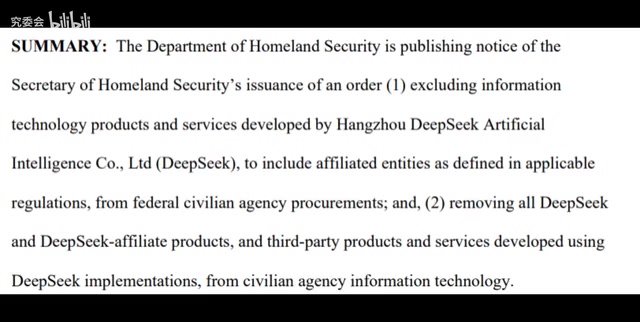
The underlying legal basis is that federal law targets the model developer, not the location of the server. In other words, as long as your product uses DeepSeek technology at its core, no matter where it is deployed, it cannot enter the US government procurement list. This clause directly kills the possibility of DeepSeek growing in the US market through government channels and forces all companies that want to make government money to re-examine their supply chains.
The so-called "federal civilian agencies" refer to the civil administrative departments of the US federal government other than military departments such as the Department of Defense, whose procurement activities are governed by the Federal Acquisition Regulation (FAR) and various federal statutes. The legal hook of this ban is to designate DeepSeek as technology developed by a "foreign entity of concern," thereby triggering procurement exclusion. It is worth noting that the US federal procurement system already has mechanisms such as the Federal Risk and Authorization Management Program (FedRAMP) for supply chain review, but these previously focused mainly on cloud service security compliance; using the nationality of the model developer as the basis for exclusion means the review logic has shifted from "whether the product is safe" to "whether the technology's bloodline is clean" — a change in nature.
Does the Reasoning Hold Up?
The official reasons are not new: data transmitted back to China, collection of personal privacy, and potential threats to the US government. The UP host's sarcasm is sharp: "The pizza shop next to the Pentagon might drown Pentagon staff, so should I shut it down?"
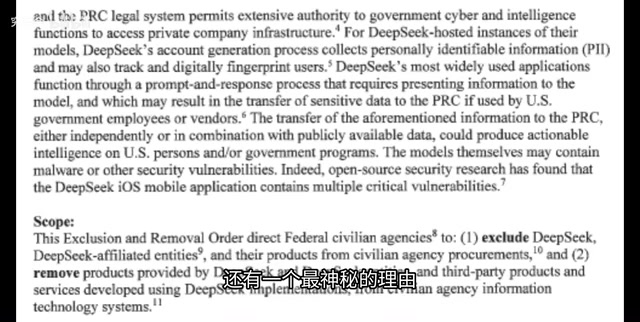
Even more puzzling is the technical attribution logic. The document cites investigation reports from certain security companies claiming that DeepSeek's iOS app has vulnerabilities, and then infers that the underlying model may contain malicious code. Deriving that the underlying large model is a Trojan from front-end app code vulnerabilities is technically difficult to establish. The implementation flaws of a front-end application and whether the model weights are safe belong to completely different levels. This attribution method exposes the weight of non-technical factors behind the ban.
From a technical perspective, the front-end code of a mobile app and the weight files of the underlying large model are completely different software artifacts. Front-end vulnerabilities usually refer to defects in the interface layer or network communication implementation, such as insecure local storage, plaintext transmission, or third-party SDK data collection issues; while the large model itself is a set of numerical parameters, and whether it "contains malicious code" requires separate audits of the weight files, inference framework, and training data pipeline. Directly presuming the former's problems as the latter's attributes is equivalent to concluding that explosives are buried in the foundation because the door lock of a building is not secure — this does not constitute a valid causal chain in engineering audits. If the security company report does not provide reverse-engineering evidence at the model weight level, its conclusion can only indicate questionable app compliance and cannot support a security characterization of the model itself.
From GPU Embargo to Model Blockade: The Trajectory of the Iron Curtain
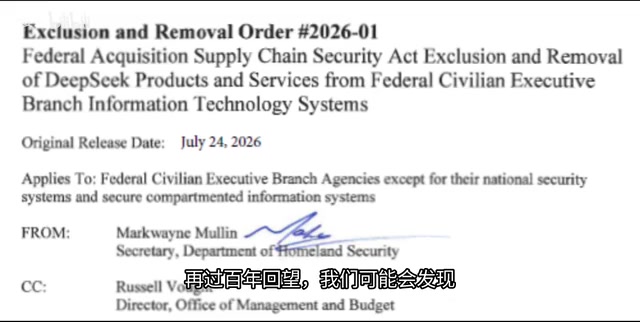
Looking at the timeline, from the 2019 GPU embargo to today's blockade of domestic large models, the path is consistent: first choke off computing hardware, then block model software. The UP host uses "from Anchorage, Alaska to Pago Pago, American Samoa" to describe this iron curtain across the Pacific and judges that "looking back in a hundred years, we may find that the iron curtain speech of the new era was delivered long before this."
Another effect of this blockade is reverse screening. The UP host jokes that "the US imperialist non-list is almost becoming a technology whitelist" — being included actually proves a company's technical strength and autonomy. The fact that DeepSeek is discussed in the same context as Huawei and ZTE itself shows that the issue has gone beyond a single product.
The core of the GPU embargo is cutting off the supply of high-end GPUs needed to train large models, which belongs to export control at the computing hardware level, based mainly on the US Export Administration Regulations (EAR) and subsequent rounds of tightening on chips with specific computing power thresholds. The model blockade belongs to demand-side procurement exclusion, based on government procurement regulations and supply chain security reviews. The two form a combination of "choking supply and closing the door to demand": the former raises training costs, the latter compresses commercial deployment space. This dual-track strategy is not new; the previous chip supply cutoff and 5G equipment procurement exclusion against Huawei followed a similar logic, except that the target has now extended from communications equipment to AI foundation models, and the control tools have expanded from export controls to government procurement lists.
Practical Impact on Developers and Enterprises
For enterprises that rely on DeepSeek technology for secondary development, especially teams targeting the US market or having supply chain relationships with US companies, compliance costs will rise significantly. What needs to be sorted out is not only directly procured model APIs but also indirectly integrated third-party components. The clause in federal law that traces the developer makes evasion tactics like "switching servers" ineffective.
From a broader perspective, national barriers for AI models are solidifying. Technology selection is no longer just a comparison of performance and cost; the political attributes of the supply chain have become a variable that must be included. This is a substantive step toward the fragmentation of the global AI ecosystem, and its impact will gradually transmit to the open-source community, cloud service market, and developer toolchain.
The UP host mentioned at the end of the video that he will continue to follow the matter and look for official sources for confirmation. For practitioners concerned about changes in the AI industry landscape, this is undoubtedly a signal worth tracking.
One-line Summary
US Homeland Security adds DeepSeek to the federal procurement blacklist, tracing developers through the supply chain, solidifying national barriers in AI.
Paragraph Summary
The US Department of Homeland Security has publicly added DeepSeek to the procurement blacklist for civilian government agencies, covering dozens of federal agencies and independent bodies including the Departments of State, Treasury, and NASA. The key to the ban is that it traces the model developer rather than the server location: any third-party product developed using DeepSeek technology, whether locally deployed or in the cloud, is removed from the government procurement list, and the supply chain's "DeepSeek content" must be zero. The official reasons are data transmission and national security, but the logic of inferring malicious code in the underlying model from app front-end vulnerabilities is difficult to establish. The article links this with the 2019 GPU embargo, arguing that from choking computing power to blocking models, national barriers in AI are systematically solidifying, and the global AI ecosystem faces substantive fragmentation.
Related articles
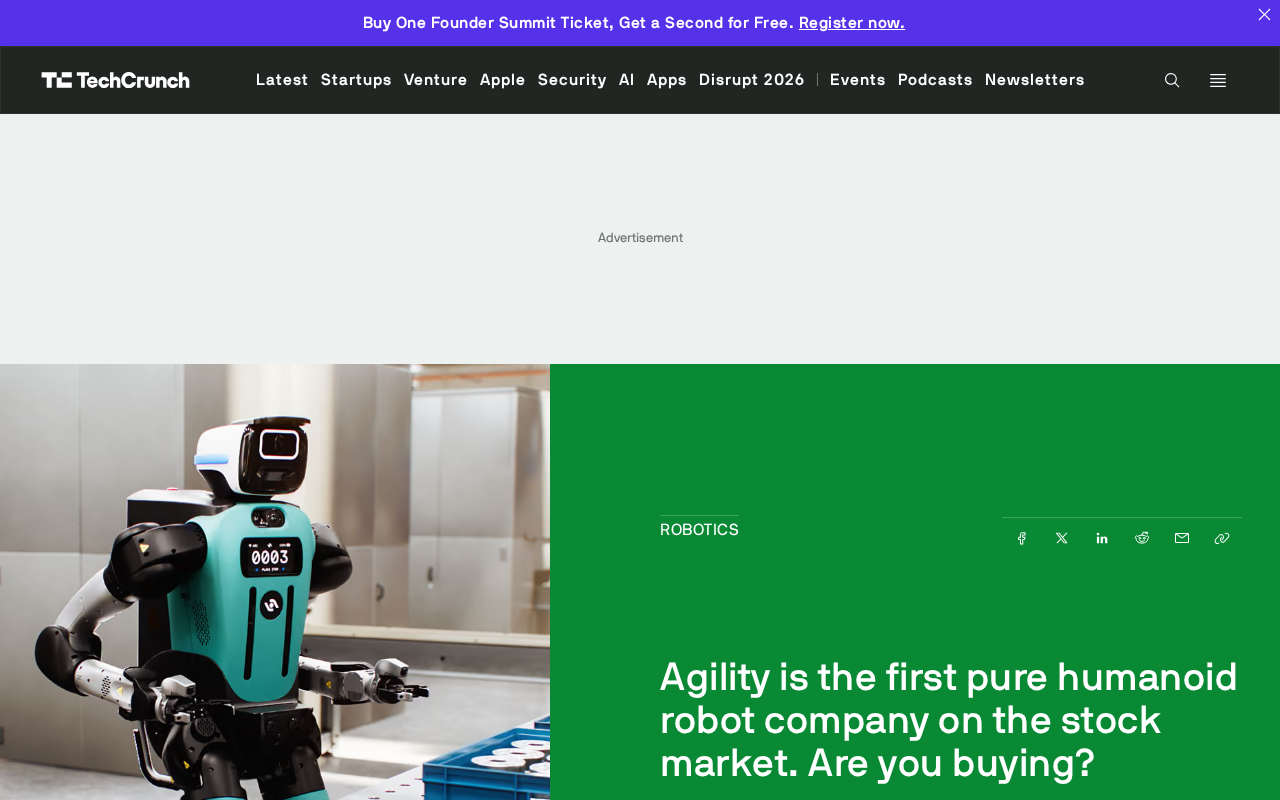
World's First Humanoid Robot Company Agility Lists on Nasdaq: Buy or Not?
Agility becomes the world's first pure-play humanoid robot company to list on Nasdaq. This article analyzes what the landmark event means for the industry and investors, unpacking the commercialization test and investment framework for the pure humanoid robot sector.
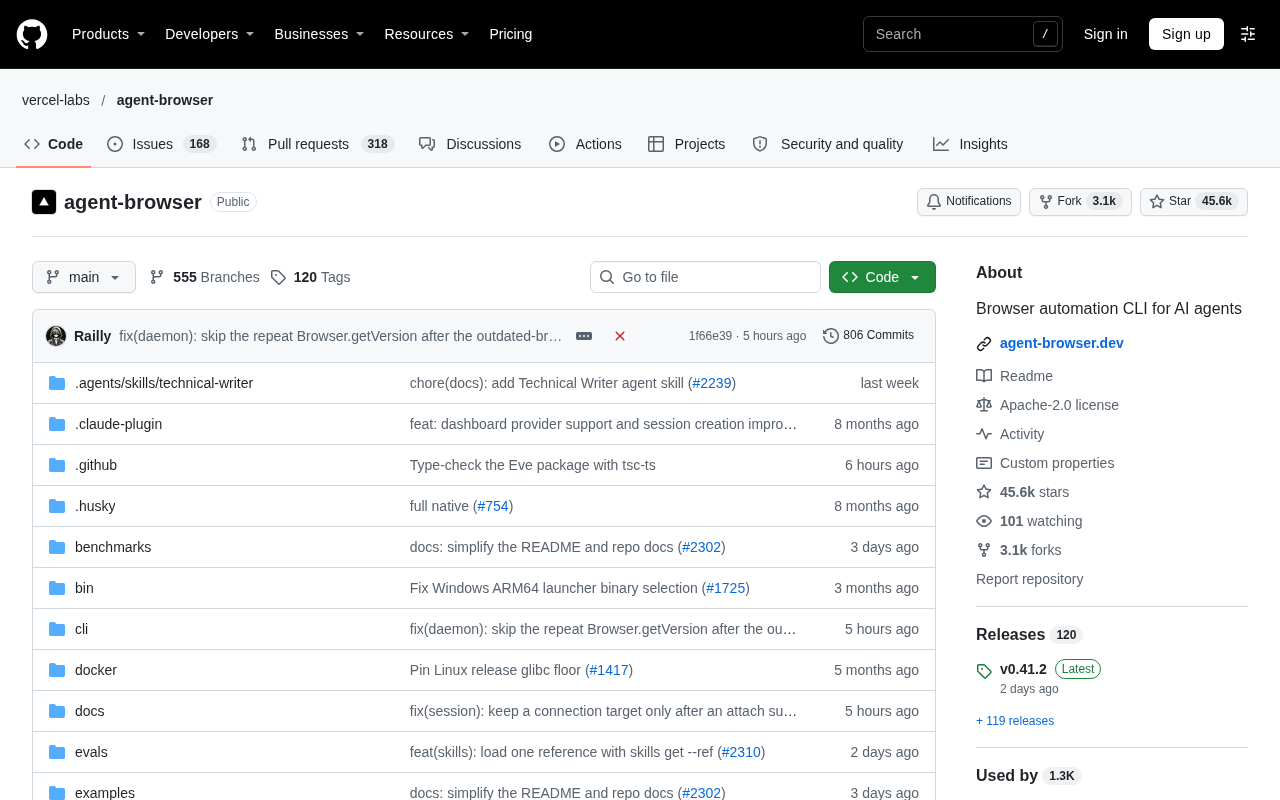
Agent-Browser: A Browser Automation CLI for AI Agents
Vercel Labs open-sources agent-browser, a Rust-built browser automation CLI designed for AI agents, with over 45,000 GitHub stars and command-line-first browser control.
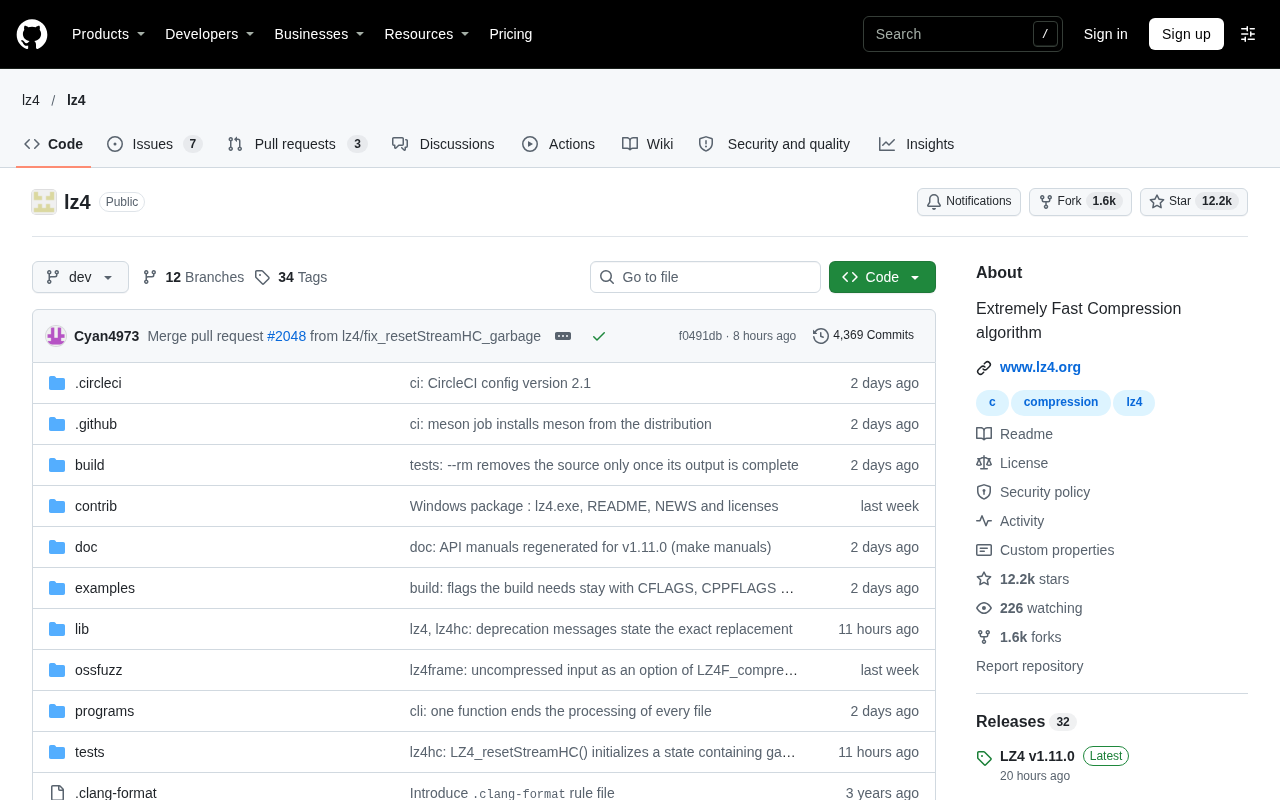
LZ4: The Open-Source Benchmark for Blazing-Fast Compression
Explore the LZ4 blazing-fast compression algorithm: its design philosophy, performance advantages, and wide use in the Linux kernel, databases, and more. How a 12k+ star open-source project became the speed benchmark.