Elgato Launches Wave Go Wireless Microphone: $99 to Take on DJI Mic Mini
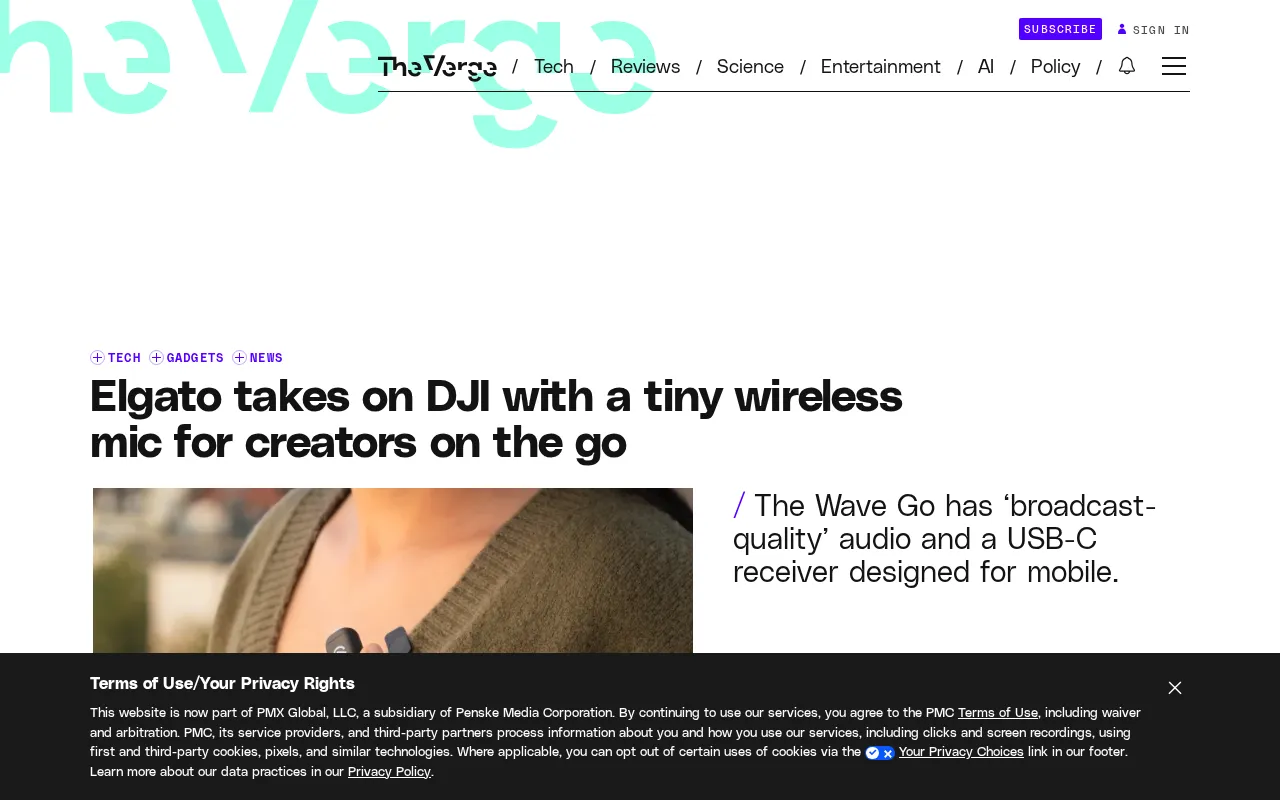
Elgato launches its first wireless mic, the Wave Go, at $99.99 to challenge the DJI Mic Mini in mobile creation.
Elgato has released its first wireless microphone, the Wave Go, at $99.99 with a clip-on hands-free design, directly targeting the DJI Mic Mini. More than just a new product, it marks Elgato's move to extend its desktop creator ecosystem into mobile scenarios. Whether it can integrate with Elgato's Wave Link software and compete on audio quality, battery life, and wireless transmission remains untested — the key variables for its success.
Elgato, the dominant force in the creator market known for its desktop livestreaming hardware, is setting its sights on the mobile content creation space. It has launched its first wireless microphone, the Wave Go, priced at $99.99 and aimed squarely at DJI's Mic Mini — matching its competitor's price point almost exactly.
A Portable Microphone That Works Right Out of the Box
According to Elgato's official description, the Wave Go works almost identically to the DJI Mic Mini — clip it onto your clothes and start recording, with hands-free capture as the main selling point. This form factor has been one of the fastest-growing categories in mobile creation hardware over the past two years.
In terms of positioning, Elgato is targeting creators who are no longer tethered to a desktop workstation: vloggers filming on the go, street interviewers, and travel documentarians. Previously, anyone wanting to use Elgato's audio system essentially had to return to their computer and pair it with Wave series microphones and Wave Link software. The arrival of the Wave Go signals that the company now acknowledges a reality it once overlooked: creation happens beyond the desk.
The $99.99 price point is telling. It doesn't pursue a low-price volume strategy, nor does it try to command a premium on brand alone — instead, it lands precisely in the DJI Mic Mini's price bracket. This is a clear head-to-head matchup, not an attempt to sidestep the competition.
Why Elgato Is Entering Now
Elgato's moat has always been built on its ecosystem. Stream Deck, Wave microphones, capture cards, Key Light — this combination lets streamers and content teams manage virtually all their hardware from a single software interface. But this ecosystem carries an implicit assumption: the creator stays at their desk.
The rise of mobile creation has broken that assumption. As more vlogs and short-form videos get shot outdoors, the desktop ecosystem's grip weakens. If Elgato doesn't offer a portable audio solution, these users will naturally gravitate toward DJI, Rode, and other brands — and once they've built new habits on their mobile gear, the odds of them choosing the same brand back at their desk only increase.
In other words, the Wave Go isn't just a microphone — it's a piece of the puzzle in Elgato's effort to hold onto creators across every scenario.
Elgato's desktop ecosystem is sticky largely because of Wave Link software — essentially a virtual mixing console that can route multiple microphones, game audio, and chat audio to separate tracks at the system level, then output them to streaming software. Stream Deck, meanwhile, consolidates hardware controls onto a single panel via programmable buttons. The hidden cost of this logic is that all devices must be connected to the same computer. Once a creator leaves the desk, this software layer becomes completely useless, and the hardware loses its ability to work in concert. So Elgato's real challenge in entering the mobile space isn't building a clip-on microphone — it's figuring out how to make on-the-go recordings recognizable and manageable by Wave Link once the creator returns to their desk.
Differences from DJI Mic Mini Still Need Verification
Based on what's publicly available, the Wave Go is functionally very similar to the DJI Mic Mini: both are clip-on wireless microphones aimed at vlogging and content creation. The details that will actually decide the winner — audio quality, wireless transmission range, battery life, and whether it can integrate with Elgato's existing software ecosystem (such as Wave Link) — will require hands-on testing to determine.
If the Wave Go can plug into Elgato's desktop audio management workflow, it will have an advantage DJI can't easily replicate: audio recorded on the go can be managed in the same system as desktop livestream audio. Conversely, if it's just a standalone accessory, then against a DJI that has iterated through multiple generations in the wireless microphone space, Elgato's persuasiveness as a newcomer will be diminished.
For creators, this competition is a good thing. Two companies fighting at close quarters in the same price bracket means that over the coming months, both feature upgrades and price adjustments in the portable wireless microphone space are worth watching.
The core experience of a wireless microphone comes down to a few hard metrics: transmission distance and stability (typically relying on proprietary 2.4GHz protocols, which are prone to interference in crowded outdoor environments with dense Wi-Fi), battery life and charging case design (how long a single recording session lasts and whether the case can recharge the device during storage), and audio encoding and noise reduction strategies. The DJI Mic Mini has established itself in this category because DJI has years of accumulated expertise in wireless transmission and power management from its drone and video transmission technology. As a newcomer to the audio space, Elgato has no publicly verifiable track record on these metrics, so real-world performance will need third-party testing to judge — similar form factor alone doesn't guarantee comparable experience.
FAQ
Who is the Wave Go for? It's primarily aimed at content creators who need to record on the go, including vloggers, interview-style video producers, and livestreamers who need portable audio capture.
Which is better, the Wave Go or the DJI Mic Mini? For now, their core form factors and pricing are very close. Specific differences will have to wait for hands-on comparisons of audio quality, battery life, and ecosystem compatibility.
Does the Wave Go work with Elgato's existing software? This is one of the key questions. If it supports integration with Elgato's audio management ecosystem, it will be more appealing to existing users — but the company hasn't yet provided complete details on this.
One-line Summary
Elgato launches its first wireless microphone, the Wave Go, at $99.99 to take on the DJI Mic Mini and defend its ground in mobile content creation.
Paragraph Summary
Elgato has released its first wireless microphone, the Wave Go, priced at $99.99 with a clip-on hands-free design, directly targeting the DJI Mic Mini. This product isn't just another new release — it's a key step in extending Elgato's desktop creator ecosystem into mobile scenarios. Previously, its Stream Deck, Wave microphones, and Wave Link software all assumed the creator stays at their desk, but the rise of vlogs and short-form video is eroding that assumption. Whether the Wave Go can integrate with Elgato's own audio software ecosystem and whether it can compete on audio quality, battery life, and wireless transmission remain untested — and these are the core variables that will determine its success.
Related articles

GitHub Daily · October 30: Skills Ecosystem Explodes, Agents Start Provisioning Their Own Computers
GitHub Daily Oct 30: Skills ecosystem hits three layers (official, personal, vertical), agents get their own computers, and cross-session memory becomes essential.
AWS AgentCore Gateway: Connecting AI A…
AWS AgentCore Gateway: Connecting AI Agents to Enterprise Backends with MCP
How AWS AgentCore Gateway acts as a primary MCP server to aggregate REST APIs, Lambda, and existing MCP services? Analyzing its AST real-time mapping, zero cold start, semantic search for tool overload, session isolation, and key injection security design, plus the architectural approach to decoupling enterprise AI agents from backends.

One Link Gives Figma AI a New Skill: Hands-On with MCP Connectors
Paste one MCP server link and the AI Agent in Figma gains new tool capabilities. We break down the setup flow, 20+ one-click apps, read/write permissions and execution policies, and the public HTTPS requirement.