From a Birthday Party to a Trillion-Dollar AI Empire: The Rise of a New PayPal Mafia

A 2015 internship group photo connects a decade-later portrait of AI founders now valued at over $100 billion, revealing intergenerational talent network inheritance.
The article starts from a 2015 birthday party group photo during a Hudson River Trading internship and tracks three young founders ten years later: Alexander Wang's Scale AI received over $14 billion from Meta, Scott Wu's Cognition AI soared from $350 million to $48 billion, and Jeff Wang founded Hyperliquid. Their shared math and programming competition rivalry became the foundation of trust. Crucially, early funding for Scale AI and Cognition AI came from Peter Thiel's Founders Fund, showing the original PayPal Mafia is systematically backing the next generation. The article argues the closed-loop talent ecosystem matters more than any single valuation.
The Trillion-Dollar Miracle Behind a Single Photo
In 2015, a group of twenty-somethings gathered for an internship program at Wall Street trading firm Hudson River Trading. About ten of them ended up in a single photo taken at a birthday party hosted by their mutual friend Alexander Wang. Ten years later, the names in that photo—Alexander Wang, Scott Wu, Jeff Wang—are now tightly bound to AI companies valued at over $100 billion combined. According to analysis from a YouTube tech channel, the most fascinating part of this story isn't the wealth figures, but rather an industry transformation that was predicted a decade in advance.

What these people share is clear: they grew up together and competed against each other in math and programming competitions. This high-intensity intellectual rivalry later became the most natural foundation of trust for their entrepreneurial ventures.
Three People, Three Paths
Alexander Wang: Leaving MIT to Bet on Data Labeling
Alexander Wang dropped out of MIT to found Scale AI, focusing on AI training data labeling. Meta later invested over $14 billion in the company, and Wang now directly leads Meta's AI business. Scale AI's value lies in its grip on the upstream lifeline of large model training—without high-quality labeled data, even the most powerful compute can't produce a usable model.

Scott Wu: From Competition Champion to AI Programmer
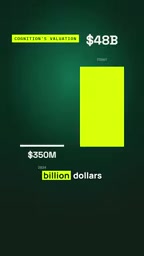
Scott Wu founded Cognition AI, which launched the AI coding agent Devin. According to video data, the company's valuation skyrocketed from $350 million in 2024 to $48 billion. Behind this surge is the market's frenzied bet on the narrative of "AI replacing junior programmers," and Wu's competition background gives him natural credibility in the code generation space.
Devin is an AI software engineer released by Cognition AI in March 2024, claiming to be able to complete programming tasks end-to-end, including reading documentation, writing code, debugging, and deployment. At launch, Cognition showcased a demo video of Devin taking on and completing real projects on platforms like Upwork, which drew widespread attention but also controversy over the authenticity of the demo. Devin's core capabilities are based on large language models and an agent framework, enabling it to autonomously plan multi-step operations and call tools. Although its actual performance is still limited by complex tasks and long-context stability, Devin is regarded as a flagship product of the "AI replacing junior programmers" narrative, directly driving the market's valuation frenzy for the AI coding space. Understanding Devin's positioning helps assess the market expectations and risks behind Cognition AI's soaring valuation.
Jeff Wang: Another Continuation of the Trading Desk
Jeff Wang founded Hyperliquid, entering decentralized derivatives trading. Compared to the previous two, his direction leans more toward financial infrastructure, but it still bears the imprint of this group's early trading internships.
What Matters More Than Wealth Is the Closed-Loop Ecosystem
Calling them "the next PayPal Mafia" is based not on individual wealth, but on an interwoven network structure. This group invests in each other's companies, poaches from one another, and shares resources and information. More dramatically, the key early funding for both Scale AI and Cognition AI came from Founders Fund—the very fund founded by Peter Thiel, who himself was a core member of the original PayPal Mafia.
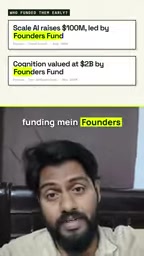
This means the original PayPal Mafia is systematically nurturing the next generation. After cashing out from PayPal, Thiel invested in companies like Facebook and Palantir, and now the same capital pipeline is being replicated for the AI era. This intergenerational capital network is more worthy of study than the success of any single company.
PayPal Mafia refers to the core team that founded PayPal in 1998, including Peter Thiel, Elon Musk, Reid Hoffman, David Sacks, and others. After PayPal was sold to eBay for $1.5 billion in 2002, this group cashed out and went on to found or invest in companies like LinkedIn, SpaceX, Tesla, Palantir, and YouTube, and became Facebook's first outside investors. Through funds like Founders Fund and Sequoia and a dense social network, they created an extremely strong cycle of capital and talent in Silicon Valley. The "PayPal Mafia" is not a formal organization but a collaboration model based on shared experience and trust, whose members frequently invest in each other and refer talent. The label later became a classic metaphor in the tech world for "groups of serial successful entrepreneurs," and is key background for understanding intergenerational inheritance in the current AI startup network.
What This Photo Teaches Us
The judgment offered at the end of the video is worth quoting: sometimes your social network doesn't just determine your career development—it can determine the future of an entire industry. The line from that 2015 birthday party—"why can't it be us"—became the starting point, ten years later, for one of Silicon Valley's most influential founder groups.
The real insight from this case is that once a high-density talent network forms, its value is continuously amplified through investment, hiring, and collaboration. For those watching the AI industry, rather than chasing individual company valuation changes, it's better to observe the connections between these founders—that is the leading indicator for judging the next wave of opportunities.
One-line Summary
A 2015 internship group photo links a portrait of AI founders now valued at over $100 billion, revealing the intergenerational inheritance of talent networks.
Paragraph Summary
The article starts from a 2015 birthday party group photo during a Hudson River Trading internship and tracks the trajectories of three young founders ten years later: Alexander Wang's Scale AI received over $14 billion from Meta, Scott Wu's Cognition AI soared from $350 million to $48 billion, and Jeff Wang founded decentralized derivatives trading platform Hyperliquid. Their shared background of intense competition in math and programming competitions became the foundation of entrepreneurial trust. More crucially, early key funding for both Scale AI and Cognition AI came from Peter Thiel's Founders Fund, showing the original PayPal Mafia is systematically nurturing the next generation of AI founders. The article argues that the closed-loop ecosystem of a high-density talent network is more worthy of attention than any single company's valuation.
Related articles
AWS AgentCore Gateway: Connecting AI A…
AWS AgentCore Gateway: Connecting AI Agents to Enterprise Backends with MCP
How AWS AgentCore Gateway acts as a primary MCP server to aggregate REST APIs, Lambda, and existing MCP services? Analyzing its AST real-time mapping, zero cold start, semantic search for tool overload, session isolation, and key injection security design, plus the architectural approach to decoupling enterprise AI agents from backends.

One Link Gives Figma AI a New Skill: Hands-On with MCP Connectors
Paste one MCP server link and the AI Agent in Figma gains new tool capabilities. We break down the setup flow, 20+ one-click apps, read/write permissions and execution policies, and the public HTTPS requirement.

Cognition SWE-2 in Practice: One Prompt to Handle the Whole Product Launch Process
Analyzing a YouTube creator's prompt for using Cognition SWE-2 to launch a product: a landing page, seven-email sequence, and non-buyer follow-up tool, plus how the 'test and report' constraint changes AI delivery quality.