Gemini 4 Argon vs Claude Opus 5.5: Is Google Finally Back?
Gemini 4 Argon brings Google back into the top-tier conversation, but it is not the strongest and has obvious shortcomings and risks.
After Google released Gemini 4 Argon, creator Ebenezer Don concluded from hands-on testing that it is the first model in a long time that can compete with Claude Opus 5.5 on the same stage, but it is not the strongest. Argon ranks first on the independent VAUX leaderboard and is roughly on par with Opus, but it ranks only eighth on artificial analysis, and its performance is highly task-dependent. In testing, its 3D generation was stunning, but its UI design and waiting experience clearly lag behind Opus. On price, it is about half of Opus per token, but the price doubles starting December 1, and it consumes more than twice as many tokens as GPT-6 Astra to complete the same task. Google's chaotic product line also weakens user trust. The author suggests that users test with real work rather than trusting charts or demos.
Title
Gemini 4 Argon vs Claude Opus 5.5: Is Google Finally Back?
Meta Description
After Google releases Gemini 4 Argon, a YouTube creator compares it hands-on with Claude Opus 5.5: Argon ranks first on an independent leaderboard but is roughly on par with Opus, delivers impressive 3D generation yet lags in UI design, and its price advantage lasts only until December 1.
Article Content
After Google released Gemini 4 Argon, the tech community quickly split into two camps: one believes Google has finally returned to the top tier, while the other digs up Google's history of missed deadlines and reminds everyone not to celebrate too soon. After hands-on testing, YouTube creator Ebenezer Don reached a relatively measured conclusion: Argon is the first model in a long time that can genuinely compete with Claude Opus 5.5 on the same stage, but it is not the strongest one.
Release Background: From Missed Deadlines to Universal Availability
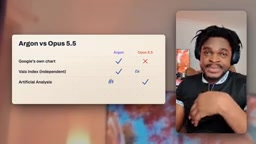
Google's previously promised Gemini 3.5 Pro was slated for a summer launch but never materialized. Argon was initially available only to "trusted partners," and outsiders worried it would repeat the same pattern. Now Argon is finally open to all users, and Google officially positions it as the best model for coding, business work, and cyber defense scenarios, placing Argon ahead of Opus 5.5, Fibu 5.1, and GBD6 Astra on its own charts.
However, Google admits in the chart footnotes that testing for most other models was not conducted by Google itself but instead used self-reported evaluation data published by each company. This is similar to the behavior Meta was criticized for this week, but with one difference: Argon actually took first place on an independent leaderboard.
Its Real Position on Independent Leaderboards
On the VAUX index—an independent leaderboard covering finance, legal, and coding tasks—Argon ranks first, with Opus close behind, and the two are essentially tied. But Argon's operating cost is currently about twice that of Opus. On artificial analysis, an independent index that previously exposed Meta's rankings, Argon ranks only eighth, behind Opus and even behind MuseWonder.
Two independent leaderboards reach starkly different conclusions, showing that Argon's performance is highly task-dependent. This is exactly the picture of it being "not the strongest in the world, but already in the fight."
The difference between the VAUX index and artificial analysis: The VAUX index is an independent evaluation leaderboard focused on finance, legal, and coding tasks. Its test set is closer to professional work scenarios, so it is more sensitive to a model's capabilities in structured reasoning and long-context handling. artificial analysis, by contrast, is a comprehensive independent model evaluation platform covering multiple dimensions such as reasoning, knowledge, coding, and math, and it publicly discloses its testing methods and raw data. It drew attention for exposing the controversy over Meta's rankings. The reason for the divergence between the two rankings lies in different task distributions: Argon excels at specialized vertical tasks but still has shortcomings in broader general capabilities. This also reminds readers that any single leaderboard reflects only one facet of a model's capabilities, and when choosing a model, they should refer to the leaderboard corresponding to their own task types.
Hands-on Performance: Stunning 3D, UI Holds It Back
Ebenezer Don tested it in the Gemini app with a Pro account (currently Pro users can only use Argon there; the Anti-Gravity tool is limited to Ultra users).
The first test was a lava lamp. The version generated by Argon was "not bad," but the wax got stuck at the top, and it took the liberty of overlaying a control panel on the lamp. Worse was the waiting process: nearly three minutes with no progress feedback, and users could not switch to code view to see what it was doing.
The second test was a mechanical watch. Argon took about five minutes, and the 3D portion far exceeded expectations—the golden texture, lighting, and wheel movement were all on point. But the design outside the 3D part looked like the level of a model from two or three years ago, and the visuals flickered. When the same prompt was given to Claude Opus 5.5, it took longer, but the overall result was more refined, without flickering, and the details held up when zoomed in.

The third test was pure front-end creativity: build the most creative admin dashboard for a small clothing shop. Argon took about three and a half minutes, while Opus took about seventeen minutes. Argon's output was "not ugly," but it was just conventional cards, chat boxes, and data tables, lacking creativity. Opus, meanwhile, turned the navigation into a tape measure, hung products on fabric racks, marked low inventory in red on price tags, printed new orders like receipts, and let users click a product to see sizes, sales, and restock reminders. The light theme even used graph paper and hand-drawn notes.

In the bug-fixing test, Argon performed well: it found the flaw in the rate limiter in under a minute, explained it clearly, and provided two correct fixes.
The positioning differences among the Gemini app, Anti-Gravity, and AI Studio: The Gemini app is a conversational entry point for ordinary users, offering Pro and Ultra subscription tiers; Anti-Gravity is Google's agentic coding tool for developers, emphasizing autonomous execution and multi-step tasks; AI Studio is a model testing ground for developers, offering API debugging and prototype-building capabilities. The three overlap in functionality, but subscription permissions are not interoperable—Pro users can use Argon in the Gemini app but cannot invoke it in Anti-Gravity, and only Ultra users can use Anti-Gravity. This fragmentation of permissions exacerbates product-line confusion and makes it hard for users to judge where they should complete their work.
The Price Trap and Ecosystem Chaos
Argon's current price per token is about half that of Opus, but this is only an introductory price—starting December 1, the price doubles and will be on par with Opus. artificial analysis also found that the number of tokens Argon needs to complete the same task is more than twice that of GPT-6 Astra. A cheap per-token price does not equal a cheap per-task cost.
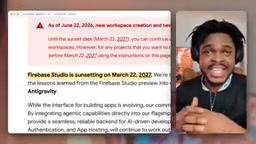
Another headache for users is the chaos of Google's product line. The Gemini app, Anti-Gravity, and AI Studio overlap in functionality, and Pro users have Argon in Gemini but cannot use it in Anti-Gravity. Google also once renamed Project IDX to Firebase Studio and then shut it down, and Gemini CLI was discontinued for Pro and Ultra users in June and replaced by Anti-Gravity CLI.
Introductory price: This is a common pricing strategy when cloud services and AI models launch, in which vendors use discounted prices below long-term levels to attract early users to try and migrate, usually with a clear deadline. Argon's current price per token is about half that of Opus, but the official notice states that it will double starting December 1 and be on par with Opus by then. This pricing approach easily creates the illusion of being "cheaper" during comparisons while ignoring the long-term cost after the price is restored. More importantly, the total cost of a single task also depends on token consumption—artificial analysis found that the number of tokens Argon needs to complete the same task is more than twice that of GPT-6 Astra, which means that even if the per-token price is lower, the actual cost of completing the task may be higher. When evaluating model costs, the criterion should be "cost per task" rather than "price per token."
Conclusion: Google Is Back, but for How Long?
Argon has indeed brought Google back into the same conversation as Opus, and it can even be called Google's "comeback work" in the competition. But it is not the strongest model, its UI generation capability and waiting experience still have obvious shortcomings, and its price advantage is only temporary.
What is more worth watching out for is the historical pattern: when Gemini 3 Pro was released, outsiders also thought Google was back, but afterward it did not continue to close the gap. Will Argon just be a "check-in" for Google in 2026, followed by another "comeback" in 2027? That depends on whether Google can resolve the chaos in its product ecosystem alongside model iteration.
For ordinary users, the most pragmatic advice comes from the creator himself: test it with your own real work, rather than trusting any side's charts or someone else's demo.
One-line Summary
Gemini 4 Argon brings Google back into the top-tier conversation, but it is not the strongest, and its shortcomings and hidden risks are obvious.
Paragraph Summary
After Google released Gemini 4 Argon, creator Ebenezer Don concluded from hands-on testing that it is the first model in a long time that can compete with Claude Opus 5.5 on the same stage, but it is not the strongest. Argon ranks first on the independent VAUX leaderboard and is roughly on par with Opus, but it ranks only eighth on artificial analysis, and its performance is highly task-dependent. In testing, its 3D generation was stunning, but its UI design and waiting experience clearly lag behind Opus. In terms of price, it is about half of Opus per token, but the price doubles starting December 1, and it consumes more than twice as many tokens as GPT-6 Astra to complete the same task. Google's chaotic product line also weakens user trust. The author suggests that users test with real work rather than trusting charts or demos.
Related articles

Will GitHub Die? Open Source Maintainer Burnout and the Collaboration Crisis in the AI Era
Lex Fridman podcast discussion on open source maintainer burnout and GitHub's predicament: massive pull requests overwhelm core maintainers, and AI worsens code bloat. Using math journal peer review and Poincaré conjecture verification as analogies, the article analyzes why verification in knowledge production must be deliberately slow, and how open source communities can avoid the failure mode of maintainers exiting.

Stop Building Cookie-Cutter AI Websites: 3 Tools That Transform Your Coding Agent
Three tools that boost AI coding agents: FFmpeg skill for local video editing in Claude Code and Cursor, Hallmark's 50 design themes to fix cookie-cutter AI sites, and Jailbreaks' 25+ model prompts.

How America's Gerontocracy Squeezes the Younger Generation
Americans over 55 hold nearly three-quarters of national wealth, alongside an 80-year-old president and elderly congressional leaders. The Atlantic's Idrees Kahloon explains how gerontocracy drives up housing costs, squeezes opportunities for the young, and explores zoning reform and child poverty reduction as practical fixes.