Google Open-Sources Elephant Goldfish: An AI Agent-Driven Software Design Review Plugin
Google open-sources Elephant Goldfish, using AI agents for software design and review.
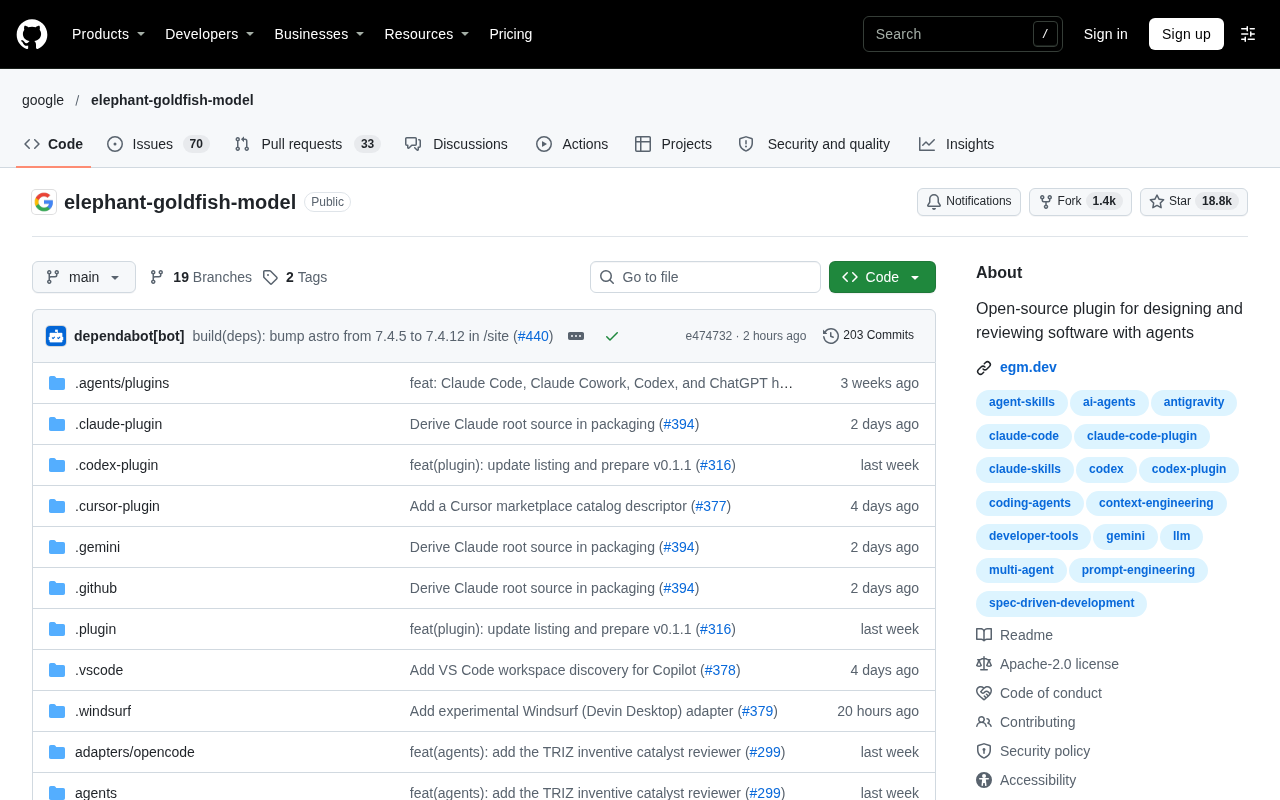
Google has open-sourced Elephant Goldfish on GitHub, a Python plugin that uses AI agents for software design and review. It gained 5,560 stars in a week, reaching 18,818 total stars and 1,405 forks. Unlike AI tools focused on code completion and single-file generation, it targets cross-file, cross-module design ideation and code scrutiny, which requires stronger context understanding. The plugin form eases integration into existing workflows, and its open-source nature lets teams audit prompt logic, customize review rules, and connect internal standards. The article advises small-scale pilots, a feedback mechanism for adopting agent suggestions, and notes the current lack of production stability validation, warranting cautious observation.
What Is Elephant Goldfish
Google has open-sourced a Python plugin on GitHub called Elephant Goldfish, positioned as "using agents to design and review software." The project quickly gained significant attention after launch, adding 5,560 stars in a single week and reaching 18,818 total stars with 1,405 forks—a standout performance in the open-source community.
Judging from its name and description, the project attempts to address two high-frequency but easily fragmented phases of software engineering: solution ideation during the design phase, and code and architecture scrutiny during the review phase. It hands both tasks to AI agents for collaborative completion, rather than leaving developers alone with a blank document or a lengthy review process.
AI agents here refer to AI systems capable of autonomous planning, tool invocation, and multi-step task execution—not merely single-turn Q&A chatbots. Unlike code completion models that predict the next code segment based on the current file context, agents can proactively decompose goals such as "design a module" or "review a commit," read multiple files, retrieve project structure, generate intermediate conclusions, and offer comprehensive recommendations. This capability depends on the underlying large model's task planning and tool-calling interfaces, and it also determines the upper bound of its performance in cross-file and cross-module scenarios. Understanding this helps explain why Elephant Goldfish chose design and review as its entry point—these two tasks precisely require multi-step reasoning and global context rather than local text generation.
Plugin Form and How It Works
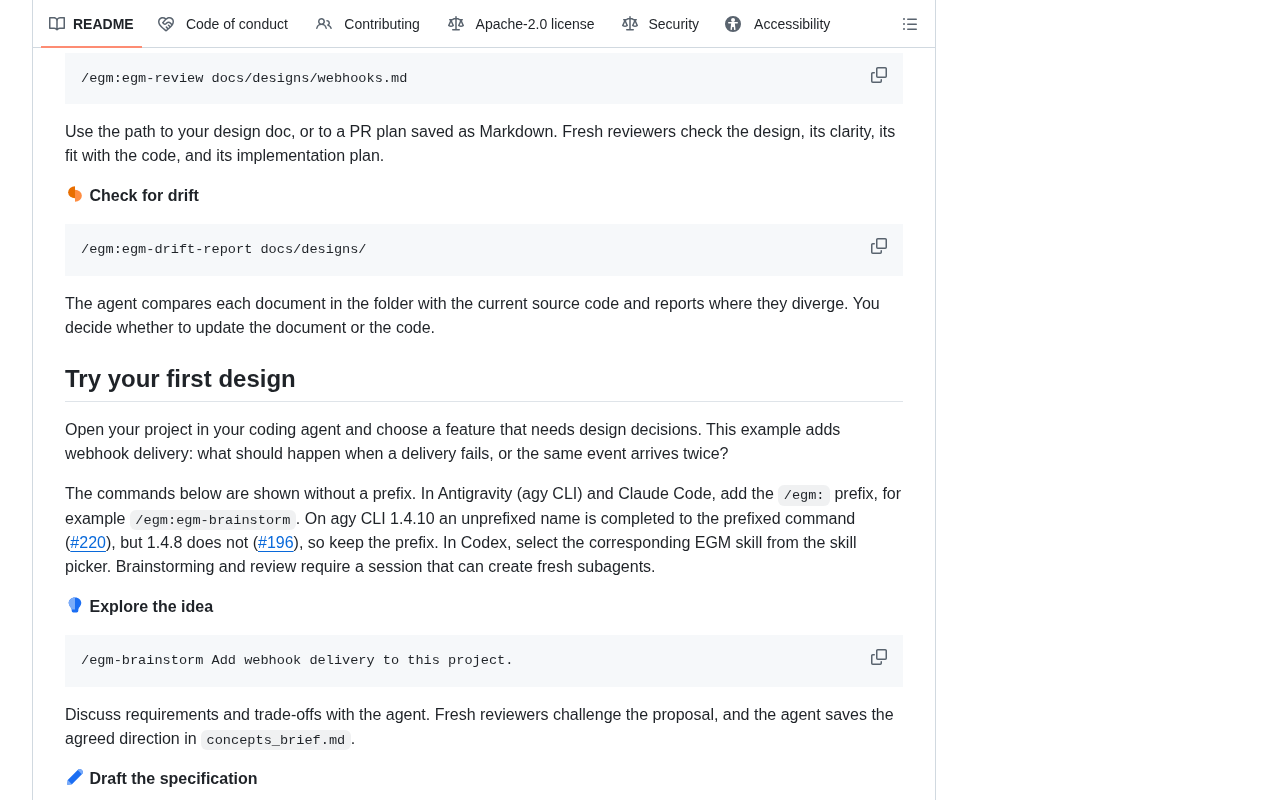
Elephant Goldfish is offered as a plugin, with Python as its primary language, meaning it can be embedded relatively easily into existing development toolchains. Compared with building an independent platform from scratch, the advantage of the plugin form is staying close to developers' existing workflows—design discussions and code reviews already happen in editors, code hosting platforms, and collaboration tools, and plugins can directly invoke agent capabilities in these scenarios.
The project's core idea is to have agents participate at both ends of the software lifecycle: at the front end is design, where agents can help organize requirements, generate design proposals, and flag potential structural issues; at the back end is review, where agents can provide feedback on existing code or architecture. This "design + review" combination emphasizes continuous quality control for software more than single-purpose code generation tools.
Plugin architecture typically refers to a host program loading external modules through predefined interfaces, enabling external code to access the host's capabilities and extend its functionality. For Python plugins, this means the project often relies on hooks or APIs exposed by the host tool rather than running independently. The cost of the plugin form is being constrained by the host's capability boundaries: what it can do depends on which contexts and operation permissions the host exposes. Therefore, when evaluating Elephant Goldfish, in addition to the agent's own capabilities, one must also confirm whether the host environment it relies on provides sufficient project context (such as file trees, dependencies, and version history); otherwise, the agent's review quality will decline due to insufficient input information.
Why It's Worth Watching
Judging from the star growth rate in community feedback, developers have real demand for the direction of "agents participating in software engineering." Over the past year, most AI programming tools have concentrated on code completion and single-file generation, whereas software design review involves cross-file, cross-module contextual understanding, which is more difficult and more likely to expose the boundaries of agent capabilities. Elephant Goldfish's choice to enter this phase indicates that Google is exploring a path for agents to move from "writing code" to "reviewing code and designing systems."
Another noteworthy point is its open-source nature. 18,818 stars and 1,405 forks indicate that many developers are already preparing to build on it or integrate it. For teams, open source means they can audit the agent's prompt logic, adjust review rules, and even connect it to internal code standards systems—something difficult to achieve with closed-source commercial tools.
Code review in engineering practice not only checks syntax and style but also focuses on architectural soundness, boundary conditions, maintainability, and potential regression risks, usually requiring reviewers to understand the relationship between changes and surrounding modules. This is precisely where large models' single-file generation capability is weak: limitations in context windows and project structure understanding make agents prone to one-sided conclusions about cross-module impacts. By placing agents in the reviewer position, Elephant Goldfish is in effect testing whether models can handle "judgment tasks requiring a global view." This also explains why the community is highly interested—if agents can consistently provide valuable review feedback, it means the value focus of AI programming tools will shift from "writing fast" to "judging accurately."
Usage and Integration Recommendations
Since the project is released as a Python plugin, integration should first confirm whether the team's development environment supports the plugin mechanism. For teams already using AI-assisted programming tools, Elephant Goldfish can serve as a supplement to the design review phase rather than a replacement for existing processes. It is advisable to start trials with low-risk modules, observe whether the agent's design suggestions and review comments fit the project's reality, and then gradually expand the scope.
In addition, agent participation in review introduces a new question: how to evaluate the quality of agent opinions. Teams need to establish a simple feedback mechanism to record which suggestions are adopted and which are ignored, so as to judge the agent's performance on a specific codebase. The advantage of open-source projects is that these evaluation logics can be customized without being constrained by a vendor's fixed policies.
Limitations and Observations
Currently, public information mainly comes from the project repository itself, and there is a lack of detailed practice reports on how the agent specifically understands design intent and how interpretable the review results are. 18,818 stars reflect attention, not stability validation in production environments. For teams preparing to adopt it, it is advisable to remain cautious, conduct small-scale pilots first, and monitor subsequent issue discussions and usage feedback in the community.
Overall, Elephant Goldfish represents a signal that AI agents are entering the deep waters of software engineering: shifting from generating code to participating in design decisions and quality review. Whether this path can succeed depends on the agent's performance in real, complex projects, and collective validation by the open-source community is precisely the test it will face next.
One-line Summary
Google open-sources Elephant Goldfish, using AI agents to enter software design and review.
Paragraph Summary
Google has open-sourced a Python plugin called Elephant Goldfish on GitHub, positioned as using AI agents to participate in software design and review. The project added 5,560 stars in a week, reaching 18,818 total stars and 1,405 forks, showing high community interest. Unlike AI programming tools focused on code completion and single-file generation, it enters cross-file, cross-module design ideation and code scrutiny, which demands stronger contextual understanding. The plugin form makes it easier to embed into developers' existing workflows, while its open-source nature allows teams to audit prompt logic, customize review rules, and connect internal standards. The article recommends that teams first conduct small-scale pilots, establish a feedback mechanism for adopting agent opinions, and notes that production stability validation is currently lacking, so cautious observation is needed.
Related articles

Palmer Luckey Interview Goes Viral: From Ukraine to a Floating City, the Complete Worldview of a Tech Hawk
A deep dive into the Palmer Luckey interview: his take on Trump and Ukraine, why he favors public executions, and the governance logic behind Slab, the billion-dollar floating city project from 2017.

Worst Gmod TTT Round Ever: When the Random Role Pack Hits Rock Bottom
Yogscast's Gmod TTT series hits its worst random role pack yet: Illusionist, Marshal, and Quartermaster all flop, the Frenchman is absurdly broken, and Gun Game drags on forever. A breakdown of role balance and mode design issues.
Debian Developer Quits: Controversy Over Politicization of Open Source Projects
Debian senior developer Cyril Bouthors quits, saying the project is more like a political movement than a technical one. AI policy is the trigger. This article covers the departure statement, cases of open-source politicization, and its impact on the ecosystem.