GPT-6.1 Terra Hands-On: Insanely Fast, But Prone to Giving Up Midway?

GPT-6.1 Terra is blazing fast with aggressive pricing, but tends to give up prematurely on complex tasks—a practical yet polarizing model.
OpenAI's newly released GPT-6.1 Terra has sparked discussion in the developer community. A Bilibili creator's hands-on test shows the model is extremely fast—generating a skateboarding game in 2 minutes 35 seconds and completing 3D wrestling game modeling and playtesting in 4 minutes 19 seconds—and is priced at $1 per million input tokens and $5 per million output tokens with high usage efficiency. Its coding ability sits between Luna and Soul (50.3% at maximum effort), with Soul still better for pure coding. Computer-use performance is decent on Mensa tests, but in fine Blender modeling and robotic arm tasks it shows a tendency to "give up easily," with similar reports on X. Game development results are simple but usable, and the inverted-controls issue recurs across multiple tasks, requiring follow-up fixes. Overall: suitable for quickly completing large volumes of work that doesn't demand extreme refinement, but difficult tasks need more pushing.
OpenAI's newly released GPT-6.1 Terra has sparked considerable discussion in the developer community. A Bilibili creator brought a first-hand hands-on test, putting the model through a series of high-intensity coding and computer-use tasks. The conclusion is somewhat contradictory: it's insanely fast with fairly aggressive pricing, but it shows a puzzling tendency to "give up easily" when executing complex tasks.
Speed and Pricing: Terra's Core Selling Points
According to the hands-on test in the video, GPT-6.1 Terra's speed was a highlight throughout. In fast mode or Ultra fast mode, the model can generate runnable code extremely quickly. For example, a C++ skateboarding game prompt, after spawning several sub-agents, was created in just 2 minutes 35 seconds; a 1990s-themed 3D wrestling game, with models created and playtested in the Blender and GDAU environments, took only 4 minutes 19 seconds on its first run.
On pricing, GPT-6.1 Terra charges $1 per million input tokens and $5 per million output tokens. The creator believes that, combined with its speed and computer-use capabilities, this price is highly competitive. After a test session including many Ultra-mode tasks and fast mode, total consumption was less than 4% of the weekly usage allowance, demonstrating high usage efficiency.
The "$1 per million input tokens and $5 per million output tokens" mentioned in the article is a common pricing model for current LLM APIs. A token is the basic unit of text a model processes; an English word typically corresponds to about 1 token, while a Chinese character may correspond to 1 to 2 tokens. Therefore, separate pricing for input and output means: when you provide long context (such as codebases or documents) to the model, you mainly consume input tokens; whereas the code or answers the model generates consume output tokens. Terra's output price is five times its input price, which follows industry convention, since the generation process requires more computational resources. Understanding this helps evaluate actual usage costs: for tasks that require reading large amounts of context with limited output, Terra's price advantage becomes more pronounced.
Coding Ability: Between Luna and Soul
On coding ability comparisons, the creator cited official chart data. At maximum effort, GPT-6.1 Terra's coding score is 50.3%, and 47% at low effort. It seems to touch part of GPT-6.1-SOUL's capability range, but SOUL remains the better choice for pure coding tasks. Terra is positioned more as a cheaper, faster balanced option, with its text and image input capabilities, over 1 million token context length, and 128K maximum output forming its baseline specs.
The names "Luna," "Soul," and "Astra" appearing in the article are codenames used internally by OpenAI or by the community for different model variants of the same generation. Judging from context, Soul leans toward pure coding and high-precision tasks, Astra performs more reliably in complex computer-use tasks, and Terra focuses on balancing speed and cost. This multi-model strategy is not uncommon in the industry, similar to forming a product matrix through distillation, quantization, or fine-tuning of the same base model for different scenarios. Readers can think of Terra as a "lightweight fast version" that inherits some capabilities of the GPT-6.1 series but sacrifices sustained effort on difficult tasks for speed and price. Therefore, the official chart's 50.3% coding score should be compared with Soul on the same benchmark, not across generations.
Computer Use: Highlights Coexist with "Early Quitting"
The model's computer-use capability was a key promotional focus at launch, and it's also the most contradictory part of the test. In a Mensa Norway practice test, the model completed the questions through browser operations, even going back to check harder puzzles and answering questions with a touch of humor.
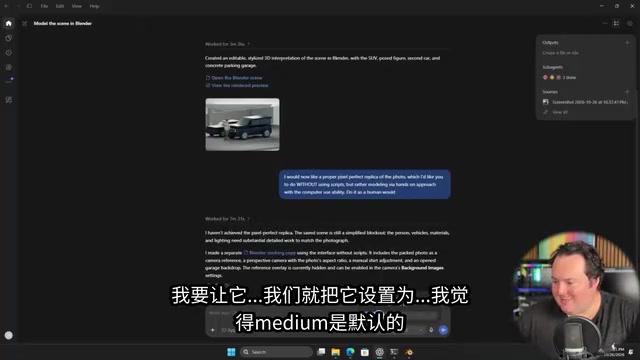
However, in another Blender 3D modeling task requiring fine manipulation, the problem surfaced. Although the model quickly set up the scene via scripts, when asked to refine it manually, it moved the camera viewpoint and then declared completion. The creator noted that since release, users on X have reported similar feelings—the model "kind of gives up easily."
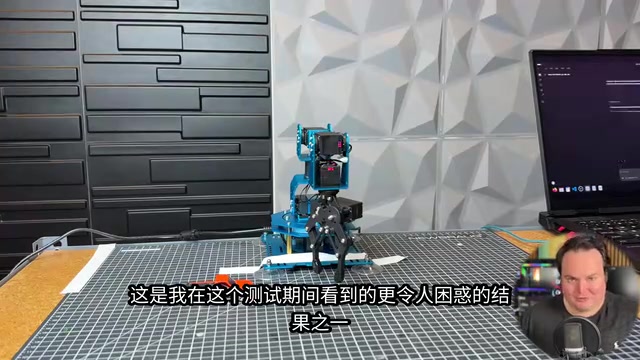
In the robotic arm test, the model complained from the start that the camera angle wasn't optimal, and after the user adjusted it, repeatedly claimed the servo mapping was wrong, ultimately stopping prematurely without completing the task, citing "no correct visual information." The creator believes this sense of hesitation also appears in other GPT-6 or 6.1 models, while GPT-6 Astra's performance in similar tasks was more impressive.
"Computer-use capability" refers to a model's ability to directly control software or browsers by visually recognizing screens and simulating mouse and keyboard operations, a core skill in the agent direction. Such tasks typically require the model to do multi-step planning, observe feedback, and correct errors, placing high demands on visual grounding and long-horizon reasoning. The Blender 3D modeling and robotic arm tests mentioned in the article are both tasks requiring fine spatial reasoning and sustained operation. The model's "gives up easily" behavior may stem from prematurely judging a goal as achieved in multi-step tasks, or mishandling uncertainty in visual information. This also explains why it performs reasonably well on Mensa multiple-choice tests—those are single-turn Q&A, whereas Blender tasks require dozens of consecutive steps of precise interaction.
Game Development Hands-On: Simple but Capable, Reliant on Follow-Up Improvements
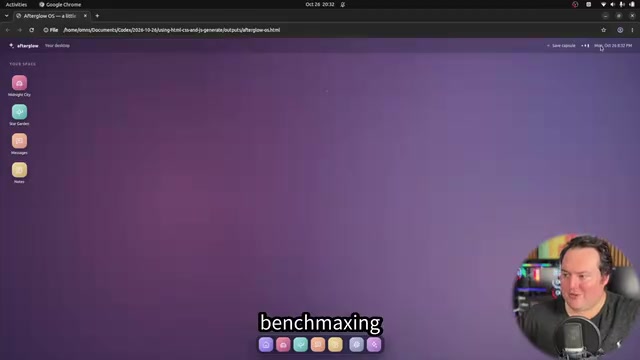
Game development was the centerpiece of this test. In the browser OS test, the model took 14.5 minutes in fast mode at maximum effort, generating a "very serene" styled operating system interface, including a GTA clone and a second game about cultivating galaxies. The color palette leaned pastel, sound effects and interactions were simple, but overall usable.
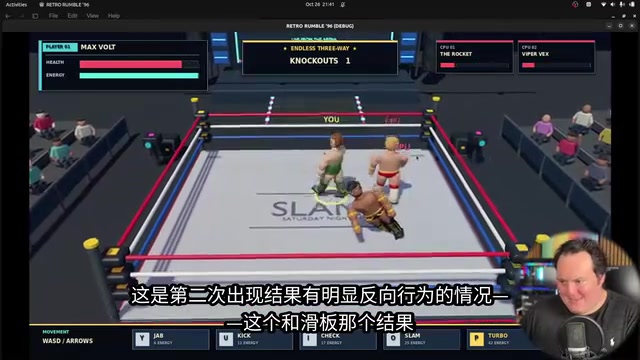
In the subway FPS game test, the model produced a basic version in 9.5 minutes, but weapon models were rough, there were no bullet holes, and sound was muted by default. Under subsequent fast mode plus extreme mode instructions, an improved version was generated in 6 minutes, adding right-click zoom, visible shell casings, and higher-quality enemy models, but bullet holes were still missing. The wrestling game also exposed the same issue after multiple iterations: characters moving in reverse. The creator pointed out that the inverted-controls problem recurred in both the skateboarding and wrestling games, and nearly every result required follow-up fixes.
The final overall assessment: these games are "very simple but very fast, and without many problems," with generally acceptable mechanics, but still short of fine polish.
The "inverted-controls problem" recurring in the article refers to game characters moving in the opposite direction of player input—for example, pressing left makes the character move right. In game development, this is usually caused by coordinate system transformation errors, camera orientation mismatching character orientation, or input mapping signs being reversed. For human programmers, such bugs can be found through simple debugging; but for model-generated code, it may stem from a misunderstanding of the relationship between "screen coordinates and world coordinates," or a failure to maintain global consistency across multiple iterations. The issue recurring across the skateboarding, wrestling, and other games suggests the model lacks systematic checks for interaction consistency when generating game logic, relying more on follow-up instructions to patch things up rather than producing conflict-free code in one pass.
Overall Assessment: A Practical Model That Leaves You Torn
The creator expressed mixed feelings in the summary. GPT-6.1 Terra isn't as disappointing as some of OpenAI's recent releases; it does have advantages: fast, cheap, and decent computer-use capability. But that subconscious feeling of "this is crazy" doesn't come from astonishingly high-quality code—it comes from a certain uncertainty about the model's behavior.
For scenarios that require quickly completing large volumes of work without extreme demands on refinement, GPT-6.1 Terra offers an attractive option. But if you need a model that stays committed to difficult tasks and doesn't give up easily, its performance may require more follow-up instructions to push forward. This model's capability boundary may lie precisely between the seemingly contradictory labels of "speed" and "giving up."
One-line Summary
GPT-6.1 Terra is extremely fast with aggressive pricing, but tends to give up prematurely on complex tasks—a practical model that leaves you torn.
Paragraph Summary
OpenAI's newly released GPT-6.1 Terra has sparked discussion in the developer community. A Bilibili creator's hands-on test shows the model is extremely fast—generating a skateboarding game in 2 minutes 35 seconds and completing 3D wrestling game modeling and playtesting in 4 minutes 19 seconds—and is priced at $1 per million input tokens and $5 per million output tokens with high usage efficiency. Its coding ability sits between Luna and Soul, scoring 50.3% at maximum effort, with Soul still the better choice for pure coding. Computer-use performance is decent on Mensa tests, but in fine Blender modeling and robotic arm tasks it shows a tendency to "give up easily," with similar reports from users on X. Game development results are simple but usable, and the inverted-controls issue recurs across multiple tasks, requiring follow-up instructions to fix. Overall: suitable for quickly completing large volumes of work that doesn't demand extreme refinement, but difficult tasks need more pushing.
Related articles

Display 1.0: Build Docs and Apps with Any Agent
Display 1.0 launches on Product Hunt, letting any Agent create docs, prototypes, and apps in one workspace, organized via Spaces and Folders into a team knowledge base with flat pricing.

UnleashX: Hire AI Employees Like People and Turn Conversations into Deliverables
UnleashX launched on Product Hunt with a pitch to hire AI employees like people: choose a role, connect CRM and tools, set rules, execute workflows end to end, and involve humans only when needed. This article analyzes its positioning, configuration logic, and human-AI collaboration boundaries.

Cedric AI: The AI Agent That Attends Meetings and Presents Slides for You
Cedric AI is a Product Hunt meeting AI agent that joins Zoom, Meet, and Teams to present slides, answer questions with real-time data, and generate approved notes and follow-ups. This article breaks down its three-layer capabilities, differentiated design, and use cases.