Hotly: The Open-Source Paid Inbox That Turns DMs into Revenue

Hotly turns your inbox into a paid gateway: strangers pay or subscribe weekly to DM you, with open-source self-hosting.
Hotly is an open-source paid inbox tool on Product Hunt that puts a price on DMs: senders pay a one-time fee or weekly subscription to reach your unified inbox, with Stripe handling payments. Using price as an asymmetric filter, it suits time-constrained roles like consultants, creators, and open-source maintainers. It offers free self-hosting and an official hosted service (30-day trial), keeping data and pricing control with users. Challenges include deterring potential partners, subscription retention, low replication barriers from open source, and limited early feedback.
Hotly: The Open-Source Paid Inbox That Turns DMs into Revenue
In an age of information overload, attention has become the scarcest resource. Every day we're flooded with DMs, emails, and notifications, yet we rarely see any real return from them. Hotly, newly launched on Product Hunt, aims to flip that dynamic: it turns your inbox into a priced gateway—strangers pay to message you, or subscribe weekly to your updates, and you simply reply selectively from a unified inbox while Stripe handles the payouts.
Hotly earned 88 upvotes and 6 comments on Product Hunt, ranking 15th for the day, under the tags messaging, open source, GitHub, and monetization. This article breaks down the value and boundaries of this "paid DM" tool across four dimensions: product logic, open-source deployment, target users, and potential challenges.
Core Mechanism: Putting a Price on DMs
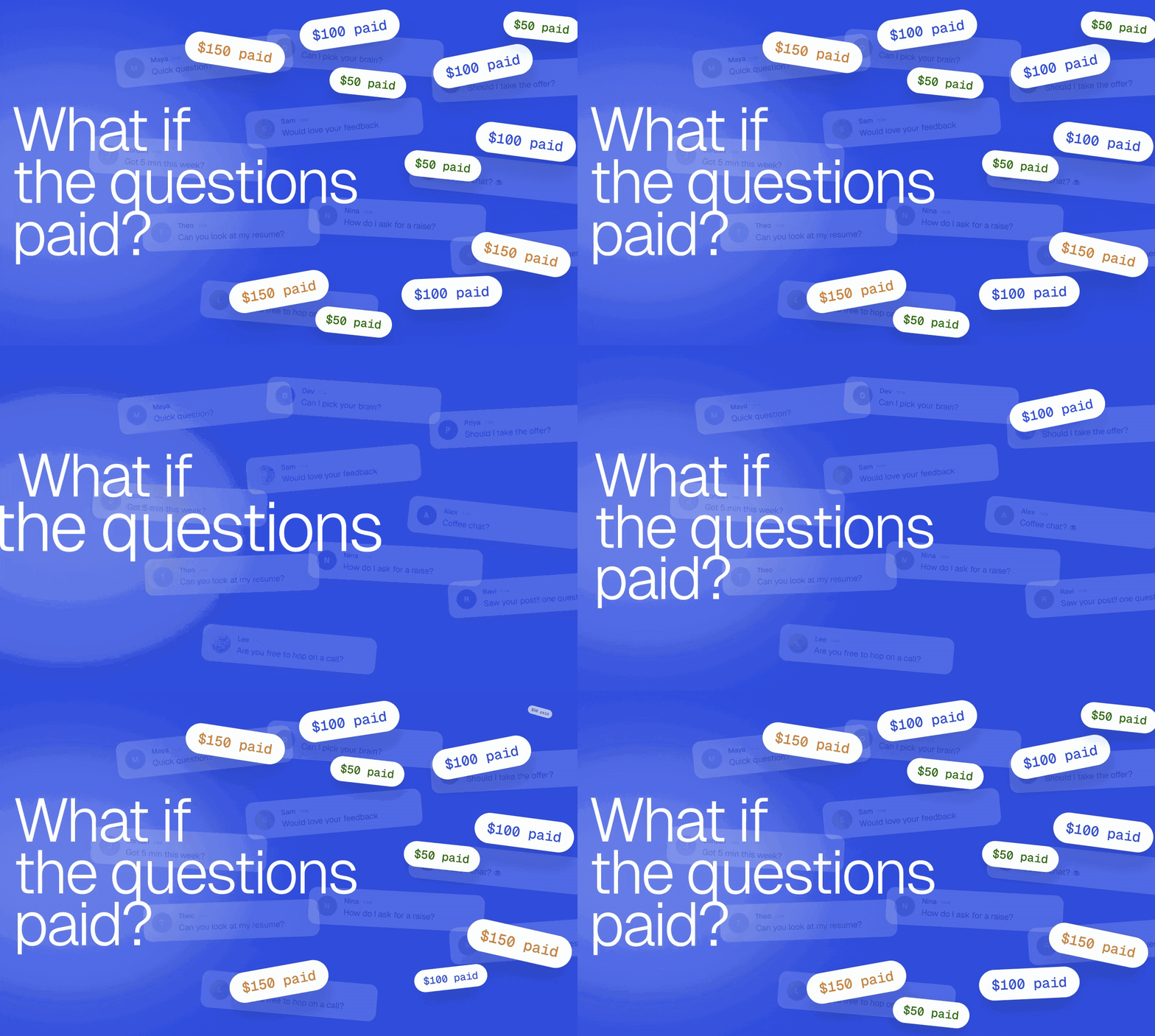
Hotly's product description is refreshingly blunt: "Your inbox, with a price tag on it." Specifically, it supports two payment models: pay-per-note and weekly subscription. Senders must pay before a message enters your Hotly inbox; subscribers pay on a recurring basis to keep sending you content. The recipient views and replies from a single inbox, and Stripe handles the payment flow.
The key to this mechanism is asymmetric filtering. Traditional inboxes are free and open to everyone, which leads to a flood of spam and low-value requests; Hotly uses price as a gatekeeper, allocating attention to those genuinely willing to bear a cost. This model is a natural fit for consultants, creators, and advisory roles—people who already sell their time and insights but lack a channel to directly monetize inbound DM requests.
Interestingly, Hotly doesn't frame the payment as a "tip" or "donation" but as an explicitly priced ticket. Payment happens before the message is sent, so the recipient bears no reading cost upfront—a more effective filter than post-hoc tipping against casual senders.
Asymmetric filtering borrows from the "signaling" idea in information economics: when the cost of sending is zero, anyone can cheaply occupy someone else's attention, and the inbox becomes a tragedy of the commons. Setting a price threshold effectively requires senders to "vouch" for their request with real money. The higher the price, the weaker the incentive to fire off casual messages, and the higher the average quality of what remains. This shares the same logic as job platforms charging applicants or headhunters charging companies—it's not pricing information itself, but pricing the "priority access to someone's attention."
Pay-per-note and weekly subscription represent two different commitment structures. Pay-per-note is a one-off transaction, suited to occasional, specific inquiries; a weekly subscription establishes an ongoing relationship, where the sender gains the right to initiate a conversation at any time, rather than buying a single specific message. Weekly granularity is finer than monthly, lowering the barrier to try it out, but it also puts more pressure on the recipient to reply consistently—subscribers will reassess week by week whether the relationship is worth renewing.
Open Source and Self-Hosting: You Own Your Data and Pricing
One of Hotly's most distinctive selling points is its open-source nature. The official description says you can run it on your own server for free, or choose the official hosted service, which offers a 30-day free trial. For users who care about privacy and data sovereignty, self-hosting means message content and payment configuration stay on your own infrastructure, with no third-party platform intermediation.
From a monetization-tool perspective, open source carries another layer of meaning: pricing strategy, subscription periods, and payout accounts are all controlled by the user, with no platform taking a cut in the middle. Stripe as the payment channel is a standard choice—high developer familiarity, low integration cost. For indie developers and small creator teams, this combination lowers the engineering barrier to launching a paid community—no need to build payment, subscription management, and message routing from scratch.
That said, self-hosting also means shifting operational responsibility. Servers, backups, Stripe configuration, and security updates all fall to you, which is a real barrier for non-technical creators. The official hosted service therefore functions more as the mainstream entry point, while self-hosting serves the technically capable, data-sensitive user base.
Self-hosting means deploying software on servers you control, rather than using a vendor's multi-tenant cloud service. For a tool like Hotly that handles DMs and payment configuration, self-hosting means message content, Stripe keys, and subscription data never pass through a third-party server, with data sovereignty fully in the user's hands. The trade-off is operational responsibility: you need to configure a domain and HTTPS, back up the database regularly, keep up with security patches, and handle Stripe webhook receipt and retries yourself.
Stripe is developer-facing payment infrastructure offering acquiring, subscription billing, auto-renewal, and split payments, integrated with business systems via API and webhook. By delegating payments to Stripe, Hotly essentially outsources compliance, risk control, and fund settlement, keeping only the state tracking of "who paid and for how long." The difference between hosted and self-hosted comes down to whether this operational and configuration work is handed to the official service or kept in-house.
Target Users and Use Cases
Hotly's positioning evokes several adjacent categories: paid Q&A, membership newsletters, and creator subscriptions. But it narrows the entry point to the specific act of "DMing," making its use cases more focused.
The first group is time-constrained professionals—consultants, lawyers, investors, and industry experts—who receive a flood of inquiry requests daily, where paid messages can filter out non-serious inquiries. The second group is content creators, for whom the subscription model turns DMs into a lightweight membership perk: fans pay weekly for direct access. The third group is open-source maintainers and indie developers, who can use paid DMs as a commercialization path for technical support while keeping public issue trackers free of low-quality questions.
Compared with Calendly, which charges by time, or Substack, which charges by content subscription, Hotly sells "the right to send" rather than "time blocks" or "content bundles." This granularity is finer and better suited to asynchronous communication—recipients don't need to respond immediately and can batch-process at their convenience.
Calendly is a scheduling tool whose core is selling "time blocks," billed by meeting duration; Substack is a membership newsletter platform whose core is selling "content bundles," with readers subscribing monthly or annually. Hotly sells "the right to send"—senders aren't buying a stretch of time or a batch of content, but permission to put a message in someone's inbox. This distinction determines each tool's use case: choose Calendly for synchronous conversation, Substack for ongoing reading, and Hotly for asynchronous, low-frequency communication where each request is independent.
Potential Challenges and Observations
Hotly's model is elegant, but it faces several practical issues in execution. A payment threshold will deter some contacts who might have brought long-term value, especially potential partners making first contact; balancing "filtering noise" against "missing opportunities" requires each user to tune it themselves. Subscription retention is another challenge—the value of a DM conversation often diminishes over time, and whether users are willing to keep paying weekly depends on whether the recipient can consistently deliver high-quality replies.
The open-source strategy cuts both ways. Open code builds trust and invites community contributions, but it also means competitors can quickly replicate the core functionality, with the product's moat resting more on hosted experience and brand equity than on technical barriers. Moreover, the Product Hunt page shows 88 upvotes and only 6 comments, indicating community discussion is still early, real user feedback is limited, and long-term retention and paid-conversion data remain to be seen.
From an industry perspective, Hotly rides two trends: "attention monetization" and "segmentation of the creator-economy toolchain." It doesn't try to replace email or instant messaging but adds a payment gate on top of existing communication channels. Whether this lightweight approach takes hold comes down to a simple question: will people actually pay to send a DM? For some high-value providers, the answer may well be yes.
One-line Summary
Hotly turns your inbox into a paid gateway: strangers must pay or subscribe weekly to send you a DM, with open-source self-hosting supported.
Paragraph Summary
Hotly is an open-source paid inbox tool launched on Product Hunt whose core mechanism is putting a price on DMs: senders pay a one-time fee or a weekly subscription to get a message into the recipient's unified inbox, with Stripe handling payments. It uses price as an asymmetric filtering threshold, allocating attention to those willing to bear a cost, and suits time-constrained roles like consultants, creators, and open-source maintainers. The product supports free self-hosting and an official hosted service (30-day trial), with data and pricing control in users' hands. The article also notes its challenges: the payment threshold may deter potential partners, weekly subscription retention depends on consistently high-quality replies, open source lowers the barrier to replication, and early community buzz is still low, with real paid conversion yet to be proven.
Related articles
AWS AgentCore Gateway: Connecting AI A…
AWS AgentCore Gateway: Connecting AI Agents to Enterprise Backends with MCP
How AWS AgentCore Gateway acts as a primary MCP server to aggregate REST APIs, Lambda, and existing MCP services? Analyzing its AST real-time mapping, zero cold start, semantic search for tool overload, session isolation, and key injection security design, plus the architectural approach to decoupling enterprise AI agents from backends.

One Link Gives Figma AI a New Skill: Hands-On with MCP Connectors
Paste one MCP server link and the AI Agent in Figma gains new tool capabilities. We break down the setup flow, 20+ one-click apps, read/write permissions and execution policies, and the public HTTPS requirement.

Cognition SWE-2 in Practice: One Prompt to Handle the Whole Product Launch Process
Analyzing a YouTube creator's prompt for using Cognition SWE-2 to launch a product: a landing page, seven-email sequence, and non-buyer follow-up tool, plus how the 'test and report' constraint changes AI delivery quality.