Librem 5 v2: A Phone That Sets Everyone Free
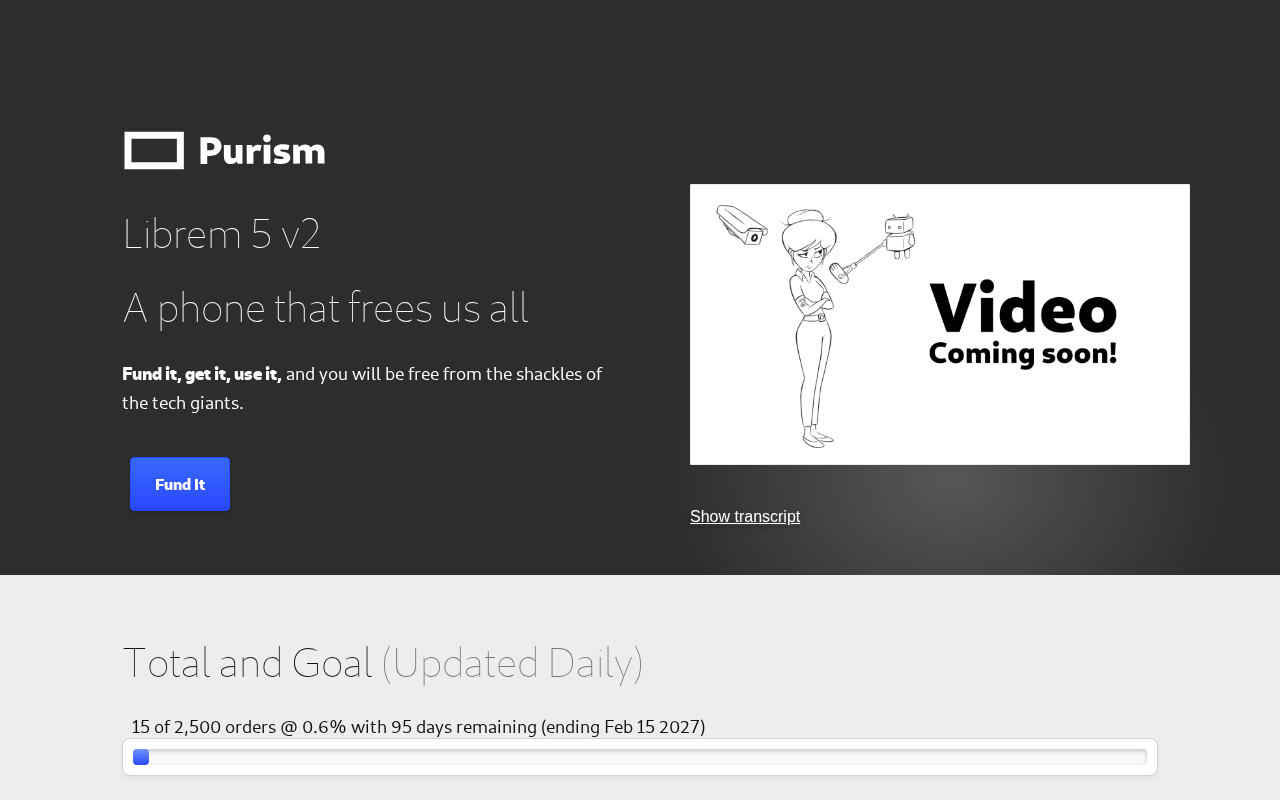
Purism launches the Librem 5 v2 Linux phone, challenging mainstream phone monopoly with open source and physical privacy switches.
The article introduces Purism's Librem 5 v2 Linux phone, whose core proposition is giving users true control: it runs Linux-based PureOS, emphasizes open-source auditability, and uses physical switches to cut power to the camera, microphone, and wireless modules. Compared with mainstream Android/iOS, it returns control to users but has clear trade-offs in app ecosystem and usability. Hacker News discussions focus on pricing, hardware performance, software ecosystem maturity, and vendor delivery capability, with attitudes both expectant and cautious. The article argues the device is more likely aimed at developers, privacy advocates, and open-source enthusiasts rather than the mass market, but its philosophy has symbolic value amid privacy controversies.
In an era where smartphones are almost entirely dominated by a handful of tech giants, a phone that claims to "set everyone free"—the Librem 5 v2—has once again entered the public eye. This Linux phone, built by Purism, emphasizes privacy and openness from hardware to software, attempting to forge a path radically different from mainstream Android/iOS.
The Core Philosophy of Librem 5 v2: Freedom and Privacy
The Librem 5 v2 continues the core proposition of the original Librem 5: a device that users can truly control. It runs PureOS, a Linux-based operating system that emphasizes open source and auditability, and provides physical hardware switches to cut power to the camera, microphone, and wireless modules at the hardware level. This design approach stands out as particularly unconventional in today's highly integrated smartphone market, and it directly addresses the core pain points of privacy-sensitive users.
Judging from community discussions, the appeal of the Librem 5 v2 lies not in performance specifications but in the value proposition of "freedom." For users who wish to escape data collection by big tech companies and pursue software freedom, this phone represents a viable alternative direction.
PureOS is a distribution developed by Purism based on Debian GNU/Linux, adhering to the Free Software Foundation (FSF) free software certification standards, and by default contains no proprietary firmware or closed-source drivers. Unlike mainstream mobile operating systems, PureOS runs a complete desktop-grade GNU/Linux user space, allowing users to freely install and uninstall software through package managers without being subject to app store review or vendor lock-in. This design makes the system highly auditable—developers can inspect the code line by line to confirm there are no backdoors or hidden data collection behaviors. However, a complete desktop system also brings challenges in power consumption and interaction adaptation on mobile devices, which is precisely the long-standing engineering challenge faced by Linux phones.
Hardware kill switches are the most distinctive design feature of the Librem 5 series: the camera, microphone, and wireless modules each have independent physical toggle switches that directly cut off the circuit power supply to the corresponding components, rather than merely disabling them through software. This means that even if the operating system is compromised by malware, attackers cannot eavesdrop or take photos when these components are powered off, because the cutoff occurs at the hardware level and cannot be bypassed by software. This mechanism provides a security guarantee for privacy protection that cannot be achieved at the software level, and is one of the core reasons why this device has attracted attention in the privacy community.
Differences from Mainstream Phones: A Game of Control
The convenience of mainstream smartphones is built on users relinquishing some degree of control: app store review, cloud synchronization, background data collection. The Librem 5 v2 does the opposite, returning control to users. Physical hardware switches, a replaceable software ecosystem, and a commitment to open-source drivers are all concrete manifestations of this philosophy.
This difference also implies trade-offs. Linux phones lag behind mature platforms in app ecosystem and everyday usability, and there are differing voices on this in community discussions. Some argue that the Librem 5 v2 is more of a device for developers, privacy advocates, and open-source enthusiasts rather than a consumer product for the mass market.
The shortcomings of the Linux phone ecosystem are mainly at the application level: Android and iOS have millions of vetted apps, while Linux phones typically rely on adapted desktop Linux applications or web apps, with a limited number of native mobile apps. In addition, many everyday functions (such as mobile payments, banking apps, and map navigation) lack official support, and users often need to rely on compatibility layers (such as Waydroid for running Android apps) to compensate. This ecosystem gap means that Linux phones will struggle to meet all the daily needs of ordinary consumers in the short term, which also explains why their positioning leans more toward developers and niche user groups.
Community Response and Discussion Focus
On Hacker News, although discussion about the Librem 5 v2 is not particularly heated, comments focus on several key questions: whether the pricing is reasonable, whether hardware performance can meet daily use, the maturity of the software ecosystem, and Purism's delivery capability as a vendor. These discussions reflect that outsiders hold both expectations and caution toward Linux phones.
Supporters value the symbolic significance and practical viability of a "freedom phone"; skeptics worry that it will struggle to escape its niche positioning. The coexistence of both voices precisely illustrates the market position of the Librem 5 v2: it is not intended to replace the iPhone or Android flagships, but to provide a choice for a specific group of people that aligns with their values.
Challenges and Prospects of Freedom Phones
The challenges facing the Librem 5 v2 are real: supply chain, software adaptation, and user habits—each requires long-term investment. But the philosophy it represents—that users should have ultimate control over their own devices—is being valued by more and more people. Against the backdrop of frequent privacy controversies, the existence of such products itself has value.
For users concerned about digital rights, the open-source ecosystem, and privacy protection, the Librem 5 v2 is worth continued attention. It may not be most people's next phone, but it reminds us that the choice of smartphones could be more diverse.
One-line Summary
Purism launches the Librem 5 v2 Linux phone, challenging mainstream phone monopoly with open source and physical privacy switches.
Paragraph Summary
The article introduces the Librem 5 v2 Linux phone built by Purism, whose core proposition is to give users true control over their device: it runs the Linux-based PureOS, emphasizes open-source auditability, and uses physical switches to cut power to the camera, microphone, and wireless modules. Compared with mainstream Android/iOS, it returns control to users, but there are clear trade-offs in app ecosystem and usability. Hacker News community discussions focus on pricing, hardware performance, software ecosystem maturity, and vendor delivery capability, with attitudes that are both expectant and cautious. The article concludes that the device is more likely aimed at developers, privacy advocates, and open-source enthusiasts rather than the mass market, but its philosophy has symbolic value against the backdrop of privacy controversies.
Related articles

Nvidia CEO Removal Saga: Trump Intervenes Over the Weekend, Jensen Huang Reinstated Monday
Vergecast podcast reveals Nvidia CEO drama: earnings call said he wouldn't return and a new CEO was being sought; Trump intervened over the weekend, with J.D. Vance brokering a security guarantee to the board; Jensen Huang reinstated at 9 a.m. Monday.
Semantic Caching Explained: Reusing the Same Answer for Similar Questions
Semantic caching uses embeddings to judge whether queries are similar in meaning and reuses cached results for similar prompts. This article explains how it works, the difficulty of threshold tuning (such as the risk of misjudging negations), and its applicable boundaries.

How Did Trump Personally Turn Nvidia into the "Twelfth Board Member"?
A YouTube political commentary offers a sharp view: behind Nvidia's market cap milestone, Trump's deep involvement earns him the title of "twelfth board member." The article breaks down the commentator's logic on stock market achievements, the break from small-government tradition, and power display.