LLM Inference Learning Guide: Hours of Video and Handwritten Notes

A learner compiled an LLM inference guide through videos and 85 pages of handwritten notes, reflecting the scarcity and opportunity of systematic learning resources in this field.
The article discusses a Hacker News share in which a learner spent hours watching YouTube videos and handwrote 85 pages of notes to compile an introductory guide to LLM inference. LLM inference is a core stage of model deployment and involves optimization techniques such as quantization, KV cache, and batching, but the relevant knowledge is scattered and lacks systematic introductory material. Combining videos and handwritten notes can deepen understanding, but personal notes have limitations such as lack of review and lagging updates, and need to be cross-validated with official documentation and code practice. The article suggests using such notes as a roadmap, focusing on underlying principles rather than tool commands, and emphasizes hands-on experiments and community discussion. The post was not highly popular, reflecting that LLM inference learning resources remain scattered and that there is an opportunity to create systematic tutorials.
In an age of information overload, learning a complex technology efficiently has become a challenge for many developers. Recently, a share on Hacker News sparked discussion about LLM inference learning paths: a learner spent hours watching YouTube videos and handwrote 85 pages of notes to compile an introductory guide to LLM inference. Although the original post had only a brief title and link, the act itself reflects some key trends in the current AI learning ecosystem.
Why Is LLM Inference Worth the Time?
LLM (large language model) inference is the core stage of model deployment and real-world application. Compared with training, inference directly affects user experience, cost control, and system stability. As model sizes continue to grow, inference optimization techniques such as quantization, KV cache management, and batching strategies have become crucial. However, this knowledge is often scattered across academic papers, technical blogs, and video tutorials, with a lack of systematic introductory material. By integrating video content with handwritten notes, this learner attempted to build a learning path from scratch, precisely responding to the community's demand for structured tutorials.
Quantization refers to the technique of converting model weights and activations from high-precision floating-point numbers (such as FP32, FP16) to lower-precision representations (such as INT8, INT4). Its core motivation is that LLMs often have billions of parameters, and inference requires loading all weights into VRAM; high-precision formats lead to huge VRAM usage, and memory bandwidth becomes a bottleneck. Quantization can compress model size by 2-4x while using integer arithmetic units to improve throughput. Common methods include post-training quantization (PTQ) and quantization-aware training (QAT). The former requires no retraining and is simple to implement, while the latter simulates quantization error during training and incurs smaller accuracy loss. In practical deployment, algorithms such as GPTQ and AWQ can already maintain generation quality close to the original model under 4-bit quantization, making them one of the key means of reducing inference costs.
KV cache is a core optimization mechanism in autoregressive generation with large language models. In the Transformer decoder, each time a new token is generated, attention computation must be performed over the Key and Value vectors of all previous tokens. If recalculated each time, the overhead would grow quadratically with sequence length. The KV cache stores historical Key/Value pairs to avoid repeated computation, thereby reducing the computational complexity of single-step generation from O(n²) to O(n). However, the cache itself consumes a large amount of VRAM and grows linearly with batch size and sequence length. Therefore, techniques such as PagedAttention, KV cache quantization, and prefix sharing have been proposed to optimize cache management, and these are also core innovations of inference systems such as vLLM.
The Value and Limitations of Multi-Source Learning Materials
From YouTube videos to handwritten notes, this learning approach demonstrates the advantage of integrating multiple sources of information. Video tutorials usually visually demonstrate inference workflows and tool usage, while handwritten notes prompt learners to actively distill key concepts and deepen memory. The 85 pages of notes indicate that the content covered a considerable number of topics, possibly including inference fundamentals, performance metrics, optimization techniques, and more. However, the limitations of such personal notes are also obvious: they lack peer review and may contain misunderstandings; moreover, their update speed struggles to keep pace with rapidly iterating technology.
In the Hacker News discussion, some commenters pointed out that although such learning resources are valuable, they need to be combined with official documentation and open-source code practice to form a complete understanding. This also reminds readers to maintain critical thinking when referring to such materials and to cross-validate key information.
Batching strategies are a key means of improving throughput in inference services. Since GPU utilization for a single request is often insufficient, merging multiple requests into one batch for parallel computation can significantly amortize computational costs. But the challenge is that different requests have varying input and output lengths, and generation proceeds token by token, so simple batching causes short requests to wait for long ones (i.e., "head-of-line blocking"). To address this, the industry has proposed strategies such as continuous batching and dynamic batching, allowing new requests to join the batch at any time and completed requests to exit immediately, thereby maximizing GPU utilization while ensuring low latency. Understanding batching strategies helps developers weigh the core trade-off between latency and throughput, and is also an important consideration when choosing an inference framework.
How to Use Such Learning Resources Efficiently
For developers who want to get started with LLM inference, such notes can be used as a roadmap rather than a final answer. It is advisable to first skim the structure of the notes to understand the distribution of core topics, and then consult the original videos or related papers for each topic. Hands-on practice is indispensable, for example, using open-source inference frameworks for small-scale experiments and observing the impact of different parameters on latency and throughput. Community discussion is also an important supplement; experience sharing on platforms such as Hacker News often reveals pitfalls not mentioned in the documentation.
Interestingly, during learning, one should focus on the underlying principles of inference technology rather than simply memorizing tool commands. For example, understanding the computational bottlenecks of attention mechanisms helps in better applying optimization methods. If this learner's 85 pages of notes could be shared publicly, they might become a stepping stone for more people to get started, but more importantly, it is about cultivating the ability to independently organize and verify knowledge.
The computational bottleneck of attention mechanisms is key to understanding LLM inference performance. Standard self-attention requires computing the dot products of the Query with all Keys, with complexity O(n²·d), where n is the sequence length and d is the hidden dimension. In long-context scenarios, attention computation and KV cache memory access become the main bottlenecks. In addition, the decoding phase is a typical memory-bound task: each generated token requires reading all model weights and the KV cache, but the amount of computation is small, so a large portion of GPU compute capacity sits idle. This explains why optimization methods such as quantization, KV cache compression, and FlashAttention (which reduces memory reads and writes through tiled computation) can bring significant speedups. Only by mastering these underlying principles can one identify the bottleneck during actual tuning rather than blindly applying tools.
Community Response and Takeaways
The post received 12 points on Hacker News with few comments, suggesting that it may be a niche but vertical share. This low popularity does not mean the content is worthless; rather, it reflects that learning resources in the LLM inference field remain scattered and have not yet formed widely disseminated classic tutorials. For content creators, this suggests an opportunity: systematizing scattered knowledge points and producing high-quality introductory guides may be welcomed by the community.
Overall, this learner's investment demonstrates enthusiasm and method in technical learning. Against the backdrop of rapid AI technological evolution, continuous learning and knowledge organization capabilities are more important than ever. As a highly practical direction, LLM inference needs more such explorers to share their learning paths and jointly build a more complete knowledge system.
One-line Summary
A learner compiled an introductory guide to LLM inference through videos and 85 pages of handwritten notes, reflecting both the scarcity and the opportunity for systematic learning resources in this field.
Paragraph Summary
The article centers on a Hacker News share in which a learner spent hours watching YouTube videos and handwrote 85 pages of notes to compile an introductory guide to LLM inference. LLM inference is a core stage of model deployment and involves optimization techniques such as quantization, KV cache, and batching, but the relevant knowledge is scattered and lacks systematic introductory material. Combining videos with handwritten notes can deepen understanding, but personal notes have limitations such as lack of review and lagging updates, and need to be cross-validated with official documentation and code practice. The article suggests using such notes as a roadmap, focusing on underlying principles rather than tool commands, and emphasizes the importance of hands-on experiments and community discussion. The post was not highly popular, reflecting that LLM inference learning resources remain scattered and that there is an opportunity to create systematic tutorials.
Related articles

Codex and AI Coding Agents in Practice: A Complete Guide from Prompts to MCP
A Codex-centered guide to agentic coding: Task-Context-Output prompts, AGENTS.md project memory, plan mode, skills, characterization vs. spec tests, permissions and config.toml, MCP tool calls, plus secrets safety and context management.

GPT-6 Security Model and the AI Attack-Defense Escalation: This Week in AI
This week in AI: OpenAI's GPT-6 Saber found 948 Linux kernel root-escalation paths; Cursor deploys full apps from one sentence; Binance details a social engineering attack; C++26 fails ISO vote.
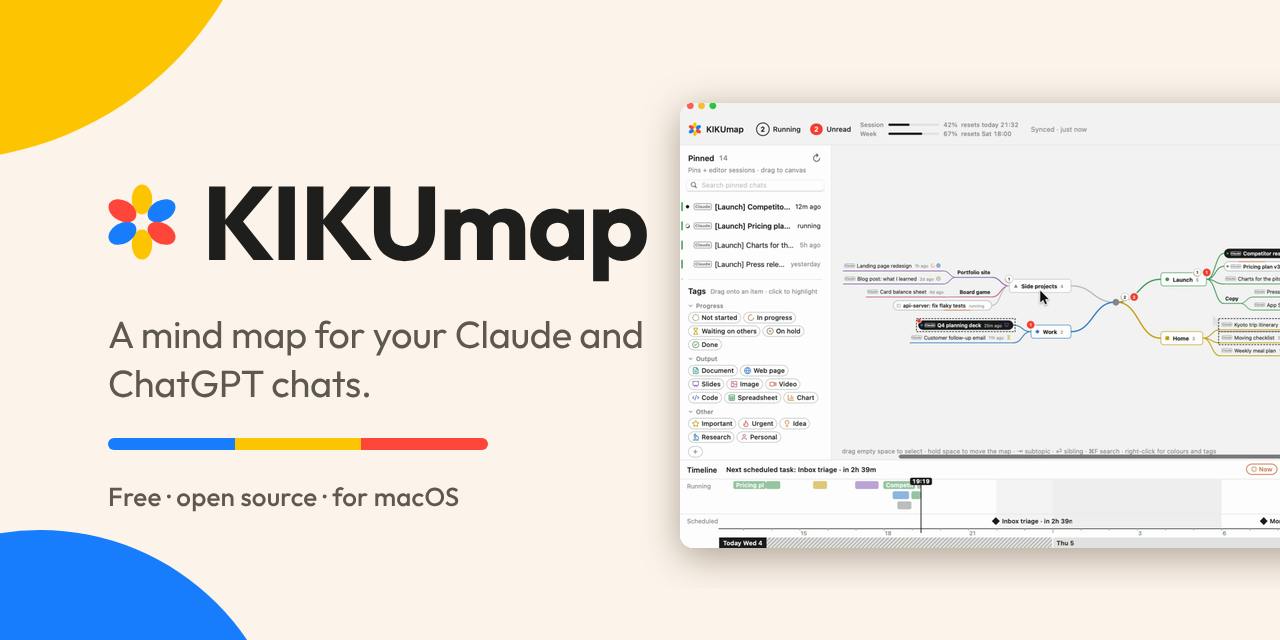
KIKUmap: Manage Your Claude and ChatGPT Conversations with Mind Maps
KIKUmap is a macOS menu bar app that visualizes Claude and ChatGPT conversations as mind maps with real-time status. Free and open source.