Paramount's $111 Billion Bid for Warner Bros. Discovery: A Full Breakdown of Hollywood's Deal of the Century

Paramount eyes a $111B Warner Bros. Discovery acquisition to build a Hollywood content empire against streaming giants.
Paramount is pursuing an acquisition of Warner Bros. Discovery valued at approximately $111 billion, in what would be one of the largest mergers in Hollywood history. If completed, the deal would unite Warner Bros. Pictures, HBO, CNN, and Discovery with Paramount Pictures, CBS, and their respective streaming services into a single content powerhouse spanning film, TV, news, and streaming. The underlying rationale is clear: as streaming competition matures, subscriber growth stalls, and content costs climb, legacy media giants must consolidate to compete with Netflix, Disney, and Amazon. The deal remains in progress, however, facing significant uncertainties around cultural integration, debt absorption, and antitrust regulatory scrutiny.
A Landmark Deal Set to Reshape Hollywood
Paramount is planning to acquire Warner Bros. Discovery in a deal valued at approximately $111 billion — widely regarded as one of the largest mergers in Hollywood history. If completed, it would fundamentally redraw the competitive map of the entertainment industry, with far-reaching implications for streaming, film and TV production, and content distribution.
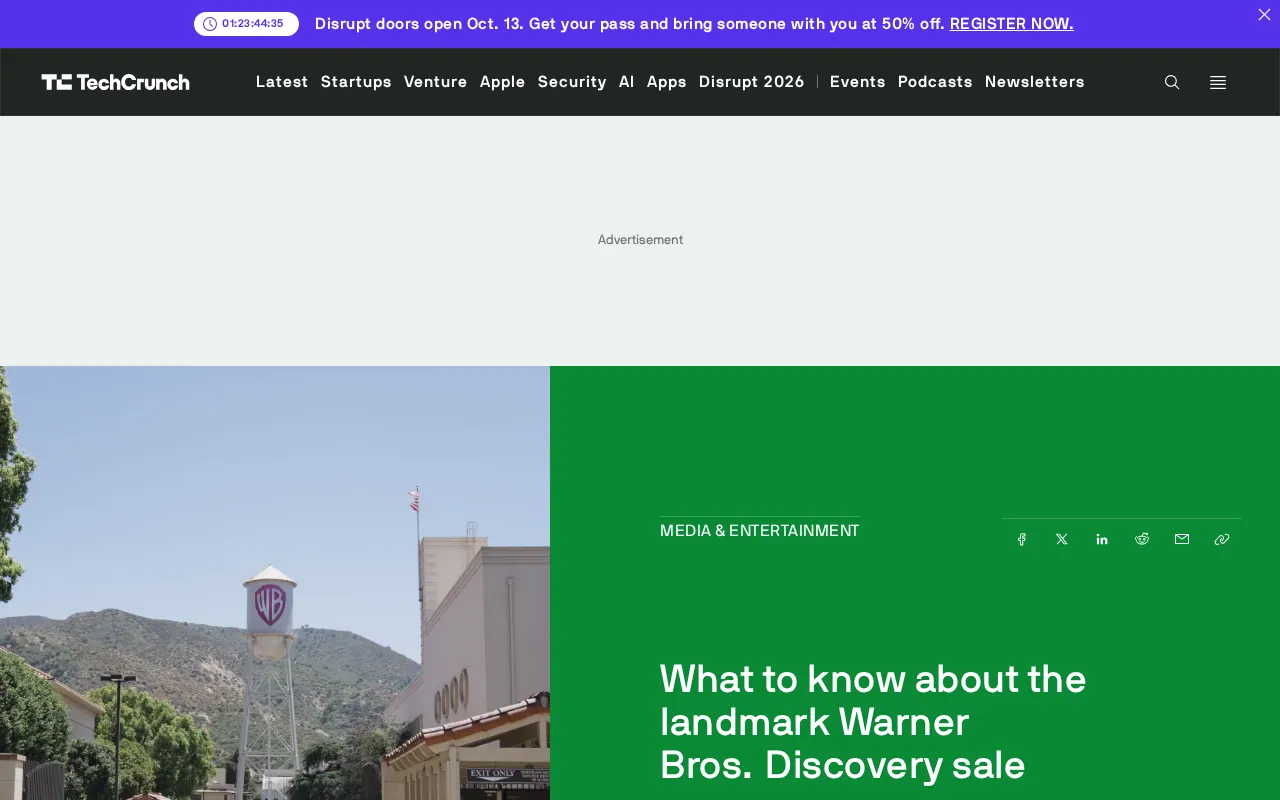
Based on what has been disclosed so far, the deal is still in progress and many details remain to be finalized. But the sheer scale — $111 billion — is enough to make this one of the most closely watched events in the global media industry this year.
Why This Deal Matters
Hollywood has been going through a period of intense consolidation and disruption. Legacy studios have faced mounting pressure from the streaming wave, with content production costs soaring and subscriber growth plateauing. Against this backdrop, large-scale mergers have become a key strategy for companies seeking economies of scale, consolidating content libraries, and holding their ground against competitors.
Warner Bros. Discovery houses a portfolio of heavyweight content assets and brands, including Warner Bros. Pictures, HBO, CNN, and Discovery. Paramount, for its part, owns Paramount Pictures, CBS, and its own streaming service. A combined entity would form a content superpower spanning film, television, news, documentaries, and streaming.
At this scale, the merged company would enter competition against Netflix, Disney, and Amazon with a significantly deeper content library and stronger bargaining power.
It's worth noting that Warner Bros. Discovery is itself a product of a major merger — in 2022, AT&T spun off WarnerMedia and merged it with Discovery in a deal valued at $43 billion, creating the current Warner Bros. Discovery. However, the combined company has been saddled with roughly $48 billion in debt, its stock has remained under pressure, and CEO David Zaslav has had to resort to sweeping cost cuts, layoffs, and content reductions to maintain financial stability. This context makes Paramount's acquisition offer particularly attractive to Warner Bros. Discovery — an external merger could be a way out of the debt burden and a path to restoring investor confidence.
The Industrial Logic Behind $111 Billion
The $111 billion valuation reflects not just the asset value of Warner Bros. Discovery, but also the media industry's urgent appetite for scale. As the streaming wars enter their second half, the cost of going it alone keeps rising, and the balance between content investment and subscriber acquisition has become increasingly difficult to sustain.
Content Remains King
Regardless of how the industry evolves, premium content remains the core competitive advantage. Warner Bros. Discovery's vast library of film and TV rights and iconic IP is the most compelling part of this deal. A merged entity would allow Paramount to leverage these assets to strengthen its content offering on streaming platforms.
The Challenges of Integration
Large-scale mergers invariably come with significant integration hurdles. Cultural alignment, business restructuring, workforce adjustments, and potential regulatory scrutiny are all critical variables that will determine whether the deal can close smoothly. A merger of this magnitude will almost certainly attract intense attention from antitrust authorities, and the approval process could be lengthy and complex.
U.S. antitrust enforcement has become notably more aggressive toward media mergers in recent years. In 2023, the Department of Justice successfully blocked Adobe's acquisition of Figma; the Federal Trade Commission (FTC) has also challenged multiple large mergers in the tech and media sectors. For a combination of this scale, regulators may closely scrutinize market concentration in news (CNN + CBS News), sports rights, and the streaming market. Historically, the AT&T–Time Warner merger took nearly two years of litigation to complete — a precedent that suggests this deal could face an equally protracted approval timeline.
A Deal Still in Motion
It bears emphasizing that this transaction is still evolving, and many specific terms, financing structures, and regulatory developments have yet to fully materialize. For observers tracking the media and entertainment industry, every subsequent development is worth watching closely.
From a broader perspective, this deal is emblematic of legacy media giants searching for survival and growth in the digital age. It is not just about the fate of two companies — it could also serve as a catalyst for a new wave of industry consolidation.
Conclusion
Paramount's plan to acquire Warner Bros. Discovery, with its staggering $111 billion price tag, is destined to be a landmark moment in Hollywood history. Whether or not it ultimately succeeds, it has already laid bare the central tension of the current entertainment industry — in an era of intensifying streaming competition and soaring content costs, scale and consolidation have become an unavoidable path for the major players. As the details of the deal continue to unfold, the outcome of this century-defining merger remains shrouded in suspense.
Related articles
AWS AgentCore Gateway: Connecting AI A…
AWS AgentCore Gateway: Connecting AI Agents to Enterprise Backends with MCP
How AWS AgentCore Gateway acts as a primary MCP server to aggregate REST APIs, Lambda, and existing MCP services? Analyzing its AST real-time mapping, zero cold start, semantic search for tool overload, session isolation, and key injection security design, plus the architectural approach to decoupling enterprise AI agents from backends.

One Link Gives Figma AI a New Skill: Hands-On with MCP Connectors
Paste one MCP server link and the AI Agent in Figma gains new tool capabilities. We break down the setup flow, 20+ one-click apps, read/write permissions and execution policies, and the public HTTPS requirement.

Cognition SWE-2 in Practice: One Prompt to Handle the Whole Product Launch Process
Analyzing a YouTube creator's prompt for using Cognition SWE-2 to launch a product: a landing page, seven-email sequence, and non-buyer follow-up tool, plus how the 'test and report' constraint changes AI delivery quality.