Perplexity Computer Comes to Mac: Models and Agents Run Locally

Perplexity Computer runs fully locally on Mac, with both models and agents executing on-device.
Perplexity announced that Perplexity Computer can now run fully locally on Mac, with models and agents executing on-device. Users can interact directly with native apps and local files, and sensitive data stays off the cloud. The feature is integrated into the existing Mac app. The article notes this addresses enterprise data compliance and privacy concerns while reducing reliance on network and cloud compute—part of the broader shift of AI products to the edge. However, hardware requirements, supported file types, and local model size remain undisclosed, and performance differences from the cloud version await real-world testing.
Title
Perplexity Computer Comes to Mac: Models and Agents Run Locally
Meta Description
Perplexity Computer now runs fully locally on Mac, with both models and agents executing on-device, supporting native Mac apps and local files without uploading sensitive data to the cloud. Now available in the Perplexity Mac app.
Article Content
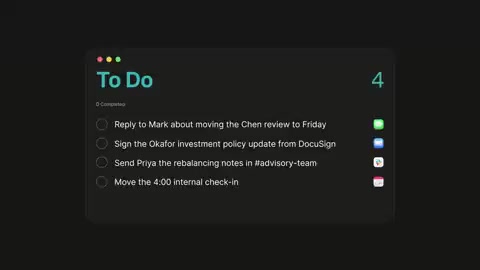
Perplexity announced on X that Perplexity Computer can now run fully locally on Mac. Users can interact directly with native apps and local files, and sensitive data does not need to be uploaded to the cloud during task execution—both the models and the agents run on-device. The feature is now live in its Mac app.
What Local Execution Means
According to Perplexity's official tweet, the core capabilities of Perplexity Computer—including the models that drive task execution and the agents that orchestrate operations—all run on the user's Mac. The company emphasized two points: direct access to native Mac apps and local files, and the fact that sensitive data never has to leave the device.
For users who need to work with internal documents, code, or customer data, keeping data on the local machine is a substantial draw. In the past, cloud-based AI assistants often forced a trade-off between convenience and privacy; local solutions attempt to narrow that gap.
Core differences between on-device and cloud models
"Running the model on-device" typically means deploying a parameter-compressed model (possibly quantized, such as 4-bit or 8-bit) locally, with inference performed by the device's own CPU, GPU, or neural engine rather than a remote server. This is a fundamentally different division of labor from cloud models: the cloud can call on models with tens of billions or more parameters and elastically scale compute, while on-device execution is constrained by unified memory, memory bandwidth, and thermals, often requiring a balance between model size and response speed. As a result, on-device solutions excel in privacy and offline availability but are usually weaker than cloud versions at complex reasoning and long-context processing. A common approach is a hybrid architecture: "small model locally + cloud when necessary."
Features and Usage
Based on the tweet, the feature is integrated into Perplexity's Mac app and is an update to an existing product rather than a standalone app. Users can use local mode directly within the app to complete tasks in conjunction with native system apps and local files. The official tweet did not disclose specific hardware requirements, the range of file types supported, or the parameter size of the local model.
You may not have noticed that Perplexity highlights "both models and agents run locally" as a selling point—meaning this isn't just simple local file reading, but a complete task execution pipeline running on-device.
What an AI agent means
The "agent" repeatedly mentioned in the article is not a single model but a task execution framework driven by a large model: the model understands user intent and plans steps, then completes multi-step tasks through tool calls (reading and writing files, operating apps, executing scripts, etc.), adjusting subsequent actions based on intermediate results. Whether an agent can run locally depends not only on whether the model can perform inference locally, but also on whether the tool-calling pipeline, permission controls, and execution environment are all closed-loop on-device. This is precisely why Perplexity emphasizes that "both models and agents run locally"—it means task planning and operation execution don't need to send intermediate data to the cloud, rather than simply completing a single Q&A locally.
Competitive Signals for On-Device AI
Perplexity's move continues the trend of AI products migrating to the edge. Running agents locally addresses enterprise users' data compliance concerns while also reducing dependence on network connectivity and cloud compute. However, the performance ceiling of local execution depends on device hardware, and complex task handling and response speed may differ from cloud versions; the company has not yet provided comparison data.
For Mac users, this update offers a new option for using AI agents in privacy-sensitive scenarios. How it performs in practice will require more user feedback and third-party testing.
On-device AI and data compliance
One of the main concerns enterprise users have about AI assistants is that internal documents, code, and customer data leave a controlled environment during transmission and inference, potentially triggering compliance requirements around data residency, industry regulation, or internal security policies. On-device execution confines data processing to employee devices, reducing the risk of data being retained on third-party servers and making it easier to audit through enterprise endpoint management policies. It's worth noting that local execution does not automatically equal full compliance: model provenance, logging practices, and the app's own network behavior still need to be evaluated separately. Such features are therefore typically viewed as a way to reduce compliance friction, not as a sufficient condition for compliance.
One-line Summary
Perplexity Computer supports fully local execution on Mac, with both models and agents running on-device.
Paragraph Summary
Perplexity announced that Perplexity Computer can now run fully locally on Mac, with both models and agents executing on-device. Users can interact directly with native apps and local files, and sensitive data does not need to be uploaded to the cloud. The feature is integrated into the existing Mac app as a product update rather than a standalone app. The article notes that this addresses enterprise users' data compliance and privacy concerns while reducing dependence on network connectivity and cloud compute, continuing the trend of AI products migrating to the edge. However, the company has not disclosed hardware requirements, the range of supported file types, or the local model's parameter size. The performance ceiling of local execution is constrained by device hardware, and differences from the cloud version remain to be tested.
Related articles

Say Goodbye to AI Influencer Faces: A Complete Guide to Creating Visual Assets for AI Comic Dramas from Scratch
Bilibili creator shares a full workflow for zero-basics AI comic drama visual assets: use Doubao Work skills with script-first, visual references, and real-person texture to escape AI influencer faces, then lock character and scene consistency with asset sheet layouts, weapon detail images, scene nine-grids, and cinematic color palettes.

The AI Production Pipeline Behind Great Videos: From Research to Agent Validation
AI video production isn't just a model race. This article breaks down a transferable four-step pipeline: researching professional workflows, organizing a skill checklist, configuring agents, and experimental validation—and explains how general-purpose LLMs like DeepSeek can replace paid tools to run the entire process.

Get Started with Hermes Agent in 20 Minutes: Build Your AI Assistant with Zero Code
Zero-code tutorial to get started with Hermes Agent in 20 minutes: deploy a VPS with Hostinger in one click, connect Nels Portal models, link Telegram for notifications, and set up scheduled monitoring tasks and cross-session memory preferences to build an always-on personal AI assistant.