Perplexity Launches Teammates: An AI Assistant to Monitor the Markets and Manage Orders for You

Perplexity launches Teammates, turning AI from a Q&A tool into a task assistant that continuously monitors market orders.
Perplexity has launched Teammates, allowing users to set up an AI assistant to continuously monitor and manage market orders, extending its reach from a cited AI search engine toward a continuous task-delegation assistant. The article notes this reflects AI products shifting from Q&A tools for information acquisition to task-oriented agents for attention allocation. Market orders are information-intensive and time-sensitive, making them suitable for continuous AI monitoring, but official details on execution boundaries, platforms, and automation remain undisclosed. The name Teammates signals the industry's move from tools to agents, while in finance, clear monitoring scope, trigger conditions, and manual takeover matter most.
Perplexity Launches Teammates: Let AI Monitor and Manage Market Orders for You
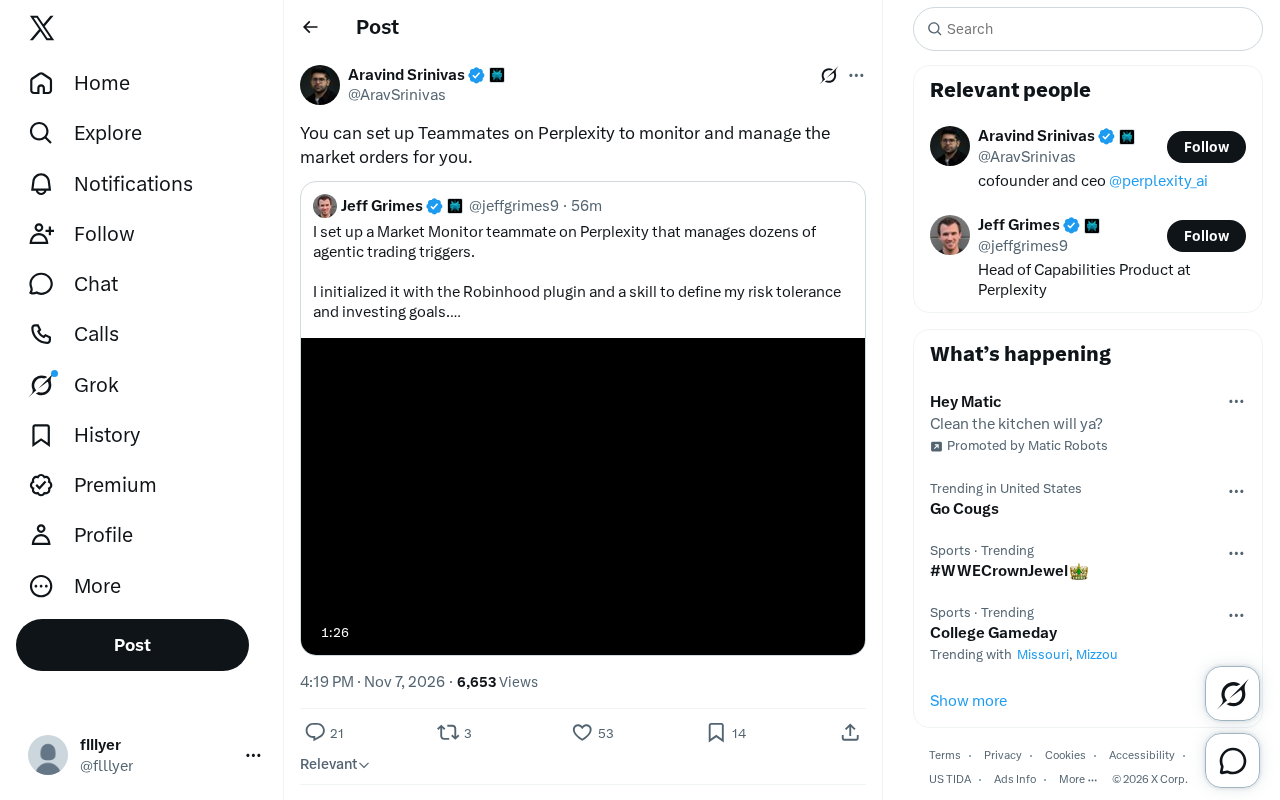
AI search company Perplexity is pushing the boundaries of its capabilities from "answering questions" toward "getting things done for you." According to its official statement on social platforms, users can now set up Teammates on Perplexity to continuously monitor and manage market orders. This sounds like a minor feature update, but the direction it points to is worth paying attention to: AI assistants are beginning to evolve from one-off Q&A tools into "digital colleagues" with ongoing tasks and execution actions.
From Search to Execution: The Positioning of Teammates
Perplexity was initially known as a "cited AI search engine," with the core interaction being that users ask questions and the model retrieves information and provides answers. The framing of Teammates is clearly different—it is an object that can be "set up," taking on two types of ongoing responsibilities: monitoring and management.
Behind this is a shift in AI product form. Q&A products solve the problem of information acquisition, while task-oriented assistants solve the problem of attention allocation. Market orders inherently require people to continuously watch the market and react when conditions are triggered—precisely one of the scenarios best suited for continuous AI assistants. Perplexity's choice to start with market orders suggests it wants Teammates to become the entry point for users to "offload" some repetitive judgment in their daily workflows.
AI Agent is the key concept for understanding this shift. Unlike traditional Q&A AI, an Agent is given a persistent goal, can autonomously plan steps, invoke external tools (such as browsers, APIs, trading interfaces), run repeatedly in the background, and adjust its behavior based on environmental changes. The industry typically describes how an Agent works using a "perceive—plan—act" loop: it first obtains state information, then judges whether action is needed, then executes and observes the results. The "settable, continuously monitoring" form of Teammates is essentially the Agent paradigm landing at the product layer. Its core difference from ordinary chatbots is that interaction is no longer triggered by the user one time at a time, but driven by task state. This is also why the article emphasizes that "tools wait for instructions, while teammates can proactively report"—proactivity is one of the hallmarks that distinguishes Agents from traditional software automation.
Why the "Market Orders" Scenario
Order management in financial markets has several natural characteristics: information-intensive, highly time-sensitive, and requiring continuous attention. Manually watching the market is costly and prone to missing changes due to attention fatigue. Delegating such tasks to an AI assistant is logically sound.
However, it should be emphasized that the official statement is currently quite restrained—it only says Teammates can "monitor and manage market orders," without specifying the exact execution boundaries, the trading platforms it connects to, or how high the degree of automation is. This means that a more reasonable understanding at this stage is: Teammates handles monitoring and alerts at the information level, and whether it directly places orders still depends on subsequent product details. For users, in scenarios involving real money, figuring out "what AI can and cannot do" is more important than the feature itself.
Order management in a trading context usually includes several layers: order status tracking (submitted, partially filled, fully filled, cancelled), conditional triggers (such as alerting or placing orders when the price reaches a certain threshold), and continuous observation of positions and risk. Traditional brokerage platforms mostly provide rule-based tools such as "conditional orders" and "stop-loss orders," but they rely on users presetting explicit numerical conditions and lack the ability to understand unstructured information (such as news and announcements). The value point of AI assistants is precisely to extend "rule-based triggers" into "semantic judgment"—for example, identifying whether a certain piece of news might affect holdings. But this also brings explainability issues: judgments based on large models are difficult to audit precisely like conditional orders. Therefore, under financial compliance frameworks, such features usually first appear in the form of "alerts/suggestions" rather than being directly connected to order-placing permissions.
Industry Implications of This Update
Perplexity's move is not isolated. For some time now, mainstream AI products have been evolving from "conversation" to "agents": letting models hold long-term goals, invoke tools, and run continuously in the background. The name Teammates itself is a signal—it is not a tool, but a "teammate."
This positioning difference will affect product design. Tools wait for instructions, while teammates can proactively report and continuously track. If Teammates can truly and reliably take on monitoring responsibilities, then the relationship between users and AI shifts from "re-asking questions every time" to "assign a task once and continuously receive feedback." For Perplexity, this is also a path to improving user retention and usage frequency: search is a low-frequency, discrete behavior, while task delegation is a high-frequency, continuous behavior.
The product divide between "tools" and "agents" already has a fairly clear definition in the AI industry. Tool-type products require users to input explicit instructions each time, with the system completing and returning results within a single turn, and state is not retained across sessions; agent-type products maintain long-term task state, possess memory, scheduling, and autonomous execution capabilities, and users can "assign once and continuously receive feedback." This divide directly affects technical architecture: agents require task queues, state storage, tool-call orchestration, and exception-handling mechanisms, making engineering complexity far higher than that of Q&A systems. In terms of product metrics, tool-type products value the accuracy of individual queries, while agent-type products value task completion rates and sustained activity. Perplexity's entry into agents from search means its tech stack needs to expand from "retrieval-augmented generation" to "task orchestration," which is also the new battleground where mainstream AI companies are currently competing.
Caution to Maintain
For AI assistants involving market orders, risk and convenience are two sides of the same coin. Monitoring can be automated, but decision responsibility cannot be fully transferred. When using such features, users need to clarify at least three things: what the AI's monitoring scope is, what the conditions are for triggering alerts or actions, and how to take over manually when anomalies occur.
At present, the information Perplexity has released remains at the level of a feature announcement, lacking these key details. This does not prevent us from judging the trend, but it is enough to remind us: in financial scenarios, the value of an AI assistant depends on whether its boundaries are clear, not on how high its degree of automation is.
Conclusion
Perplexity's Teammates feature pushes AI assistants toward "continuous task delegation," with market order monitoring as its first concrete landing point. Feature details remain to be disclosed, but the product idea is already clear: let AI evolve from someone who answers questions into someone who keeps an eye on things for you.
One-line Summary
Perplexity launches Teammates, shifting AI from a Q&A tool to a task-oriented assistant that continuously monitors market orders.
Paragraph Summary
Perplexity has launched the Teammates feature, allowing users to set up an AI assistant to continuously monitor and manage market orders, marking its extension from a "cited AI search engine" toward a continuous task-delegation assistant. The article points out that the essence of this shift is AI products moving from Q&A tools that solve information acquisition to task-oriented agents that solve attention allocation. Market orders are information-intensive and highly time-sensitive, making them suitable for continuous AI market watching, but the official statement is restrained and does not disclose execution boundaries, connected platforms, or degree of automation—at this stage it is more likely monitoring and alerts at the information level. The name Teammates reflects the industry trend from "tools" to "teammates/agents," and also means the user-AI relationship shifts from re-asking questions each time to assigning a task once and continuously receiving feedback. The article also reminds that in financial scenarios, the monitoring scope, trigger conditions, and manual takeover mechanisms must be clarified—the value of AI depends on whether its boundaries are clear, not on its degree of automation.
Related articles
 Tech Frontiers
Edge AI on Microcontrollers: When Is It Actually Worth Deploying?
Drawing on Reddit discussions and Arm case studies, this article analyzes the real-world use cases for edge AI on microcontrollers: when each device needs independent inference, when a gateway or cloud is more reasonable, and the costs and boundaries of specialized hardware.
 Tech Frontiers
Pushing the Limits of Extreme Sudoku on a 16GB GPU: Insights from Depth and Flow Matching
A researcher trained a 16.54M-parameter model on a 16GB GPU to solve extreme Sudoku, finding effective depth breaks the 60% plateau and flow matching with improved sampling pushes accuracy past 99% with ~50× lower layer-evaluation budget.
 Tech Frontiers
AI Agent Approval Workflows: Why Human Confirmations Always Get Mindlessly Clicked
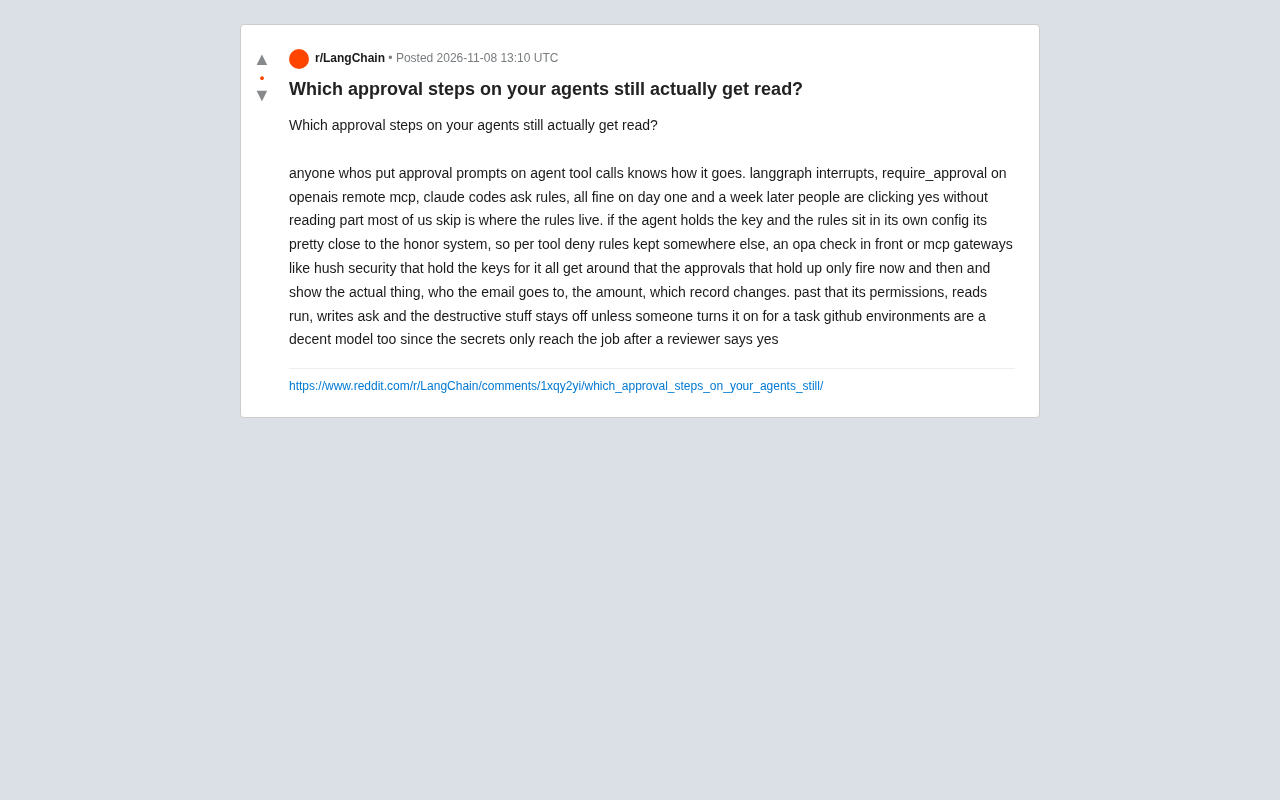
Why do AI agent approval workflows always get mindlessly clicked? A Reddit discussion shows that separating rules from keys, low-frequency high-risk approvals, and GitHub Environments-style gates are the keys to effective approvals.