Perplexity's New Default Setting: The Experience and the Logic Behind It

A Perplexity user changing the default setting sparks discussion about AI search product strategy and filter bubbles.
Starting from a Twitter tweet, the article discusses the product strategy thinking triggered by a Perplexity user changing the default setting to a new mode. The author points out that default settings are the invisible lever of product design—users usually don't actively change them, so default values directly reflect the platform's technical focus and strategic direction. The article speculates that the possible setting directions include model selection, search scope, answer style, or Focus mode, and analyzes that changing the default setting can reduce repetitive operations and improve efficiency, but may also bring the risk of a filter bubble due to source bias. Finally, it suggests users regularly check their default configuration and developers follow the official changelog to understand the product intent behind default values.
Introduction
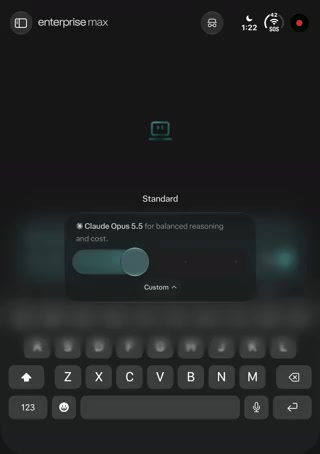
Recently, a user shared on Twitter that they had changed Perplexity's default setting to a new mode, along with a link. Although the tweet didn't reveal which specific setting it was, the action sparked discussion about Perplexity's product strategy. As a representative of the AI search field, Perplexity's default options often reflect changes in its technical focus and user needs.


Why Default Settings Matter
Default settings are the invisible lever of product design. Users often don't actively change them, so platforms guide behavior through default values. When Perplexity makes a feature the default, it may mean that feature is seen internally as the best experience or the strategic direction. For example, if the default model switches to a faster lightweight version, that highlights a priority on speed; if it emphasizes a deep research mode, that favors answer quality. This change is worth users' attention because it directly affects the interaction efficiency and depth of results in everyday search.
Speculation on the Possible Direction of the Setting
Based on Perplexity's recent developments, the default setting could involve: model selection (e.g., switching from the standard version to the Pro version), search scope (whole web vs. academic), answer style (concise vs. detailed), or Focus mode. The "new default setting" in the tweet suggests the user actively adjusted it, possibly out of a need for a specific scenario. For example, researchers might enable academic search by default, while ordinary users lean toward quick answers. Although the specifics are unknown, this behavior reflects users' pursuit of personalized search.
Focus mode is a search-scope-limiting feature launched by Perplexity that allows users to restrict a query to a specific type of source or domain—for example, searching only academic papers, only Reddit discussions, only YouTube videos, or focusing on vertical domains such as finance and law. Its design logic is: although general web search has broad coverage, its signal-to-noise ratio is low in professional scenarios, whereas Focus mode narrows in on high-quality sources in advance, making answers more precise and more traceable. Each Focus mode corresponds to a different index collection and retrieval strategy, so switching Focus essentially changes the information pool the model can access. This also explains why the default Focus setting has a significant impact on user experience—it directly determines the information boundary of each query.
Impact on User Experience
After changing the default setting, the new configuration is applied to every query, reducing repetitive operations. This can improve efficiency, but it may also bring the risk of an information cocoon—if the default mode favors a certain type of source, the diversity of information users are exposed to may be limited. Perplexity needs to balance convenience and openness. For ordinary users, it's advisable to regularly check whether the default settings match current needs; for developers, it's worth following the official changelog to understand the product intent behind default values.
Filter Bubble is a concept proposed by Eli Pariser in 2011, referring to algorithms continuously pushing homogeneous content based on users' historical behavior, trapping users in a closed information environment. In the AI search scenario, this risk appears in a new form: when default settings favor a certain type of source (such as a few authoritative sites or a content library with a particular stance), even when users actively ask questions, the answers they get may systematically lack opposing viewpoints or marginal perspectives. Unlike traditional recommendation algorithms, the "cocoon" of AI search is more subtle—answers are presented in natural language, and users find it hard to perceive the bias of the sources. Therefore, platforms should retain prompts about source diversity when setting default values, and users should also realize that the default configuration itself is a mechanism of information filtering.
Conclusion
A short tweet reveals the far-reaching impact of default settings in AI search tools. As an industry pioneer, Perplexity's adjustments to default options often foreshadow feature evolution. Users should stay sensitive to product settings so that tools better serve personalized information acquisition.
One-line Summary
A Perplexity user changing the default setting sparks discussion about AI search product strategy and filter bubbles.
Related articles

Why Rockets Don't Land Horizontally Like Airplanes: A Physics and Engineering Trade-off
Why don't rockets land horizontally like airplanes with wings? This article explains the engineering trade-offs behind Shuttle-style landings and Falcon 9 vertical landings from three angles: wing lift conditions, orbital velocity costs, and reusable booster structural reuse.

Can AI Governance Tools Block Agent and API Calls?
A Reddit developer questions whether AI governance tools only flag Agent calls rather than block them. We analyze the flagging vs. real-time blocking capability gap, vendor demo mismatches, and key questions to ask when buying.

Real or Fake? Gaussian Splatting + Physics Engine Tackles Robot Simulation Challenges
Reddit developer shares a photorealistic robot simulation built with Gaussian Splatting, MuJoCo Warp physics, and mesh models—generating interactive scenes from iPhone scans to tackle sim-to-real.