Tailscale's DNS IPv6 Address Spells Out the Brand Name
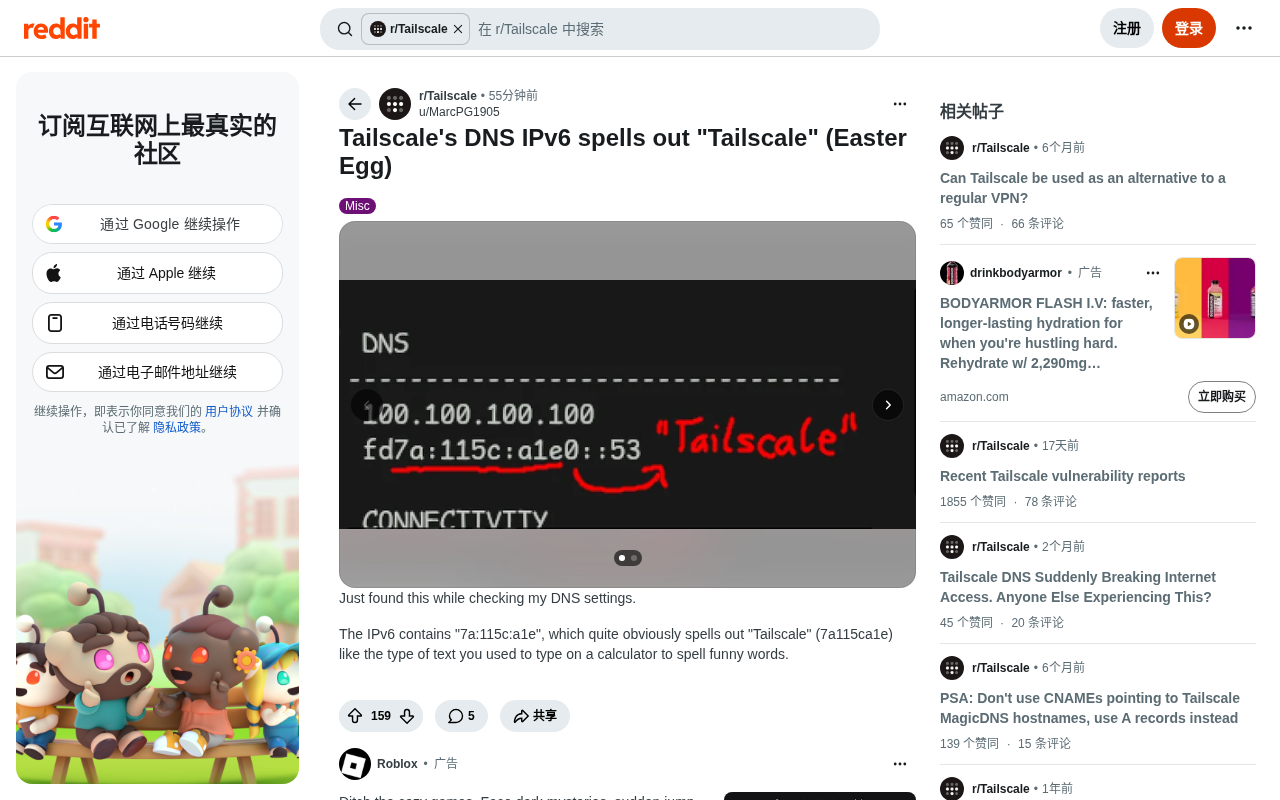
Tailscale's DNS IPv6 address characters spell out the brand name, sparking discussion about infrastructure branding in the tech community.
Starting from a brief Hacker News discussion, the article notes that Tailscale's DNS IPv6 address, through visual combinations of hexadecimal characters and digits, happens to spell out the brand name "Tailscale"—a geeky Easter egg that earned 26 upvotes and 11 comments. The article argues this isn't a special protocol capability but a naming创意 within the provider's own address space, reflecting a trend of infrastructure vendors using frequently encountered spots like DNS resolver addresses and DoH endpoints to carry brand memory. For developers, a readable brand address lowers memory cost; for vendors, it's a natural boost in the tech community. The article also draws on the "tail" and "scale" pun in the name "Tailscale," noting the subtle echo between DNS as the last link in network requests and the product's positioning, and discusses the dependence of such practices on address allocation freedom and the geek community's acceptance.
An Easter Egg Hidden in IPv6
A short but intriguing discussion appeared on Hacker News: Tailscale's DNS IPv6 address was decoded, and its hexadecimal characters happen to spell out the brand name "Tailscale." The original post was just one sentence, yet it drew 11 comments and 26 upvotes—a testament to how far this kind of geeky humor can travel.
An IPv6 address typically consists of 8 groups of 4 hexadecimal digits, with the letters a through f appearing legitimately. To make the character sequence of an entire address read like "Tailscale," one must carefully choose the prefix or suffix so that the combination of letters and numbers appearing in the address visually corresponds to the letters in the brand name. This isn't a special capability at the protocol level—it's purely a naming创意.
The full format of an IPv6 address is 8 groups of 16-bit hexadecimal numbers separated by colons, for example 2001:0db8:85a3:0000:0000:8a2e:0370:7334. Each group consists of 0-9 and a-f, and leading zeros and consecutive zero groups (represented by ::) may be omitted. It's worth noting that hexadecimal letters are limited to a through f, so spelling out a brand name like "Tailscale"—which contains t, i, l, s, c, and other letters outside the a-f range—actually relies on visual approximation between digits and letters: the digit 1 resembles l or i, the digit 5 resembles s, the digit 7 resembles t, the digit 0 resembles o, and so on. This "leet speak"-style visual substitution is the real mechanism behind such Easter eggs, not any protocol support for arbitrary letters. Understanding this is key to seeing why the original post said "decoded" rather than "read directly."
Why This Is Worth Noticing
It may seem like just a joke, but behind it lies a trend of infrastructure vendors expressing their brand through technical details. DNS resolver addresses, DoH endpoints, example domains—these spots that users repeatedly see are increasingly being used to carry brand memory hooks.
For developers, IPv6 addresses are inherently hard to remember, but an address that can be read out as a brand name actually lowers the memory cost. It adds a shareable talking point to otherwise dry network configuration and gives Tailscale a natural boost of传播 in the technical community—the Hacker News discussion itself is an example of that.
DNS resolver addresses are endpoints that users or systems repeatedly encounter when configuring networks, commonly in the form of plaintext UDP/TCP port 53 addresses and encrypted DoH (DNS over HTTPS) URLs. Tailscale, as a WireGuard-based zero-trust networking solution, uses its MagicDNS feature to assign internal domain names to devices, while its public DNS resolver address serves as the entry point for external services. Embedding a brand name into an IPv6 address follows the same philosophy as easy-to-remember IPv4 addresses like Cloudflare's 1.1.1.1 and Google's 8.8.8.8, but IPv6 addresses are 128 bits long with a richer character set, offering more room for creative naming. Such addresses are typically subnetted by the provider within prefixes allocated by RIRs (Regional Internet Registries), giving them considerable freedom in assignment.
Tails and the Network Metaphor
The name "Tailscale" itself carries a pun on "tail" and "scale," and DNS happens to be the last link in a network request. Embedding the brand name into an IPv6 address is, in a way, playing on the "tail of the network," creating a subtle echo with the product's positioning.
The Hacker News discussion didn't disclose the full form of the address, so the specific prefix allocation can't be confirmed. Such Easter eggs typically appear in providers' own DNS resolver addresses rather than randomly generated temporary client addresses. For ordinary users, the most direct impact is probably taking a second look during configuration and discovering the cleverness within.
In the DNS resolution process, a recursive resolver queries hierarchically starting from the root servers, with the authoritative server ultimately returning the result—a chain often called the "resolution chain." As the final addressing step before a user's request reaches its destination, DNS indeed sits at the "tail of the network request." IPv6 address allocation follows a hierarchical prefix structure: the first 48 bits are typically the global routing prefix (allocated by an ISP or RIR), the last 64 bits are the interface identifier, and the middle 16 bits can be used for subnetting. Providers can freely design subnets and host bits within their own prefixes—this is the technical precondition that makes it possible to "play" with the address. The resolver addresses users see are often carefully chosen combinations that serve both function and传播 value.
Infrastructure's Personality Expression Through Easter Eggs
Infrastructure products have long been regarded as "invisible," but tools like Tailscale put developer experience in a more prominent position. An IPv6 address that spells out the brand name won't improve transfer performance or change protocol behavior, yet it can spark discussion in the community and make technical details part of the brand asset.
Whether more vendors will follow suit depends on the freedom of address space allocation. But at least this discussion shows that the geek community still buys into such details—26 upvotes and 11 comments on Hacker News means it struck a chord with those in the know.
Related articles
Anthropic Model Benchmarking: Fable 5 vs 5.1 vs 5.2 Comparison
Based on Reddit community comparison material, this analyzes benchmark differences among Anthropic models Fable 5, 5.1, and 5.2, and discusses the practical implications of version iterations for developers and model selection advice.
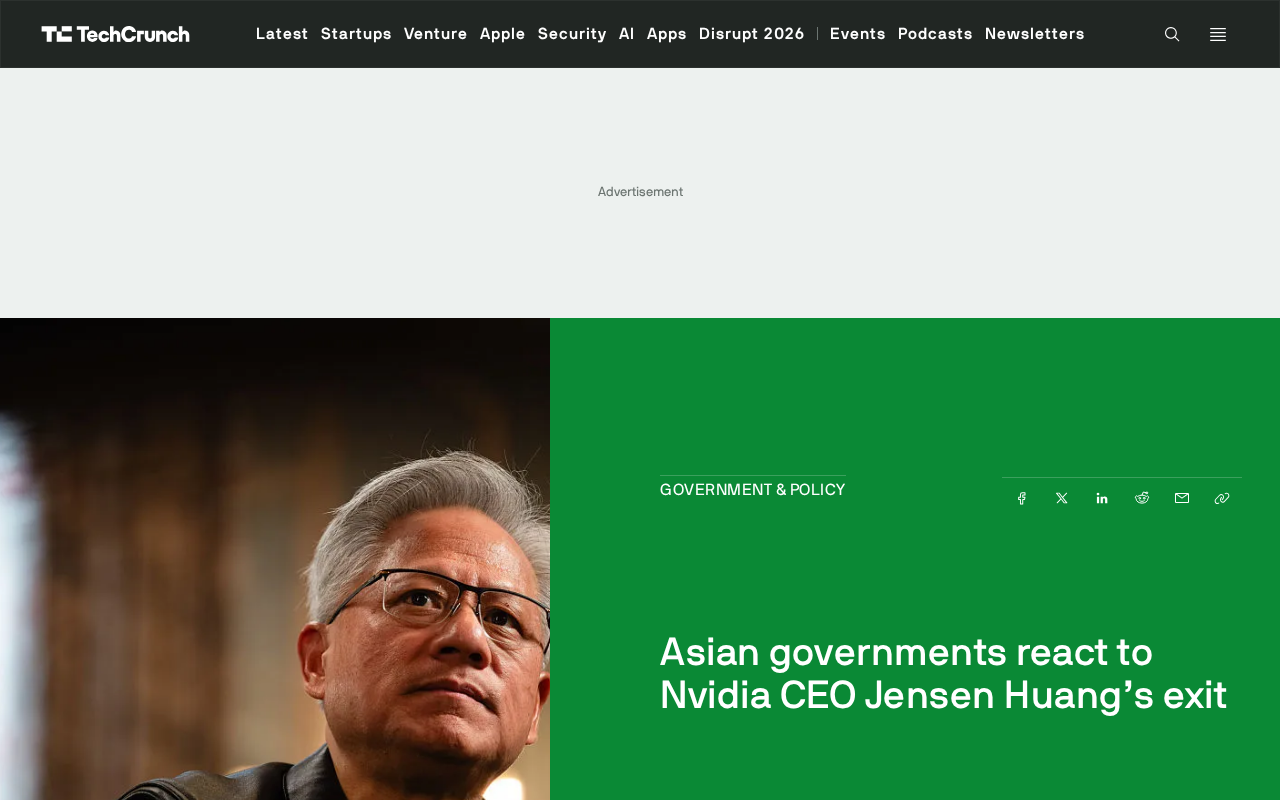
Jensen Huang Steps Down as Nvidia CEO, Asian Governments Scramble to Respond to Chip Supply Shifts
Jensen Huang's departure as Nvidia CEO triggers chain reactions across Asian governments: some confirm chip supply commitments, others monitor local AI project impacts and handle related investigations. This article analyzes supply chain stability, project risks, and compliance uncertainty.
Reddit Player Builds RISK Game Environment and Trains an AI That's Nearly Impossible to Beat
Reddit player builds a RISK training environment and trains an aggressive AI model that's nearly unbeatable. Strong at expansion but weak at defense, the author hits a bottleneck trying human data training, revealing common game AI development challenges.