TechCrunch Disrupt 2026 Exhibitor Deadline: Last Chance to Reach 10,000+ Tech Leaders

TechCrunch Disrupt 2026 booth reservations close in 24 hours — startups must decide now.
TechCrunch has announced that exhibitor booth reservations for Disrupt 2026 will close within 24 hours. The event runs October 13–15 at Moscone West in San Francisco, with over 10,000 founders, investors, and tech leaders expected to attend. For growth-stage startups, Disrupt offers more than a physical booth — it's an efficient channel for building visibility and connecting directly with potential investors. The article also cautions that realizing that value depends on booth design, product readiness, and on-site execution, advising teams to assess audience fit, demo preparedness, and staffing capacity before committing.
TechCrunch Disrupt 2026 Exhibitor Window Is About to Close
TechCrunch has announced that the window to reserve an exhibitor booth at TechCrunch Disrupt 2026 will close within the next 24 hours. This means startups hoping to make their mark at one of tech's premier annual events need to act fast.
According to official information, Disrupt 2026 will take place October 13–15 at Moscone West in San Francisco. The event is expected to draw more than 10,000 founders, investors, operators, and tech leaders in search of companies, products, ideas, and talent worth knowing about.
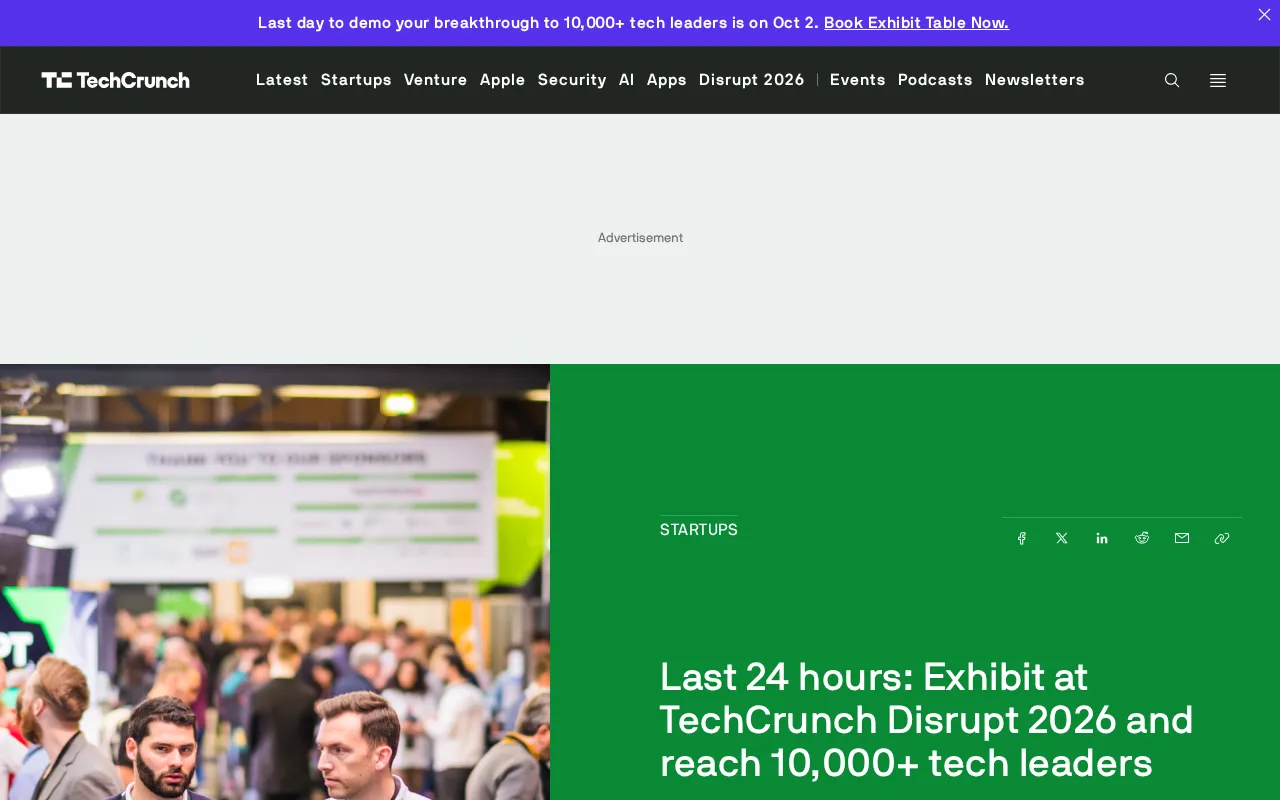
Why This Exhibitor Opportunity Matters
TechCrunch Disrupt is one of the most influential annual events in the global tech startup ecosystem. For early-stage startups, a booth isn't just physical floor space — it's a direct gateway to potential investors, partners, and early adopters.
The official promotional copy poses a pointed question: when tens of thousands of tech decision-makers pour into the venue looking for the next startup worth knowing, will they be able to find yours? This cuts to the core value of in-person trade shows — building visibility within a high-density industry crowd.
For new teams with little brand recognition, the efficiency of this kind of concentrated exposure is hard to replicate through everyday customer acquisition. Investors and operators who show up in person tend to signal higher intent and offer more direct, actionable feedback.
Since its founding in 2011, TechCrunch Disrupt has become a critical launchpad for startup fundraising and brand building worldwide. Historically, companies like Dropbox, Yammer, and Fitbit all gained early attention through the Disrupt stage. The event's flagship competition, Startup Battlefield, gives startups the chance to pitch judges and a live audience — winners receive prize money along with substantial media coverage. Even standard exhibitors benefit from TechCrunch's media platform and social amplification, extending their reach well beyond the attendees in the room. This makes Disrupt's exposure value far greater than just three days of in-person activity.
The Time Pressure Behind the Decision
The core message in this announcement is urgency — "last day," "final 24 hours." Countdown-style tactics are common in the trade show industry, designed to push hesitant teams to lock in their booth space before it's gone.
Booth inventory is typically limited, and the closer an event gets, the scarcer prime locations become. For startups considering exhibiting, planning your presentation content, materials, and on-site team well in advance will do far more for your ROI than a last-minute decision ever could.
It's worth noting that securing a booth is just the starting point. Standing out in a venue packed with tens of thousands of people depends on your booth design, the appeal of your product demo, and your team's ability to connect with people on the floor. Simply occupying a space does not guarantee attention.
Moscone West is a large-scale professional convention facility in downtown San Francisco, spanning over 740,000 square feet — making it one of the Bay Area's largest and best-equipped conference centers. It has long hosted marquee tech events like Oracle OpenWorld and Salesforce Dreamforce. Its proximity to SoMa (South of Market) — the heart of San Francisco's startup and venture capital scene — further strengthens the event's appeal to the local tech ecosystem and makes it convenient for Bay Area professionals to attend.
Advice for Prospective Exhibitors
If your team is evaluating whether to join Disrupt 2026, a few quick questions can help you decide: Does your target audience closely match the investors and tech leaders who will be in attendance? Is your product polished enough to demo? And does your team have enough people to sustain three full days of on-site operations?
If your answers lean toward yes, completing your booth reservation before the deadline is the first step to seizing the opportunity. For projects that are still very early-stage with an unclear product direction, it's worth carefully weighing the significant cost of exhibiting against the realistic return.
Overall, this is a classic event sponsorship announcement — its core value lies in reminding founders to pay attention to the exhibitor deadline and to assess whether this exposure channel is the right fit for where they are in their journey.
Related articles
AWS AgentCore Gateway: Connecting AI A…
AWS AgentCore Gateway: Connecting AI Agents to Enterprise Backends with MCP
How AWS AgentCore Gateway acts as a primary MCP server to aggregate REST APIs, Lambda, and existing MCP services? Analyzing its AST real-time mapping, zero cold start, semantic search for tool overload, session isolation, and key injection security design, plus the architectural approach to decoupling enterprise AI agents from backends.

One Link Gives Figma AI a New Skill: Hands-On with MCP Connectors
Paste one MCP server link and the AI Agent in Figma gains new tool capabilities. We break down the setup flow, 20+ one-click apps, read/write permissions and execution policies, and the public HTTPS requirement.

Cognition SWE-2 in Practice: One Prompt to Handle the Whole Product Launch Process
Analyzing a YouTube creator's prompt for using Cognition SWE-2 to launch a product: a landing page, seven-email sequence, and non-buyer follow-up tool, plus how the 'test and report' constraint changes AI delivery quality.