The 1.5 Million AI GPU Smuggling Mystery: The Chip Undercurrent Behind Jensen Huang's Departure

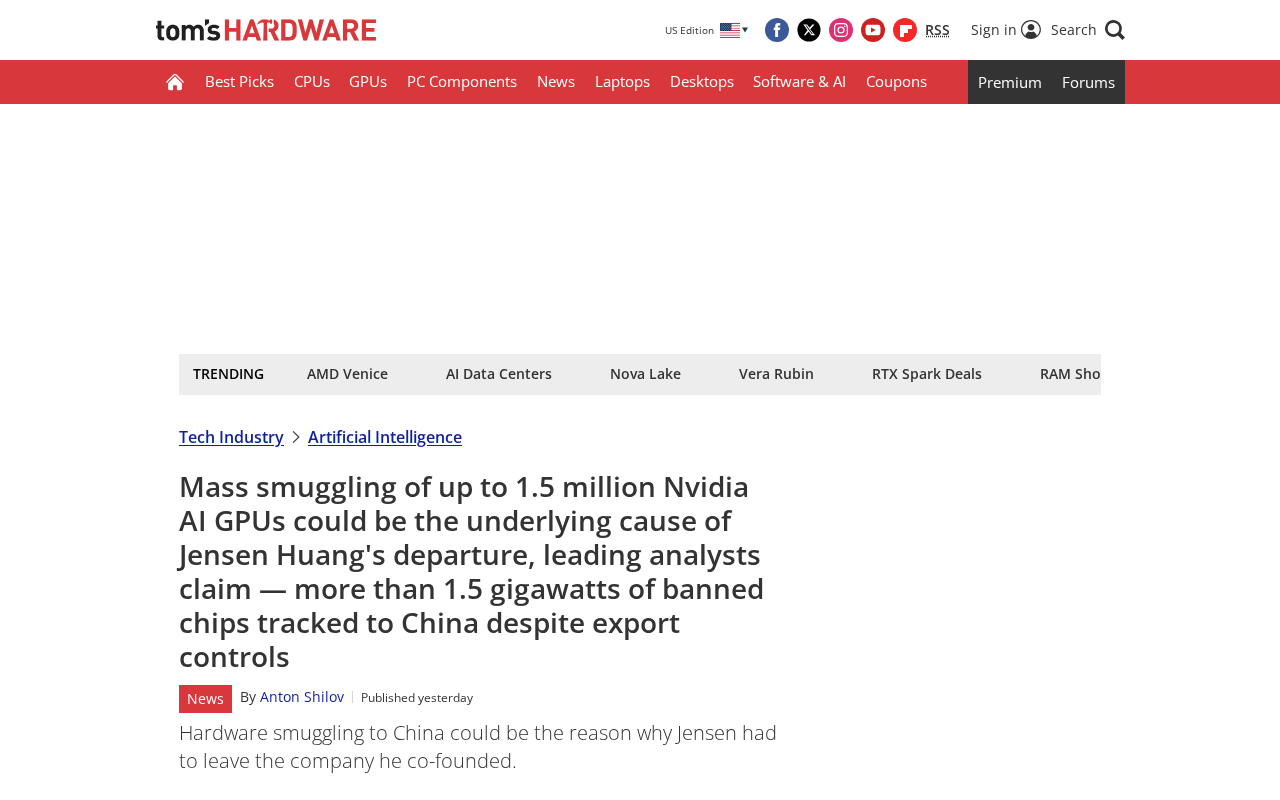
A Hacker News post speculates that 1.5 million AI GPU smuggling caused Jensen Huang's departure, but there is no evidence and the number is questionable.
The article analyzes a Hacker News post lacking sources that claimed the smuggling of approximately 1.5 million AI GPUs was the direct cause of Jensen Huang's departure from NVIDIA. The author points out that this number far exceeds the procurement scale of any single enterprise and is closer to a national-level computing reserve, and the post provided no investigative reports or data references. From an industry logic perspective, although cross-border GPU flows have gray areas, smuggling on such a large scale would inevitably leave regulatory traces, and the number may mix multiple statistical calibers. Directly linking a CEO's departure to a single compliance event is a narrative shortcut that ignores the complexity of corporate governance. The post's extremely low engagement reflects the technical community's reservations about leaks without sources. The author recommends focusing on verifiable signals such as regulatory announcements and changes in regional revenue in financial reports, rather than chasing unverified rumors.
An Explosive Speculation Lacking Evidence
A post appeared on Hacker News with only 6 upvotes and 1 comment, its title pointing directly at a sensational conjecture: the smuggling of approximately 1.5 million AI GPUs may be the direct cause of Jensen Huang's departure. The post provided no sources, investigative reports, or data references—it merely tossed out this connection in the form of a headline.
This low-information-density discussion precisely reflects a real state of affairs in today's AI chip discourse—when computing power becomes a strategic resource, any GPU-related number will be rapidly politicized and conspiracy-theorized. What kind of magnitude is 1.5 million GPUs? It far exceeds the procurement scale publicly disclosed by any single enterprise, and is closer to a national-level computing reserve. Directly linking this number to a CEO's movements requires an extremely strong chain of evidence—which this post precisely lacks.
Why This Number Warrants Skepticism Rather Than Credulity
From an industry logic perspective, cross-border flows of AI GPUs do indeed have gray areas. Export controls, re-export trade, and second-hand market circulation—these links can all produce chip flows outside statistical boundaries. But if the "1.5 million units" magnitude were true, it would imply an astonishingly large, tightly organized smuggling network involving logistics, customs, financial settlement, and multiple other links—it could not possibly leave no regulatory traces.
A more reasonable interpretation is: this number may conflate multiple statistical calibers—for example, combining the total GPU imports of a certain region over a period, a manufacturer's shipment volume, and estimated values from gray channels. Without the original report, it can only exist as a rumor awaiting verification, not as a conclusion.
Export controls are the key background for understanding cross-border GPU flows. Taking the United States as an example, since 2022, the Bureau of Industry and Security (BIS) of the U.S. Department of Commerce has implemented export controls on advanced AI chips (such as NVIDIA A100/H100 and subsequent models), classifying control levels by computing power thresholds and interconnect bandwidth, with exports to China and other specific countries requiring licenses. In 2023, controls were further tightened, covering more chips meeting "performance density" standards and restricting re-exports through third countries. Such controls have spawned gray markets: chips may be re-exported through Singapore, Malaysia, the UAE, and other locations, or circumvented through disassembly of second-hand servers, remote rental of cloud services, and other methods. However, large-scale smuggling faces dual physical and financial obstacles—each GPU has a traceable serial number, bulk transportation requires forged documents, and capital flows are subject to anti-money laundering monitoring. Therefore, regulators can typically estimate the gray scale through shipping data, anomalous regional revenue in corporate financial reports, and customs seizure records. Understanding this mechanism makes it clear why "1.5 million units" requires an extremely solid chain of evidence, rather than just a post title.
The Subtle Tension Between Executive Changes and Chip Policy
Directly establishing a causal link between a CEO's departure and chip smuggling is a typical narrative shortcut. The comings and goings of corporate executives are usually determined by multiple factors including governance structure, performance pressure, and personal plans. Attributing it to a single policy or compliance event both underestimates the complexity of corporate governance and overestimates the decisiveness of a single event.
What truly deserves attention is the context in which this post appeared: AI chip export controls are reshaping global supply chains, and any sign of trouble will be amplified and interpreted by the market. For those concerned about the AI industry, rather than chasing unverified causal chains, it is better to focus on verifiable signals—regulatory announcements, changes in regional revenue in corporate financial reports, and public disclosures from upstream and downstream supply chains.
As NVIDIA's co-founder and CEO, Jensen Huang's personal movements are highly bound to the company's strategy. NVIDIA holds approximately 80% or more of the AI GPU market, with its data center business revenue exceeding $40 billion in fiscal year 2024, becoming the core of the company's growth. CEO departures are typically accompanied by formal announcements, successor arrangements, and transition periods, and require disclosure to the U.S. Securities and Exchange Commission (SEC) via Form 8-K. If a departure due to a smuggling investigation truly existed, it would necessarily be accompanied by regulatory filings or corporate announcements, rather than merely hinted at by a Hacker News post. Furthermore, in corporate governance, CEO retention is decided by the board of directors, involving multiple factors such as performance, strategic disagreements, and personal plans; attributing it to a single external event is logically a "single cause fallacy." When following executive changes, one should prioritize corporate official statements and SEC filings over causal speculation on social media.
How to View This Kind of Low-Information Leak
This post received almost no discussion on Hacker News, which itself indicates that the community holds reservations about it. Technical communities typically respond coldly to "headline-as-conclusion" content because it lacks verifiable details and traceable sources.
For readers, this kind of information is more suitable as a "topic to watch" rather than a "news fact." If regulatory investigation documents, corporate announcements, or in-depth reports from authoritative media appear subsequently, this conjecture would have a basis for being taken seriously. Until then, it is merely a reminder: the geopolitical attributes of AI computing power have already made GPUs one of the fields most prone to rumors.
Key Points
- A Hacker News post proposed the conjecture that "the smuggling of 1.5 million AI GPUs caused Jensen Huang's departure," but without any sources or evidence.
- The magnitude of 1.5 million GPUs far exceeds the procurement scale of any single enterprise; the statistical caliber is questionable and may mix multiple sources.
- Attributing executive changes to a single compliance event is a narrative shortcut that ignores the multiple factors of corporate governance.
- The post's extremely low engagement reflects the technical community's reservations about leaks without sources.
- When following AI chip topics, priority should be given to tracking verifiable signals such as regulatory announcements and regional data in financial reports.
Related articles
Anthropic Model Benchmarking: Fable 5 vs 5.1 vs 5.2 Comparison
Based on Reddit community comparison material, this analyzes benchmark differences among Anthropic models Fable 5, 5.1, and 5.2, and discusses the practical implications of version iterations for developers and model selection advice.
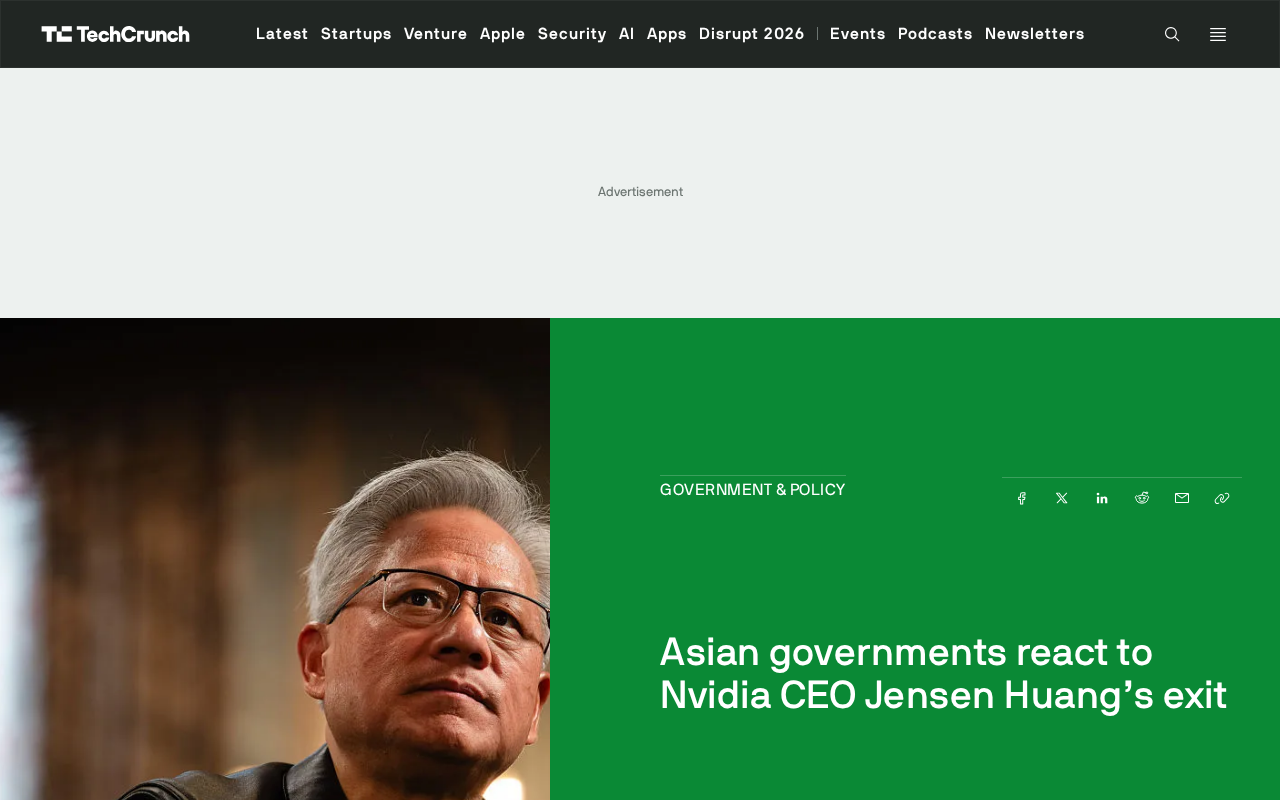
Jensen Huang Steps Down as Nvidia CEO, Asian Governments Scramble to Respond to Chip Supply Shifts
Jensen Huang's departure as Nvidia CEO triggers chain reactions across Asian governments: some confirm chip supply commitments, others monitor local AI project impacts and handle related investigations. This article analyzes supply chain stability, project risks, and compliance uncertainty.
Reddit Player Builds RISK Game Environment and Trains an AI That's Nearly Impossible to Beat
Reddit player builds a RISK training environment and trains an aggressive AI model that's nearly unbeatable. Strong at expansion but weak at defense, the author hits a bottleneck trying human data training, revealing common game AI development challenges.