The Greatest Footnote Ever? The Philosophical Meme Behind Berdyaev's "Dream Revelation"

Berdyaev's "dream revelation" footnote went viral, but it is actually a serious argument about the self and divinity misread as an anti-academic meme.
The article traces a book-page screenshot that went viral in 2017: Berdyaev wrote "This was once revealed to me in a dream" in a footnote on page 7 of The Divine and the Human. This line, which seems to skip the entire chain of evidence, was hailed as "the ultimate epistemological power move." After checking the 1949 English translation, the video's creator found that the footnote was not annotating a factual statement but Berdyaev's belief that "the ego is both man's fate and God's fate"—a complete argument about the self, freedom, and divinity. The mechanism of meme transmission is that "the more interesting reading" overwhelms the original context, and meaning is restamped by readers. The article thus reminds content creators: footnotes can be read as content, meaning drift in transmission is almost irreversible, and one should actively build a bridge between the original context and the popular reading.
How a Footnote Became an Internet Meme
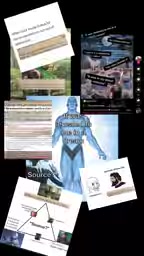
In 2017, a screenshot of a book page began circulating on social media, taken from page 7 of Nikolai Berdyaev's The Divine and the Human. Where the author needed to cite a source, he wrote something astonishing: "This was once revealed to me in a dream."
This line was quickly hailed as "the ultimate epistemological power move"—while ordinary scholars were still dutifully piling up references and citing sources, Berdyaev simply skipped the entire chain of evidence and used a dream as his authoritative source.
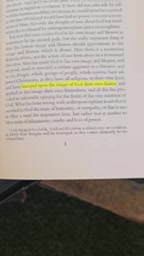
The video's creator was clear about his approach: first, confirm what exactly this footnote was annotating. So the camera turns to the 1949 English translation to check which "fact" in the original text the author claimed came from a dream.
The Misread "Fact": The Fate of the Self and of God
The verification result was unexpected: it was not a factual statement at all. What Berdyaev was annotating in the footnote was one of his beliefs—that the "ego" is both man's fate and God's fate.
This view is not out of place in the context of religious philosophy. Dreams have always been a common vehicle of religious revelation, and the Bible contains no shortage of precedents. What Berdyaev meant was: our attachment to worldly status and hierarchy, our obsession with winning and losing, our addiction to domination and submission—these make us smaller than our true mission, which is to collaborate with God.

Even sharper is the second half: this obsession has even seeped into our definition of God himself, so that God is no longer pure freedom but is reduced to something smaller—a mere king or tyrant. In other words, behind the footnote lies a complete argument about the self, freedom, and divinity, not a lazy excuse.
Nikolai Berdyaev (1874–1948) was a Russian religious philosopher, hailed as "the philosopher of freedom of the spirit." In his early years he was exiled by Tsarist Russia for participating in Marxist activities, and later turned to religious philosophy. In 1922 he was expelled from the country along with other intellectuals by the Soviet regime, went into exile in Berlin, and later settled in Clamart, on the outskirts of Paris. During his exile he completed such important works as Freedom and the Spirit, The Destiny of Man, and The Divine and the Human. The core themes of Berdyaev's thought are freedom, creativity, and personality; he opposed understanding God as an external authority and emphasized the inner connection between God and man. This background helps in understanding the view in the footnote: the reason the fate of the ego is also God's fate is that Berdyaev held that God is not an abstract absolute monarch but an "Other" tightly entangled with human freedom and destiny.
The proposition "the ego is both man's fate and God's fate" needs to be understood within Berdyaev's framework of individualism and the God-man relationship. Berdyaev distinguished between the "individual" and the "person": the individual is an atom within the natural and social order, whereas the person is a spiritual, free being. He held that people often sink into the objectified world—chasing status, hierarchy, and power—which closes off the self and also degrades God into a tool for maintaining order. The so-called "fate of God" does not mean that God is subject to man's ego, but that how man understands God depends on how man understands the self: if man looks up to God with the mentality of a slave, God becomes a tyrant; if man meets God as a free person, God is a free God. Therefore, this belief is not an isolated whim but a condensation of Berdyaev's philosophy of freedom and his thought on God-man collaboration.
Why People Prefer the Funnier Reading
The video's creator pinpointed the core of the transmission mechanism: "But this reading is much more interesting." So people forcibly pasted the joke meaning of "revealed in a dream" back onto the text.
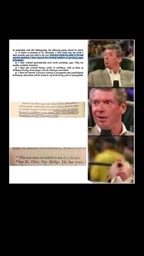
This is actually a typical path of internet meme production: a fragment detached from its context, because it fits a certain thrill of "anti-authority" and "anti-academic" feeling, is given new life. The original author's serious argument instead becomes a backdrop. The video does not criticize this kind of transmission; it merely points out calmly that meaning is stamped on by readers, rather than being inherent in the text.
Implications for Content Creators
This case offers two lessons for today's knowledge dissemination.
First, footnotes deserve to be read as content. The reason Berdyaev's footnote has传播力 (transmission power) is precisely because it is formally extreme—replacing an entire citation system with a single sentence. This "formal transgression" is more memorable than the viewpoint itself.
Second, meaning drift in transmission is almost irreversible. Once a reading better fits public sentiment, clarification often cannot keep up with the speed at which the meme spreads. For creators of in-depth content, rather than complaining about being misread, it is better to actively build a bridge between the original context and the popular reading—just as this video does: first acknowledge that it is funny, then open the original book and unfold the flattened argument again.
Whether Berdyaev really "got his source in a dream" no longer matters. What matters is that a footnote can still, seventy years later, force people back to the text to distinguish what the author said from what we ourselves have stamped on.
One-line Summary
Berdyaev's "dream revelation" footnote went viral online, but it is actually a serious argument about the fate of the self and divinity misread as an anti-academic meme.
Paragraph Summary
The article traces a book-page screenshot that went viral in 2017: on page 7 of The Divine and the Human, Berdyaev wrote in a footnote, "This was once revealed to me in a dream." This line, which seems to skip the entire chain of evidence, was hailed as "the ultimate epistemological power move." After checking the 1949 English translation, the video's creator found that the footnote was not annotating a factual statement but Berdyaev's belief that "the ego is both man's fate and God's fate"—a complete argument about the self, freedom, and divinity. The mechanism of meme transmission is that "the more interesting reading" overwhelms the original context, and meaning is restamped by readers. The article thus reminds content creators: footnotes can be read as content, meaning drift in transmission is almost irreversible, and one should actively build a bridge between the original context and the popular reading.
Related articles

Nvidia CEO Removal Saga: Trump Intervenes Over the Weekend, Jensen Huang Reinstated Monday
Vergecast podcast reveals Nvidia CEO drama: earnings call said he wouldn't return and a new CEO was being sought; Trump intervened over the weekend, with J.D. Vance brokering a security guarantee to the board; Jensen Huang reinstated at 9 a.m. Monday.
Semantic Caching Explained: Reusing the Same Answer for Similar Questions
Semantic caching uses embeddings to judge whether queries are similar in meaning and reuses cached results for similar prompts. This article explains how it works, the difficulty of threshold tuning (such as the risk of misjudging negations), and its applicable boundaries.

How Did Trump Personally Turn Nvidia into the "Twelfth Board Member"?
A YouTube political commentary offers a sharp view: behind Nvidia's market cap milestone, Trump's deep involvement earns him the title of "twelfth board member." The article breaks down the commentator's logic on stock market achievements, the break from small-government tradition, and power display.