The Other Side of the Data Center Boom: AI Energy Demand Is Forcing US Grid Innovation

The surge in AI data center electricity use is forcing US grid modernization, with innovation opportunities embedded in the pressure.
The explosive growth of AI compute demand is putting enormous pressure on America's aging grid, but industry insiders see it as more than a burden. Data centers' adjustable load provides new resources for demand response; supporting energy storage and interconnection needs are driving technology maturity; and dedicated transmission and smart distribution investments are accelerating grid digitalization. Tech companies and energy startups are deeply involved in energy procurement and grid technology, and the convergence of these forces is expected to speed up grid modernization. Despite challenges such as approval cycles, cross-regional coordination, and investment return mechanisms, the industry consensus is clear: AI's electricity demand is a real force pushing the US grid out of its outdated state.
The Other Side of the Data Center Boom: AI Energy Demand Is Forcing US Grid Innovation
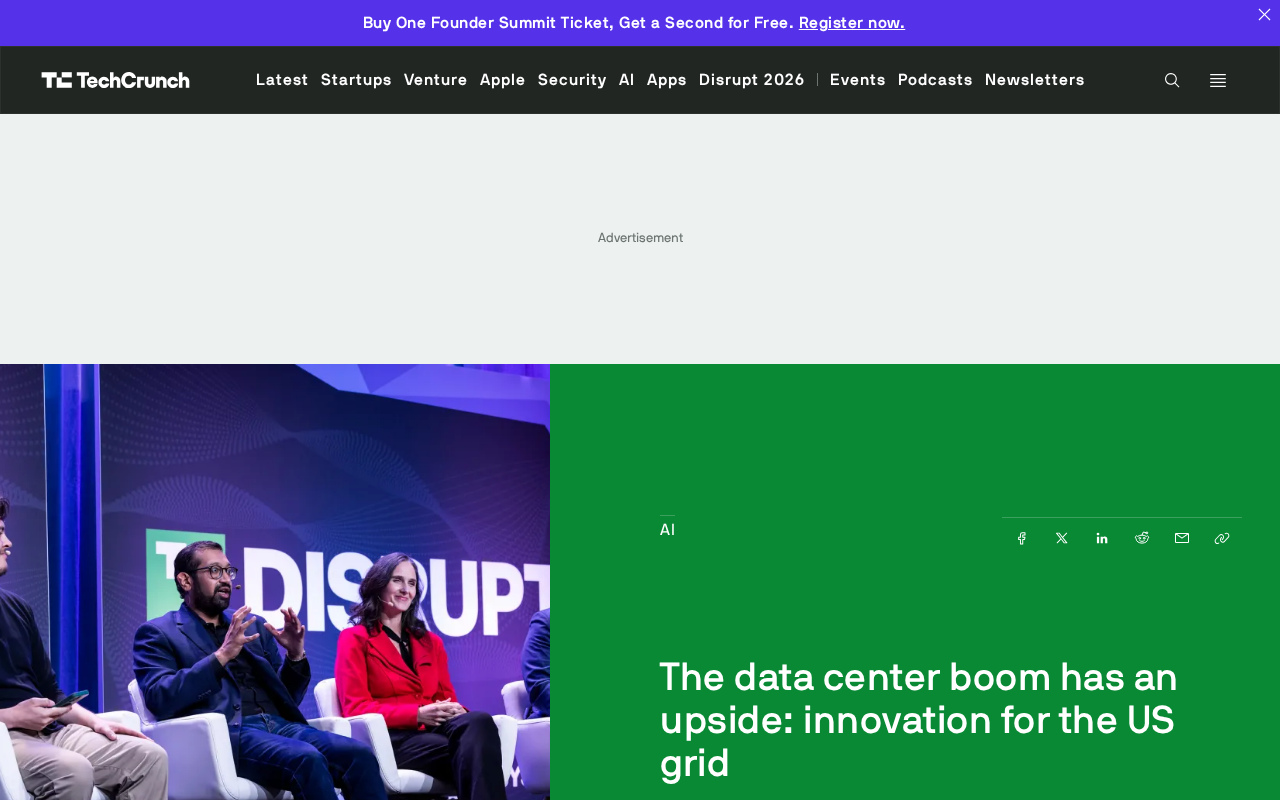
The explosive growth of AI compute demand is putting unprecedented pressure on America's aging power system. But industry insiders point out that pressure is also creating opportunity: data centers' hunger for electricity has become a shot in the arm for grid modernization.
The Grid Is Under Strain, But It's Not All Bad News
AI training and inference require massive amounts of electricity, and the expansion of data center clusters is making an already fragile US grid even more strained. However, industry insiders see this pressure as more than just a burden. It is forcing utilities, tech giants, and energy startups to re-examine every link in the power infrastructure chain—from generation and transmission to distribution and demand management—and the space for innovation has suddenly opened up.
In other words, data centers are no longer just the grid's "big eater"—they have also become a demand engine and testing ground for grid upgrades.
Where the Innovation Opportunities Come From
Facing the load challenges brought by data centers, the opportunities for grid modernization are mainly reflected at several levels.
Demand-Side Response and Flexible Resources
Large data centers have adjustable electricity consumption characteristics. Through demand-side response mechanisms, they can actively curtail load when the grid is strained, effectively providing part of the reserve capacity for the grid. This gives the power system a source of flexibility beyond traditional power plants.
Demand Response is an operating mechanism of the power system: when grid supply and demand are tight or electricity prices are high, power users actively adjust their consumption behavior based on price signals or dispatch instructions, reducing or shifting load to relieve system pressure. Traditionally, the main force of demand response has been industrial users and residential air-conditioning load, but large data centers, with their ability to schedule interruptible and adjustable compute tasks, are becoming a new type of flexible resource. Data centers can defer non-urgent AI training tasks to low-price periods or periods when the grid has surplus power, and quickly reduce load during peak moments—equivalent to a "virtual power plant." The value of this mechanism lies in the fact that it provides reserve capacity at extremely low marginal cost, reduces reliance on building new peaking power plants, and at the same time brings demand response compensation revenue to data center operators—a win-win.
Energy Storage and Grid Interconnection Technology
To ensure power supply reliability and cope with peak-valley fluctuations, data center operators are increasingly considering supporting energy storage facilities. This demand is driving the maturation of energy storage technologies and grid interconnection solutions, and once these technologies reach scale, their benefits will spill over to the entire grid.
Grid Interconnection refers to the process by which power generation facilities or large electricity loads are connected to the public grid, involving a series of technical reviews such as power flow calculations, short-circuit current verification, protection setting coordination, and power quality assessment. For gigawatt-scale data center clusters, interconnection is not simply a matter of running a dedicated line: the sudden increase and decrease of large loads can cause voltage fluctuations and frequency disturbances, requiring supporting energy storage, reactive power compensation, and dynamic voltage restorers to smooth them out. Energy storage systems (such as lithium batteries and flow batteries) play a dual role here: on the one hand, they provide second-level backup during grid faults to ensure uninterrupted power supply to data centers; on the other hand, they participate in frequency and peak regulation, providing ancillary services to the grid. The maturation of interconnection technology—including grid-forming inverters and microgrid control strategies—is precisely being driven by this type of high-reliability, high-fluctuation load demand.
Intelligent Transmission and Distribution
New data centers often require dedicated transmission lines and stronger distribution capacity, which forces grid operators to adopt smarter monitoring, dispatch, and protection technologies. Industry insiders believe these investments not only serve individual data centers but also raise the overall digitalization level of the grid.
Smart Grid refers to a modern power system that widely deploys sensing, communication, and automatic control technologies across generation, transmission, distribution, and consumption links to achieve real-time perception of grid status, rapid fault isolation, and optimized resource dispatch. Its key technologies include advanced metering infrastructure (AMI), distribution automation (DA), wide-area monitoring systems (WAMS), and AI-based load forecasting and dispatch algorithms. Data centers' extreme requirements for power supply reliability (typically above 99.999%) are forcing grid operators to prioritize the deployment of these intelligent means on the lines that supply them: for example, using dynamic rating technology to increase the transmission capacity of existing lines, using digital twins for power flow simulation, and monitoring cable hot spots in real time through fiber-optic temperature measurement. Although these investments are triggered by data center demand, the benefits of intelligent upgrades will cover the entire supply area, improving the overall resilience and efficiency of the grid.
Who Benefits
The participants in this wave of grid innovation are not limited to traditional power companies. Technology companies, out of consideration for securing their own power supply, are deeply involved in energy procurement and grid technology; energy startups see a window to provide customized power solutions for data centers. The convergence of multiple forces is expected to accelerate grid modernization faster than the previous pace led solely by utilities.
Challenges Remain
It should be clearly recognized that grid innovation does not happen overnight. Issues such as approval cycles, cross-regional coordination, and investment return mechanisms still exist. Whether the opportunities brought by data centers can be transformed into systemic grid upgrades depends on the coordinated advancement of policy, market, and technology.
But at least the industry has reached a consensus: AI's electricity demand should not be seen only as a threat—it is also a real force driving the US grid out of its outdated state.
One-line Summary
The surge in electricity consumption by AI data centers is forcing US grid modernization, with innovation opportunities embedded in the pressure.
Paragraph Summary
The explosive growth of AI compute demand is putting enormous pressure on America's aging grid, but industry insiders believe this is not a pure burden. The adjustable load characteristics of data centers provide new resources for demand response; supporting energy storage and interconnection needs are driving related technologies to maturity; and dedicated transmission and smart distribution investments are accelerating grid digitalization. Technology companies and energy startups are deeply involved in energy procurement and grid technology, and the convergence of multiple forces is expected to accelerate the pace of grid modernization. Although challenges such as approval cycles, cross-regional coordination, and investment return mechanisms remain, the industry has reached a consensus: AI's electricity demand is a real force driving the US grid out of its outdated state.
Related articles
AWS AgentCore Gateway: Connecting AI A…
AWS AgentCore Gateway: Connecting AI Agents to Enterprise Backends with MCP
How AWS AgentCore Gateway acts as a primary MCP server to aggregate REST APIs, Lambda, and existing MCP services? Analyzing its AST real-time mapping, zero cold start, semantic search for tool overload, session isolation, and key injection security design, plus the architectural approach to decoupling enterprise AI agents from backends.

One Link Gives Figma AI a New Skill: Hands-On with MCP Connectors
Paste one MCP server link and the AI Agent in Figma gains new tool capabilities. We break down the setup flow, 20+ one-click apps, read/write permissions and execution policies, and the public HTTPS requirement.

Cognition SWE-2 in Practice: One Prompt to Handle the Whole Product Launch Process
Analyzing a YouTube creator's prompt for using Cognition SWE-2 to launch a product: a landing page, seven-email sequence, and non-buyer follow-up tool, plus how the 'test and report' constraint changes AI delivery quality.