The Stanford Prison Experiment 50 Years Later: A Carefully Orchestrated Performance of 'Evil'?

Through archives and participant testimony, the documentary exposes the official narrative of the Stanford Prison Experiment and its manipulated 'spontaneity.'
The National Geographic documentary *The Stanford Prison Experiment Revealed* systematically questions the classic 'good people turn bad' narrative Zimbardo built over half a century, using unpublished archives and interviews. French researcher Le Texier, after examining the complete archives, found that guards received explicit training before the experiment and filed daily reports, and that their abusive behavior was script-following rather than spontaneous; Ken Carter, the only guard who dropped out early, proves that not everyone abuses power. A BBC replication further showed that without authoritative guidance the guards did not become abusive, and that leadership is the key variable triggering toxic behavior. The documentary also analyzes how Zimbardo turned the experiment into a cultural brand through media, books, and court testimony, while participants themselves question the way it was narrated. The core conclusion: situational influence is real, but situations are often designed, guided, and amplified, and a single narrative can obscure a complex truth.
Introduction: A Deeply Ingrained Story of 'Evil'
In the summer of 1971, Stanford University psychology professor Philip Zimbardo built a mock prison in a basement, randomly divided 24 physically and mentally healthy college students into 'prisoners' and 'guards,' and planned to run the experiment for two weeks. However, the experiment was forced to end on the sixth day. For half a century, this experiment has been written into textbooks as a classic example of how 'situational forces are enough to make good people do evil,' and Zimbardo himself became a globally renowned psychologist on the strength of the 'Lucifer Effect.'
But a new National Geographic documentary, The Stanford Prison Experiment Revealed, presents a radically different story through a large trove of never-before-publicized archival materials and interviews with those involved. The documentary brings together the voices of experiment participants, independent researchers, and the 'dropouts' who were overlooked at the time, and raises systematic doubts about the official narrative Zimbardo constructed.
Lucifer Effect is the title of Zimbardo's 2007 book, used to summarize his core claim: how ordinary good people transform into wrongdoers under specific situational pressures. The concept borrows the image of the angel Lucifer falling into Satan in Milton's Paradise Lost, emphasizing that 'evil' is not the exclusive province of a small number of bad people, but rather a product of situational and systemic forces acting on ordinary human nature. In academia, the concept is regarded as a supplement to 'dispositional' explanations, but it has also been criticized for overemphasizing situations and ignoring individual differences and agency. The documentary's questioning of Zimbardo's narrative is essentially also a questioning of this simplified causal model, the 'Lucifer Effect.'
The Official Narrative: How Good People Turn Bad in a Bad Environment
According to Zimbardo's classic account, the script of the experiment went like this: a group of 'the most stable, healthiest' young people, selected through psychological testing, were randomly assigned roles after a coin toss. The guards put on khaki uniforms bought from a military surplus store, wore reflective sunglasses, and were issued batons; the prisoners were actually arrested, strip-searched, sprayed for lice, dressed in smocks printed with numbers, and had chains locked around their ankles.
'We only told the guards to maintain order and not let the prisoners escape; control of the prison was in their hands,' Zimbardo recalled in the film. According to his account, the guards quickly and 'spontaneously' developed humiliating strategies—roll calls in the middle of the night, forced push-ups, solitary confinement, deprivation of sleep and clothing. By the second day, the prisoners launched a rebellion; by the third day, the guards' repressive measures escalated; within 36 hours, prisoner No. 8612, Doug Korpi, suffered an 'emotional breakdown.'
Zimbardo concluded from this that the power of the situation is enough to overwhelm individual character, and that evil is not the exclusive province of certain people but a possibility latent in everyone's heart. This conclusion, reinforced by the Attica prison riot and later the Abu Ghraib torture scandal, gained enormous real-world resonance.
The Other Side in the Archives: Manipulated 'Spontaneity'
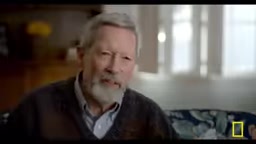
French researcher Thibault Le Texier was the first person to systematically comb through the complete archives of the Stanford Prison Experiment. At the Stanford University library, he spent weeks examining 6 hours of video, 15 hours of audio, guards' daily reports, forms filled out by participants, and Zimbardo's original notes. His findings form the core of the documentary's challenge.
Le Texier points out that the guards' behavior was far from 'spontaneous.' The archives show that before the experiment officially began, the guards attended a 'training session' lasting several hours. At that session, Zimbardo's research team explicitly told the guards the purpose of the experiment and guided them to think about how to create boredom, frustration, and fear. 'We are completely in control of the situation,' one guard said in the training recording. More critically, the guards had to fill out reports every day, recording 'implementation of the plan' and 'punitive measures.' Le Texier displayed a report that read, 'The schedule is basically being followed as planned.'
'They weren't improvising; they were following a script,' Le Texier says in the film. Another long-overlooked figure is guard Ken Carter. He dropped out before the experiment began because he smelled something 'manipulated' at the training session. 'I felt the whole thing was pushing us in one direction, which was to prove that prison is evil,' Carter said. His presence directly challenges Zimbardo's thesis that 'everyone will yield to the situation.'
Le Texier's conclusion is sharp: 'The official narrative is a lie. What Zimbardo says happened is not what the archives record.'
Method Acting is an acting training method derived from the Stanislavski system, emphasizing that actors 'become' the character through emotional memory, improvisation, and deep role immersion, rather than merely 'playing' the character. Guard Dave Eshelman admitted in the film that he had just finished an acting class at the time and was obsessed with Method Acting, which provides crucial context for understanding his behavior: his brutal conduct may not have been a natural product of situational pressure, but rather a conscious construction of a role and a performance strategy, possibly even motivated by a desire to please the researcher. This detail weakens the explanatory power of 'situations automatically triggering brutality' and reintroduces individual agency and performative intention into the causal chain.
Testimony from Three Key Participants: Performance, Exit, and Awakening
The documentary further dismantles the simple causal chain of 'situational determinism' through the personal accounts of three participants.
'John Wayne's' Performance Methodology: Guard Dave Eshelman was called 'John Wayne' by the prisoners because his harshness and dramatic style were the most conspicuous. But Eshelman admitted in the film that he had just finished an acting class at the time and was obsessed with Method Acting. 'I decided to play Strother Martin in Cool Hand Luke; I never broke character,' he said. 'I would tap my baton against my hand and say, "I'm going to beat you until your whole family is dead." The prisoners thought it was hilarious.' Eshelman acknowledged that his behavior had an element of pleasing the researcher: 'Professor Zimbardo deliberately came over and said to me, "You're terrific." At that moment I felt I had achieved what he wanted.'
Ken Carter's Exit: As the only guard who dropped out before the experiment began, Carter provides a counterexample. His presence shows that not everyone given power will abuse it. Carter said that at the time he already believed the experiment was 'designed to let the guards be abusive,' and he chose not to take part.
Christina Maslach's Intervention: Zimbardo's girlfriend, psychology graduate student Christina Maslach, visited the basement on the evening of the fifth day and witnessed guards making prisoners simulate sexual acts. She broke down on the spot and confronted Zimbardo: 'What you're doing to these boys is terrible.' Zimbardo then decided to terminate the experiment. But Le Texier points out that in later accounts Zimbardo packaged Maslach's intervention as a dramatic 'moment of awakening,' while the archives show that the decision to end the experiment may have involved other considerations—for example, the guards' loss of control had already exceeded the boundaries of the research design.
The Failure of Replications: No Leader, No Tyranny
If Zimbardo's conclusion holds, then any group of ordinary people given power will quickly become tyrannical. But another study introduced in the documentary gives the opposite answer.
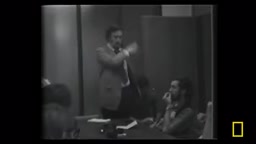
Stephen Reicher, a social psychologist at the University of St Andrews in the UK, took part in a BBC reenactment of the Stanford Prison Experiment in 2002. They used the same random assignment and the same mock prison setup. 'We expected the guards to quickly establish authority, but the result astonished us—they simply didn't want to be guards,' Reicher said. 'They hated the role; some even said, "I'd rather be a prisoner."'
Reicher attributes the difference to leadership. 'In Zimbardo's study, he himself was the leader; he told the guards what to do and provided legitimacy for abusive behavior. Without that leadership, you simply don't see that kind of toxic behavior.' This finding directly challenges the core proposition that 'situations automatically produce evil.'
The documentary also presents another intriguing detail: Zimbardo later admitted that at the time he 'forgot he was a researcher and acted like a prison warden.' But Le Texier argues that this seemingly candid reflection actually conceals a fact—Zimbardo was never a neutral observer from the start, but an active participant.
Social Identity Theory, proposed by Henri Tajfel and John Turner, holds that individuals define themselves through group membership, and that intergroup comparison and competition give rise to prejudice and discrimination. Stephen Reicher's research is an extension of this theory: in the BBC reenactment, the guards did not form a positive group identity but instead disliked their role, and therefore no tyrannical behavior emerged. This contrasts with Zimbardo's experiment, where the researcher injected 'legitimate authority' and positive identity into the guard group through training, a reporting system, and direct encouragement. Reicher therefore emphasizes that tyrannical behavior requires a leader to construct and maintain a certain group identity, rather than arising automatically from role assignment and situational pressure alone.
Media Amplification and Academic Controversy: How a Narrative Is Manufactured
The documentary devotes considerable time to analyzing how Zimbardo turned a flawed experiment into a globally renowned cultural brand. Key moments include: one month after the experiment ended, the Attica prison riot occurred, and public attention to prison issues soared; Zimbardo quickly collaborated with a local television station to produce a feature program, rearranging the narrative order according to the television producer's requirements to heighten the drama of 'day-by-day escalation'; subsequently, he published The Lucifer Effect, directly linking the experiment's conclusions to the Abu Ghraib torture scandal, and testified at courts-martial on behalf of the soldiers involved.
'This experiment hasn't been overturned in 50 years because no one went through the archives,' Le Texier says. 'But after I went through them, I found the gap between the official narrative and the archives is astonishingly large.'
The documentary also presents Zimbardo's own defense. In an interview, he insisted that the core conclusion of the experiment still holds: 'We created a prison that made people suffer, and they behaved cruelly and harshly. Sometimes even I forgot I was a researcher and acted like a prison warden.' To criticism, his response was: 'All their criticisms don't hold up.'
But even prisoners who took part in the experiment at the time have questioned Zimbardo's way of narrating it. Prisoner Clay Ramsey said: 'I respect what the experiment stands for, but I don't think it's a legitimate way to prove that conclusion.'
The Abu Ghraib torture scandal refers to the systematic humiliation, abuse, and torture of prisoners by U.S. military personnel at Abu Ghraib prison in Iraq between 2003 and 2004; the relevant photographs, made public in 2004, triggered global condemnation. Zimbardo directly linked this event to the Stanford Prison Experiment and testified at courts-martial on behalf of the soldiers involved, arguing that their behavior was a product of situational pressure rather than a defect of personal character. This connection greatly enhanced the public influence of the 'Lucifer Effect,' but it also sparked controversy: critics argue that reducing a complex historical atrocity to a replica of a laboratory situation both overextends the experiment's conclusions and may weaken individual moral responsibility. The documentary's analysis of the construction of Zimbardo's narrative includes precisely this key moment.
Reflections Fifty Years Later: The Boundary Between Fact and Fiction
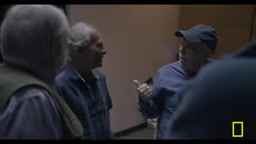
At the end of the documentary, the participants from back then reunite in a reconstructed 'prison' set. They reenact the scenes from those days; some laugh, some are silent, and some admit that they 'spent a lifetime digesting those few days.'
Prisoner Chuck Burton said something thought-provoking: 'I respect very much what Clay stands for. But in that moment, I chose to go along with the crowd and knocked on that door. I could have said no. But that would have been more trouble.'
Guard Dave Eshelman said: 'All life is real life. There is no special box where what you do has no consequences. That box doesn't exist.'
The documentary does not offer a simple conclusion. What it presents is a complex truth: the Stanford Prison Experiment did create an extreme situation, and the people in it did experience real emotions—fear, humiliation, anger, the desire for power. But these emotions are not spontaneous evidence of 'human nature being evil'; they were induced within a script carefully orchestrated by researchers, amplified by the media, and endorsed by academic authority.
As Le Texier says in the film: 'The official narrative is a lie. In those six hours and fifteen hours of audio and video, what actually happened is far more complex than the story Zimbardo tells. And when we accept only one version of the story, we misunderstand not only history but human nature itself.'
Conclusion: What We Can Still Learn
The legacy of the Stanford Prison Experiment is contradictory. It did spark public attention to the prison system, the abuse of power, and the power of situations. But it also warns us: when scientific research serves narrative construction, when the researcher himself becomes part of the 'script,' and when media logic replaces academic caution, a 'classic' experiment may drift further and further from the truth.
For today's AI and tech industry, this story is also relevant. Algorithm designers, product managers, and platform operators all, in a sense, play the role of 'situation designers.' We design rules, allocate permissions, and create information asymmetries, and users' behavior—whether it manifests as compliance, resistance, or indifference—is never purely spontaneous. Perhaps the real lesson of the Stanford Prison Experiment is not that 'human nature is evil,' but rather: when you hold the power to design a situation, you must be responsible for the people within it.
Related articles

A Step-by-Step Vibe Coding Tutorial: Get Started with AI Programming in 3 Steps
A step-by-step Vibe Coding tutorial for beginners, covering Claude Code installation, DeepSeek API integration, and editor configuration in three steps, with troubleshooting tips.

Instagram Is Letting Celebrity AI Deepfakes Run Rampant?
An AI-generated Mia Goth photo posted by a verified Instagram fan account went viral and was summarized by Google AI Overview as real. AI videos of Taylor Swift and Lionel Messi hit millions of views, yet Meta doesn't require AI labeling—raising doubts about platform governance.

Who Pays for U.S. Medicaid Cuts? Hospital Closures and the Chain Reaction of Millions Losing Coverage
A Vox report analyzes the real costs of Republican Medicaid cuts: the CBO estimates over 7 million newly uninsured by 2034, an Iowa hospital has ended obstetric services, Arkansas work requirements cost 18,000 people coverage, and rural areas face $137 billion in permanent cuts.