Two AI Bots: Blocking Spam Calls and Scrubbing Leaked Data

A YouTube creator shares Grokbot and Privacy Scrubber—two AI tools for blocking spam calls and scrubbing leaked data.
The article presents a YouTube creator's approach to handling about 20 spam calls and texts daily: Grokbot auto-submits your number to multiple Do Not Call registries in five seconds, while Privacy Scrubber scans the web daily to find personal info leaked to data brokers and sends deletion requests. They target the entry and exit points of harassment respectively, but coverage and response rates are undisclosed, so effectiveness should be assessed cautiously.
Bombarded by 20 spam calls and texts a day—political campaigns, loan pitches, one after another—this is an experience many people know all too well. A YouTube creator shared two AI tools they found: one sends your number to "Do Not Call" registries, the other scans the web daily and asks data brokers to delete leaked personal information. They address two different layers of the problem: the entry point for harassment, and the exit point for data.

The Root of Spam Calls: Numbers Resold Again and Again
The reason spam calls never stop is that phone numbers are repeatedly traded in the black market. Once a number appears even once, it can end up on countless marketing lists. The creator mentioned receiving about 20 spam calls and texts per day, covering political campaigns, loan sales, and more—endlessly annoying.
Relying solely on the phone's built-in blocking only stops calls that have already come in—treating the symptom, not the cause. Grokbot's approach is to proactively submit your number to official "Do Not Call" registries, reducing the willingness of legitimate marketing agencies to call in the first place.
Grokbot: Multi-Registry Submission in Five Seconds
According to the creator, Grokbot has a very low barrier to entry: enter your phone number, and it automatically submits it to different registries—the whole process takes about five seconds.
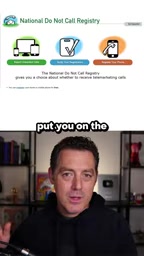
"It really works"—that's the feedback the creator gave in the video, though they didn't elaborate on which country or region, or which registries are covered. This is worth noting: "Do Not Call" mechanisms vary widely by region, and effectiveness depends on local regulatory enforcement. For users plagued by spam calls, the value of such tools lies in compressing a cumbersome multi-platform registration process into a single action, saving the hassle of manually filling out forms.

A caveat: registering for "Do Not Call" mainly constrains legitimate marketing agencies and is nearly useless against scam calls and overseas call centers. It can reduce noise, but it cannot replace on-device blocking and reporting mechanisms.
The "Do Not Call Registry" is an official mechanism introduced by many countries and regions. In the United States, for example, the National Do Not Call Registry operated by the Federal Trade Commission (FTC) allows users to register their phone numbers for free; legitimate telemarketing companies are required to download the list periodically and proactively remove registrants, and violations can result in hefty fines. However, registration is not instantaneous—it usually takes some time to take effect, and it does not expire unless the number changes or the user actively deregisters. Registries in different countries vary greatly in coverage, enforcement, and update frequency. For instance, the UK's TPS (Telephone Preference Service) only binds marketing agencies within the UK and has no jurisdiction over overseas calls. Therefore, the core value of tools like Grokbot lies in automated submission, but the actual anti-spam effect depends on whether local regulators enforce the rules strictly and how the registry's update mechanism works.
Privacy Scrubber: Daily Web Scans and Proactive Deletion Requests
The second tool, Privacy Scrubber, tackles a different problem: personal information being collected and resold by data brokers.
According to the creator, Privacy Scrubber scans the web every day to find personal information that may have leaked to shady data brokers, and proactively sends them deletion requests.
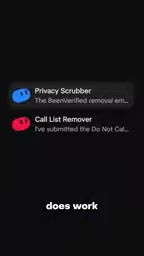
This approach complements "Do Not Call": the former governs how calls come in, the latter governs how personal information flows out. Data brokers are commercial entities that collect, organize, and resell personal information; users' names, addresses, spending habits, and other data are often collected without their knowledge. Manually sending deletion requests to each broker is a chore, and automation can indeed save a lot of time.
However, the video did not disclose how many data brokers Privacy Scrubber covers or what the response rate to deletion requests is. The actual effectiveness of such services depends heavily on coverage and enforcement, so users should confirm the supported platforms and regions before choosing one.
Data brokers are companies that specialize in collecting, aggregating, and reselling personal information. They obtain data from public records, commercial transactions, website tracking, mobile apps, and other channels, build detailed personal profiles, and sell them to marketing firms, insurance companies, background-check agencies, and more. In the United States, the data broker industry is large but has long lacked unified federal regulation, with laws varying by state. California's Consumer Privacy Act (CCPA) gives residents the right to request that companies delete their personal information, while the EU's General Data Protection Regulation (GDPR) is even stricter. Privacy-scrubbing tools typically send deletion requests to brokers under these laws, but response rates and enforcement vary widely. Some brokers cooperate proactively, while many ignore requests or require additional verification. When using such services, users should pay attention to the number of brokers covered, whether their region is supported, and whether deletion progress tracking is provided.
How Much Can These Two Tools Solve?
Taken together, these two tools represent two automated paths for individuals to counter data harassment: entry blocking and exit cleaning. At the end of the video, the creator said viewers can comment "privacy" to get links to both tools.
From a practical standpoint, such AI tools lower the barrier for ordinary people to protect their data, but expectations should remain reasonable. Root-level governance of spam calls depends on regulators and carriers, and data broker compliance varies by region. Automation can lighten the burden but cannot solve everything once and for all. For users troubled by 20 spam calls a day, a five-second registration and a daily automated scan are at least a first step worth trying.
Tackling spam calls involves multiple links: number leakage, marketing agency calls, carrier blocking, and regulatory penalties. What individual users can do is mainly register for Do Not Call and enable on-device blocking. Scam calls and overseas call centers often use fake numbers or untraceable lines, so Do Not Call registration is nearly useless against them, because such callers don't follow the rules in the first place. Built-in spam blocking on phones relies on number databases and machine learning to identify calls, which can stop some known spam numbers but may also block legitimate calls by mistake. More thorough solutions include carrier-provided anti-spam services, third-party blocking apps, and being cautious about authorizing your phone number. Automation lowers the barrier to action but cannot replace root-level governance at the regulatory level. Users should combine multiple approaches and regularly check their personal information exposure to build layered protection.
One-line Summary
A YouTube creator shares two AI tools, Grokbot and Privacy Scrubber, tackling spam calls and data leaks through entry blocking and exit cleaning respectively.
Paragraph Summary
The article introduces a YouTube creator's solution for dealing with about 20 spam calls and texts a day: Grokbot automatically submits your phone number to multiple "Do Not Call" registries within five seconds, reducing legitimate marketing calls at the source; Privacy Scrubber scans the web daily to find personal information leaked to data brokers and proactively sends deletion requests. The two target the entry point of harassment and the exit point of data, complementing each other. However, the video did not disclose the tools' coverage regions, the number of registries, or deletion request response rates, so actual effectiveness should be evaluated cautiously. Do Not Call registration is basically ineffective against scam calls and overseas call centers and cannot replace on-device blocking.
Related articles

A New Paradigm for Text Editing in Compose: TextFieldState Replaces the Old API
Jetpack Compose introduces the TextFieldState API to fix dropped characters and cursor jumps from async input. The old value/onValueChange callbacks will be deprecated in 1.13. This article covers InputTransformation, OutputTransformation, four state hoisting patterns, and new formatted text editing capabilities.

Remote Compose: A New Document-Driven Paradigm for Cross-Platform UI on Android
Remote Compose transmits compact binary documents instead of screen pixels, enabling efficient UI rendering on remote surfaces like Wear OS and widgets. This article covers its document creation API, expression animations, size optimization techniques, and Wear OS progress.

How Crashlytics Eliminates Android Memory and Responsiveness Issues
Through the Chroma Clip case study, this article explains how Firebase Crashlytics uses Application Exit Info, Profiling Manager, GWP ASAN, and ARM MTE to pinpoint ANRs, OOMs, memory limit terminations, and native memory corruption—solving the challenge of stack traces that don't point to the real culprit.