US Government Hides Secret Court Ruling, Reigniting Surveillance Controversy

US government conceals secret court ruling on surveilling Americans, igniting transparency and privacy debate.
According to Wired, the US government is hiding a secret court ruling on how it surveils Americans, with neither its content nor legal basis disclosed. The story sparked heated debate on Hacker News over how the public can oversee surveillance when judicial rulings themselves are secret. The ruling relates to the FISA Court system, known for its secrecy and non-adversarial proceedings. The tech community is divided: some see confidentiality as necessary for intelligence work, while others insist secrecy must be limited when citizen surveillance is involved. The case also highlights tech companies' dual pressure from gag orders and user trust, raising questions about the long-term tension between transparency and security.
Core of the Story: A Concealed Ruling
According to Wired, the US government is hiding a secret court ruling concerning how it surveils Americans. The specific content of the ruling, the legal basis involved, and the surveillance targets have all not been made public, but the exposure of the news itself has already sparked widespread discussion about government transparency and citizen privacy.
On Hacker News, this story received 270 points and 69 comments, showing the tech community's continued attention to surveillance issues. The discussion focused on: when court rulings themselves become secret, how can the public effectively oversee surveillance activities?
The Surveillance Mechanism Behind the Secret Ruling
According to Wired's report, this ruling is related to surveillance authorization under the Foreign Intelligence Surveillance Court (FISA Court) system. The court's operations are already known for their secrecy; its rulings are typically not made public, and proceedings do not include adversarial hearings. The government invoked relevant legal provisions to keep the ruling's content confidential, citing national security.
The controversy lies in this: when the surveillance targets are American citizens, is confidentiality still reasonable? Under the legal framework, the government needs to balance intelligence gathering with privacy protection, but secret rulings make this balance difficult to scrutinize from the outside. Tech community comments pointed out that the lack of public judicial review amounts to handing oversight authority entirely to the executive branch.
The Foreign Intelligence Surveillance Court (FISA Court) is a special court established under the 1978 Foreign Intelligence Surveillance Act (FISA), specifically to review government surveillance applications targeting foreign powers and suspected espionage activities. The court is composed of federal district judges, but its proceedings are highly confidential: the government files applications unilaterally, typically without opposing parties participating in an adversarial manner, and rulings are rarely made public. The FISA Court's secrecy stems from the sensitivity of intelligence work, but critics point out that this "non-adversarial" process lacks external checks and balances, making it prone to excessive approval of surveillance authorizations. Historically, the FISA Court's public disclosure rate has been extremely low, and rulings are often heavily redacted, making it difficult for the public to understand the scope of surveillance and its legal basis. The hidden ruling in question is yet another example of the secrecy practices under this system.
Concerns and Divisions in the Tech Community
The Hacker News discussion revealed two viewpoints. Some commenters argued that the existence of secret courts is itself necessary, because intelligence work genuinely requires a certain degree of confidentiality; otherwise, ongoing investigations could be compromised. Others emphasized that when rulings involve surveillance of citizens, the scope of secrecy should be strictly limited—at minimum, disclosed to Congress or independent oversight bodies.
Some comments drew parallels with previously exposed surveillance programs, arguing that history has repeatedly proven that surveillance systems lacking transparency are prone to abuse. However, some voices cautioned that making all rulings public could expose intelligence sources and methods, causing irreversible security damage.
Gag orders are often used in such surveillance authorizations, prohibiting companies or individuals who receive government demands from disclosing the existence of those demands to the outside world. When tech companies receive data provision directives issued under laws such as FISA, they are often simultaneously prohibited from informing users—and may not even be allowed to reveal that they have received such demands. This leaves users unable to know whether their data has been obtained by the government and undermines the effectiveness of companies' transparency reports. The legal basis for gag orders typically involves national security, but their scope and duration lack public review, making them a long-standing focal point of criticism from privacy advocates. Understanding how gag orders operate helps clarify the real dilemma tech companies face in balancing cooperation with surveillance and maintaining user trust.
Impact on the Tech Industry and Users
From a technical perspective, such surveillance authorizations may involve the collection of communications data, including metadata, network traffic, and even content data. If tech companies are required to cooperate, they often face legal gag orders and cannot disclose this to users. This directly affects users' trust in cloud services and communication platforms.
For ordinary users, the existence of secret rulings means that even if they are not explicitly under investigation, their data may be obtained at some point in the chain. This uncertainty places higher demands on privacy protection practices—for example, the importance of end-to-end encryption and localized storage becomes even more prominent.
The Long-Term Game Between Transparency and Security
This incident has once again brought the issue of surveillance transparency to the forefront. How to draw the boundary between national security and citizens' right to know is a difficult problem facing every country. Wired's report does not offer a conclusion, but raises a key question: when judicial rulings themselves become secret, who watches the watchers?
The tech community's reaction shows that developers and privacy advocates remain highly sensitive to such issues. In the future, legislative and judicial battles over secret courts and surveillance authorizations will continue, and the degree of public awareness will directly influence the direction of policy.
Related articles
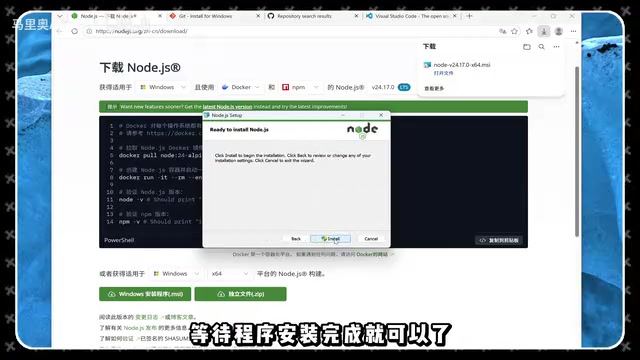
A Step-by-Step Vibe Coding Tutorial: Get Started with AI Programming in 3 Steps
A step-by-step Vibe Coding tutorial for beginners, covering Claude Code installation, DeepSeek API integration, and editor configuration in three steps, with troubleshooting tips.

Instagram Is Letting Celebrity AI Deepfakes Run Rampant?
An AI-generated Mia Goth photo posted by a verified Instagram fan account went viral and was summarized by Google AI Overview as real. AI videos of Taylor Swift and Lionel Messi hit millions of views, yet Meta doesn't require AI labeling—raising doubts about platform governance.

Who Pays for U.S. Medicaid Cuts? Hospital Closures and the Chain Reaction of Millions Losing Coverage
A Vox report analyzes the real costs of Republican Medicaid cuts: the CBO estimates over 7 million newly uninsured by 2034, an Iowa hospital has ended obstetric services, Arkansas work requirements cost 18,000 people coverage, and rural areas face $137 billion in permanent cuts.