Vergecast Ebook Library Tips: Multiple Virtual Library Cards and Kobo Integration
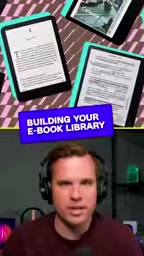
Vergecast shares ebook discovery strategies: buy directly to support authors, and use multiple virtual library cards plus Kobo integration to expand library borrowing.
The Vergecast podcast explored smarter ways to discover and acquire ebooks. Core strategies include prioritizing direct purchases from authors or indie bookstores to support the creative ecosystem, and using multiple virtual library cards to access larger library ebook and audiobook catalogs. Libby and Overdrive support linking multiple cards for cross-library borrowing, while Kobo e-readers deeply integrate library resources and now support multiple cards for a more seamless borrowing experience. The recommended approach combines buying and borrowing in parallel—supporting creators while maximizing reading freedom and reducing costs.
From Podcast to Practice: Vergecast's Ebook Discovery Strategy
In the latest episode of Vergecast, the hosts discussed how to discover and acquire ebooks more intelligently. The core message is clear: prioritize supporting authors and independent bookstores while fully leveraging library digital resources. Although the discussion was brief, it was dense with information—especially the details about multiple virtual library cards and Kobo integration, which are worth unpacking further.
The First Principle: Buy Directly, Support Creators
The first piece of advice from the show: whenever possible, buy directly from the author or an independent bookstore. This isn't just another channel for acquiring books—it's a way to support the creative ecosystem. With ebook platforms commonly taking a cut, buying directly ensures more revenue goes to the author. For independent bookstores, every direct order is a concrete act against the dominance of large platforms. This advice requires no complex technical门槛—just a conscious choice from the consumer.
Virtual Library Cards: The Underrated "Life Hack"
The show called virtual library cards "the biggest hack," and that assessment isn't exaggerated. Many public library systems allow residents to register for a library card online, and even if you don't live locally, you may still be eligible to apply. By holding cards from multiple library systems, you can access a much larger catalog of ebooks and audiobooks.

Multi-Card Management with Libby and Overdrive
The show noted that through the Libby or Overdrive apps, you can link multiple library cards at once. This means when a book has a waitlist at one library system, you can switch to another system to see if a copy is available. For audiobook lovers, free library audiobook resources are a huge perk, and a multi-card strategy can significantly expand what you can borrow.

The host explicitly stated that if you aren't already using multiple different library cards, you absolutely should try it. This strategy costs nothing extra—just a bit of time researching which library systems allow online registration.
Libby is OverDrive's next-generation borrowing app for readers, while OverDrive is the ebook and audiobook lending system behind many public libraries. The relationship can be understood as: OverDrive is the back-end platform that libraries use to purchase and manage content, and Libby is the front-end app readers use to browse, borrow, and read. Libby supports adding multiple library cards within the same app and switching searches across different library systems—this is the technical foundation that makes the multi-card strategy easy to implement. In addition, Libby offers tags, reading progress sync, and offline downloads, making cross-library borrowing more seamless.
Kobo's Library Integration: No Need to Actively Visit
The discussion specifically highlighted an advantage of Kobo e-readers: library borrowing is deeply integrated into the system. You don't need to open Libby or Overdrive separately to search—library resources appear directly in the device interface. This seamless experience lowers the psychological barrier to using library resources.

Multi-Card Support Upgrade
More importantly, the show mentioned that Kobo has just upgraded its functionality and now supports multiple library cards, just like Libby. This means Kobo users can manage multiple library accounts directly on the device, further simplifying the cross-library borrowing process. The show believes this change "changes a lot of things" because it extends the convenience of the multi-card strategy from a phone app to a dedicated reading device.
Kobo is an e-reader brand under Canada's Rakuten, and its devices come with built-in OverDrive library borrowing integration. Unlike having to open the Libby app separately, Kobo users can access library resources directly from the device's store or reading interface, and borrowed ebooks automatically appear in the library. This deep integration reduces the steps of switching between apps and lowers the likelihood that users forget to use library resources. After a recent upgrade, Kobo supports multiple library cards, meaning users can manage multiple library accounts directly on the device, further enhancing the convenience of cross-library borrowing.
Strategy Combination: Buying and Borrowing in Parallel
Vergecast's discussion didn't pit buying against borrowing. A sensible strategy runs both in parallel: for authors you particularly love or exclusive editions from independent bookstores, choose to buy directly; for high-volume reading needs, use multiple virtual library cards and Kobo's integration to reduce costs. This combination supports creators while maximizing personal reading freedom.
Summary
This podcast segment provides a clear action framework: buy directly to support authors and independent bookstores, use multiple virtual library cards to expand access to library resources, and rely on Kobo's deep integration to make borrowing effortless. For readers who want to build their ebook libraries more intelligently, these tips are worth trying one by one.
Related articles

Jon Krohn in Conversation: How LLMs Are Reshaping the Value of Data Scientists
Super Data Science host Jon Krohn talks with Josh Starmer and Luis Serrano about how LLMs erode twenty years of technical moats and shift value to context, business understanding, and agent orchestration.

Support Vector Machines (SVM): Core Concepts and Python Hands-On Practice
From maximal margin classifiers to the kernel trick, this article explains SVM core concepts in an accessible way and demonstrates a complete polynomial-kernel SVM workflow on the diabetes dataset in Python, including standardization, model training, and decision boundary visualization.

GRPO Reinforcement Learning Explained: Group Relative Policy Optimization That Teaches LLMs to Reason
A deep dive into the GRPO reinforcement learning algorithm: how in-group relative advantages are computed, how clipping and the importance sampling ratio work in the loss, the role of KL divergence constraints, and GRPO's training-cost advantage over PPO—with round-by-round mathematical derivations.