Deep Dives
In-depth AI analysis, industry observations, and technical insights — slow down and read.

Sketching Algorithm Drastically Reduces Context Attribution Costs
New research proposes a sketching-based context attribution algorithm that, under a stability assumption, estimates all Leave-One-Out attribution values with only O(√log(1/ε)/ε) model evaluations, provides a matching theoretical lower bound, and significantly reduces computational costs in long-prompt scenarios.

Energy Model CRAM: 1,000x Faster Inference Than Looped Models
New research proposes the CRAM energy model, training at least 1,000x faster than looped models on Sudoku and mazes, reducing inference FLOPs by 282x, and warns of simple benchmark limitations.
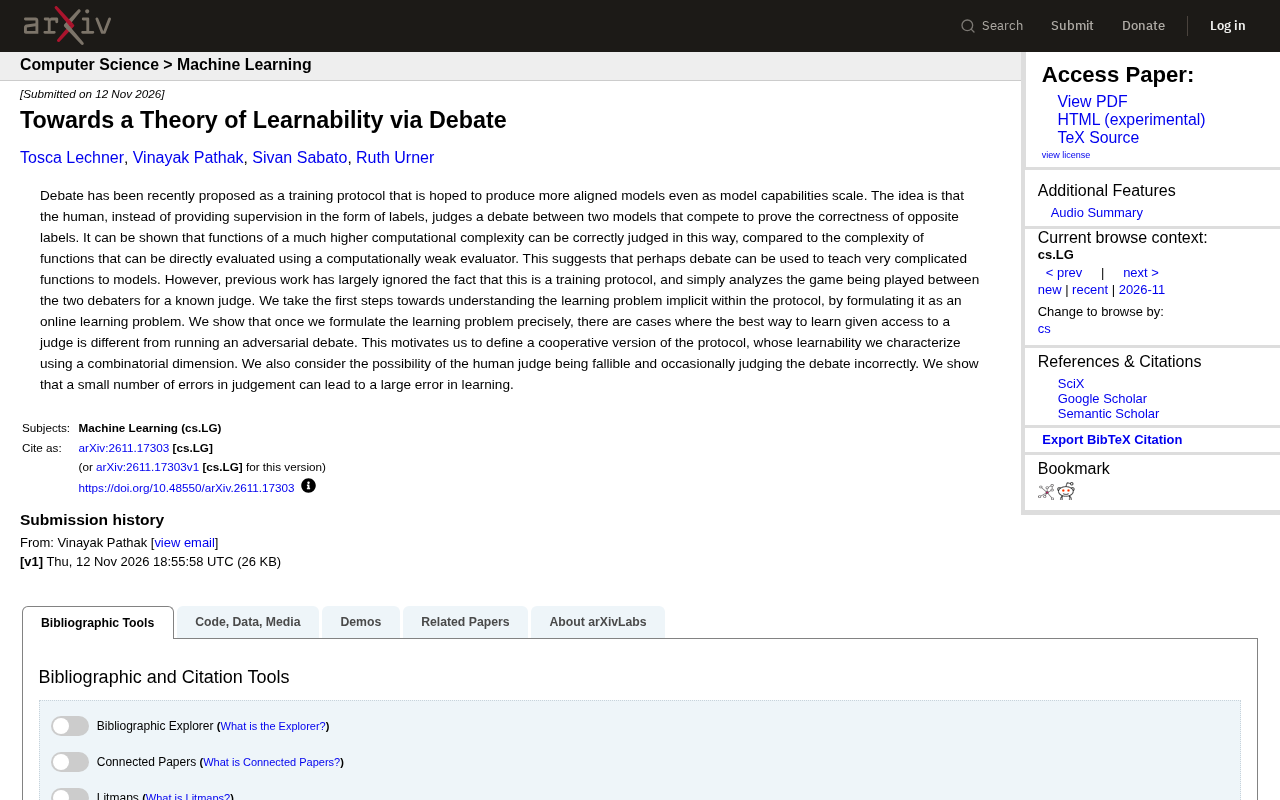
New Advances in the Learnability Theory of Debate Training Protocols
This article interprets new advances in the learnability theory of debate training protocols, formalizing them as online learning problems, proposing a cooperative protocol characterized by a combinatorial dimension, and revealing that a small number of judge errors can cause large learning errors, offering new perspectives for AI alignment training.

How to Quantify the Structural Stability of Insurance Pricing Models? A New Metric, MSSD, Provides the Answer
Insurance pricing models are updated frequently—how to quantify structural stability? This article explains functional transparency and the Mean Squared Shape function distance (MSSD) metric, and presents benchmark findings on GLM and EBM across three auto insurance datasets.

FLEX-LBP: A Binary Texture Descriptor with Learnable Parameters That Outperforms ResNet-50
FLEX-LBP learns LBP radius, angles, and thresholds via straight-through estimator while keeping exact binary inference. It improves six texture benchmarks by 3.55 points on average, surpassing ResNet-50 features with only 90 parameters.

When Should Diffusion Language Models Regenerate? The DiVR Verifier Answers
Diffusion Language Models can correct errors via remasking, but when to regenerate is key. DiVR verifier predicts final sequence correctness, surpassing search baselines at lower cost on LLaDA-8B-Base, boosting average accuracy from 35.3% to 43.4%.

CoReMem: Teaching Coding Agents to Pay for Their Memories
The CoReMem framework uses prospective segment valuation and provenance-gated credit assignment to let coding agents weigh memory's future benefits against costs in consecutive tasks. On ChainSWE, a 27B model improves solve rate from 21.0% to 25.7%, with 17% fewer steps and 11% fewer tokens.
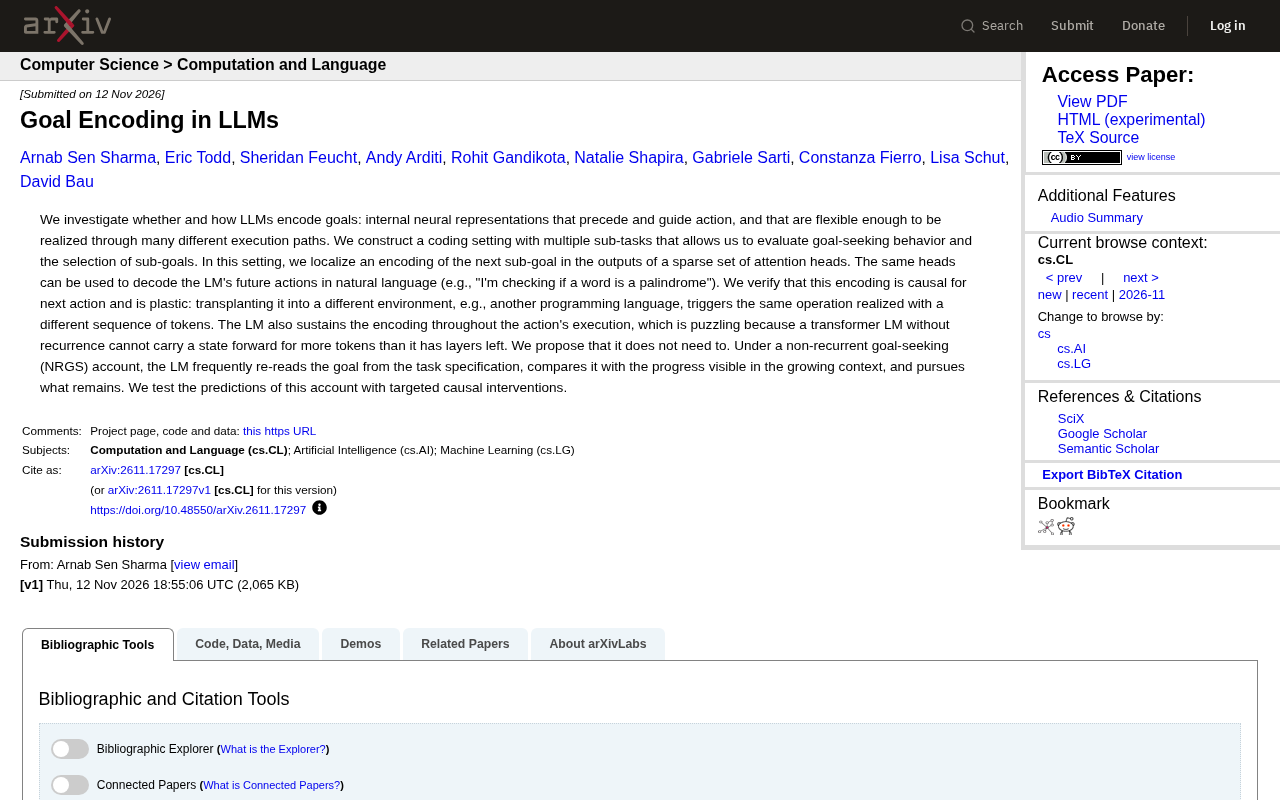
How Do LLMs Encode Goals Internally? New Research Reveals Sparse Attention Head Mechanism
New research locates sparse attention heads encoding next subtasks in LLMs, validates their causality and cross-environment plasticity, and proposes the Non-Recurrent Goal-Seeking (NRGS) hypothesis.

Metal Sandbox: Isolated Execution and Scheduling for GPU Coding Agents on Apple Silicon
Metal Sandbox is open-source infrastructure for GPU coding agents on Apple Silicon, offering per-instance file isolation, native command execution, and cross-Mac scheduling—delivering 1.68–2.05x command throughput and 18.8% lower tool wait.

NOPO: Solving One-Sided Verification with Negative-Only Reinforcement Learning
This article explains NOPO (Negative-Only Policy Optimization), which performs policy optimization using only trusted negative samples in One-Sided Verifiability (OSV) scenarios, improving pass@k on code, logic, and math tasks, and discusses its principles and experiments.
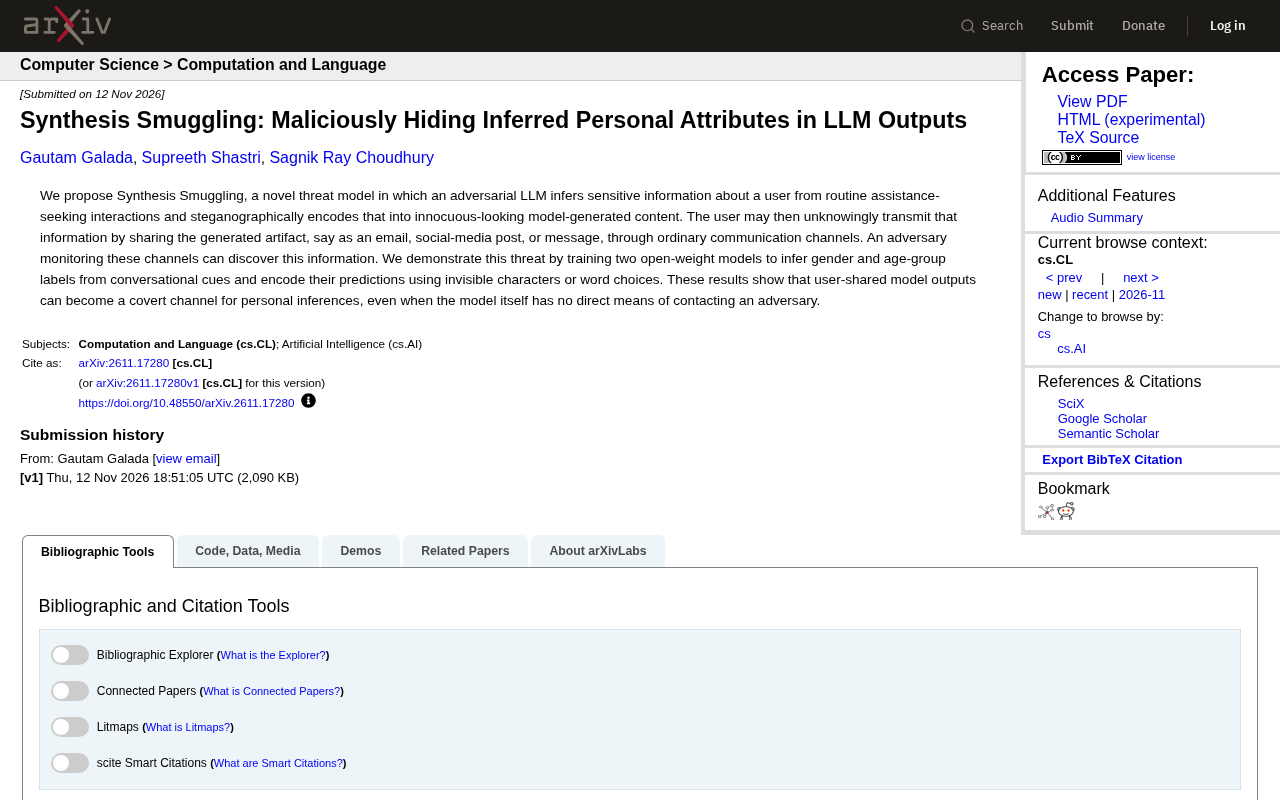
LLM Outputs Can Leak Privacy: Inside the Synthesis Smuggling Threat Model
Synthesis Smuggling is a new LLM threat model: adversarial models infer sensitive user attributes like gender and age, encode them via steganography into normal-looking outputs, and users leak them unknowingly when forwarding.

LiveGeo: A Benchmark for LLM Agents in Dynamic Geographic Worlds
LiveGeo is a geographic agent benchmark built on the GeoWorld platform, requiring LLM agents to actively acquire information, verify evidence validity, and revise plans in a continuously evolving real-world geographic environment. Experiments show frontier models already struggle on static tasks, and high static scores do not guarantee dynamic reliability.

Insufficient Effective Rank in LoRA Causes Forgetting? A New Regularization Method Breaks the Deadlock
A new paper finds that LoRA adapters' effective rank is far below the configured rank, worsening the learning-forgetting trade-off. The authors propose an SVD-free Rényi-2 effective rank regularizer that reduces Wiki perplexity across multiple models. Code is open-sourced.

Output Format Determines Silent Error Rate in Small-Model Semantic Parsing
In small fine-tuned semantic parsers, syntactically valid but semantically wrong trees cause silent errors. PIZZA benchmark shows natural-language word encodings beat compact symbolic formats, cutting silent errors 2.3×, with negation handling the main gain.

vid2vid-long: Solving Long-Range Consistency in Video-to-Video with Explicit Correspondences
vid2vid-long proposes an explicit-correspondence video-to-video method: compute patch-level correspondences on the input video, retrieve historical generated output, and inject it via cross-attention—improving long-range temporal consistency without sacrificing real-time performance or generation quality.

Ballad: Scheduling LLMs with Multi-Armed Bandits for Automated Heuristic Discovery, Cutting Costs by 65.6%
Ballad proposes a multi-armed bandit LLM routing algorithm for automated heuristic discovery. On five NP-hard combinatorial optimization problems, it matches or surpasses the best single model while cutting API costs by up to 65.6% versus always using the strongest model.

Nintendo's Massive GitHub DMCA Sweep: Emulators and Firmware Taken Down
Nintendo launched a large-scale DMCA takedown on GitHub targeting Switch emulators and mod chip firmware. This article covers the scope, Hacker News reaction, and potential impact.

NVIDIA Employees Petition for Jensen Huang's Return: A Stunt or Deep-Seated Anxiety?
NVIDIA employees petition for Jensen Huang's return—what's really behind the Hacker News hot post? We analyze the organizational anxiety and founder culture dilution.
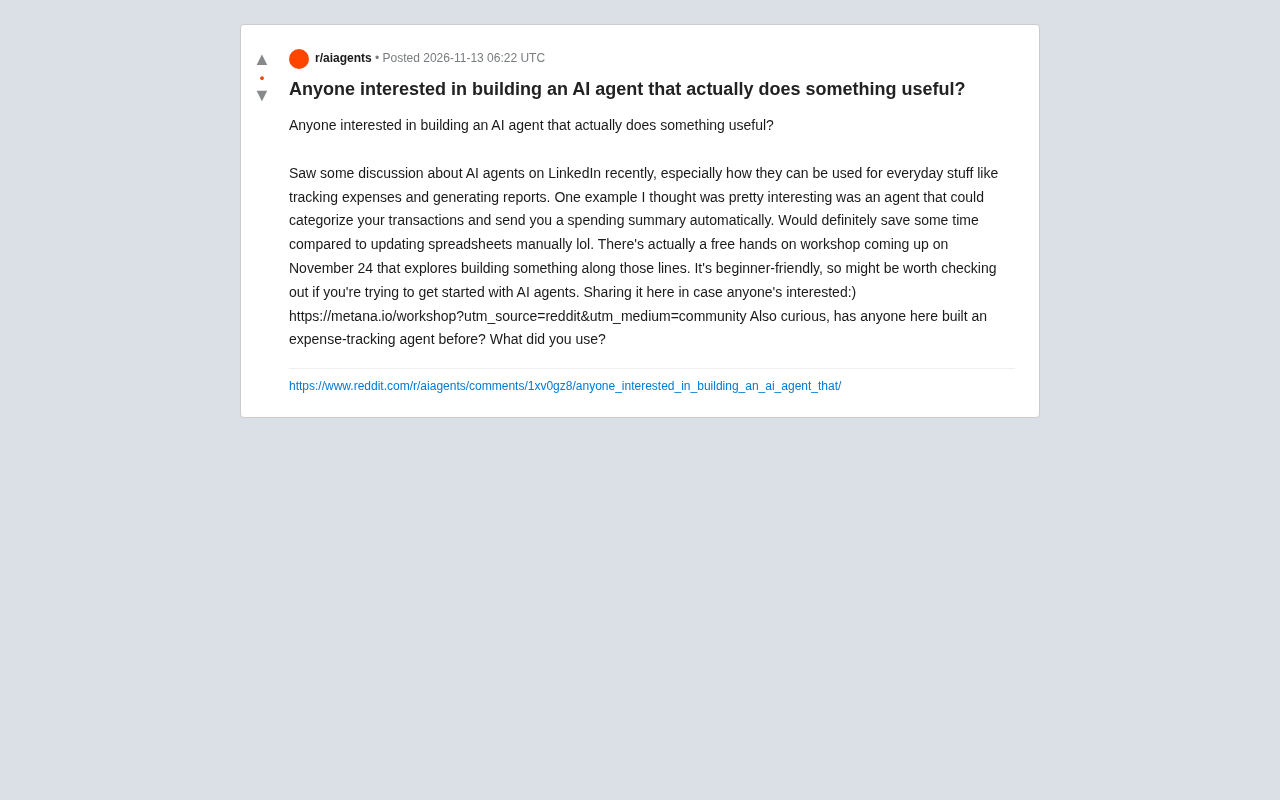
From Bookkeeping to Reports: How to Build a Truly Useful AI Agent
Starting from a Reddit discussion, explore how to build a truly useful AI agent, using automated bookkeeping and expense reporting as an example to break down data acquisition, categorization, automation, and output, with an entry-level tech stack and steps.

epistemic-guard: Intercepting AI Hallucinated Tool Calls in 10ms and Signing Agent Memories
epistemic-guard is an MIT-licensed Python package using clause-level tool receipt supervision and Ed25519 public-key memory gating to catch AI Agent ghost tool claims in ~10ms on CPU/NPU and prevent memory poisoning, with zero LLM API calls.