#AI Agent
1121 related articles

Flocker Agent Profiles: Give Every AI Agent a Dedicated Homepage and Collaboration Network
Flocker Agent Profiles gives every AI Agent a dedicated homepage, live feed, and personal storage to solve context loss. Supports Claude Code, Codex, and more.

AI Agent Permission Controls for SaaS Applications: A Practical Security Authorization Checklist
A practical AI Agent permission control checklist for SaaS apps, covering least privilege, short-lived credentials, intent verification, and audit logs to secure AI-authorized operations.

Will OpenAI Dots and Grok Bots Make LangChain/LangGraph Obsolete?
OpenAI Dots and Grok Bots are eating into the LangChain/LangGraph market. We analyze deterministic state machines, model agnosticism, and data privacy to map where agent frameworks still win in 2026.

Cadence MCP in Action: AI Reads PDF and Auto-Generates Schematics
A Bilibili creator demos a self-built Cadence MCP project: AI reads TI application circuit PDFs and auto-draws schematics in OrCAD, with multi-agent rule checking and human-AI iteration.

90% of Agents Just Chat — They Don't Actually Work: The Three-Layer Architecture and Production Rules of Real Agents
90% of Agents are just wrapper chatbots. This article breaks down the three-layer architecture of real Agents — perception, decision, execution — plus 7 production tips and 3 ironclad rules.
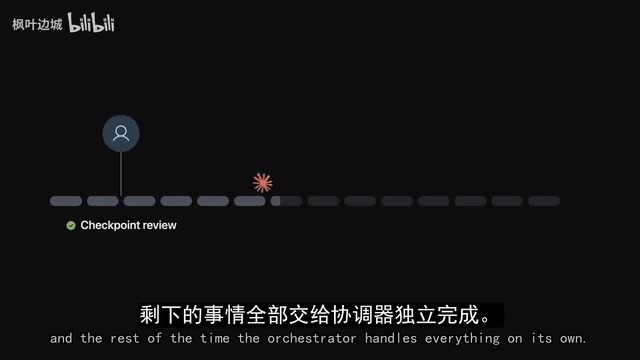
Replicating Shopify's AI Coding Workflow: The Gate Mechanism Behind Autonomously Rebuilding a 300-Screen App
AI Labs reverse-engineered Shopify's workflow for rebuilding a 300-screen app with AI agents — breaking down checkpoints, four gates, sub-agent context isolation, and human-in-the-loop design.

AI Agents Can Auto-Generate Projects — Do You Still Need to Learn Deep Learning Code?
AI Agents can auto-generate full deep learning projects, but data leakage pitfalls show why reading and auditing AI code matters more than writing it yourself.

Deep Dive into Goal Mode: The Core Implementation Flow Behind AI Agent Automation
A deep dive into AI Agent Goal mode: how it differs from chat and Plan mode, how turn loops, self-verification, and Token budgets work — essential reading for developers building autonomous AI automation.

Harness Engineering in Practice: Building the Control Layer for AI-Assisted Coding from Scratch
A deep dive into Harness Engineering: from prompt engineering to context engineering to harness engineering, covering Agent failure modes and how to build the information, constraint, and automation layers for stable AI-assisted coding.

Sophos in Practice: How AI Agents Compressed Cybersecurity Response Time from 38 Minutes to 89 Seconds
Sophos CTO details how the OpenAI Daybreak project compressed average security incident response time from 38 minutes to 89 seconds, with half of cases now handled automatically by AI agents, and explains the notify/collaborate/authorize human-AI collaboration framework.

A Simulated Town of 200 AI Residents Caught a Customer Service Agent Lying
An 18-year-old built Populace, a simulated town of 200 AI residents that caught an LLM customer service agent fabricating engineer visits — exposing what single-turn evals miss.

Retrieval Is a Decision Problem, Not a Similarity Problem: Lessons from GPT Researcher Experiments
Retrieval isn't just similarity matching — it's a decision problem. GPT Researcher experiments show decision-based retrieval raises relevant context from 46% to 73%, reshaping RAG and AI Agent design.
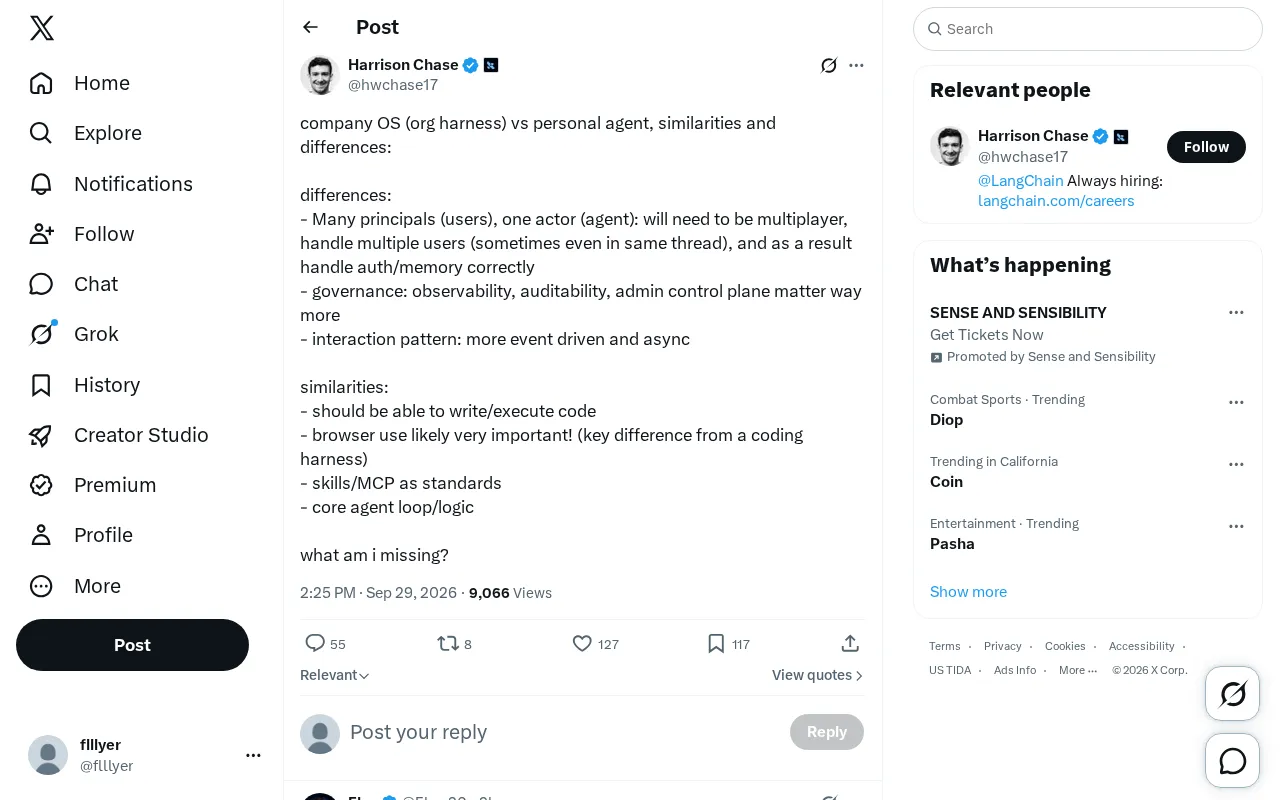
Enterprise AI Agent vs. Personal Agent: A Deep Architectural Comparison
Enterprise AI Agents (company OS) differ fundamentally from personal agents in multi-user collaboration, governance, and interaction patterns, while sharing core infrastructure like code execution, browser use, and MCP.

Building RL Environments for LLM Agents: Six Core Components from State to Reward
How do you build an RL environment for LLM agents? This article breaks down six core components — state, observations, actions, transitions, rewards, and resets — and covers reward design and pre-launch validation.

3 Months of an Open-Source AI Agent Memory Layer: 13K Downloads and Strangers Contributing
An indie dev's 3-month open-source AI Agent memory layer journey: 13K downloads, a PR to mem0, and strangers contributing code. What it means for the ecosystem.

OpenAI Launches dots: An AI Assistant That Gets Things Done Proactively
OpenAI launches dots, a proactive AI assistant that keeps work moving across complex projects while keeping users in control. A look at its positioning and the AI Agent trend.

Dots: Always-On AI Agents Redefine Task Automation
Dots' "Always-on agents" transform AI from passive chatbots into persistent, event-driven background assistants. Explore the core concept, value, and engineering challenges.

What Is an AI Agent, Really? The Core Principles Explained Through a Simple Analogy
What is an AI Agent? Using a relatable 'go to class for me' analogy, this article breaks down the four core principles of Agents: understanding commands, task splitting, LLM calls, and rule-driven execution.

WorkBuddy Beginner's Guide: How This Chinese AI Agent Handles Real Office Tasks for You
WorkBuddy is a Chinese AI Agent built for office workflows. Learn how it differs from traditional AI, why it suits beginners, and how to get started fast.

A 6-Step Framework for AI Agent Development: From Beginner to Real-World Deployment
A complete 6-step AI Agent development framework — from tool use and prompt engineering to large-scale production deployment — to help beginners avoid common pitfalls.