#AI编程
9349 related articles
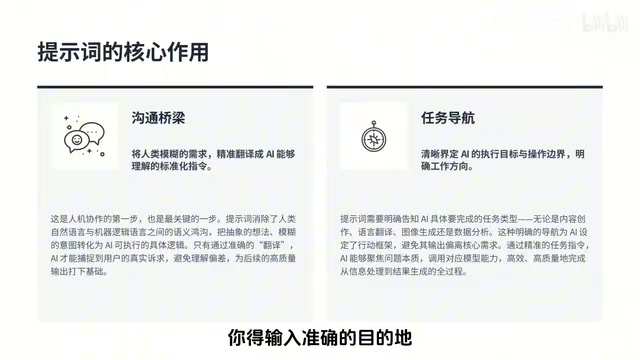
Prompt Engineering for Beginners: From Writing Instructions to Systematic Design
A beginner's guide to prompt engineering: the difference between prompts and prompt engineering, the four roles of prompts, the six-step process and four goals, plus key limitations around capability ceilings, stability, hallucinations, context length, and cost.
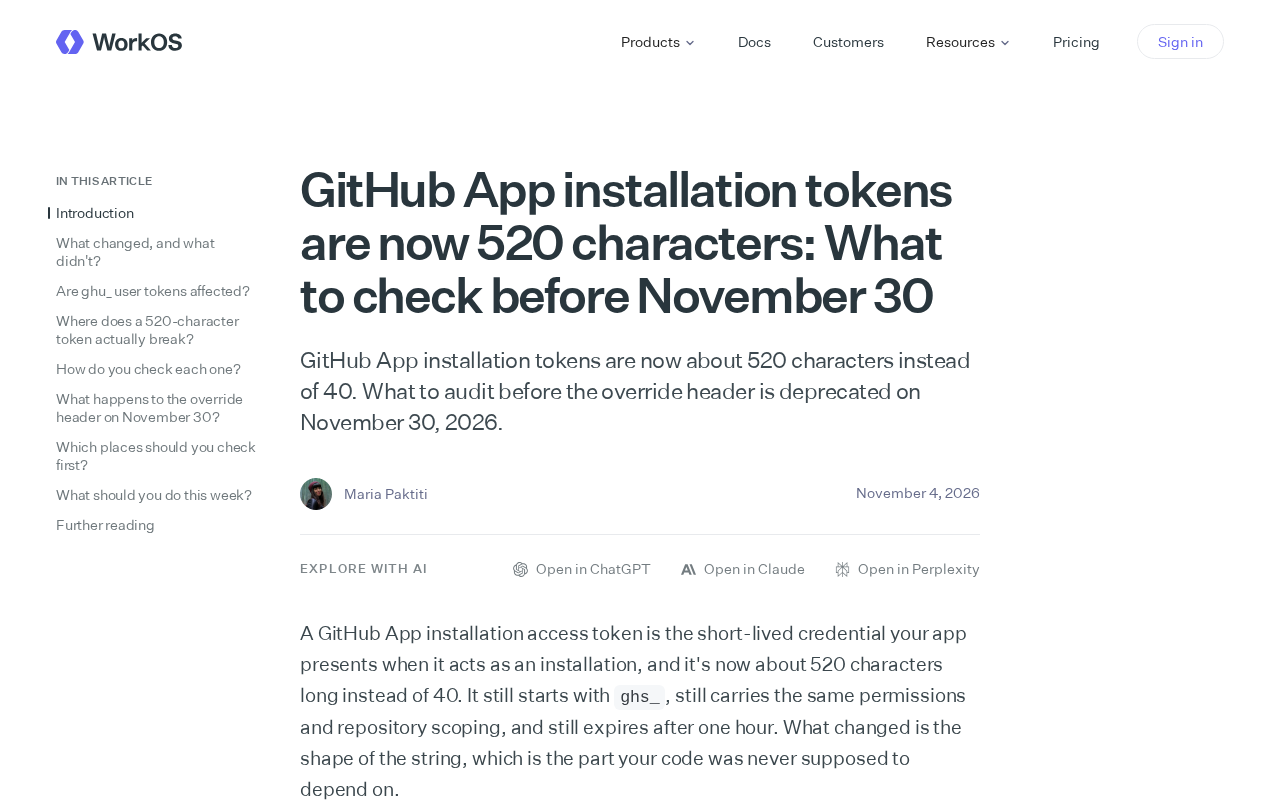
GitHub App Tokens Expand to 520 Characters: Checklist to Complete Before November 30
GitHub App installation tokens grow from ~40 to ~520 characters, with the override header deprecated on November 30, 2026. This article covers the technical impact and provides a three-part audit checklist: storage paths, code length assumptions, and transition planning.
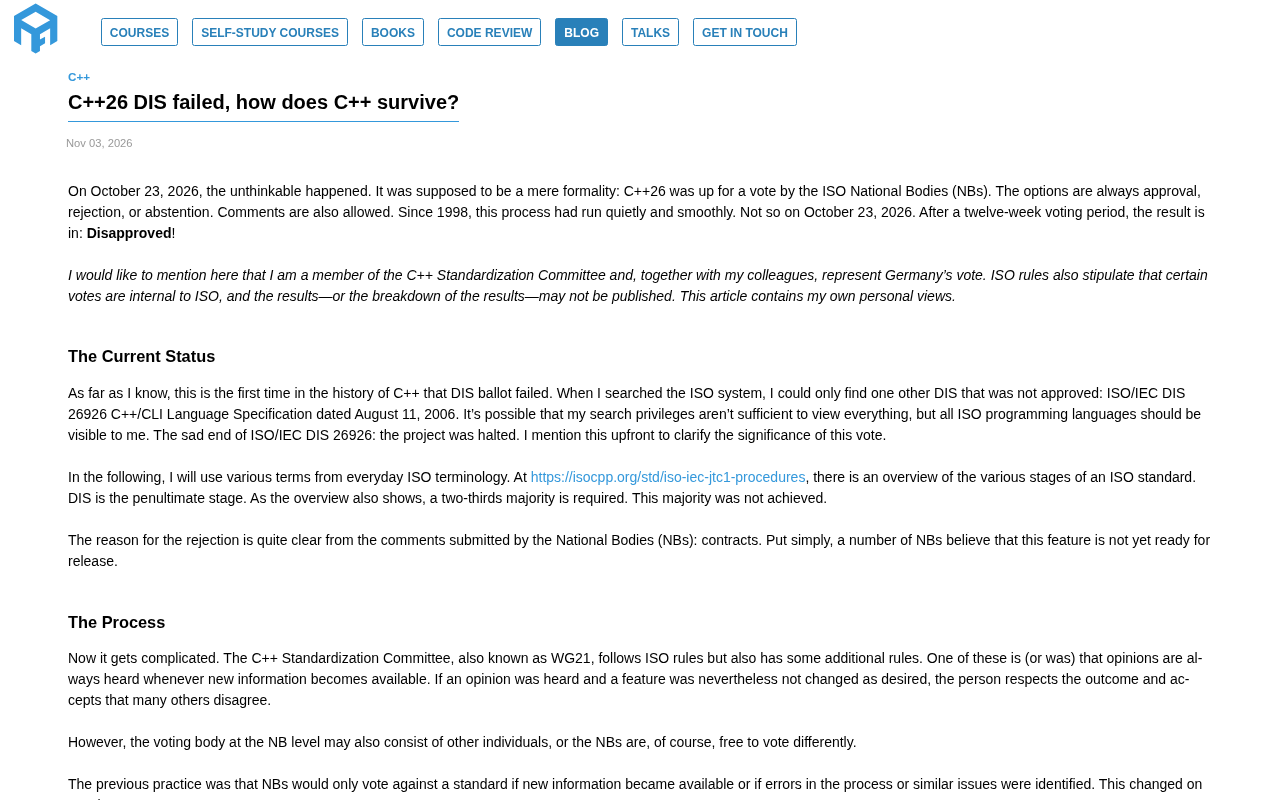
C++26 Rejected: The Standard Evolution Process Under Scrutiny
The C++26 standard draft was rejected, sparking Hacker News debate. This article analyzes the pros and cons of the WG21 consensus mechanism, the impact of standard delays on developers and the compiler ecosystem, and how C++ can balance stability and evolution amid competition from Rust and other languages.
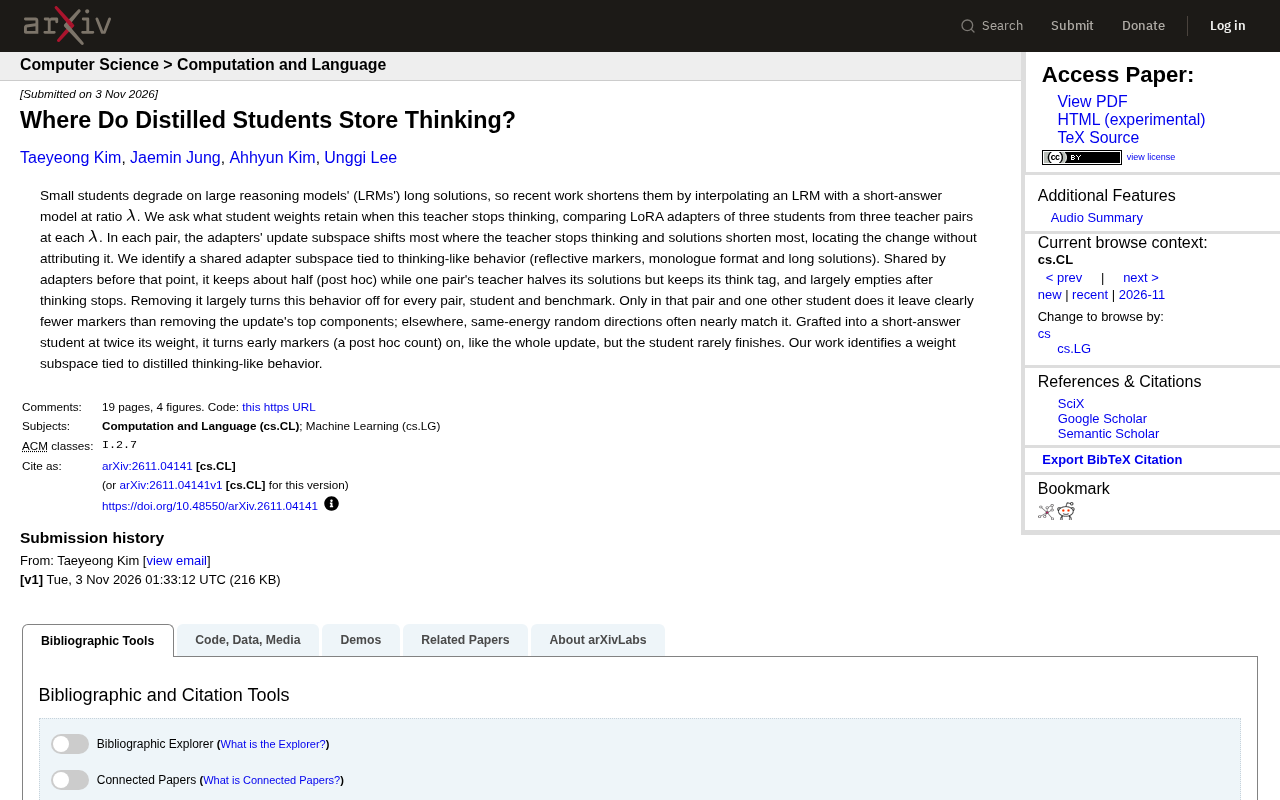
Where Do Distilled Students Hide Their 'Thinking'? Uncovering the Weight Subspace
New research compares LoRA adapters to locate a shared weight subspace tied to thinking behavior in distilled student models. Removing it disables thinking; transplanting it triggers but cannot complete reasoning, offering new insight into distillation mechanisms.

BCSM: An Efficient New Objective Breaking Through the Bottleneck of Discrete Diffusion Distillation
BCSM proposes Bidirectional Centered Score Matching, reducing discrete diffusion distillation pairwise complexity from O(|V|²) to O(K), achieving 6× NFE reduction in single-step inference and 16.9% relative improvement on HumanEval.

Reproducing the Chinchilla Scaling Laws: Feasible Paths and Key Challenges for Small-Scale Experiments
A discussion of small-scale reproduction experiments for DeepMind's Chinchilla scaling laws, analyzing feasible paths, experimental design essentials, and common pitfalls when reproducing compute-optimal training laws with PyTorch or JAX, offering practical reference for researchers.

Should LLM Activation Steering Depend on Input? New Research Provides a Measurable Criterion
New research reveals input dependence in LLM activation steering: retrieval-based steering beats fixed directions when the target direction varies within a request category. Word-level edits suit shallow layers with few neighbors, clause-level edits need only the class mean, and four state quantities can determine the editing strategy in advance.

LIRA: Making LoRA Dynamic Rank Allocation More Interpretable
LIRA proposes an interpretable dynamic rank allocation for LoRA, scoring each layer via second-order local loss perturbation and reallocating ranks with the DELTA algorithm under budget matching. It outperforms uniform LoRA and adaptive-rank baselines on RoBERTa-base GLUE; Trajectory EMA matches Fixed-point Fisher at lower cost.

DeepSeek Harness in Detail: DIY Your Own Software Like Building with LEGO
What is DeepSeek Harness? Using the metaphor of a car assembly platform, this article explains this equipment system of freely combinable functional modules, analyzes its spatiotemporal composability technical foundation, and shows how ordinary users can DIY exclusive software that does not exist on the market at extremely low cost.

DeepSeek Open-Sources Super Agent Foundation: Using Old Operating System Tricks to Solve AI Management Challenges
DeepSeek open-sources a Super Agent research prototype using dual-layer architecture, event-driven design, FastPass/SlowPass filtering, and storage-compute separation to solve multi-Agent parallel management. Experiments show median task completion of 12.4 minutes; Router batching cuts per-decision inference time from 6.4s to 1.6s.

Open-Source Analysis of Live-Compact, the Real-Time Compression Plugin for DeepSeek Harness
DeepSeek Harness plugin Live-Compact is open-sourced, using 20,000-token small slices instead of 80% forced compression to cut compression time and delay big compression, with cache hit rates matching the original and code-task context reduced by about 40%.

DeepSeek Harness Source Code Deep Dive: Everything Is a Plugin and the Event Bus
DeepSeek Harness source code deep dive: starting from installed and source versions, this analyzes the everything-is-a-plugin design philosophy, outlines the plugin system, main loop, and event bus as three source reading threads, and explores the open source ecosystem and the practice of hand-writing plugins to connect to MCP.

Claude Hardware-in-the-Loop: AI Builds PCBs, Writes Firmware, and Iterates Virtual Prototypes
A developer uses Claude Code for hardware-in-the-loop development: AI generates PCBs and fab files, writes firmware, designs CAD, and iterates in Isaac Sim/Unreal virtual prototypes before production. The method is open-sourced as a Claude Code skill, with notes on simulation accuracy, cost, and who it suits.

13 Claude Models, One Prompt, 14 Months: The Evolution of a 3D Game Website
A developer tested 13 Claude models with the same prompt over 14 months to document the evolution of a 3D game website—one-shot, zero edits, real shader bugs revealed.
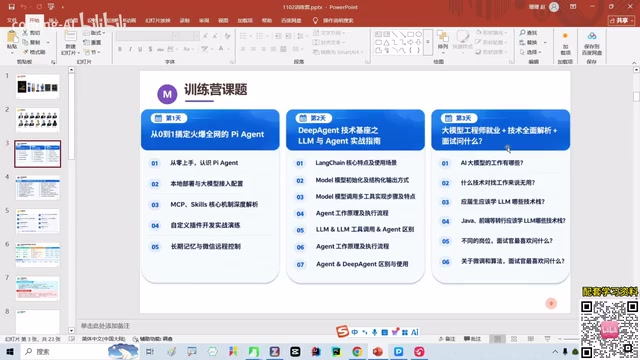
Pi Agent Hands-On Guide: Build Your Own AI Office Agent Step by Step
Pi Agent hands-on tutorial: explore its GitHub Star rise and a four-day bootcamp covering running an Agent, Deep Agent and LangChain, career paths, and resume tips to build your AI office agent.

Hermes Agent in Practice: AI Vulnerability Discovery from Setup to Verification
A Bilibili tutorial walkthrough on building a penetration testing agent with Hermes Agent, covering Git and NodeJS setup, DeepSeek model configuration, security knowledge base integration, SSH connection to Kali tools, the six-step AI vulnerability discovery workflow, and monetization path analysis.
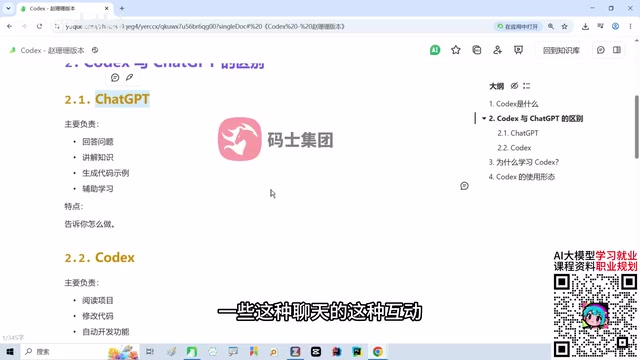
Getting Started with Codex Programming Agent: From Installation to Agent Development
Based on a Bilibili hands-on tutorial, this article explains OpenAI Codex's core positioning, its fundamental differences from ChatGPT, and its four usage forms (CLI, web, IDE plugin, standalone app), and explores the trend of developers shifting from writing code to directing AI and making requests in the AI era.
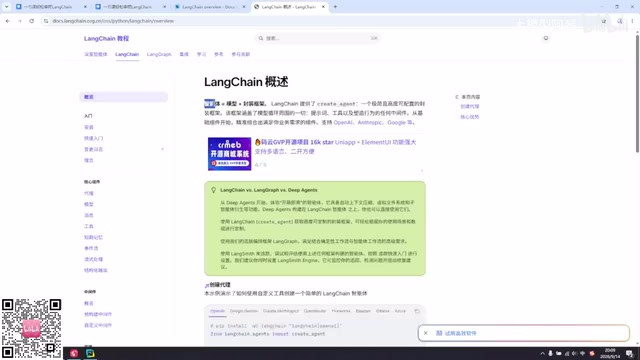
LangChain for Beginners: Core Concepts and Three Major Application Scenarios Explained
A beginner's guide to LangChain: what it is, the agent formula, three core application scenarios (internet queries, external data access, context management), core components, plus learning tips and official documentation usage advice.
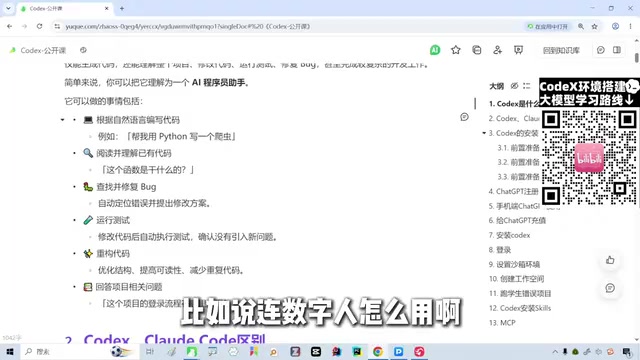
Codex Full Workflow in Practice: From Installation to Skills and MCP Calls
A Bilibili tutorial details the full workflow of OpenAI Codex from environment installation to Skills and MCP calls, compares it with Claude Code, and analyzes how AI coding assistants are becoming a hard job requirement—suitable for beginners to quickly get started.

Python + AI Reverse Engineering from Zero: A Full Breakdown of Bilibili's 300-Episode Course
A breakdown of Bilibili's 300-episode Python + AI reverse engineering beginner course, covering Python syntax, scraping principles, JS encryption parameter location, AI-assisted unpacking, and an assessment of the course structure and learning value for scraping and reverse engineering beginners.