#AI编程
9352 related articles

Cognition Reshapes AI Software Engineering with Devin and Windsurf
Cognition builds both Devin, an AI software engineer, and Windsurf IDE, covering autonomous agents and interactive coding. Silas Alberti, Senior VP of Research, will share at a tech event; this article analyzes the dual-product strategy and industry context.

Windsurf's $3B Sale Fell Through, and It Ended Up with Devin
OpenAI's $3B bid for Windsurf fell through; Google paid $2.4B for its CEO and tech license, while the remaining product was folded into Cognition and renamed Devin Desktop.

Claude Code for Beginners: Bypassing Account Bans and Practical Tips
Claude Code beginner's guide: install via NPM instead of PowerShell, use ccswitch to bypass account login and reduce ban risk, plus permission modes, prompt tips, and model selection advice.

Codex Practical Tutorial: AI Coding Agents from Beginner to Developer
An in-depth analysis of OpenAI Codex coding agent: how it fundamentally differs from ChatGPT, why developers should learn it, and a complete learning path from installation to agent development. Suitable for programmers looking to boost development efficiency.

LangGraph in Production: Seven Lessons from Service Splitting to Human-in-the-Loop
A developer shares core lessons from parts 2–7 of a LangGraph production series: service boundaries, cross-language contracts, idempotent tools, subgraph multi-agent orchestration, and the most hidden human-review failure mode.

AI Penetration Testing Learning Roadmap Explained: From WorkBuddy Deployment to SRC Vulnerability Discovery
A four-stage AI penetration testing learning roadmap from a Bilibili tutorial, covering WorkBuddy deployment, AI-assisted Web vulnerability discovery, Kali tool invocation and POC verification, and SRC platform practice, analyzing the new paths and limits of security testing in the AI era.

Andrew Ng's New Logic for Learning Python from Scratch in the AI Era
Andrew Ng explains in his Bilibili Python beginner course: why should everyone learn a little programming in the generative AI era? From chatbot training partners to efficiency levers for knowledge workers, this article breaks down the core logic and learning methods of this 35-lesson course.

OmniDiff: An Open-Source Content-Aware Git Diff Tool Built in Rust
OmniDiff is an open-source, fast, content-aware Git diff tool written in Rust, supporting code, images, PDFs, and more with excellent performance and built on real diff data.
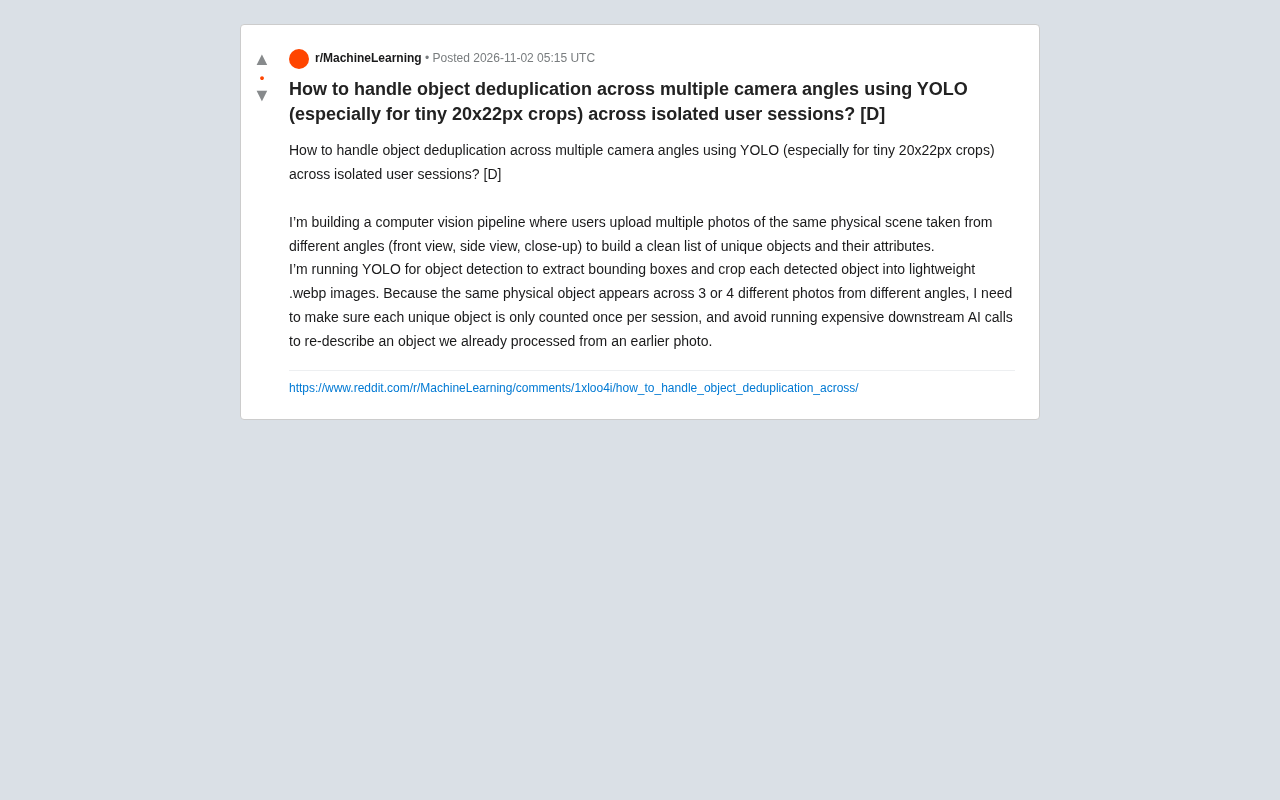
YOLO Multi-Angle Object Deduplication: A Cross-Session Approach for 20x22px Small Targets
Addressing YOLO multi-angle object deduplication, this analyzes matching strategies for 20x22px small-target crops under session isolation, proposing a hierarchical deduplication architecture and cost control plan.

What Does Claude Code Actually Read When It Opens a Web Page?
When Claude Code opens a web page, it reads the entire text-converted content rather than clean article text. A Reddit discussion reveals its actual reading mechanism and shares a practical hook-based solution to trim redundant content and save tokens.

DQN for Beginners: Concepts, Code, and Math Explained
From concepts to code and math, this article breaks down DQN (Deep Q-Network) core ideas. Based on a popular Reddit note, it covers experience replay, target networks, Bellman equation, and loss functions—ideal for RL beginners.

qwenGPU: Compiling a SIMT GPU Into the 45 Weight Layers of Qwen3.5-2B
qwenGPU compiles a 4-lane SIMT GPU into 45 untrained weight layers of Qwen3.5-2B, using Gated DeltaNet state as registers and memory as the model writes each real CUDA launch step.

Doing a PhD in the AI Era vs. Pre-AI Era: How ML PhDs Choose
Reddit debate: would ML PhD students rather do their PhD before or after ChatGPT? The discussion reveals how AI tools change research efficiency and depth, and the balance between tool reliance and independent thinking.

Godot MCP in Practice: Building an AI Game Development Environment from Scratch
A detailed guide to building an AI game development environment with Godot MCP: set up the MCP server, configure multiple servers in VSCode, let the Agent create directories automatically and run Hello Agent, plus Git checkpoint rollback and troubleshooting for common errors, with a complete self-check checklist.
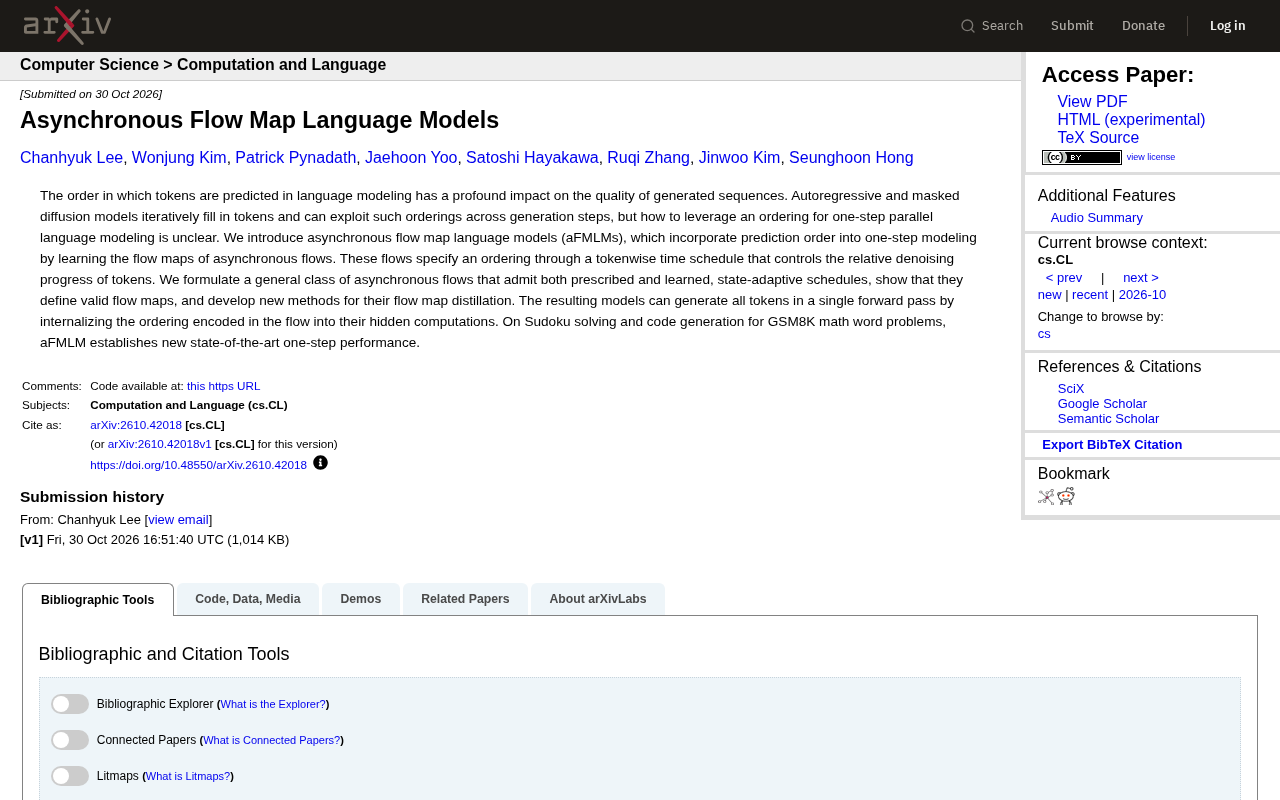
Asynchronous Flow-Map Language Models: A New Paradigm for One-Step Generation
Introducing Asynchronous Flow-Map Language Models (aFMLMs): tokenwise schedules define asynchronous flows, and flow-map distillation internalizes prediction order into one-step parallel generation, achieving new state-of-the-art one-step performance on Sudoku solving and GSM8K code generation.
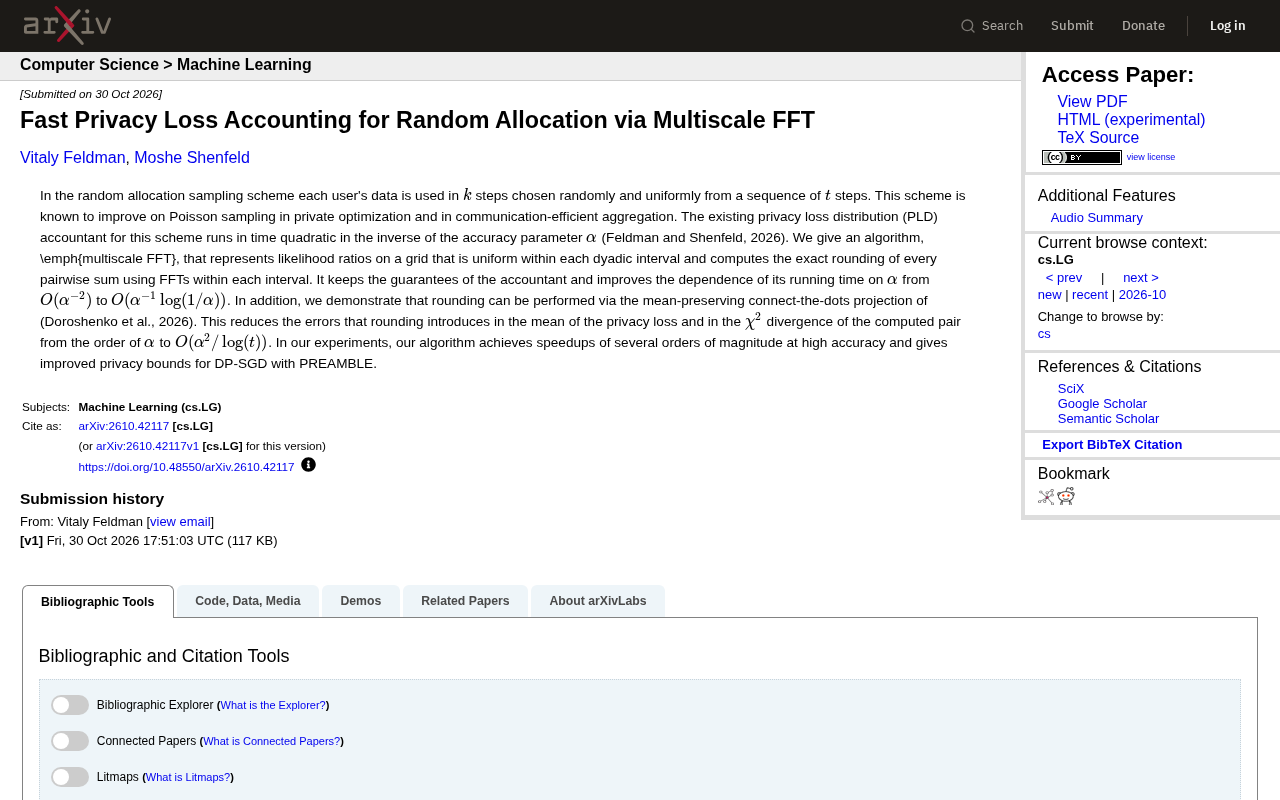
Multi-scale FFT Accelerates Privacy Loss Accounting for Random Allocation Sampling
The multi-scale FFT algorithm reduces the time complexity of privacy loss accounting for random allocation sampling from O(α^{-2}) to O(α^{-1}log(1/α)), achieving order-of-magnitude speedups at high accuracy and improving DP-SGD privacy bounds.

Gradient Descent on Two ReLU Neurons: Global Landscape and Bifurcation Dynamics
This article interprets the global loss landscape and bifurcation dynamics of gradient descent in a two-neuron ReLU teacher-student model, showing that all nonzero-weight critical points are global minima or saddle points and that gradient flow undergoes collapse, escape, and specialization stages.

Oh My Pi (omp): The Enhanced Fork of the Pi Coding Agent and Its Model Roles Explained
Oh My Pi (omp) is an enhanced fork of the Pi coding agent with built-in model roles, an Advisor mechanism, and fallback chains. This article explains its model scheduling design, stability considerations, and usage caveats.
AI Writes More Code, But System Design Is Still an Engineer's Job
Hacker News debate: AI writes more code, but system design still needs engineers. We analyze the real difference between coding and software engineering, why engineering judgment can't be replaced, and how AI coding affects team collaboration and review.
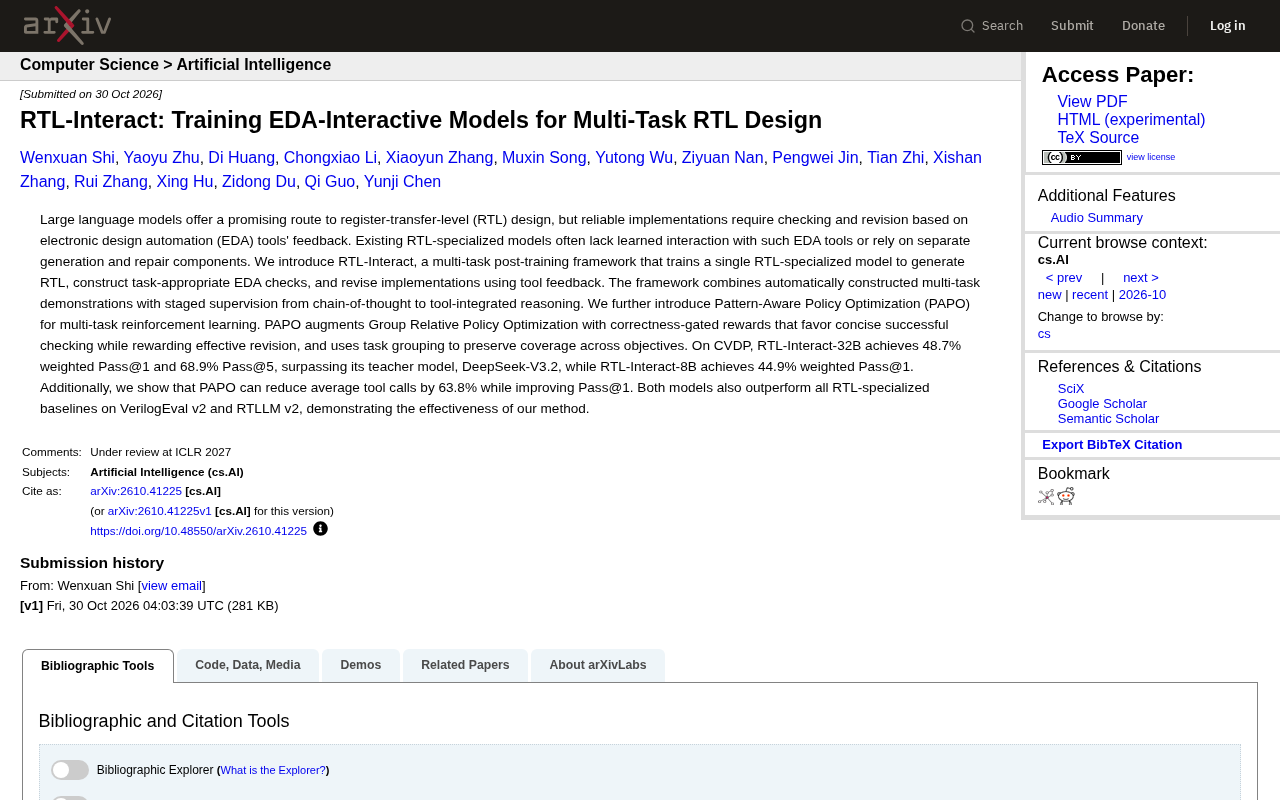
RTL-Interact: Teaching LLMs to Design Chips by Interacting with EDA Tools
RTL-Interact proposes a multi-task post-training framework that trains a single RTL-specific model to complete the generation, EDA checking, and revision loop, and introduces PAPO reinforcement learning, surpassing the teacher model DeepSeek-V3.2 on CVDP while reducing tool calls by 63.8%.