#AI编程
9366 related articles

n8n: The 187K-Star Open-Source Automation Powerhouse That Turns Repetitive Work into Workflows
n8n is a 187K-star open-source visual workflow automation engine with 400+ nodes, Webhook/schedule/polling triggers, self-hosting for data security, and AI Agent support. Here's a guide to its core concepts, use cases, and pitfalls.

Build a Real Estate Listing Presentation with ChatGPT in 12 Minutes
Break down a 12-minute ChatGPT workflow for generating a four-page listing presentation: agent brief, value proposition, marketing plan, communication protocol, pricing framework, and UK/US/Canada/Australia compliance rules.

Building an MCP Server from Scratch: Making AI Agents Controllable and Extensible
What is MCP and how does it connect with AI agents? Based on a technical seminar, this article covers MCP core concepts, agent interface mechanisms, solution selection, and key decisions for building your own MCP server.

StackOverflow Monthly Questions Fall Below 1,000: Twilight of the Technical Q&A Community?
StackOverflow monthly questions fall below 1,000, sparking Hacker News debate. This article analyzes the rise of AI coding assistants, deteriorating community atmosphere, and migration of knowledge channels to explore the transformation challenges and future value of technical Q&A communities in the AI era.

Why Claude's "Boomer Thumbs Up" While Installing Kubuntu Is So Endearing
A Reddit user had Claude help install Kubuntu and was amused by Claude's "boomer thumbs up" encouraging tone. This article analyzes the human touch in AI assistants' technical collaboration and the role shift behind it.

Training LLaMa from Scratch: A Full Record of 11-Hour Training for a 125M Model
A developer trains a LLaMa model from scratch: manually implements RoPE, GQA, RMSNorm, SwiGLU, and KV cache, training a 125M model in 11 hours on dual A5000 GPUs.
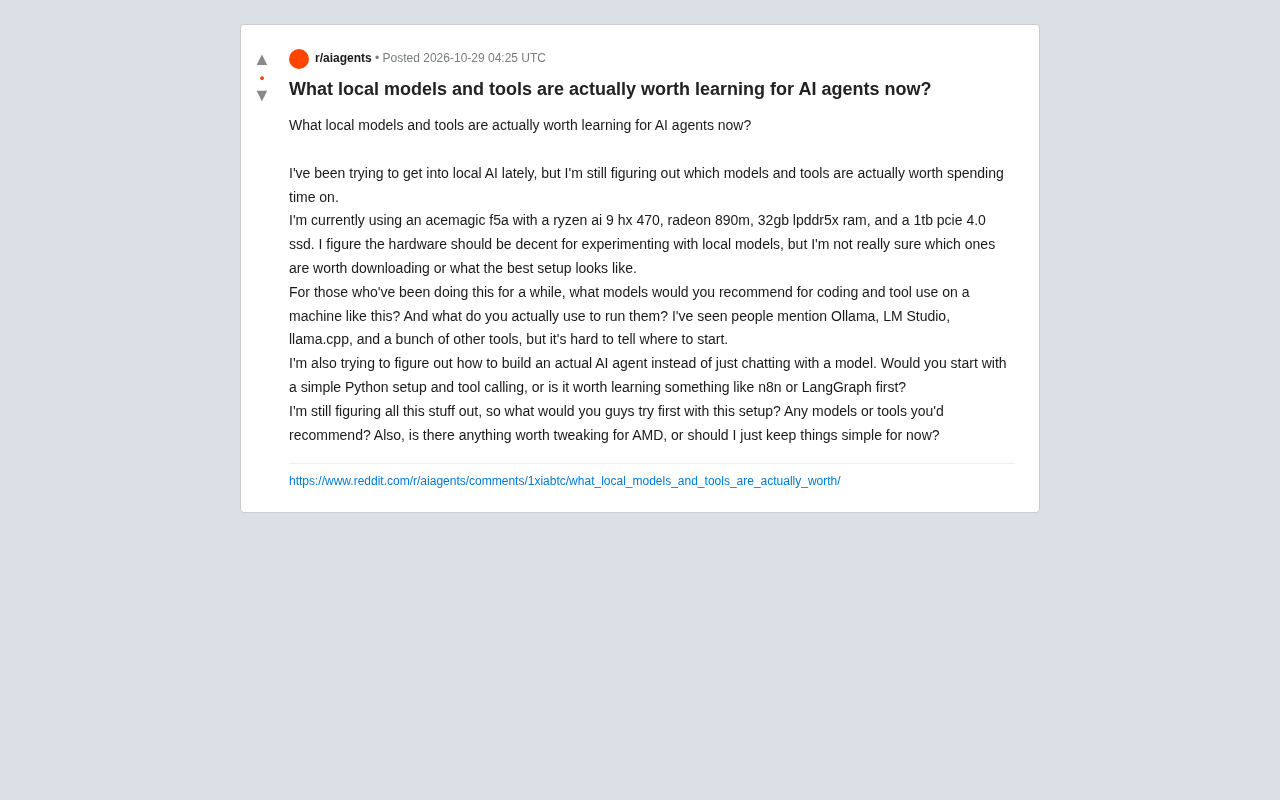
Getting Started with Local AI Agents: How to Choose Models and Tools
A beginner's guide to local AI agents: how to choose coding and tool-calling models on integrated GPU platforms, which scenarios suit Ollama, LM Studio, and llama.cpp, and the learning path from hand-writing tool-calling loops in Python to frameworks like n8n and LangGraph, with AMD tuning tips.
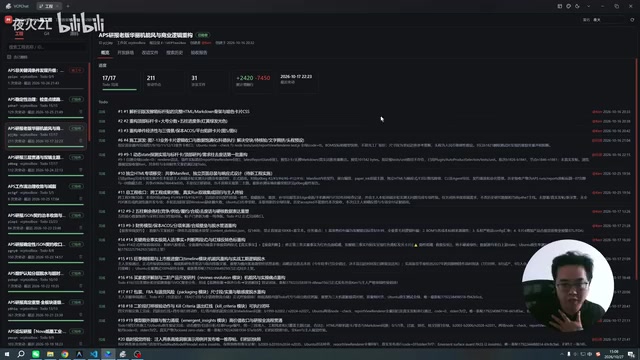
VCP V-Project Hands-On: 95% Token Cache Hit Rate, AI-Controlling-AI Spiral Programming
VCP V-Project hands-on: over 95% token cache hit rate in single-turn chats, AI-controlling-AI spiral programming with a master Agent planning and a worker Agent coding—fully hands-off once planned. Full setup steps and limitations included.
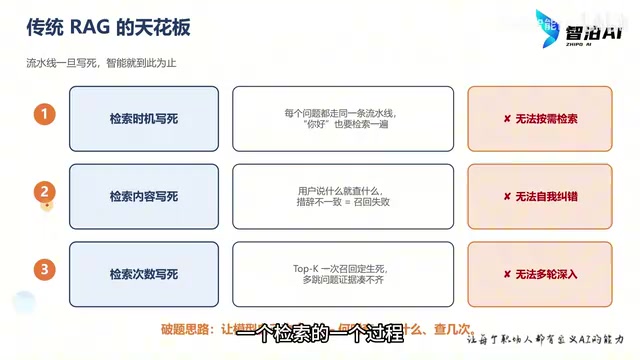
Agentic RAG in Practice: From Principles to Code, Building an Intelligent Retrieval System Step by Step
Traditional RAG hard-codes retrieval timing, content, and count, causing irrelevant answers. This article, based on a Bilibili tutorial, breaks down Agentic RAG principles: wrapping retrieval as tools for LLM autonomous decision-making, with four-tool design and complete code implementation to build a self-correcting, multi-hop intelligent retrieval system step by step.
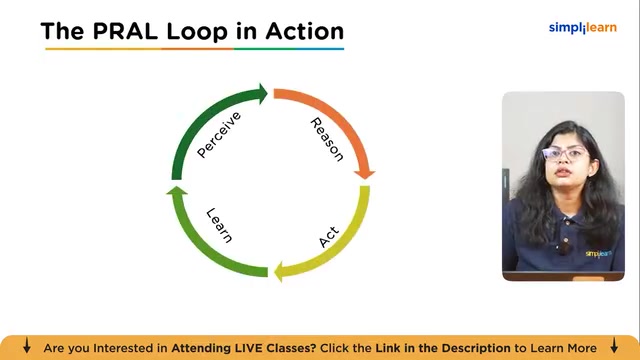
Understand Agentic AI in 1 Hour: Architecture, Design Patterns, and Hands-On Building
A breakdown of Simplilearn's Agentic AI crash course: the three-layer agent architecture (perception, cognition, action), single-agent vs. multi-agent comparison, the perceive-reason-act-learn loop, three design patterns, and hands-on demos of research agents, app building, and feedback repair loops.
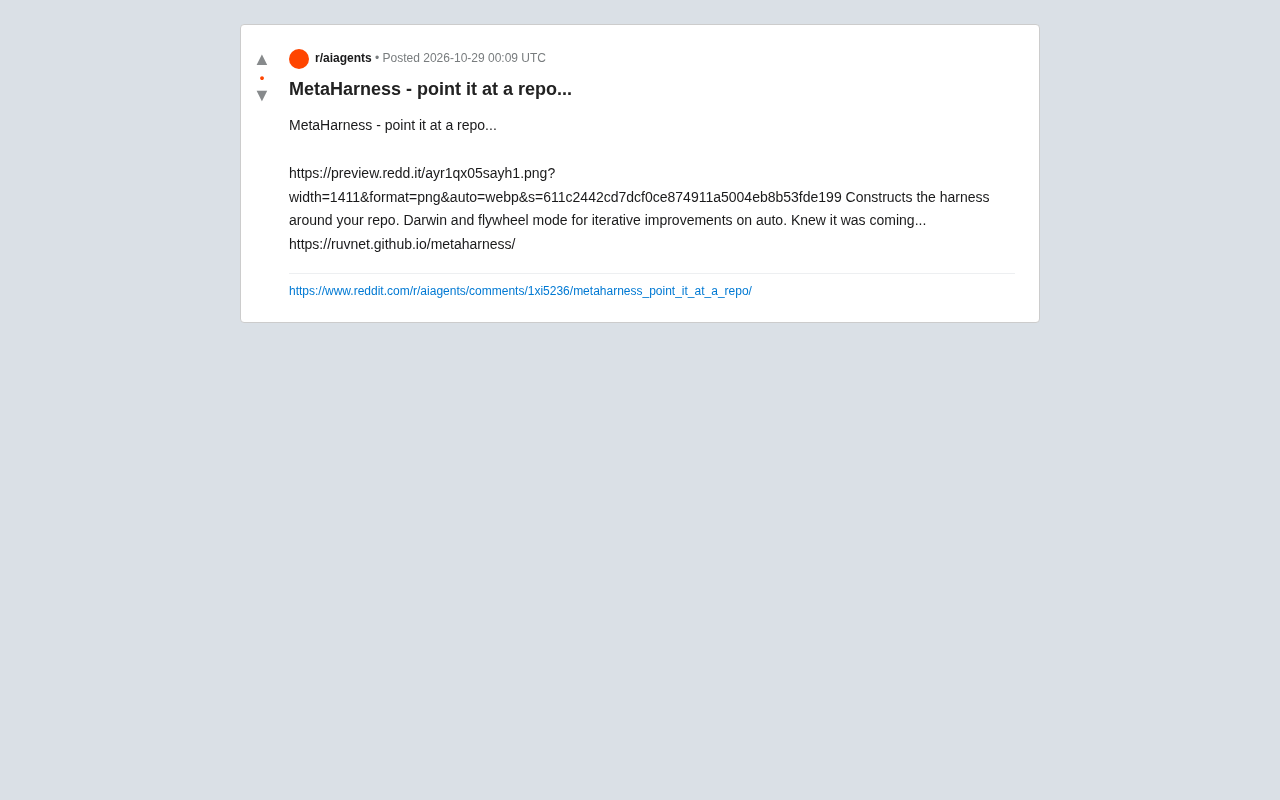
MetaHarness: Automatically Building AI Test Frameworks for Code Repositories
MetaHarness is an open-source tool that automatically builds harnesses around code repositories, with Darwin and Flywheel iteration modes. Here's a look at its capabilities, use cases, and risks.

Claude Code Burns 15% of Its Tokens Every Turn Just to Display Three Words
A Hacker News discussion notes that Claude Code spends ~15–20% of its tokens on a three-word status line. This article analyzes how the status line is injected into context, its impact on cost and the context window, and how developers can audit token overhead.

Claude Code in Practice: Building a Zero-Code Clip Factory That Turns Long Videos into Vertical Shorts Automatically
Bilibili creator Wukong uses Claude Code to build a zero-code clip factory, automatically turning a 35-minute long video into 10 vertical shorts. Full workflow from Plan Mode, Whisper transcription, claude.md rules, hook QA to subagent review and plugin distribution, with real measured data.

Zero to One: Java + DeepSeek in Practice — A Programmer's Guide to Transitioning into AI Large Model Development
Based on a Bilibili livestream tutorial, this article explains how Java programmers can transition into AI large model development from zero, covering skill paths, building your first Java AI app, resume packaging, and job-hunting strategies to help you seize opportunities in the large model era.

Claude Code in China: A Practical Guide from Installation to Real-World Coding
A Bilibili live class explains Claude Code in China: installation and integration, built-in commands, MCP configuration, SQL skills, and the DRMD file, plus a stable login workaround to avoid account bans and help developers avoid pitfalls.

Claude Code Setup and Practical Guide for Users in China: Bypassing Bans and Full MCP Integration Explained
A Bilibili livestream class explains Claude Code use in China: from installation and integration to MCP tool configuration, SQL skills, and built-in commands, plus causes of account bans and login-bypass ideas, with a six-module learning roadmap.
ChatGPT Pro and Business Subscriptions Now Include API Credits, Enabling Direct Development in Codex
OpenAI gives ChatGPT Pro and Business subscribers monthly API credits usable across the OpenAI platform. With the OpenAI Developers plugin in Codex, users can link API organizations, create dedicated keys, and dictate API integrations—greatly lowering the barrier to development experimentation.
 Tech Frontiers
The Ultimate Guide to Claude Models and Effort: How to Save Tokens
Based on 8 Claude model and Effort combinations and 4 real coding tasks, this breaks down Haiku, Sonnet, Opus, and Fable positioning and pricing, analyzes Effort's impact on token consumption, and offers practical token-saving configurations.
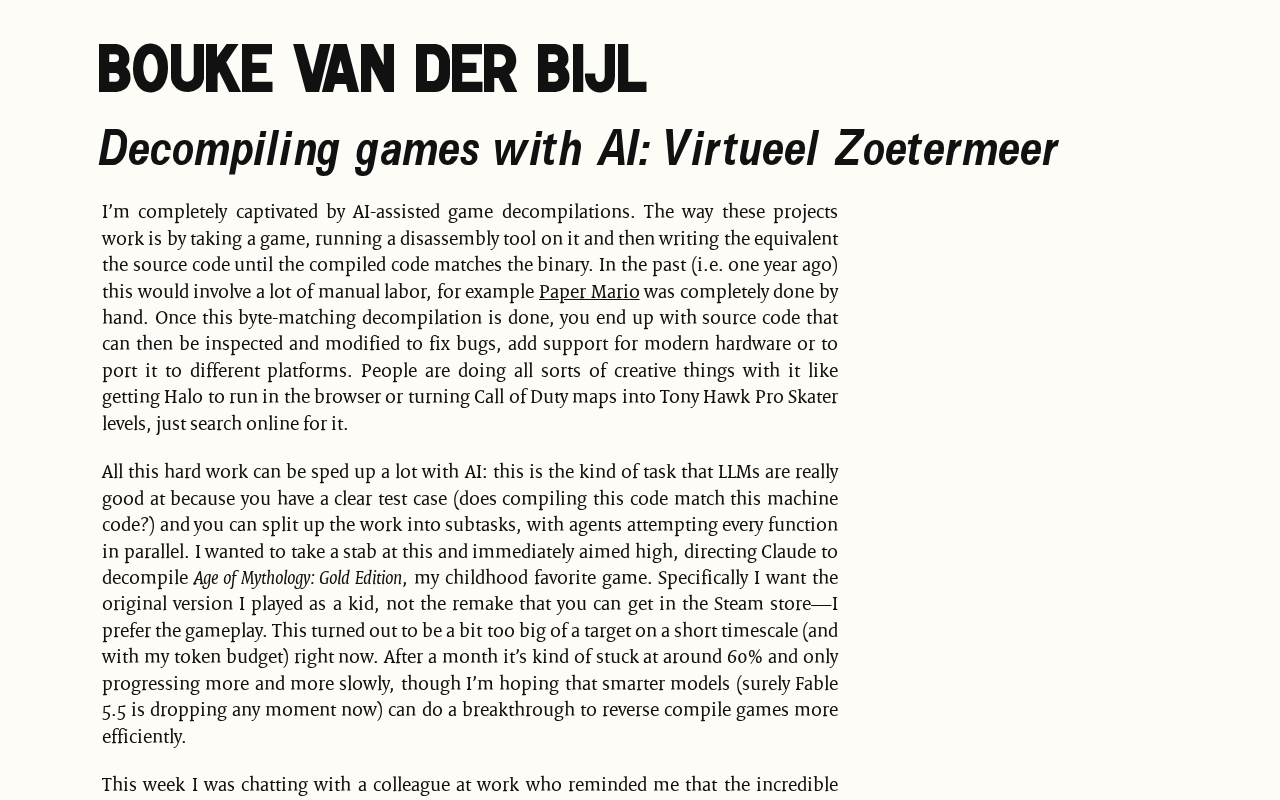
AI-Powered Game Reverse Engineering: The Virtueel Zoetermeer Decompilation Experiment
How does AI assist game decompilation? This article examines the Virtueel Zoetermeer project on Hacker News, analyzing AI's role in reverse engineering, technical approaches, and developer implications for game preservation and legacy systems.

AI Gateway Launches Virtual Models: Centralized Model Configuration Without Redeployment
AI Gateway launches Virtual Models, using custom model IDs to centrally manage model selection and parameters, with agent setting injection, provider routing, ZDR compliance, and cost attribution—no redeployment needed.