#AI编程
9454 related articles
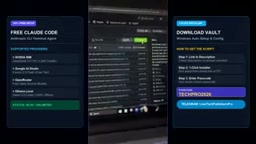
Run Claude Code for Free: DeepSeek V3 & Gemini API Integration Guide
Learn to use a one-click Windows installer to switch Claude Code's backend to DeepSeek V3, Gemini, or free OpenRouter APIs—zero-cost terminal AI coding, with full setup and limitations.
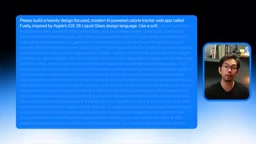
Getting Started with Gemini 4 Argonne: A Hands-On Guide from Building Sites to Agents
Complete Gemini 4 Argonne tutorial: build a calorie tracker app with one prompt in Google AI Studio, review 10-page technical documents with long context, develop a browser game as a coding Agent in Anti-Gravity, plus API Key setup, pricing, and subscription requirements.

Cursor vs. Claude Code vs. Copilot: A Scenario-Based Selection Guide
Cursor, Claude Code, or GitHub Copilot? A scenario-based guide covering daily coding, large refactors and long tasks, and teams locked into existing IDEs—plus common pitfalls and combined-use advice.
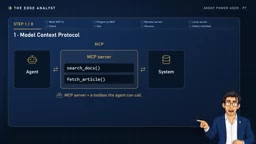
MCP Protocol Explained: The Universal Plugin for AI Agents and a Secure Installation Guide
What is MCP (Model Context Protocol)? This article explains how MCP lets AI agents connect to external tools, distinguishes remote and local servers, demonstrates installing, verifying, and removing MCP servers in Codex, and offers five security questions to ask before installing third-party servers plus a prompt injection risk warning.

Using AI Agents to Automatically Find the Best Meeting Time for Your Team
Follow the Outlook Assistant tutorial's second installment: use an AI Agent to find the best 30-minute slot for a six-person team with scoring rules, Codex tools, heat maps, and drafts.

Same Price, Different Bill: AI Agent Billing Traps and Cost-Saving Routing Strategies
With the same per-token price, AI Agent bills can differ by 10x. This article breaks down three billing traps—reasoning effort, the context cliff, and cache invalidation—and offers actionable cost-control solutions: routing models by step, logging four-bucket telemetry, and compression guards.

Use Claude Code CLI for Free: One-Click Windows Installation Tutorial
A YouTube Short shows how to install Claude Code CLI for free on Windows in one click. We break down the steps, the free-access mechanism, privacy/security risks of third-party relays, and safer alternatives.

Building AI Agents with Python and the Claude API: Tool Use and MCP in Practice
A hands-on Python AI Agent tutorial with the Claude API: from basic messages.create calls to Tool Use, Agent Loop implementation, the MCP open standard, the Claude Agent SDK, and security best practices.

AI Agents Aren't Chat Boxes: Breaking Down the Plan-Tool-Read-Decide Loop
An AI Agent isn't a smarter chatbot but a four-step loop: plan, call tools, read results, decide. This breakdown uses an 18KB file task to explain the mechanism, compares Claude Code, Codex, and ChatGPT tool calling, and summarizes traps like infinite tool loops and blind trust in tool output, plus five convergence practices.

AI Agents Are Not ChatGPT: Three Core Differences and a No-Code Hands-On Demo
How is an AI Agent different from ChatGPT? Based on a YouTube demo, this article explains the three core capabilities of AI Agents—using tools, running on a schedule, and autonomous decision-making—and showcases a no-code, zero-cost job-monitoring Agent case study.

Claude Max Gives You $100 in Free API Credits Every Month — Here's How to Use It
Claude Max subscribers get $100 in API credits monthly. Learn the rules, activation steps, usage limits, and four low-cost product validation ideas.
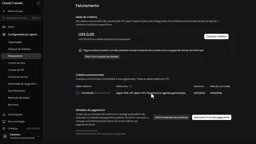
Claude Max Members Now Get $100–200/Month in API Credits: Usage Guide and Limitations Explained
Claude Max subscribers now get $100–200/month in API credits covering API, Playground, and Agent SDK but not Claude Code. Here's how to claim them and use them well.

Claude Agent SDK vs Claude Code: Same Engine Showdown — Which Is Faster?
A developer pits a 55-line JavaScript agent against Claude Code on the same model and repo: the go-kart finishes in 53 seconds using one-tenth the tokens. Here's how the Agent SDK and Claude Code relate, and when to use each.

Gemini CLI's Seven Key Features: A Million-Token Open-Source Terminal AI Agent
What is Gemini CLI? Discover its seven key features: Apache 2.0 open source and free, 1M token context, MCP integration, GEMINI.md configuration, slash commands, and Google Search grounding, plus getting-started advice.

Google Gemini CLI Installation Guide: Get Started in Three npm Steps
Complete Google Gemini CLI installation guide: confirm Node.js, install @google/gemini-cli globally via npm, reopen terminal to verify, log in with a Google account or API Key, and learn the .gemini config directory and common commands.

We Tested 5 AI Coding Assistants: Only Two Were Worth Keeping
We tested five AI coding assistants on one real codebase task: Cursor wins with multi-file editing at $20/month, Claude Code stands out with terminal agents and self-repairing tests, while Copilot, Devon Desktop, and Replit Agent lose out due to opaque billing.

What Is Devin Actually Doing When It Codes? Analyzing the Boundaries of AI Agent Capabilities
Devin promises to go from writing code to doing work, but behind its high SWE-bench scores, vague requirements, broken tests, and legacy code in real projects still make its output dependent on human review. This article analyzes the boundaries of AI agent capabilities and their impact on junior developers' work.

Claude Agent Tool Integration Guide: Custom Tools, MCP, and Subagents
An in-depth look at Claude agent tool integration: custom tool definitions, MCP server access, tool search, and subagent budget control for production-grade agent systems.

How MCP Makes Wi-Fi AI Agents Practical: From the Plumber Analogy to a 15-Minute Build
A WLPC Prague 2026 talk breakdown: how MCP lets AI agents connect to Wi-Fi networks, the full 15-minute process for building your first MCP server, and the four hard rules for tool design—read-only by default, credential isolation, and audit logging.

RIA: Let AI Agents Automatically Reverse Engineer Any Application
RIA is an MCP Server that lets AI Agents automatically reverse engineer native binaries, Electron, .NET, Go/Rust, and Unity apps — no source code needed. Works with Claude Code and Cursor, runs locally, and every conclusion comes with an evidence chain.