#Kubernetes
21 related articles

Radar: Giving AI Agents a Kubernetes Cluster Radar
Radar is an open-source tool that provides Kubernetes cluster context via MCP to AI Agents like Claude Code, Codex, and Cursor—including prioritized issues, change timelines, logs, ownership, and read-only root cause investigation.
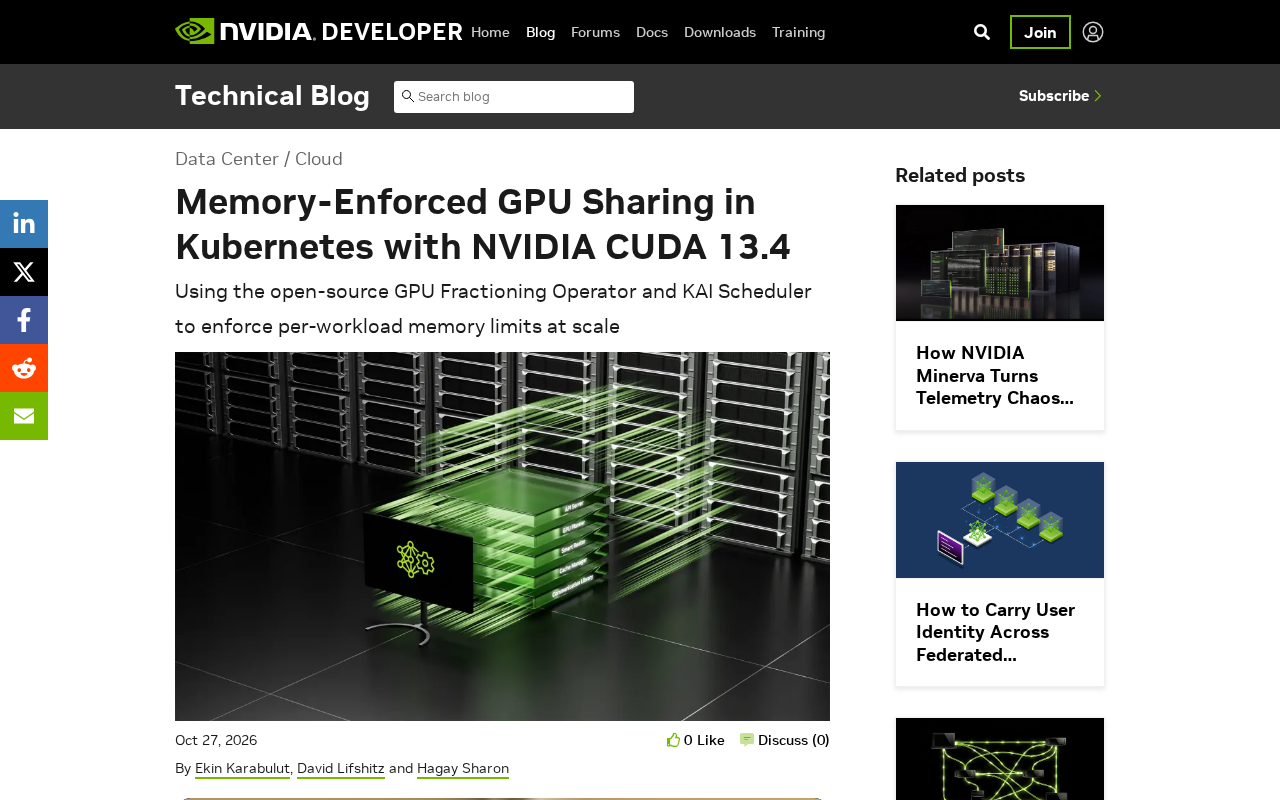
CUDA 13.4 Memory Enforcement: A New Solution for Kubernetes GPU Sharing
NVIDIA CUDA 13.4 introduces memory enforcement, moving Kubernetes GPU sharing from scheduling conventions to runtime hard constraints. This article analyzes how it works with the K8s resource model, applicable scenarios, and quota granularity and compute contention issues during implementation.
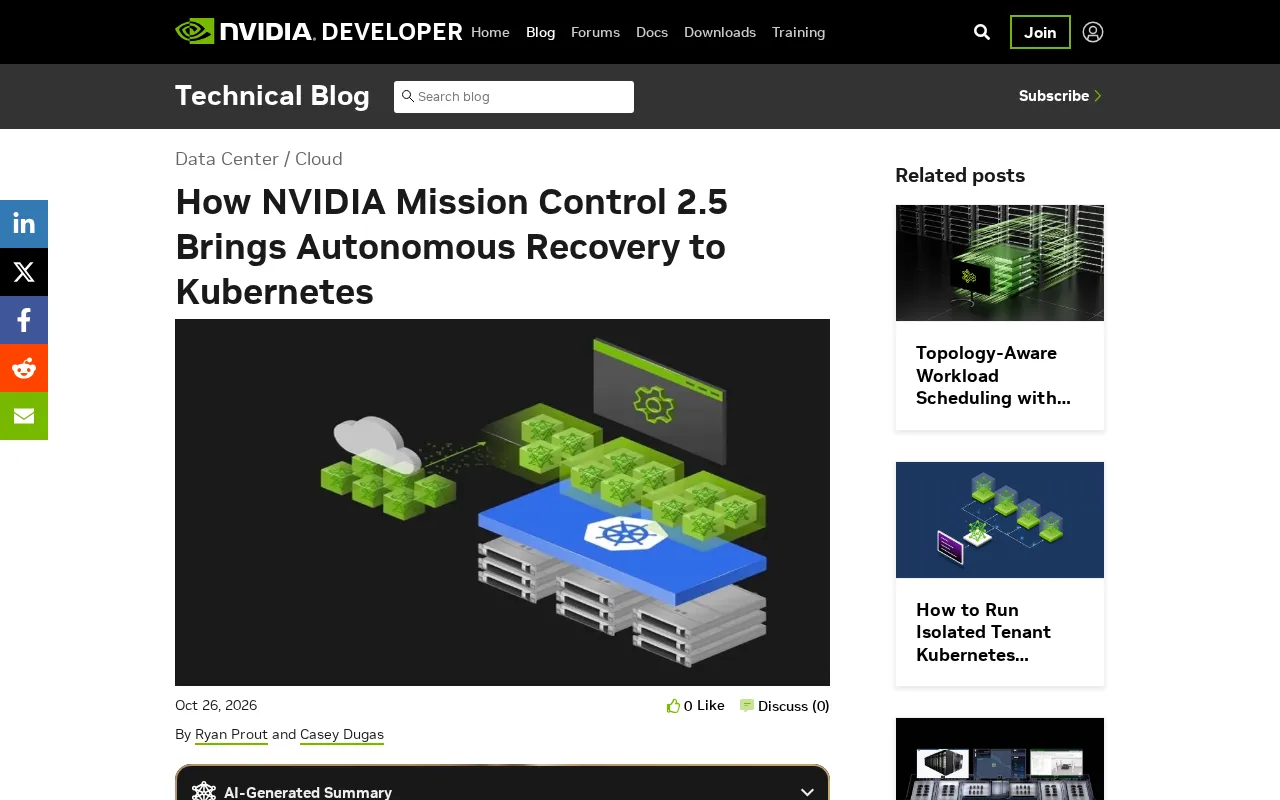
NVIDIA Mission Control 2.5: New Advances in Kubernetes Autonomous Recovery
NVIDIA Mission Control 2.5 brings autonomous recovery to Kubernetes for large-scale GPU training clusters, automating failure detection, diagnosis, and remediation to reduce manual operations.
llm-d 1.0 Released: Cache-Aware Routing Unifies TPU and GPU Inference
Google, Red Hat, and IBM jointly release llm-d 1.0, a Kubernetes-native distributed LLM inference stack adding cache-aware routing, multi-tenant flow control, zero-downtime upgrades, and Agent-aware routing, with unified support for vLLM, SGLang, and TPU/GPU heterogeneous clusters.

NVIDIA Open-Sources Run:ai: Kubernetes GPU Scheduling Enters the Apache 2.0 Era
NVIDIA open-sources the full Run:ai GPU orchestration platform under Apache 2.0, including KAI Scheduler, CUDA 13.4 GPU fractioning, quota management, and a local Kind dev environment. This article analyzes the impact on Kubernetes GPU scheduling, utilization, and enterprise adoption.
NVIDIA Dynamo on Kubernetes: Understand AI Inference Deployment in 5 Minutes
How does NVIDIA Dynamo deploy AI inference on Kubernetes? This article breaks down the Dynamo Operator pattern, the DGDR and DGD deployment paths, the OpenAI-compatible request chain, and a five-step practical workflow to help teams smoothly migrate from single-model servers to Kubernetes-native inference.
AI Agent Orchestration Arms Race: Building Blast-Radius-Aware Code Review on Kubernetes
Multi-agent orchestration is becoming the mainstream architecture for AI code review, but blast-radius risks like runaway loops and dependency hijacking follow. This article breaks down a Kubernetes-based blast-radius-aware architecture: a three-layer orchestration model, ResourceQuota and SecurityContext sandboxes, a custom Operator in practice, and multi-agent collaboration with human-in-the-loop guardrails.

Application Security in the AI Era: Every Request Has a Cost, a Three-Layer Defense in Practice
In the AI era, about one in eight edge requests is a malicious scan or bot. Based on real traffic data, this article details a three-layer defense spanning edge WAF, load balancer, and Kubernetes Tetragon, plus AI agent tuning.
Ray LLM Containers: Deploying Large Models Across GPU Nodes on EKS
Learn how to deploy an LLM across two GPU nodes on Amazon EKS using Ray LLM Deep Learning Containers, with separated prefill and decode nodes and a single OpenAI-compatible endpoint.
AI SRE Arena: An Open-Source Benchmark for Evaluating Kubernetes AI Ops Agents
AI SRE Arena is an open-source benchmark for Kubernetes AI ops agents, measuring real-world fault diagnosis and remediation performance. Learn about its design and significance for AIOps.
From Ollama to vLLM: Deploying a Production-Grade AI Agent on Kubernetes
How to move a local AI Agent to production: swapping Ollama for vLLM, containerizing, and deploying to OpenShift/Kubernetes — including tool call validation and what production-readiness actually requires.

AICR v1.0 Released: An Open, Verifiable GPU Cluster Configuration Reference
NVIDIA's AICR v1.0 delivers an open, stable, and verifiable GPU cluster configuration reference for Kubernetes, solving version compatibility challenges across kernels, drivers, CUDA, and more.
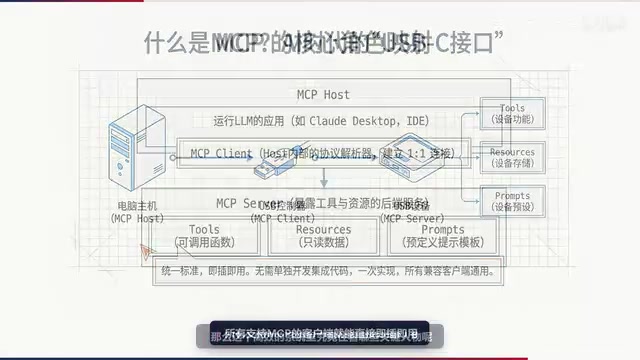
MCP from Zero to One: A Complete Guide to Building Production-Grade MCP Servers
From local test scripts to production-grade MCP servers: a full guide covering MCP architecture, Streamable HTTP, stateless design, Docker, Nginx, and Kubernetes.

When an AI Agent Truly Controls Your Homelab: Lessons and Risks from a K3s Experiment
A developer connected a local Qwen Agent to a K3s homelab via MCP with full write permissions. This experiment log reveals the real risks and lessons of giving AI agents true system access.

3D-Printed Rack + 3-Node Proxmox: A Deep Dive into a Second-Hand Homelab
A Reddit user's two-year homelab build: 3D-printed rack, 3-node Proxmox cluster, UniFi VLANs, and a full GitOps Kubernetes stack with Talos, Terraform, and ArgoCD.
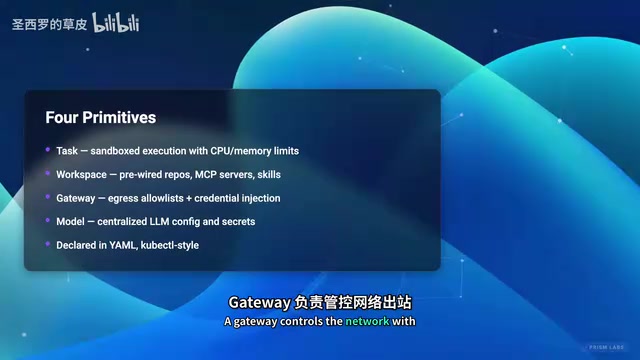
Google Open-Sources AX: The Kubernetes for AI Agents
Google open-sources AX (Agent Executor), an AI agent runtime built for billion-scale concurrent sessions with sub-second crash recovery via kernel snapshots. Explore its four declarative primitives and Agent Substrate architecture.
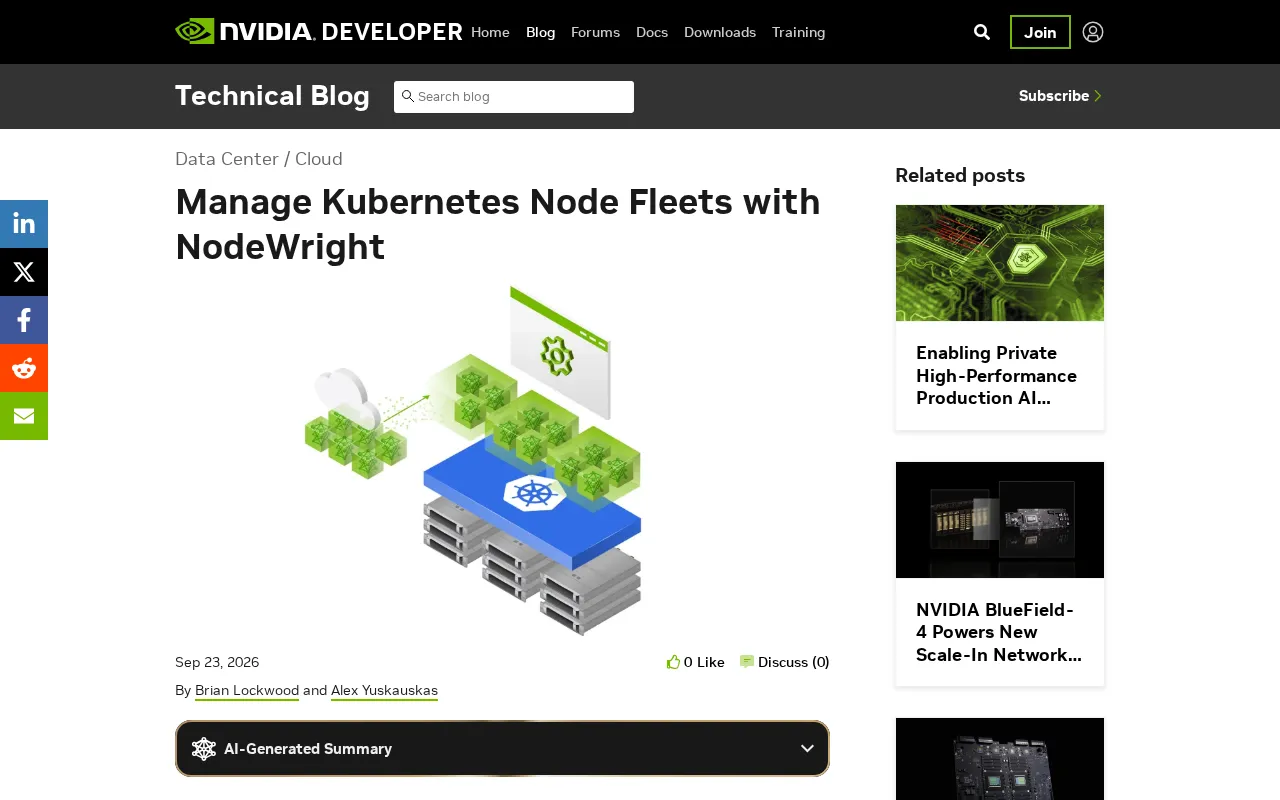
NodeWright: Solving the Kubernetes Node Cluster Management Problem
NVIDIA's NodeWright brings Kubernetes node configuration — kernel params, packages, storage, and security — into a declarative framework, solving GPU cluster drift at scale.
 Industry Insights
NVIDIA Dynamo Snapshot: A Snapshot Recovery Solution for GPU Inference Cold Start Problems
Deep dive into how NVIDIA Dynamo Snapshot reduces LLM inference cold start time from minutes to seconds via GPU state snapshot and recovery, covering Kubernetes integration and elastic inference.
 Tutorials
ACPX in Practice: Scaling AI Agent Deployment on Kubernetes for Automated PR Processing
How to build an automated PR processing system using ACP protocol, ACPX workflow engine, and Kubernetes. From OpenCLO's 60K+ PR challenge to enterprise-grade multi-Agent orchestration.
 Tutorials
Kubernetes Cluster GPU Monitoring in Practice: A Complete Solution for Real-Time Utilization Tracking
A detailed guide to real-time GPU utilization monitoring in Kubernetes clusters, covering NVIDIA DCGM, GPU Operator, and Prometheus deployment to maximize AI infrastructure ROI.