#NVIDIA
68 related articles
 Tech Frontiers
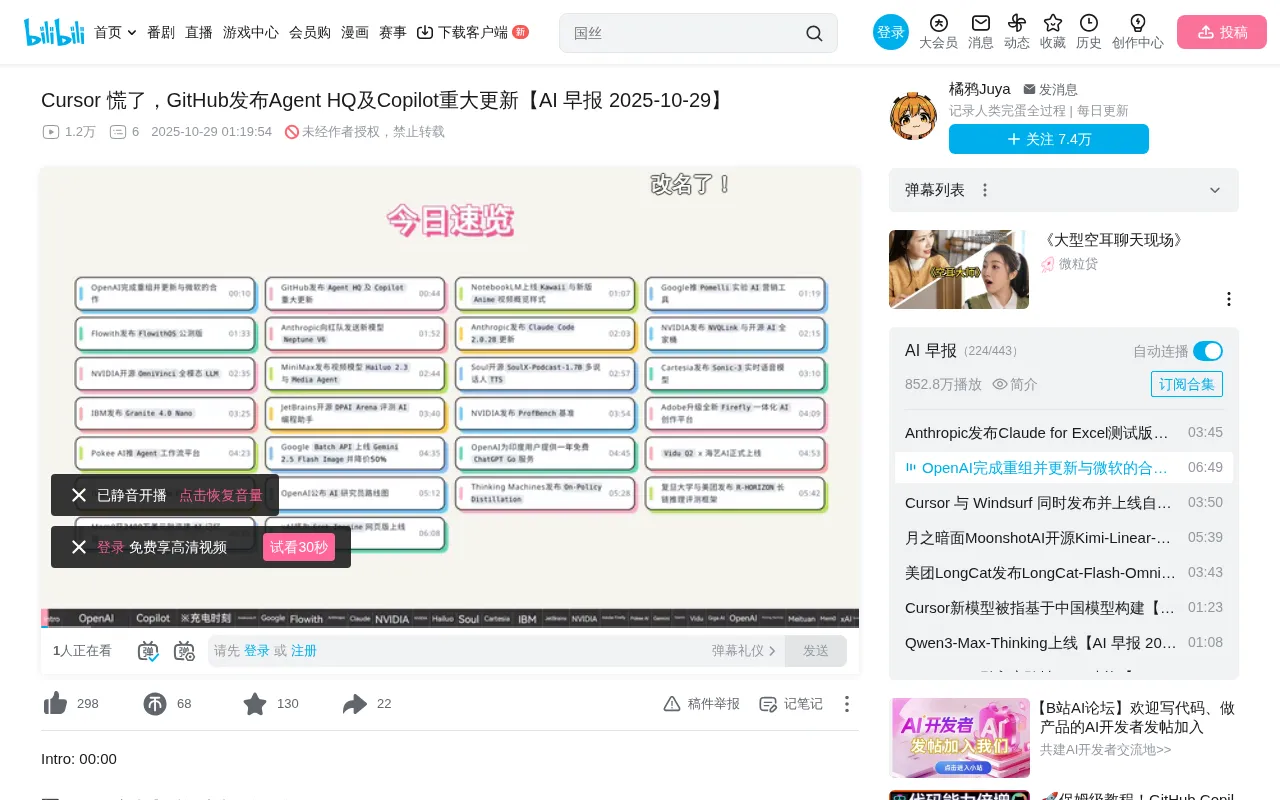
GitHub Agent HQ Launch: AI Coding Tools Enter the Era of Platform Competition
GitHub Universe unveils Agent HQ platform for unified coding agent management, Copilot upgrades with multi-model support. OpenAI completes restructuring, Anthropic tests new model, NVIDIA open-sources AI models.
 Tech Frontiers
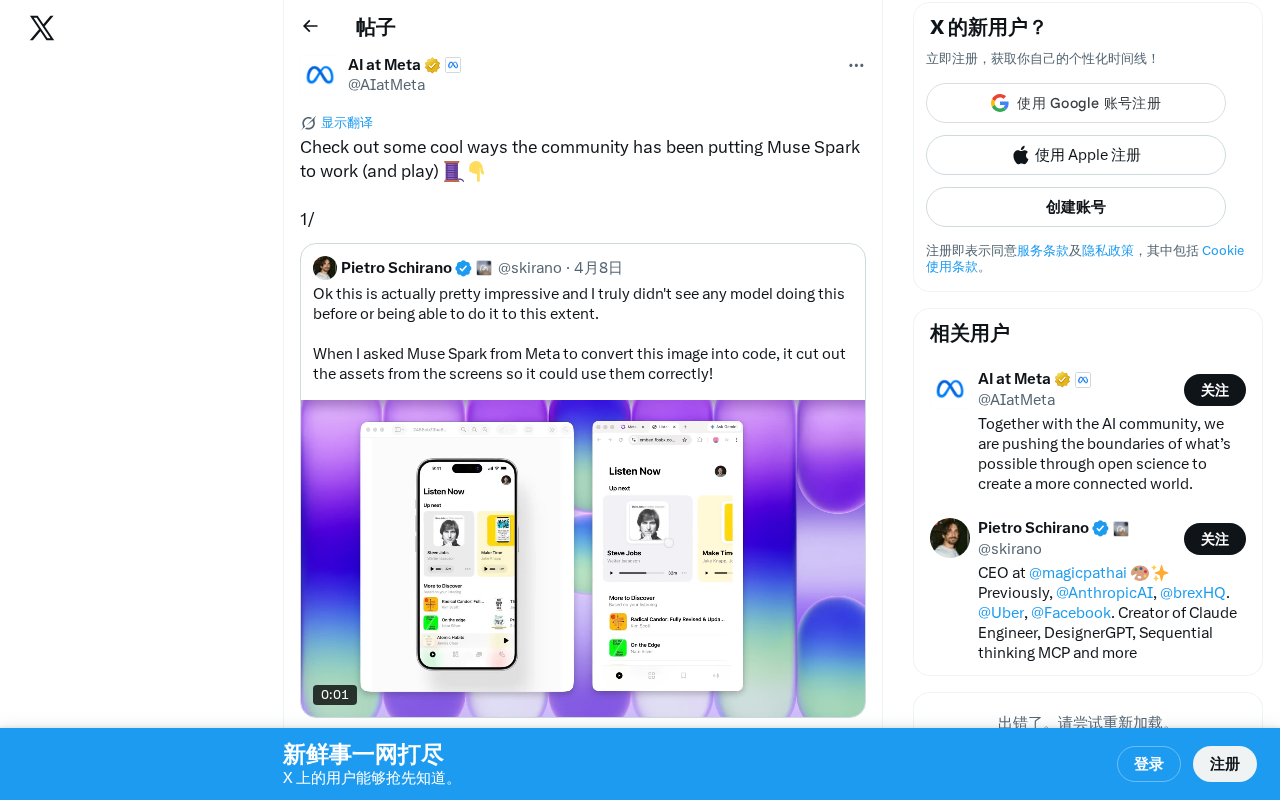
What is NVIDIA Muse Spark? A Complete Guide to Community Creative Uses and Application Scenarios
Explore NVIDIA Muse Spark's features as an AI creative tool, discover community users' creative applications in work and entertainment, and analyze AI creative tool ecosystem trends.
 Industry Insights
NVIDIA Dynamo Snapshot: A Snapshot Recovery Solution for GPU Inference Cold Start Problems
Deep dive into how NVIDIA Dynamo Snapshot reduces LLM inference cold start time from minutes to seconds via GPU state snapshot and recovery, covering Kubernetes integration and elastic inference.
 Industry Insights
NVIDIA Blackwell Sets New STAC-AI Records for Financial LLM Inference
NVIDIA Blackwell GPU sets new LLM inference records in STAC-AI financial benchmark. Explore Blackwell architecture advantages, TensorRT-LLM co-optimization, and LLM applications in trading and risk management.
 Industry Insights
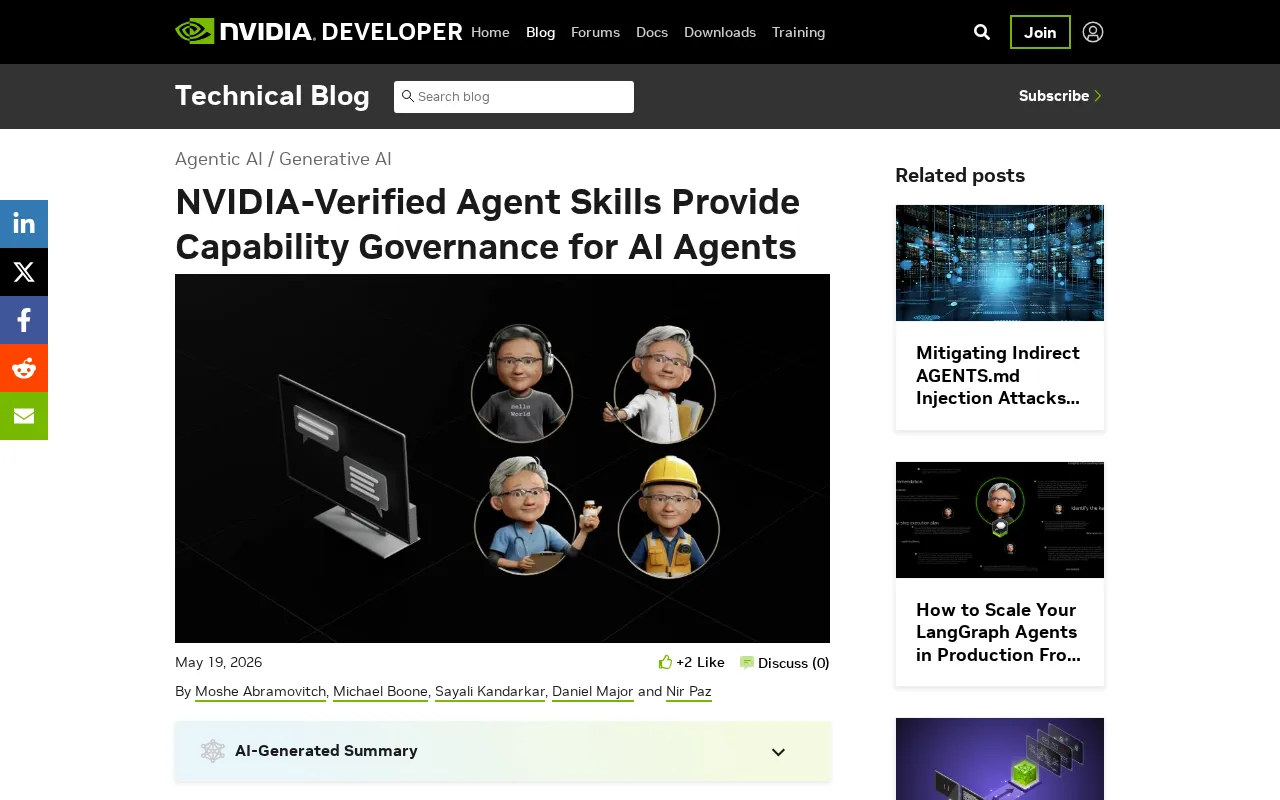
NVIDIA Verified Agent Skills Framework: A New Standard for AI Agent Capability Governance
NVIDIA releases its Verified Agent Skills framework, offering systematic capability governance for AI agents through skill certification, permission control, and MCP integration.
 Tutorials
NVIDIA Open-Sources AI-Q: A Skill Pack That Gives Coding Agents Deep Research Capabilities
NVIDIA open-sources AI-Q skill pack, giving coding Agents like Claude Code and Codex a four-stage deep research pipeline with MCP protocol, local deployment support, and 94% benchmark accuracy.
 Tutorials
MiniMax M2.7 Free Access Guide: Zero-Cost AI Coding via NVIDIA Endpoint + Kilo CLI
MiniMax M2.7 is now available on NVIDIA's free endpoint. 230B parameter MoE architecture with 204.8K context. Learn how to connect via Kilo CLI for zero-cost AI coding.
 Research
NVIDIA Synthetic 3D Medical Imaging: How AI-Generated Data Breaks the Training Bottleneck
NVIDIA's large-scale synthetic 3D medical imaging solution uses diffusion models to generate realistic CT/MRI data, solving data scarcity, privacy, and annotation cost challenges in medical AI.
 Deep Dives
How NVIDIA's Multi-Agent System Automates Financial Signal Discovery
Deep analysis of NVIDIA's multi-agent system for quantitative financial signal discovery, covering architecture design, LLM financial reasoning, and automated backtesting iteration.
 Deep Dives
GB200 NVL72 Topology-Aware Scheduling: How Slurm Unlocks Exascale Performance
Deep dive into Slurm topology-aware job scheduling for NVIDIA GB200 NVL72 systems, covering NVLink domain config, topology.conf, scheduling optimization, and NCCL performance validation.
 Industry Insights
Telecom AI Factories: How Token Metering Is Reshaping Carrier AI Service Models
How telecom operators are building sovereign AI factories using NVIDIA NCP architecture, delivering token-metered AI inference services to transform from connectivity providers to AI infrastructure operators.
 Deep Dives
How to Add Deep Research Skills to AI Agent Frameworks: NVIDIA's Skill-Based Architecture Explained
Explore NVIDIA's Deep Research Skill approach for embedding deep research capabilities as skill modules into AI Agent frameworks like Claude Code and LangChain, enabling goal decomposition, multi-source retrieval, and knowledge synthesis.
 Tech Frontiers
AI Weekly | OpenAI Codex Upgrade, Xiaomi Open-Sources Autonomous Driving Model, NVIDIA Open-Sources 2.6B Parameter World Model
This week's AI roundup covers NVIDIA's 2.6B parameter world model, Xiaomi's open-source autonomous driving model, OpenAI Codex upgrades, and Anthropic's $900B valuation funding round.
 Deep Dives
XANI: How GPU-Accelerated X-Ray Nanoscale Imaging Is Revolutionizing XFEL Data Analysis
Explore how the XANI project uses NVIDIA GPUs to accelerate XFEL data analysis, compressing nanoscale imaging from days to hours and advancing fusion materials and semiconductor research.
 Tutorials
NCCL Multi-GPU Communication Optimization in Practice: A Guide to Scaling HPC High-Performance Computing
Deep dive into NVIDIA NCCL multi-GPU communication library principles and optimization strategies, covering AllReduce, NVLink, and GPUDirect RDMA to help HPC and AI developers master scaling from single-node to massive clusters.
 Deep Dives
How NVIDIA AI Agents Turn Massive Video Feeds into Searchable, Real-Time Intelligence
Deep analysis of NVIDIA's latest video AI Agent solution, using multimodal LLMs and modular Skills architecture to transform massive surveillance video into searchable real-time intelligence.
 Tutorials
NCCL Inspector Explained: Real-Time GPU Cluster Communication Monitoring with Prometheus Integration
Deep dive into NVIDIA NCCL Inspector for real-time GPU cluster communication monitoring with Prometheus integration, covering straggler detection, alerting, and Grafana visualization for distributed training optimization.
 Tutorials
NVIDIA Model Optimizer Post-Training Quantization (PTQ) Practical Guide
A deep dive into NVIDIA Model Optimizer's PTQ workflow, covering INT8/INT4 quantization principles, calibration methods, RTX GPU optimization, and best practices for deploying quantized LLMs on consumer GPUs.
 Deep Dives
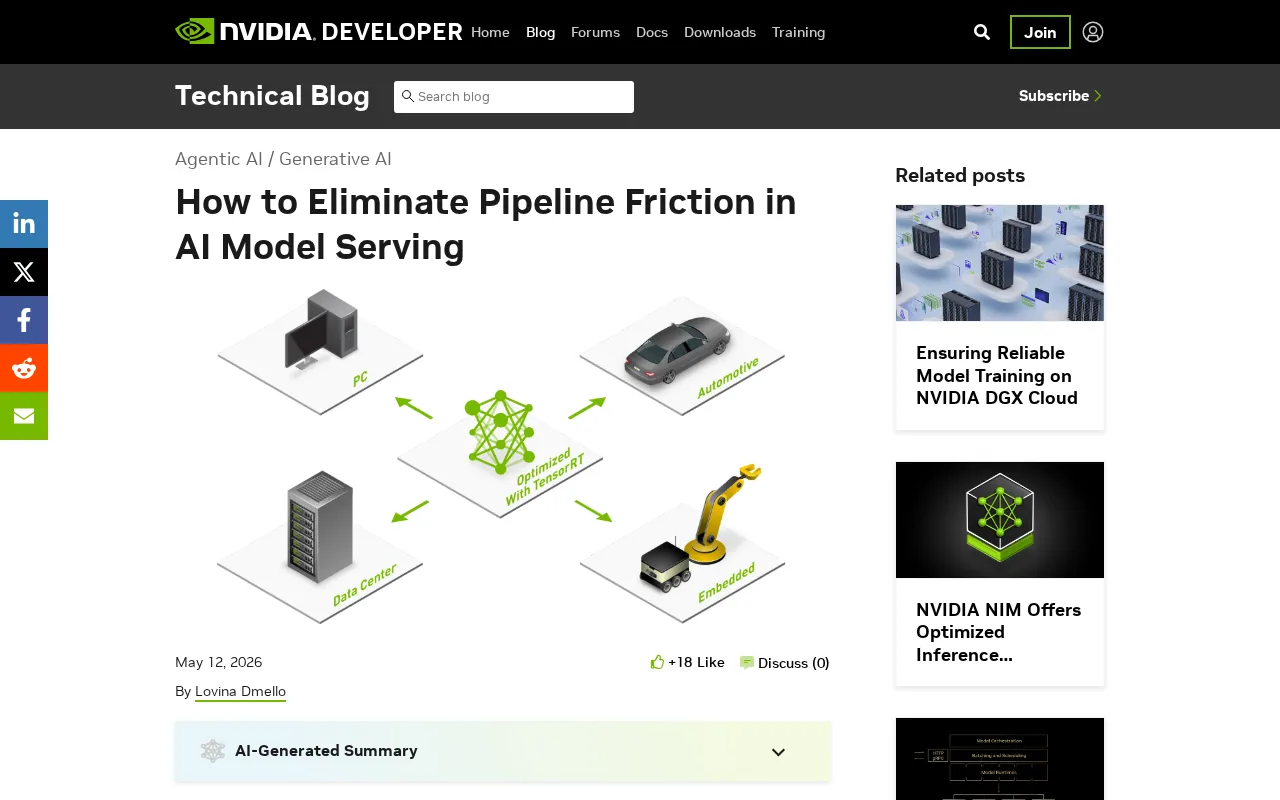
AI Model Deployment Pipeline Friction: How TensorRT Systematically Eliminates Inference Optimization Bottlenecks
Deep dive into pipeline friction in AI model deployment from training to production, covering TensorRT automated optimization, ONNX export, and Triton Inference Server best practices.
 Deep Dives
NVIDIA Vera Rubin Platform Deep Dive: Solving the Scalability Challenge of Agentic AI Inference
Deep dive into NVIDIA's Vera Rubin platform Pod-level architecture and next-gen NVLink, revealing how it solves Agentic AI inference scalability bottlenecks and the industry shift from training-first to inference-first.