#RAG
318 related articles

Getting Started with Chatbot Development: Which Programming Languages Do You Need for a RAG Stack?
Not sure where to start building a RAG chatbot? This guide covers language selection (Python, JavaScript), the core RAG workflow, and beginner-friendly learning resources.

Embedding Models in RAG Explained: From Knowledge Base Construction to Similarity Retrieval
A deep dive into how Embedding models power RAG: from chunking knowledge bases and storing vectors, to retrieving top-k documents and assembling prompts — and why fine-tuning Embeddings is key.

The Hidden Risks of Context Optimization: Who Tests the Evidence You Throw Away?
Context optimization isn't just about compression. This article examines the hidden risks of LLM context pruning — how critical discarded evidence gets masked by average metrics — and explores Reef Infra's experiment loop, selection policies, and coverage testing approaches.
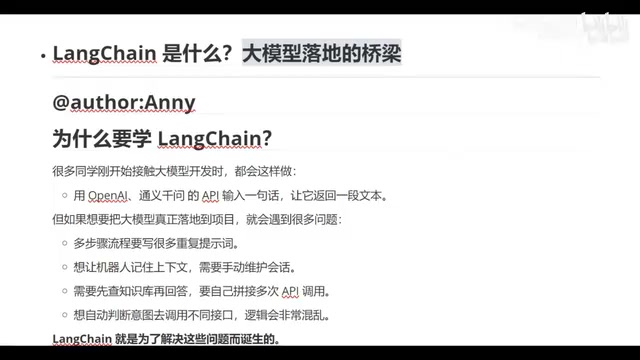
Why LangChain Is Essential for LLM Applications: A Guide to Core Concepts
Why learn LangChain if you can already call LLM APIs? This article explains LangChain's core value from an engineering perspective, covering Prompt Templates, Chains, Memory, RAG, and Agents.

DeepSeek + RAGFlow: A Complete Guide to Building a Local Personal Knowledge Base
Step-by-step guide to building a local personal knowledge base with Ollama, DeepSeek, and RAGFlow — covering RAG, Embedding, Docker setup, and online model options.

Spring AI 2.0 in Practice: Building an AI-Powered OA System with Cursor
A deep dive into a Spring AI 2.0-powered enterprise OA system featuring RAG retrieval, AI smart forms, LLM tool calling, and multi-level approvals — built with Cursor AI.
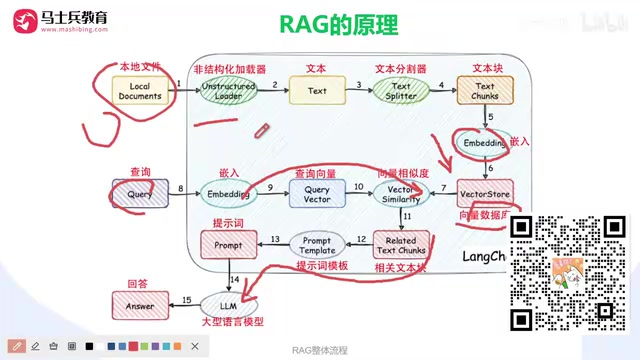
Deep Dive into RAG Systems: Why Enterprise Private Knowledge Bases Are Harder Than You Think
RAG looks simple but hides real complexity. This article breaks down enterprise RAG: PDF chunking, BGE-M3 embeddings, multi-path retrieval, re-ranking, Agent routing, and RAGAS evaluation.

AdaMem: A Soft Compression Method That Intelligently Allocates Memory Tokens by Relevance in RAG
AdaMem is a relevance-guided RAG soft compression framework that dynamically allocates memory tokens by query relevance. Outperforms uniform baselines across 6 QA benchmarks with up to 19.7% relative gain at 64× compression and 4× lower latency.
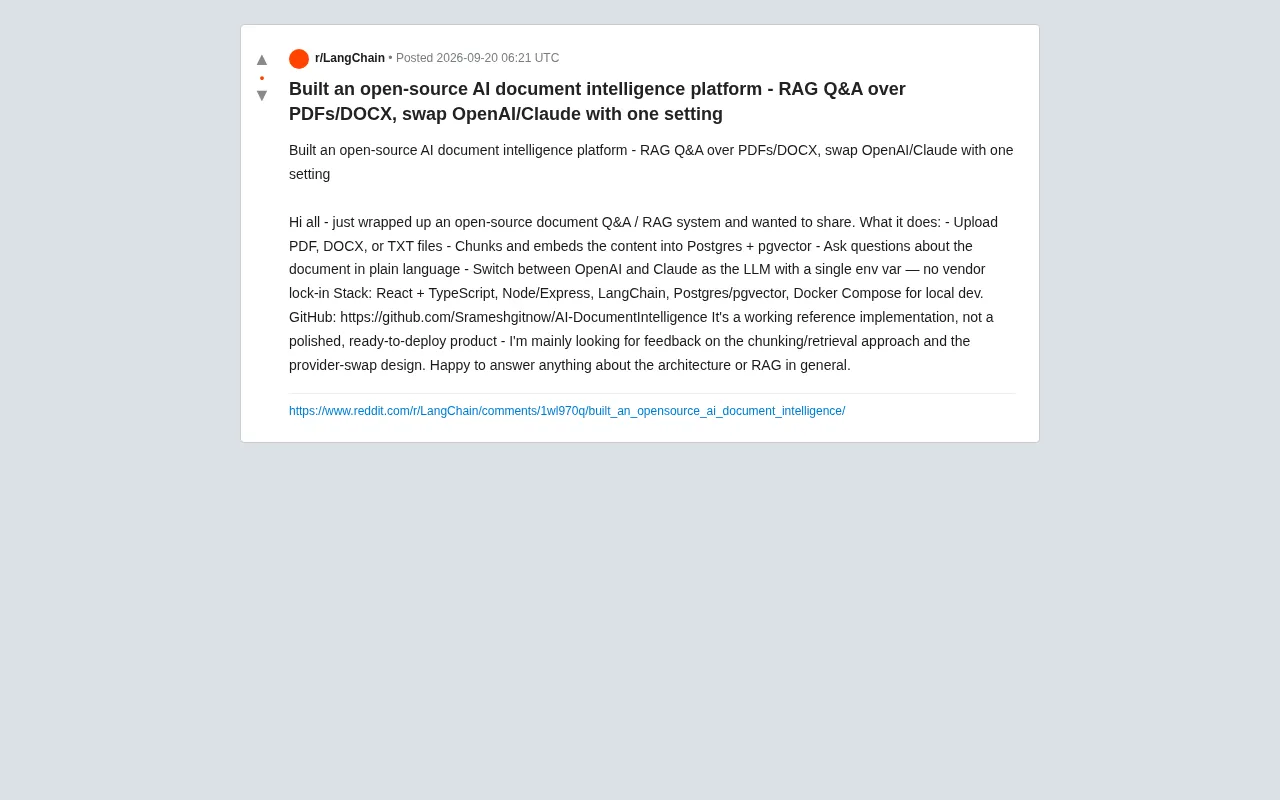
Open-Source Document Intelligence in Practice: RAG-Based PDF Q&A with Multi-Model Switching
A developer open-sourced a RAG-based document Q&A platform supporting PDF/DOCX upload, pgvector retrieval, and single-config switching between OpenAI and Claude. A deep dive into its stack and design.

Tired of Manually Tuning RAG? Open-Source Tool Muffakir Automates Your Experiments
Muffakir is an open-source RAG experiment runner that automates chunking, embedding, retrieval, reranking, and top-k combinations, comparing results by metrics, latency, and cost.

Building a RAG Knowledge Base Q&A System from Scratch: A Full Walkthrough with DeepSeek Integration
Build a RAG private knowledge base Q&A system from scratch with Python and DeepSeek. Learn document upload, vector indexing, and retrieval-augmented generation.

Hot AI Debates: Is RAG Dead? Do Skills Replace MCP?
GitHub Podcast tackles three hot AI debates: should you read AI-generated code line by line, is RAG obsolete, and will Anthropic Skills replace MCP? A deep-dive analysis.

FAISS Vector Search in Practice: Lessons Learned From Embeddings to RAG
A developer shares hands-on lessons building FAISS vector search and RAG pipelines, covering embeddings, metadata filtering, query rewriting, and hybrid retrieval.

3-Month LLM Learning Roadmap: From Zero to Agent Development, Fully Broken Down
A 3-stage LLM learning roadmap for beginners: master prompts and APIs, build RAG-powered knowledge bases, then develop Agents with ReAct and multi-agent collaboration.

RAG Knowledge Base: A Complete Guide from Fundamentals to Optimization
A complete guide to building a RAG knowledge base: covering vector databases, chunking, embedding models, retrieval strategies, re-ranking, and agent workflows to minimize LLM hallucinations.

Industrial-Grade AI Agent Development Guide: From Demo to a Four-Layer Architecture That Can Handle Real Business
A complete guide to building industrial-grade AI Agents: covers the four-layer architecture, Planner, Tools, Memory, the ReAct loop, vector databases, RAG, and enterprise stability.

Layout-Aware PDF Parsing in Practice: Solving the RAG Chunking Problem
Learn how to build a layout-aware PDF parser with Python and pdfplumber to solve RAG chunking issues in multi-column documents using visual grid coordinate detection.

rag-eval: A Zero-Dependency, No-API-Key RAG Evaluation Tool
rag-eval is a zero-dependency, framework-agnostic open-source RAG pipeline evaluation tool. It supports free local lexical and retrieval metrics with no API keys required, and offers optional LLM Judge for semantic validation. Compatible with Haystack, LangChain, and LlamaIndex.

Explainable Agentic Retrieval: Making RAG More Than Just 'Guessing the Right Answer'
Pure vector RAG agents retrieve content but can't explain their reasoning. This article explores explainable agentic retrieval using Neo4j knowledge graphs, hybrid vector-graph search, and multi-step entity extraction for traceable, source-backed AI Agent answers.

AI Large Model Learning Roadmap for Beginners: Three Stages from Prompt Engineering to Agent Development
A complete AI learning roadmap for beginners: from prompt engineering and API calls, to RAG knowledge bases, to Agent and multi-agent development — a 3-stage framework to go from zero to building real AI applications.