Gemini 3.0 Pro + Claude Opus 4.5: A Practical Guide to Dual-Model Programming Workflows

Gemini 3.0 Pro and Claude 4.5 Opus complement each other in a dual-engine AI programming workflow.
This article compares Gemini 3.0 Pro and Claude 4.5 Opus through three programming benchmarks: Gemini excels at precise instruction following with faster speed and lower cost, while Claude is stronger in deep architectural understanding, security awareness, and complete implementation. The author proposes an optimal strategy where Claude handles architecture planning and Gemini handles code execution, implemented through KiloCode's multi-profile switching in VS Code — achieving higher quality output at lower cost.
When Google's Gemini 3.0 Pro and Anthropic's Claude 4.5 Opus were released almost simultaneously, the developer community faced a classic dilemma: which one should you choose? But perhaps the more worthwhile question is — why not use both? This article provides an in-depth comparison of each model's strengths in programming tasks and introduces how to combine them into an efficient dual-engine programming system using the open-source tool KiloCode.
Core Positioning of the Two Models
Gemini 3.0 Pro is Google's most intelligent model to date, designed for complex reasoning and advanced multimodal tasks. With a 1-million-token context window, it can easily handle large-scale codebases. It performs excellently on multiple programming benchmarks including Terminal Bench and Live Code Bench.
Claude 4.5 Opus is considered one of the world's strongest programming models, achieving a SOTA score of 80.9% on SWE-Bench Verified. Beyond its outstanding coding capabilities, it excels at deep research, document analysis, spreadsheet processing, and other everyday tasks — thanks to its powerful Agent capabilities.
In-Depth Comparison Across Three Programming Benchmarks
To visually demonstrate the differences between the two models in real-world programming, developers designed three programming challenges of different dimensions in KiloCode.
Test 1: Python Rate Limiter (Strict Instruction Following)
This test set 10 rigid requirements: exact class names, exact error messages, exact method signatures — zero creative freedom. Results:
- Gemini 3.0 Pro: Executed the prompt strictly, producing clean, concise, correct code with no extra features or assumptions — scored highest
- Claude 4.5 Opus: Close behind, with more elegant code and better documentation, but lost points due to a minor naming mismatch between
tokensandcurrent_tokens
Conclusion: If you need precise instruction execution, Gemini is the most "obedient" model; if you want more polished code, Claude delivers a more refined implementation.
Test 2: TypeScript API Refactoring (Deep Architectural Understanding)
Given a messy 365-line legacy API with security vulnerabilities, inconsistent naming, missing validation, and unsafe queries, the task required a complete refactoring implementing 10 architectural requirements.
- Claude 4.5 Opus: Perfect score 10/10, the only model that caught all necessary fixes. It implemented rate limiting (explicitly required), used environment variables for key management, and added a complete error hierarchy
- Gemini 3.0 Pro: Scored 8/10, with clean output but shallow interpretation — missed deep security vulnerabilities and architectural flaws, understood transaction requirements but didn't actually implement them, and completely omitted rate limiting
Conclusion: Gemini excels at quick, clean surface-level rewrites; Claude far surpasses it in deep architectural understanding, security awareness, and complete implementation.
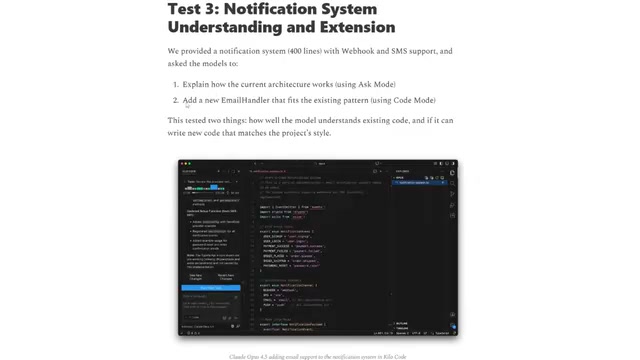
Test 3: Notification System (System Understanding & Feature Extension)
Given 400 lines of code with Webhook and SMS support, the task required the model to first understand the existing architecture, then add a complete email handler.
- Claude 4.5 Opus: Delivered the most comprehensive implementation within one minute, adding templates for all 7 notification events, including runtime template management, error hierarchy, and fully aligned architecture
- Gemini 3.0 Pro: Functional but minimal — no attachments, no CC/BCC support, only a few code templates implemented
Conclusion: Gemini produces a "minimum viable version"; Claude produces a "production-ready complete system."
Core Strategy for Dual-Model Collaboration
Through the comparison of these three tests, the complementary nature of the two models becomes crystal clear:
| Dimension | Gemini 3.0 Pro | Claude 4.5 Opus |
|---|---|---|
| Response Speed | Extremely fast | Fast |
| Cost | Cheaper | More expensive |
| Instruction Following | Letter-perfect | Slight improvisation |
| Frontend/UI | Excellent | Good |
| Deep Architecture | Weaker | Extremely strong |
| Security Awareness | Average | Outstanding |
| Completeness | Minimum viable | Production-ready |
The optimal strategy: Let Claude handle planning and architectural design, let Gemini handle code execution and implementation.
KiloCode in Practice: Building a Dual-Engine Workflow
KiloCode is an open-source VS Code extension that serves as an AI coding assistant with multi-model switching support. Here are the specific configuration and usage steps.
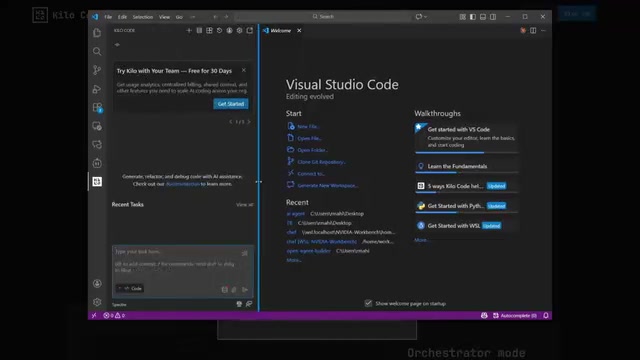
Step 1: Configure Dual-Model Profiles
After installing the KiloCode extension in VS Code, go to Settings and create two configuration profiles:
- Opus Profile: Select Claude 4.5 Opus as the model, enable Reasoning, set Verbosity to High
- Gemini Profile: Select Gemini 3.0 Pro Preview, also set Reasoning Effort to High
Step 2: Define Clear Division of Labor
- Architect Mode + Opus Profile: Used for planning and design. Claude 4.5 Opus breaks down tasks, designs system architecture, catches potential errors, and performs deep reasoning
- Code Mode + Gemini Profile: Used for code implementation. Gemini 3.0 Pro strictly follows the plan generated by Claude, producing clean, concise code
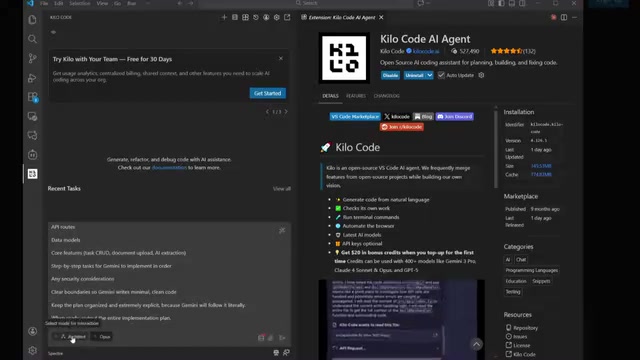
Step 3: Practical Demo — Building an AI Task Manager
Here's a complete case study demonstrating the dual-model workflow in action: building a task manager with intelligent priority sorting, supporting task creation, document uploads, and AI-powered automatic extraction of key tasks and priorities.
The specific workflow:
- In Architect mode, use the Opus Profile to have Claude generate the complete system architecture and implementation plan
- Switch to Code mode, use the Gemini Profile to have Gemini implement all components step by step according to the plan
- When debugging or deep review is needed, switch back to the Opus Profile for code review
The final application includes a complete Kanban view, task CRUD operations, a tagging system, priority management, and an AI-powered intelligent task extraction feature — upload a document and it automatically analyzes and generates task cards.

The total cost of the entire process was approximately $2, far less than using Claude Opus alone for all the work, while the code quality and UI performance were also better than using either model independently.
Key Takeaways and Practical Recommendations
The core idea behind this dual-model workflow isn't complicated: let each model do what it does best. This aligns perfectly with the "separation of concerns" principle in software engineering.
Several practical recommendations worth considering:
- Don't blindly trust a single model: Even the strongest models have weaknesses — combining them often yields results greater than the sum of their parts
- Architecture first: Planning with a strong reasoning model before executing with an efficient model works far better than letting a model "think and write simultaneously"
- Cost optimization: Use expensive models where they matter most (planning, review, debugging), and delegate routine coding to more cost-effective models
- Leverage the right tools: Open-source tools like KiloCode that support multi-profile switching are the critical infrastructure for implementing dual-model collaborative workflows
As AI programming tools evolve rapidly, the single-model era is coming to an end. The efficient developers of the future won't just choose the best model — they'll know how to orchestrate the most suitable combination of models.
Related articles
 Tutorials
Cursor + Codex Dual-IDE Collaboration: A Practical Methodology for Open-Source Project Customization
A complete methodology for open-source project customization based on real-world experience, detailing the Cursor+Codex dual-IDE workflow, seven-stage process, MVP validation, and AI source code reading techniques.
 Tutorials
Cursor Multi-Agent in Practice: Building a Full-Stack Next.js Blog in 50 Minutes
Build a full-stack blog in 50 minutes using Cursor IDE's multi-Agent mode with Next.js, Clerk auth, and Supabase. Learn the 4-phase AI Agent workflow and key integration pitfalls.
 Tutorials
Building an AI Software Factory from Scratch: A Cursor Engineer's Hands-On Experience with Multi-Agent Collaboration
Cursor engineer Eric shares practical insights on building an AI software factory: automation levels, guardrail design, parallel Agent management, and scaling to 1000+ Agents for 24/7 development.