Getting Started with Claude Code: Setup, Configuration & AI-Driven Testing in Practice
Getting Started with Claude Code: Setu…
A beginner's guide to Claude Code setup and AI-driven testing with DeepSeek integration.
This article covers Claude Code's core concepts, the difference between terminal and device AI Agents, environment setup steps, Skills configuration, and prompt engineering for software testing. It also explains why pairing Claude Code with DeepSeek offers an optimal balance of capability and cost for AI-driven testing workflows.
Introduction: Why Choose Claude Code?
As the AI wave continues to surge, more and more tech professionals are exploring ways to use AI to power their daily workflows. For those in software testing, choosing the right AI Agent tool is critical. Based on hands-on course content from Bilibili's Mashang Education, this article systematically covers Claude Code's core concepts, installation and configuration, and its collaboration approach with the DeepSeek large language model — helping you quickly get started with today's most popular terminal AI Agent.
Claude Code is a command-line programming tool from Anthropic, powered by its top-tier Claude models (such as Opus 4.7), which rank among the best globally for coding capabilities. Anthropic was founded in 2021 by siblings Dario Amodei and Daniela Amodei, former OpenAI research VP and colleagues. The company's core mission is to build safe, interpretable AI systems. The Claude model family uses a Constitutional AI training approach, where the model critiques and corrects itself to align with human values. This unique training philosophy gives Claude exceptional performance in following complex instructions, understanding long texts, and generating code — particularly on benchmarks like SWE-bench, where it consistently leads.
More importantly, cutting-edge concepts like the MCP protocol and the Skills system were first introduced and promoted by Anthropic, giving Claude Code a unique position in the AI Agent ecosystem. MCP (Model Context Protocol) is an open standard proposed by Anthropic in 2024 to solve the problem of standardized communication between AI models and external tools or data sources. Before MCP, every AI application had to write custom integration code for each data source and tool, creating an M×N connection problem. MCP simplifies this to M+N by defining a unified client-server architecture — similar to how the USB protocol standardized peripheral connections — supporting three core capabilities: resource access, tool invocation, and prompt templates, enabling AI Agents to access file systems, databases, APIs, and other external resources in a standardized way.
Two Types of AI Agents: Terminal Agents vs. Device Agents
Before diving deeper into Claude Code, it's essential to understand the two fundamental forms of AI Agents, as this directly impacts tool selection and security strategy.
Terminal Agents: Project-Scoped and Controllable
Terminal Agents run in the command line, with the following key characteristics:
- Runtime environment: Used in the terminal/command line, suitable for users with a technical background
- Permission scope: Works only within the current project or directory — it does not take over the entire machine
- High security: Humans always retain the highest decision-making authority over the entire device; the AI is responsible only for a specific project
- Enterprise-friendly: Compliant with enterprise asset management and information security requirements
The security model of terminal Agents is based on the operating system's process isolation and file system permission mechanisms. When Claude Code runs in a project directory, it can by default only access files within that directory and its subdirectories — it cannot read critical system configurations, other users' data, or network credentials. This sandboxed execution follows the Principle of Least Privilege, meaning each program should only have the minimum set of permissions necessary to complete its task. In enterprise environments, this means that even if the AI generates problematic code or executes an incorrect command, the blast radius is strictly limited to a single project, preventing system-level security incidents.
The main terminal Agents currently available include:
| Type | Tool Name | Background |
|---|---|---|
| Commercial | Claude Code | Anthropic |
| Commercial | Codex | OpenAI (defaults to GPT models) |
| Commercial | Gemini CLI | Google (defaults to Gemini models) |
| Open Source | Open Code | Open-source alternative modeled after Claude Code |
| Open Source | Open Claude | Open-source solution inspired by Claude Code's design |
Interestingly, commercial terminal Agents default to their own proprietary models, while open-source alternatives offer more flexibility in model selection. The naming conventions of Open Code and Open Claude make it clear that Claude Code has become the de facto standard in the terminal Agent space.
Device Agents: Fully Delegated Personal Assistants
Unlike terminal Agents, Device Agents interact through messaging platforms (WeChat, Feishu, DingTalk, etc.) and have very different characteristics:
- Low barrier to entry: No need to open a computer — instructions can be given via chat
- Broad permission scope: Takes over full control of the entire device, with AI fully managing the computer
- Higher risk: Potential for accidental deletion of system files, leaking of confidential information, and other security hazards
Typical Device Agents include the once-popular Open Crab and the later-released Elmas. Elmas has self-evolution capabilities and consumes more tokens but has greater potential — though this also means more unpredictability.
Key decision recommendation: In enterprise environments, it is strongly advised to use terminal Agents rather than Device Agents. China's national security authorities have issued related security advisories, and the risks of entrusting company assets and confidential information to a Device Agent should not be underestimated. Device Agents are better suited for personal exploration scenarios.
Why Choose the Claude Code + DeepSeek Combination?
The recommended technical approach is Claude Code as the Agent + DeepSeek as the AI large language model. The advantages of this combination include:
Core Advantages of Claude Code
- Top-tier model capabilities: Anthropic's Claude model family leads globally in coding tasks
- Strong ecosystem influence: Concepts like MCP and Skills were pioneered by Anthropic, with a rich community ecosystem
- Safe and controllable: Managed at the project level, with no overreach beyond its scope
- Industry benchmark: Numerous open-source projects reference Claude Code's design, validating its advanced philosophy
DeepSeek's Complementary Value
DeepSeek was incubated by High-Flyer, a quantitative hedge fund giant, and its technical team introduced significant innovations in model architecture. The DeepSeek-V2 model introduced the MLA (Multi-head Latent Attention) mechanism and the DeepSeekMoE mixture-of-experts architecture. These innovations reduce inference costs by approximately 90% compared to models of similar capability, with API pricing at a fraction of GPT-4's cost. The DeepSeek-Coder series is specifically optimized for code tasks and performs exceptionally well on benchmarks like HumanEval.
For software testing scenarios that require frequent AI calls, DeepSeek's low-cost characteristics make large-scale automated test case generation and code review economically feasible. Through Claude Code's flexible configuration capabilities, DeepSeek can be integrated as the underlying model, achieving the combination of "best-in-class tool framework + high-value model."
Core Approach to Environment Setup
Although specific installation steps vary by operating system, the overall setup process can be summarized in the following stages:
- Install Claude Code CLI: Install the command-line tool via npm or another package manager
- Configure model connection: Set up API keys to connect to Claude's native model or configure third-party models like DeepSeek
- Project initialization: Initialize Claude Code in the target project directory to establish a project-level AI workspace
- Skills configuration: Set up specialized skill templates based on your work scenario (e.g., software testing)
- Prompt engineering practice: Master effective prompt-writing techniques to improve AI output quality
A Deeper Understanding of Skills Configuration
Skills are a knowledge management mechanism in Claude Code. At their core, they are Markdown files stored within the project that contain domain-specific context, work standards, and best practices. When users interact with Claude Code, relevant Skills files are automatically loaded into the model's context window, enabling the model to understand the project's specific coding standards, testing strategies, or business logic. This mechanism is like giving the AI a "project handbook" it can reference at any time, eliminating the need to repeat background information in every conversation. Skills can be shared and version-controlled across teams, ensuring a consistent AI-assisted experience for everyone.
Prompt Engineering in Testing Practice
Prompt engineering refers to the practice of carefully designing text instructions given to an AI model to guide it toward producing the desired output. In software testing scenarios, an effective prompt needs to include clear testing objectives, context about the system under test, the expected output format, and quality constraints. Common prompt techniques include: Few-shot Learning (providing several examples for the model to learn patterns), Chain-of-Thought (guiding the model to reason step by step), and Role-playing (having the model take on the role of a senior test engineer). Well-designed prompts can increase the accuracy of AI-generated test cases from around 50% to over 90%, making prompt design the key factor in determining the effectiveness of AI-assisted testing.
The Practical Significance of Project-Level Management
The project-scoped management approach of terminal Agents brings significant flexibility to real-world work:
- Different projects can have different Agent parameters and Skills configurations
- Different projects can execute different commands and workflows
- Team members can share project-level configurations to ensure collaboration consistency
- Even if the AI encounters issues in one project, it won't affect other projects or the overall system
Summary and Outlook
Claude Code represents the current best-practice direction for AI Agents in enterprise applications — maintaining powerful capabilities while ensuring safety and control. For software testing professionals, mastering Claude Code is not just about learning a tool; it's an entry point into understanding the new paradigm of AI-driven testing.
From terminal Agents to Device Agents, from commercial products to open-source alternatives, the AI Agent ecosystem is evolving rapidly. The Claude Code + DeepSeek combination lets you enjoy the capabilities of a top-tier tool framework while controlling costs through flexible model configuration. In further learning, deeply mastering prompt engineering and Skills configuration will be the key to unlocking the full potential of this approach.
Key Takeaways
Related articles

iOS 27 New Details Leaked: Major Notification Center Gesture Changes, Find My Interface Redesign
iOS 27 leaks reveal major changes: Notification Center gesture moves to upper left with new animations, Find My visual redesign, Photos Clean Up improvements, and under-the-hood security upgrades.
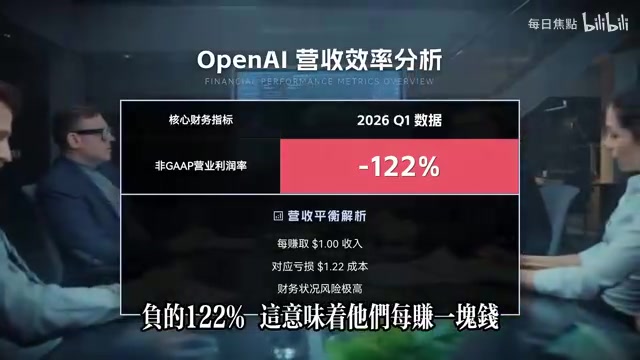
Deep Dive into the AI Bubble: The Death Spiral of Losing $1.22 for Every $1 Earned
Deep analysis of the AI industry bubble: OpenAI's -122% profit margin, enterprise token budgets burned in months, NVIDIA's shell game, and collapsing software quality.

WWDC 2026 Preview: Major Siri Overhaul and Comprehensive Apple Intelligence Upgrade
Deep analysis of WWDC 2026 Apple AI strategy: standalone Siri app, iOS 27 as an AI-native OS, and Apple Intelligence 2.0 rebuilt from the ground up.