How Ordinary People Can Build Products with AI Programming

Learning Python basics is the key to effectively collaborating with AI to build your own products
AI programming tools enable non-technical people to build products, but zero-experience users face challenges like imprecise requirement descriptions, inability to debug code, and lack of architectural understanding. Learning Python basics is the best solution, enabling you to become an efficient AI director and bridge the gap from idea to product.
AI Is Redefining "Who Can Build Products"
We're living in an unprecedented era — the explosive growth of AI programming tools is fundamentally changing the barrier to creating software products. In the past, turning an idea into a real product required requirements analysis, technology selection, front-end and back-end development, testing, and deployment — typically demanding an entire technical team. Now, with AI programming tools, one person can simultaneously play the roles of product manager, designer, and developer.
This is no exaggeration. Today's AI programming tools form a multi-layered ecosystem: Cursor is an AI-enhanced IDE based on VS Code that auto-completes and generates code based on context; Bolt (bolt.new) is a browser-based full-stack development platform where users describe what they want in natural language to generate complete web applications; and tools like GitHub Copilot, Replit Agent, and v0.dev each have their own strengths. These tools rely on the code generation capabilities of Large Language Models (LLMs), essentially translating natural language into executable code. Their emergence marks a paradigm shift in software development from "writing code by hand" to "human-AI collaborative programming."
From Cursor and Bolt to various web coding platforms, AI programming tools give people who "have ideas but lack technical skills" an efficient, low-cost path to realization. You can quickly generate a demo to validate your idea, or even push it to market for commercial testing. In the AI era, everyone can be a product manager, directing AI to handle development.
The Real Challenges Zero-Experience Users Face
However, reality isn't that simple. While AI can write code for you, if you have zero programming knowledge, you'll encounter several core problems:
Imprecise Requirement Descriptions
People without technical backgrounds often can't describe their requirements precisely. The output quality of AI tools is highly dependent on the quality of the input Prompt.
Here's a key concept to understand: a Prompt is the core interface for user-AI interaction. Prompt engineering is an emerging discipline studying how to obtain high-quality AI output through precise, structured instructions. In programming scenarios, a good Prompt needs to include clear functional descriptions, technical constraints, input/output formats, and boundary conditions. This is similar to a Software Requirements Specification (SRS) in traditional software engineering — the difference being that you used to write it for human developers, and now you write it for AI.
If you don't understand basic programming concepts, it's hard to tell AI exactly what you want, and the resulting code may be far from your expectations. People unfamiliar with technical concepts tend to write vague Prompts, causing AI to "freestyle" and produce results that deviate from expectations.
Inability to Evaluate and Modify Code
AI-generated code isn't always perfect. When bugs appear or adjustments are needed based on actual conditions, people with zero coding knowledge find themselves helpless.
A bug is an error or defect in a program — the term originates from an actual moth found in Harvard's Mark II computer in 1947. In modern software development, bugs fall into three categories: syntax errors (code that doesn't follow language rules), logic errors (code runs but produces wrong results), and runtime errors (program crashes under specific conditions). AI-generated code most commonly suffers from logic errors and context inconsistencies, because AI lacks deep understanding of the overall business scenario.
You need to at least be able to "read" what code is doing to collaborate effectively with AI. Having basic debugging ability — such as reading error messages and understanding code execution flow — is an essential skill for using AI programming tools effectively.
Lack of Architecture and Logic Understanding
A product isn't just a pile of code snippets — it requires sound architectural design and clear business logic. Software architecture refers to the high-level structural design of a system, including component division, data flow, and inter-module communication. Common architectural patterns include MVC (Model-View-Controller), microservices, and front-end/back-end separation. Good architecture determines a product's scalability, maintainability, and performance ceiling.
Currently, AI tools excel at generating code for individual functional modules, but still need human guidance for system-level decisions like cross-module coordination, database design, and API interface planning. These foundational capabilities cannot yet be fully replaced by AI. This is why understanding basic architectural thinking remains indispensable even with AI assistance.
Why Python Is the Best Language to Start With
Given these challenges, learning a programming language as a foundation becomes crucial. Among all programming languages, Python is the most recommended for beginners, for three reasons:

First, Python is the universal language of AI. Whether it's machine learning frameworks (TensorFlow, PyTorch), data processing (Pandas, NumPy), or calling various AI APIs, Python is the dominant language.
Python became the de facto standard language for AI for deep historical and technical reasons. Since the deep learning revolution of 2012, virtually all major AI frameworks have chosen Python as their primary interface language: Google's TensorFlow, Meta's PyTorch, and OpenAI's API SDK all prioritize Python. This is because Python's dynamic typing and interpreted execution are ideal for rapid experimentation and prototyping, while computationally intensive tasks are handled by underlying C/C++ libraries. NumPy provides efficient numerical computation, Pandas handles structured data, and Matplotlib/Seaborn handle visualization — this toolchain forms a complete data science workflow. Learning Python gives you the key to connecting with the AI ecosystem.
Second, its syntax is concise and quick to learn. Python's design philosophy is "readability first" — code reads almost like natural language, making it the gentlest learning curve for people with no programming experience. Python creator Guido van Rossum explicitly proposed the principle of "one way, preferably only one way, to do something," making Python code style highly consistent so beginners don't feel confused reading others' code.
Third, it's extremely practical. From web development (Django, Flask), data analysis, to automation scripts, Python covers an incredibly wide range of applications. After learning Python, you can not only use AI programming tools more effectively but also independently complete many practical tasks.
Key Strategies for Learning Programming from Scratch
For complete beginners, the learning approach in the early stages is critical. Many people "quit as soon as they start" — often not because programming is too hard, but because their learning method is wrong.

Use Analogies to Understand Abstract Concepts
Programming has many abstract concepts like variables, constants, functions, and loops. A good approach is to use everyday objects as analogies — for example, think of a variable as a cup (it can hold different things), and a constant as a sealed drink (its value never changes).
This method is known as "Conceptual Metaphor" in cognitive science, proposed by linguist George Lakoff. Research shows that the human brain automatically maps new concepts onto existing cognitive frameworks. In programming education, concepts like variables, functions, and loops are entirely new mental models for beginners. By establishing mappings with daily experiences (e.g., function = recipe, loop = repeating alarm), cognitive load is significantly reduced. This helps zero-experience users quickly build programming intuition.
Hands-on Practice Over Theory
Programming is an extremely practical skill. Rather than spending lots of time watching video tutorials, start writing code as early as possible. Even the simplest "Hello World" gives more satisfaction when typed by your own hands than passively watched. Interactive challenge-based learning modes that reinforce knowledge points through various formats have been proven effective. The underlying principle is "Active Recall" — when you're required to actively produce answers rather than passively receive information, your brain forms stronger neural connections.
Bite-sized Learning with Immediate Feedback
You don't need large blocks of time — 20 minutes of daily bite-sized learning with immediate practice feedback builds continuous progress. This model is based on "Spaced Repetition" — distributing learning across multiple time periods with gradually increasing intervals, which yields memory retention rates several times higher than cramming. The key is maintaining learning continuity rather than one-time intensive study.

AI Plus Basic Programming Skills Equals Personal Product Power
Back to the core point: The AI era represents a massive opportunity for ordinary people, but this opportunity belongs to those who "have ideas + basic technical understanding."
Relying entirely on AI without understanding any technology limits you to the simplest demos. But if you master Python basics — can read code, describe requirements precisely, and adjust and optimize AI output — your product capability will improve exponentially. The "exponentially" here isn't rhetoric — when you understand the logic of AI-generated code, you can iterate, combine, and extend on top of it. Each round of human-AI collaboration builds on the previous round's results, creating a compounding effect.
The "product" here doesn't have to be a commercial product for the market. It could be:
- A Python script that automatically organizes your files
- A personal expense tracking tool
- An app that auto-generates weekly reports
- A mini-program that solves a specific pain point
Even just building a product for your own use — that sense of achievement from turning an idea into reality is itself a gift the AI era gives to everyone.
Final Thoughts
AI programming tools have lowered the technical barrier but haven't eliminated it. The smartest approach isn't to rely entirely on AI, nor to systematically study computer science from scratch, but to find a balance — learn enough foundational knowledge to become an efficient director of AI.
In practice, this balance roughly means: understanding variables, conditional statements, loops, and functions — the four fundamental concepts; being able to read simple Python scripts; knowing how to install and use third-party libraries; and understanding the basic principles of API calls. This knowledge might only take a few dozen hours to master, but it becomes the foundation for efficient collaboration with AI.
In this era where everyone can build products, what's truly scarce isn't technical ability, but the ability to identify problems and define requirements. Technology can be delegated to AI, but insight can only come from you.
Related articles
 Tutorials
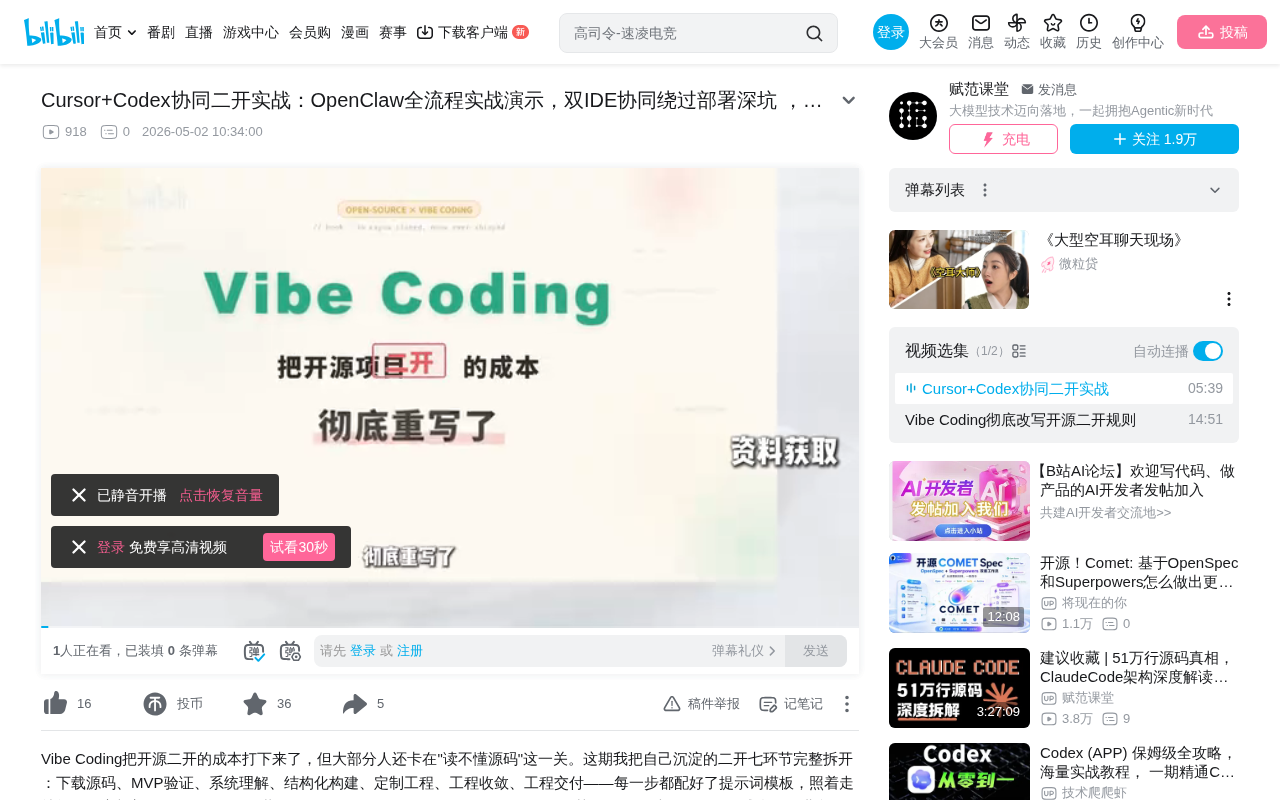
Cursor + Codex Dual-IDE Collaboration: A Practical Methodology for Open-Source Project Customization
A complete methodology for open-source project customization based on real-world experience, detailing the Cursor+Codex dual-IDE workflow, seven-stage process, MVP validation, and AI source code reading techniques.
 Tutorials
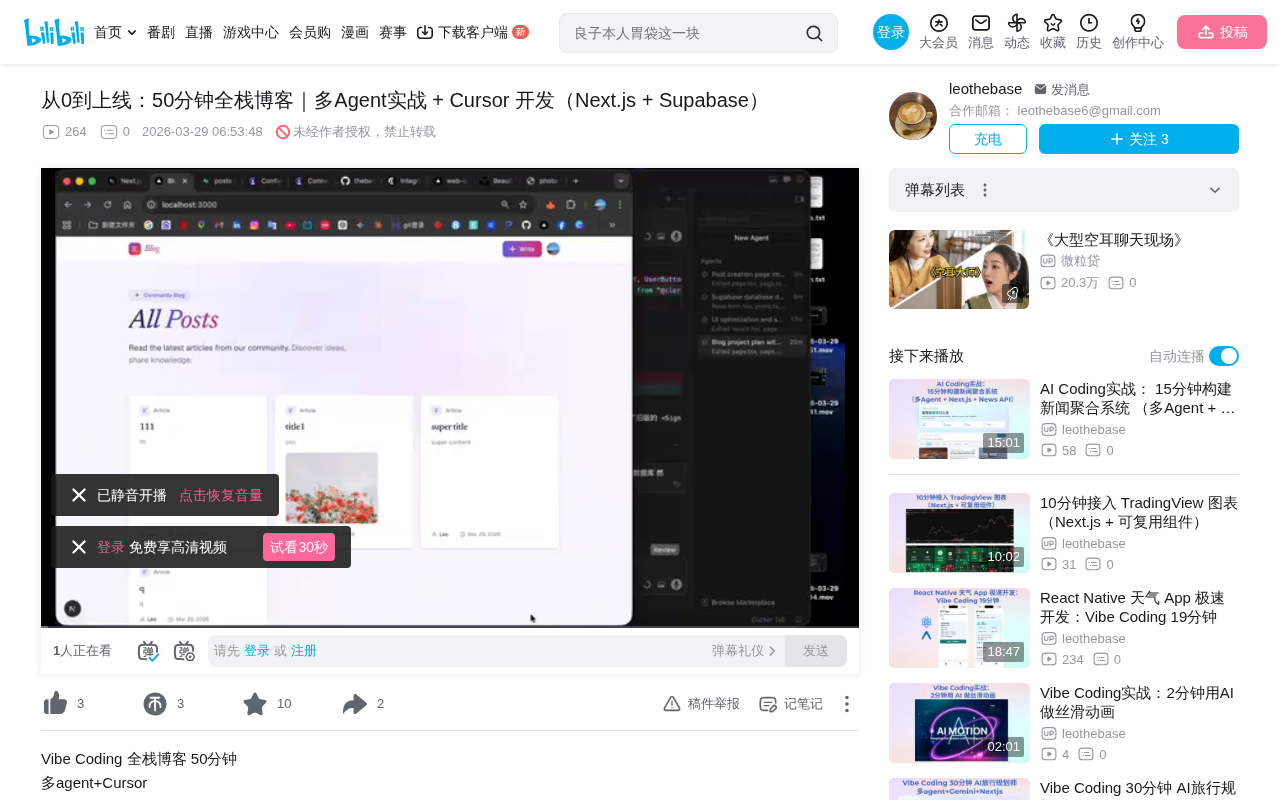
Cursor Multi-Agent in Practice: Building a Full-Stack Next.js Blog in 50 Minutes
Build a full-stack blog in 50 minutes using Cursor IDE's multi-Agent mode with Next.js, Clerk auth, and Supabase. Learn the 4-phase AI Agent workflow and key integration pitfalls.
 Tutorials
Building an AI Software Factory from Scratch: A Cursor Engineer's Hands-On Experience with Multi-Agent Collaboration
Cursor engineer Eric shares practical insights on building an AI software factory: automation levels, guardrail design, parallel Agent management, and scaling to 1000+ Agents for 24/7 development.