OpenAI Confirms System Bug Caused Wrongful Account Suspensions; Multiple AI Tools Release Dense Updates
OpenAI Confirms System Bug Caused Wron…
OpenAI fixes account suspension bug as AI tools across the industry receive a wave of major updates.
OpenAI confirmed a system bug wrongfully suspended user accounts and has since restored access. Meanwhile, the AI ecosystem saw dense updates including Codex improvements, ChatGPT's new email feature, Google DeepMind's quantized Gemma 4, Cursor's Design Mode, multiple open-source TTS models, and Anthropic's chemistry breakthrough with Claude Opus 4. Industry dynamics also include massive compute deals and growing concerns over AI cost management.
OpenAI System Bug Causes Wrongful Account Suspensions
OpenAI has officially confirmed that a recent system bug led to some user accounts being incorrectly suspended. Access has been restored for affected accounts, but anomalies in subscription status and usage quotas are still being resolved. The company stated it will notify affected users individually via email.
This incident serves as another reminder that even top-tier AI companies' infrastructure isn't infallible. For users who rely on ChatGPT for daily work, a sudden account suspension can mean workflow disruption. Users are advised to check their email notifications and confirm that their subscriptions and quotas have been fully restored.
OpenAI Product Line Receives Dense Updates
Multiple Improvements to Codex
OpenAI released several practical updates for the Codex application: a new settings search with categorized results, side chat remaining visible in full-screen mode, and automatic restoration of prompts, drafts, and work state (including work count and context) after restart. These improvements significantly enhance the continuous workflow experience for developers.
ChatGPT Launches One-Click Email Sending
ChatGPT's web interface has launched a highly practical new feature — users can now draft emails, make edits, and send them with one click directly within Writing Blocks in the conversation interface, all without leaving the current chat. This marks ChatGPT's evolution from a pure conversational tool toward an integrated work platform.
Concentrated Release of Open-Source Models and Tools
Google DeepMind Releases Quantized Gemma 4
Google DeepMind released Gemma 4 Quantization-Aware Training (QAT) checkpoints along with a new mobile quantization format. Through techniques like targeted two-bit compression, the Gemma 4 E-to-B model's memory footprint has been compressed to approximately 1GB. Model weights are now available on Hugging Face with support for multiple toolchain deployments, opening new possibilities for mobile AI applications.
Multiple TTS Models Open-Sourced
REDnote AI Lab (Xiaohongshu) open-sourced Dots.tts, a 2-billion parameter end-to-end text-to-speech model that reportedly achieves open-source SOTA across multiple benchmarks, released under the Apache 2.0 license. Meanwhile, Miso Labs also launched Miso TTS 8B, an 8B-parameter model using RVQ Transformer architecture to enhance emotional expressiveness, currently supporting English only.
Alibaba Open-Sources AI Code Review Tool
Alibaba open-sourced its internal AI code review tool, OpenCode Review, on GitHub. It employs a hybrid architecture combining deterministic engineering pipelines with LLM Agents and is compatible with both OpenAI and Anthropic APIs. This open-source release provides a new option for enterprise-grade code review.
Developer Tool Ecosystem Continues to Evolve
Cursor Launches Design Mode
Cursor updated with a Design Mode feature that allows developers to modify UI through clicking, drawing, or voice prompts in the built-in browser, with an Agent directly editing the underlying source code. This WYSIWYG AI-assisted development approach is blurring the boundaries between design and coding.
Google Launches Multiple Developer Tools
Google released Google Colab CLI, a lightweight open-source tool that connects local terminals with remote Colab runtimes, enabling developers and AI Agents to directly access GPU/TPU compute for executing ML pipelines. Additionally, Google Research and Google Cloud jointly launched a new Agentic RAG framework using a multi-agent architecture, where a core Sufficient Context Agent evaluates context completeness and triggers iterative retrieval — reportedly improving accuracy by up to 34% over standard RAG.
Cody and Kimi Updates
Cody officially announced doubling the usage quota for Code Cowork, effective immediately for all paid plans. KimiWork's Windows version has also officially launched, featuring 300 built-in Agents capable of automating tasks around the clock.
AI Safety and Industry Benchmarks
Doubao Mushroom Identification Controversy Response
Douyin Vice President Li Liang responded to rumors about Doubao (ByteDance's AI) misidentifying mushrooms and causing poisoning, stating that Doubao had flagged the risk of confusion with highly toxic species and recommended practical verification. He emphasized that AI is for reference only, and safety-critical matters must be cross-verified through multiple sources. This incident highlights the responsibility boundary issues for AI applications in safety-critical scenarios.
Multiple Evaluation Benchmarks Released
Tencent and Renmin University teams open-sourced Planning Bench, a benchmark for evaluating and training large models on complex planning tasks. Tongyi Lab also launched PowerBench, an evaluation benchmark for general-purpose agents that assesses the combined effectiveness of foundation models and runtime frameworks through 150 tasks.
Major Industry Events
Anthropic Achieves Breakthrough in Chemistry
Anthropic published a white paper stating that Claude Opus 4 — without any chemistry-specific fine-tuning — achieves average errors comparable to or better than professional software ChemDraw and MestreNova in NMR carbon spectrum forward prediction, and can also reverse-engineer molecular structures from 1D spectra. This demonstrates the remarkable potential of general-purpose large models in specialized scientific domains.
Compute and Capital Developments
According to regulatory filings, SpaceX and Google signed a new cloud computing agreement under which Google will pay $920 million per month for access to approximately 110,000 NVIDIA GPUs at a Memphis data center. Meta plans to build a data center in Louisiana with an investment of up to $200 billion and is considering issuing tens of billions of dollars in new shares to sustain AI spending.
Notably, as AI agents drive dramatic increases in token consumption, multiple tech companies have begun limiting internal AI spending due to budget overruns. The Linux Foundation announced the establishment of the Tokenomics Foundation, aimed at developing unified billing standards — reflecting that AI usage cost management has become a shared industry challenge.
Related articles
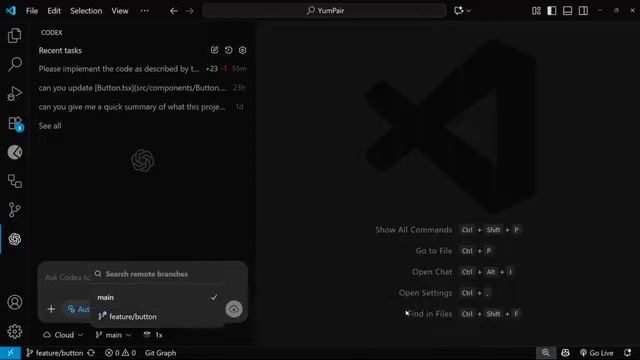
OpenAI Codex Cloud Task Delegation: The Complete Workflow from VS Code to PR
A detailed guide to OpenAI Codex extension's cloud task delegation, covering the complete workflow from initiating cloud coding tasks in VS Code to reviewing changes and creating Pull Requests.
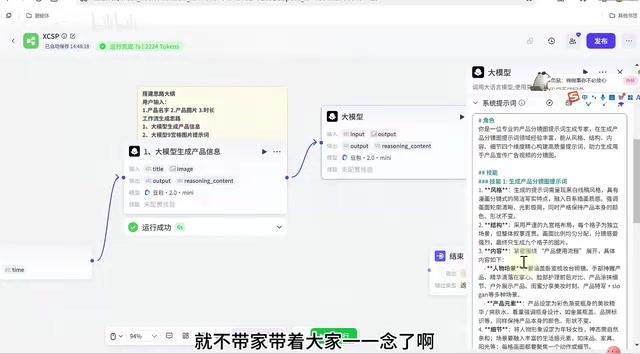
Coze Workflow in Practice: Complete Tutorial for AI One-Click Product Promo Video Generation
Step-by-step guide to building a Coze workflow for AI product promo videos, integrating HappyHours and Jimeng across 12 nodes with nine-grid storyboards and polling loops.
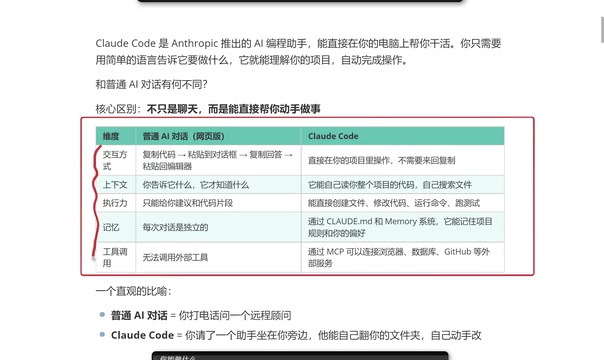
Getting Started with Claude Code: 5 Key Differences from Traditional AI Chatbots
Explore 5 key differences between Claude Code and traditional AI chatbots like ChatGPT, covering interaction, context, execution, memory, and tool integration.